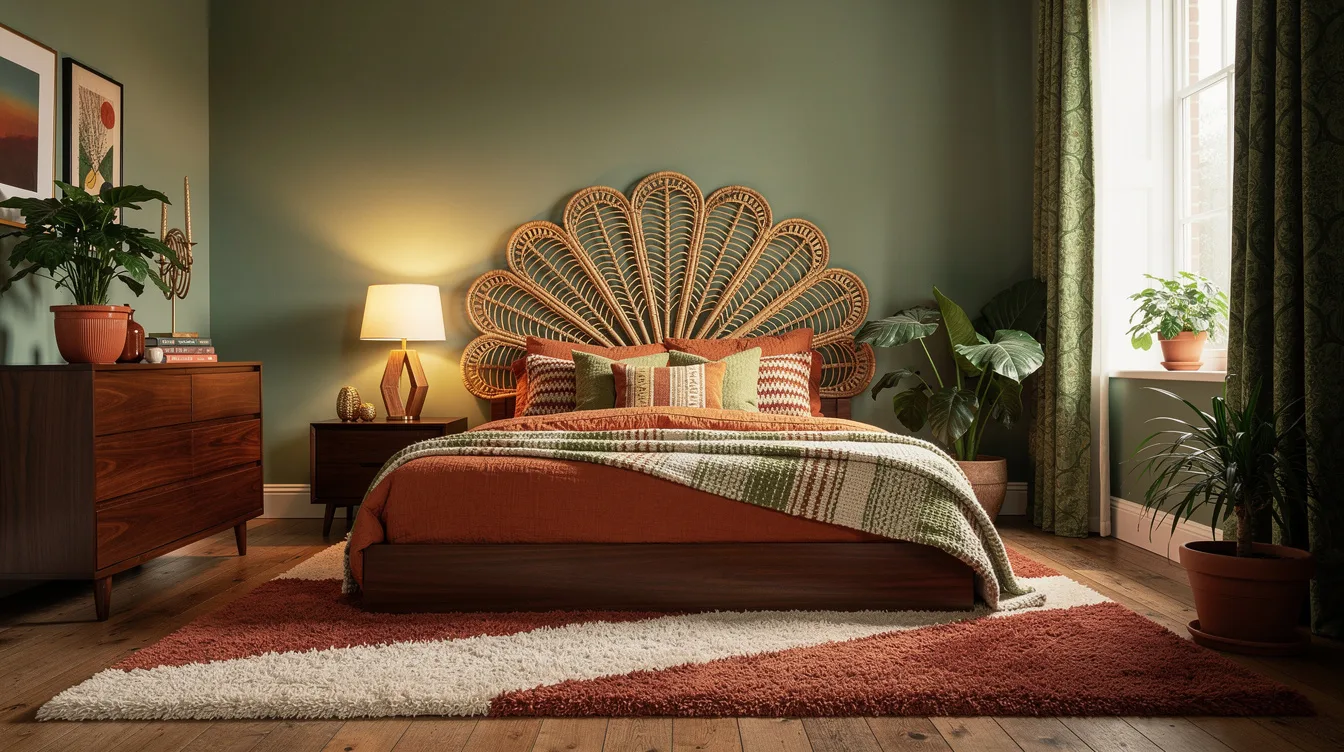
Open an old shelter magazine and the bedroom almost always looks warmer than what most of us live with now. In a typical room of about 110 to 160 square feet, the 1970s packed in color, texture, and storage without trying to look minimal.
That is the part worth revisiting. These rooms mixed low beds, glossy wood, thick rugs, and statement rattan in a way that felt relaxed, slightly dramatic, and very human.
Drop the Bed Closer to the Floor
The 1970s loved a low, loungey sleep setup, and that single move changed the whole room. In a typical bedroom, the mattress often sat only about 10 to 14 inches high, which made everything feel wider, calmer, and a little moodier.
A simple platform bed gets you there fast, and I would skip anything too tall or fussy. At retail today, a typical low-profile option from Wayfair or IKEA usually lands around $200 to $400, and that is enough to set the tone without blowing the budget.
Anchor the Wall With a Peacock Headboard
If one piece screams 1970s bedroom, it is the rattan peacock headboard. The fan shape did all the decorating work on its own, which is why it still looks good even when the rest of the room stays fairly simple.
For a full or queen bed, vintage versions typically span about 60 to 67 inches wide and rise roughly 47 to 59 inches at the tallest point. A real secondhand peacock headboard often runs around $150 to $400 depending on condition, and I think it looks far better than a brand-new faux-boho copy.
Drench the Room in Saturated Earth Tones
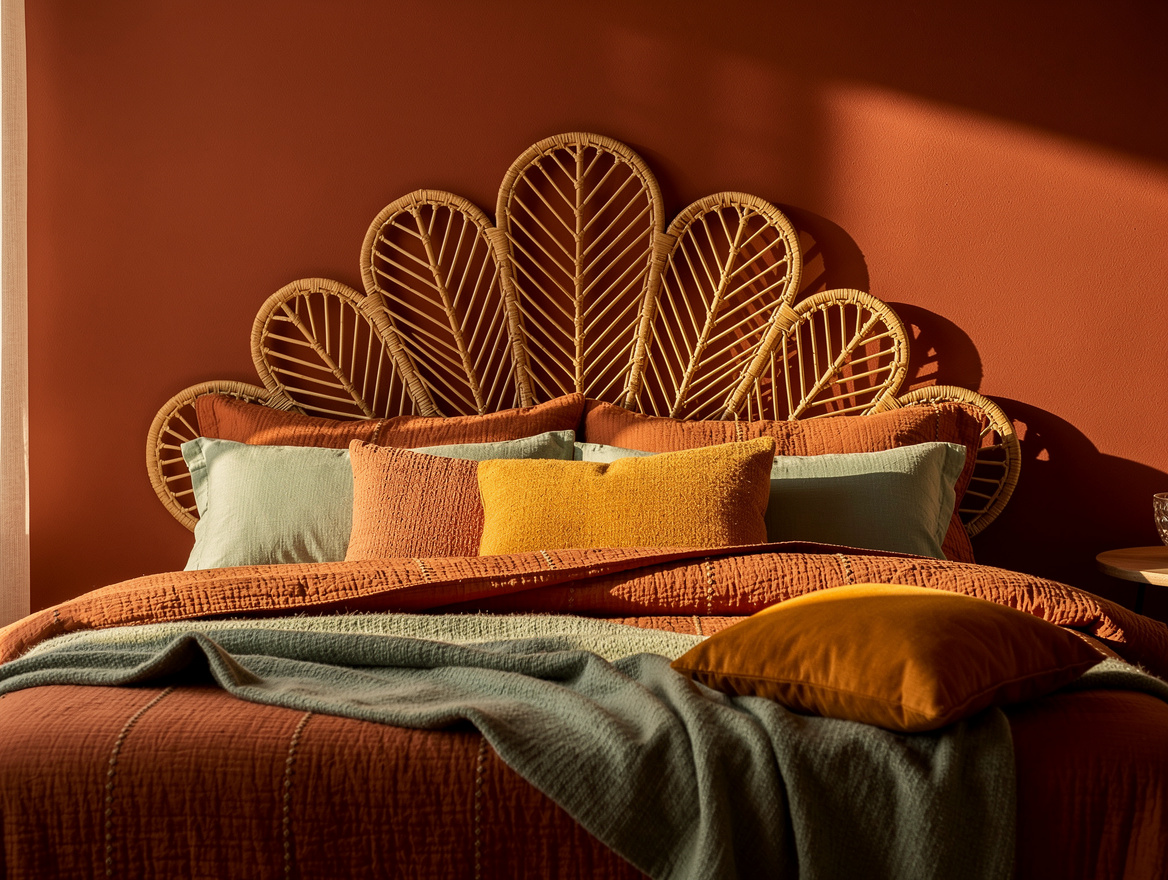
Seventies bedrooms were not shy about color. Rust orange, terracotta, bottle green, mustard, chocolate brown, and off-white worked because they felt grounded, not sugary.
I would paint the walls one warm color and let the bedding stay close to it, instead of chasing contrast. A gallon of Behr paint from Home Depot is typically around $40 to $60, and that is probably the cheapest way to make a room read older in the best sense.
Graphic wallpaper also belongs in this conversation, especially on one wall behind the bed. A typical peel-and-stick roll from Target or Amazon can cost about $35 to $60, but I would only use a strong print if the rest of the room is quiet enough to handle it.
Pile On Thick Textiles and Heavy Curtains
This era treated the bedroom like a cocoon. Shag rugs, quilted bedspreads, nubby blankets, crochet accents, and heavy drapes made the space feel insulated and private.
Start from the floor because the floor is half the look. A large area rug from Walmart or Costco typically costs around $120 to $250 for a size that covers most of a roughly 120-square-foot bedroom, and a skinny little rug will kill the mood immediately.
Then go fuller with the bed and windows than you normally would. A printed quilt set from Target might run about $60 to $120, while lined curtain panels from Amazon or Lowe’s often start around $30 to $70 a pair, and both should feel substantial, not airy.
Use Glossy Wood and Faux-Wood Storage
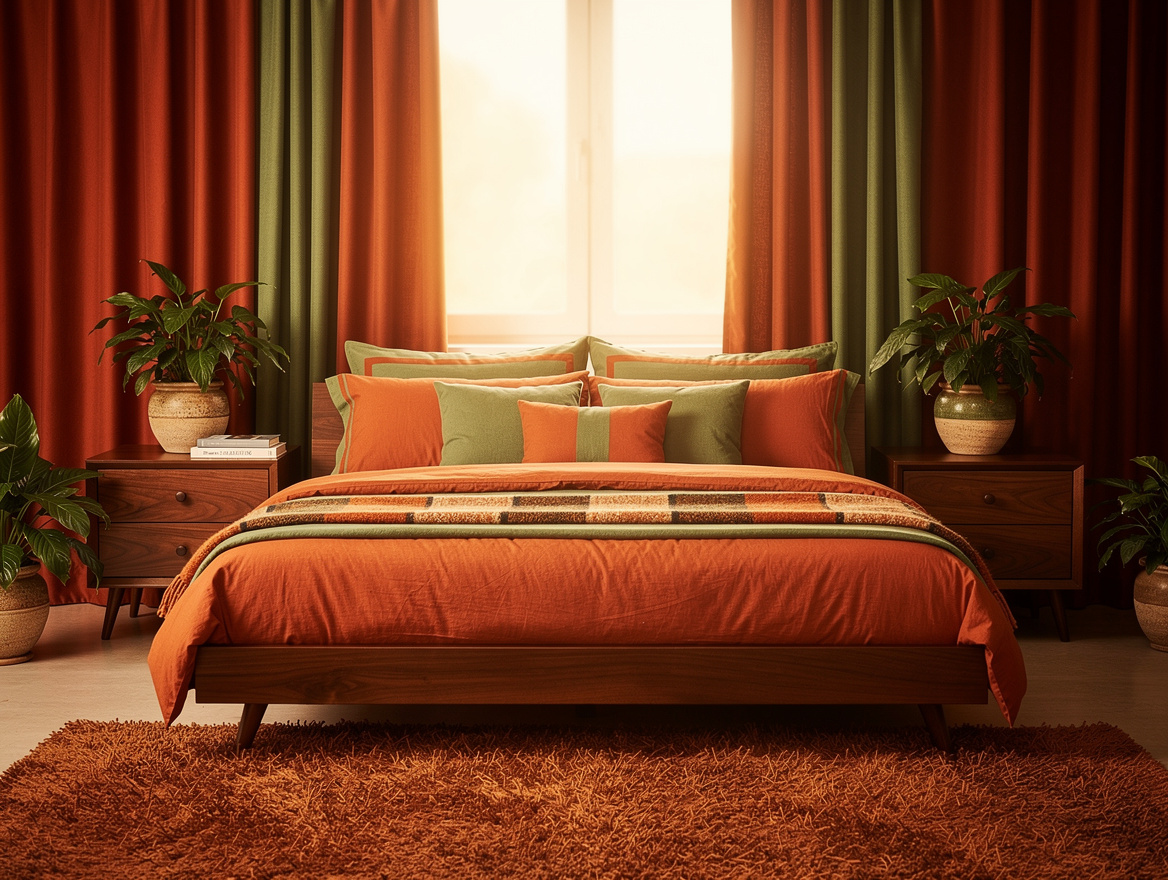
Bedrooms in the 1970s leaned hard into shiny brown furniture, and I mean that as praise. Walnut-toned wood, darker oak finishes, and even faux-wood Formica gave the room a polished, slightly clubby feel that white furniture never can.
A big armoire was common, often around 59 to 71 inches wide and roughly 71 to 79 inches tall, especially in smaller homes where closets did not do enough. If you want the look now, a typical wood veneer dresser or wardrobe from Wayfair or IKEA can cost about $300 to $800, and vintage is usually the smarter buy if the drawers still glide well.
Nightstands should also look weighty, even beside a low bed. I like a dark wood nightstand around 22 to 26 inches high, and anything too delicate or pale starts to read mid-century-lite instead of full 1970s.
Finish With Plants, Books, and Warm Lamp Light
The final layer was personal and slightly maximalist. Ceramic planters, hanging greenery, paperback stacks, woven baskets, and smoked-glass lamps made these bedrooms feel lived in, not staged.
This is where rattan earns its keep beyond the headboard. A woven pendant shade from IKEA or Target is often around $30 to $70, and a table lamp with amber or beige fabric gives the room the low, flattering glow that overhead lighting never will.
I would also add one unapologetically decorative item, maybe a macrame wall hanging or a chunky ceramic vase. Seventies bedrooms were comfortable with visual weight, and that confidence is exactly why the style still has pull.
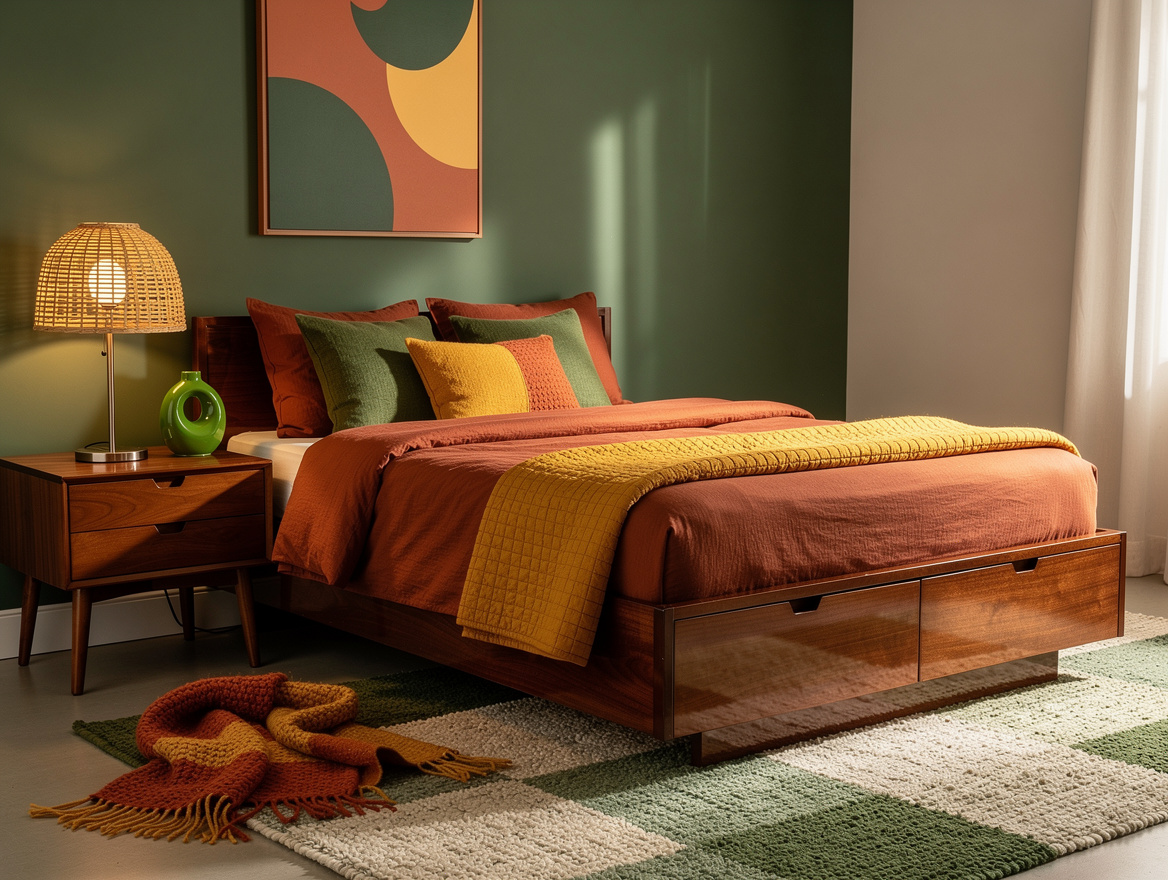
Start with the bed height and the rug size, because those two moves do the most work the fastest. Once the room sits lower and feels softer underfoot, the color and rattan pieces make much more sense.
Mia Carter writes about small-space living and budget home makeovers. She has restyled three rentals and tests most ideas in her own 45 sqm flat.