
Tiny bedrooms don’t feel cramped because they’re small. They feel cramped because the stuff in them acts like it belongs in a bigger room. I’ve walked into 9×10 spaces that felt like a retreat, and 12×12 spaces that felt like a closet, and the difference wasn’t square footage. It was choices. Here’s the short answer first: a grown-up tiny bedroom can run $200 to $800 if you’re starting from bedding and paint, or under $150 if you’ve already got the bones.
These 18 ideas aren’t a shopping list. They’re a sequence. Read them in order, do the first three this week, and you’ll feel the room shift before you buy a single new thing.
- Float the bed and reclaim the floor
- The Two-Wood Rule: how to mix wood tones without clashing
- Hang curtains a foot above the window frame
- Why does a tiny bedroom still need three light sources?
- Why a Brooklinen linen duvet beats the matched set
- The Nightstand Triangle
- Paint one wall Benjamin Moore Inchyra Blue instead of all four
- Anchor the room with a 5×7 wool rug instead of going wall-to-wall
- Build a reading nook into the dead corner
- Mix metals instead of buying everything brass
- The Three-Surface Styling Rule
- Why a tall headboard changes how small the bed looks
- Swap the overhead fixture for a flush-mount that throws light up
- Use a slim 6-drawer dresser instead of a wide 4-drawer
- Mount the TV on an articulating arm and hide it behind art
- Add one plant that’s bigger than you think you need
- Hide the closet door with a curtain instead of bi-folds
- Replace the builder-grade mirror with an arched floor mirror
1Float the bed and reclaim the floor
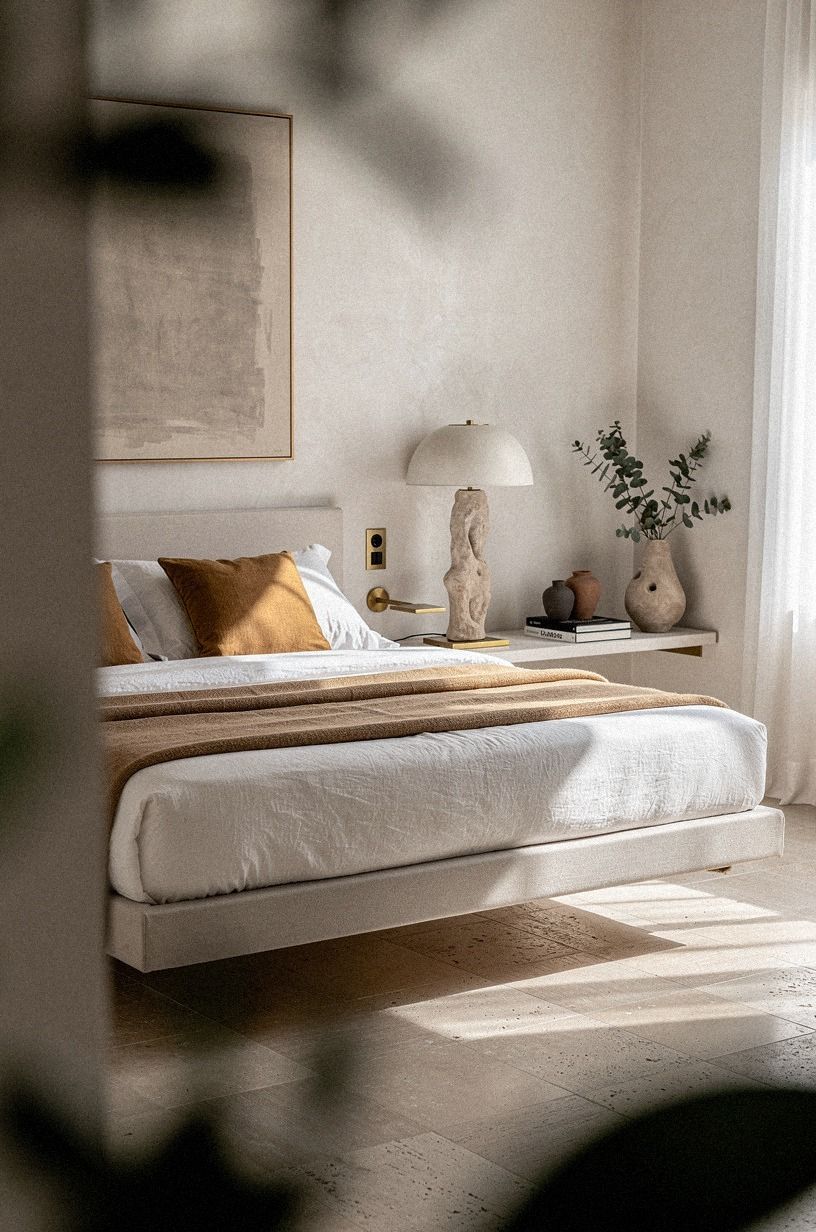
The instinct with a small bedroom is to push everything against the wall. Don’t.
Floating the bed six to twelve inches off the wall, centered if the room allows, makes the whole space feel intentional. Stuffed is the default state when everything pushes to the wall. Small bedroom layouts that work show how this single move changes the eye line of the entire room.
The first time I floated a queen (60×80 inches) on three sides in a 10×10 room, the moment I cleared the back wall, the room doubled. The bed looked like a real piece of furniture, less a barricade and more an anchor for everything else.
Heads up: if you’re renting, leave the back legs off the frame. Behind the headboard, angle a slim IKEA LACK console (about $80). You can patch two screw holes when you move, and the room reads the same.
2The Two-Wood Rule: how to mix wood tones without clashing
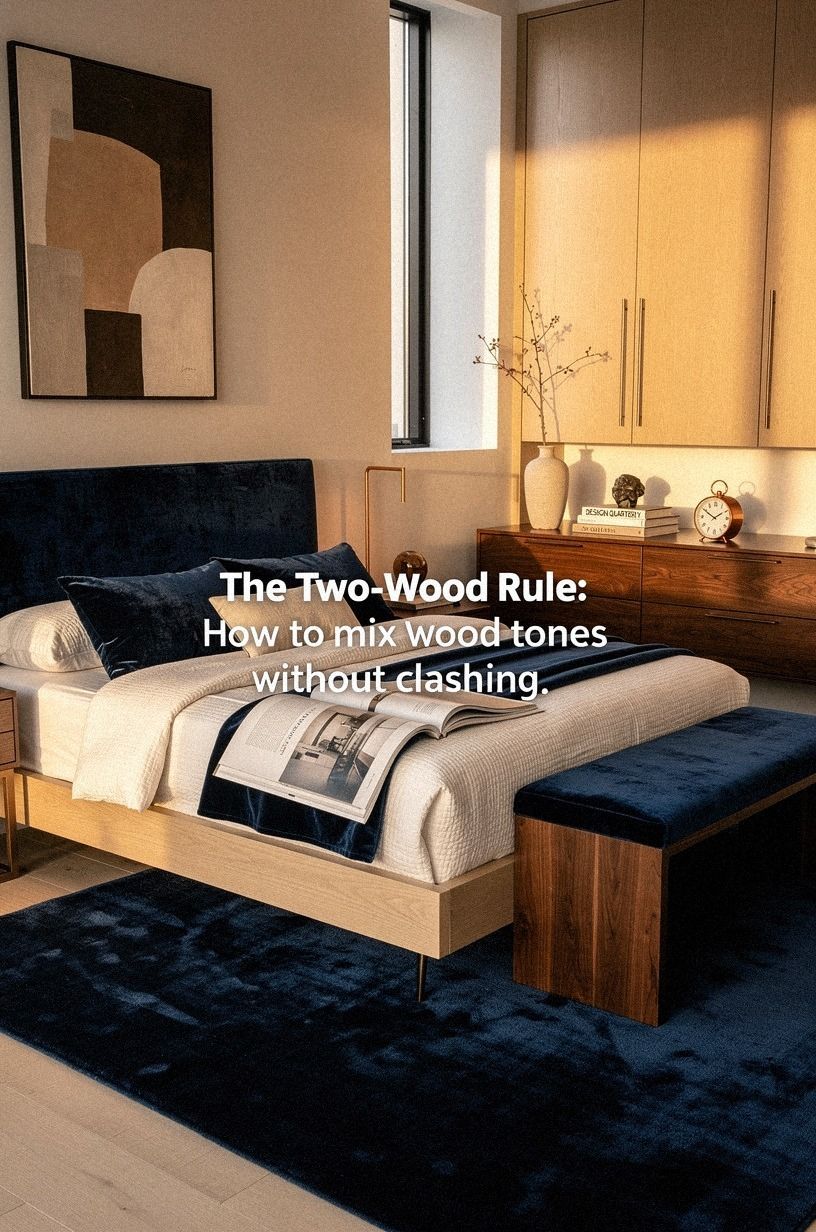
Most tiny bedrooms end up looking like a furniture store exploded because every wood piece is a different tone. The rule that fixes it: pick two woods and commit.
One light (oak, ash, maple, birch), one dark (walnut, ebony, espresso). Repeat those two across the bed frame, the nightstand, the dresser, the picture frames, and the room looks collected.
I learned this the hard way in my first apartment. I had oak nightstands, a walnut dresser, a pine bed frame, and a cherry floor.
It looked like a sample sale. Once I painted the pine frame matte black (kills the third wood) and swapped the cherry floor for a cerused white oak-look LVP, the room stopped arguing with itself.
For renters: the move is the same, just use contact paper on the loudest piece. D-C Fix self-adhesive vinyl in warm walnut at $25 a roll covers a West Elm Mid-Century dresser in an afternoon, and the eye stops seeing three competing tones.
If your floor is the problem wood, layer a big rug and let it do the talking. And if you’re styling a couple’s room with two sets of stuff, the couple-bedroom layouts guide covers how to merge two wood palettes without a fight.
3Hang curtains a foot above the window frame
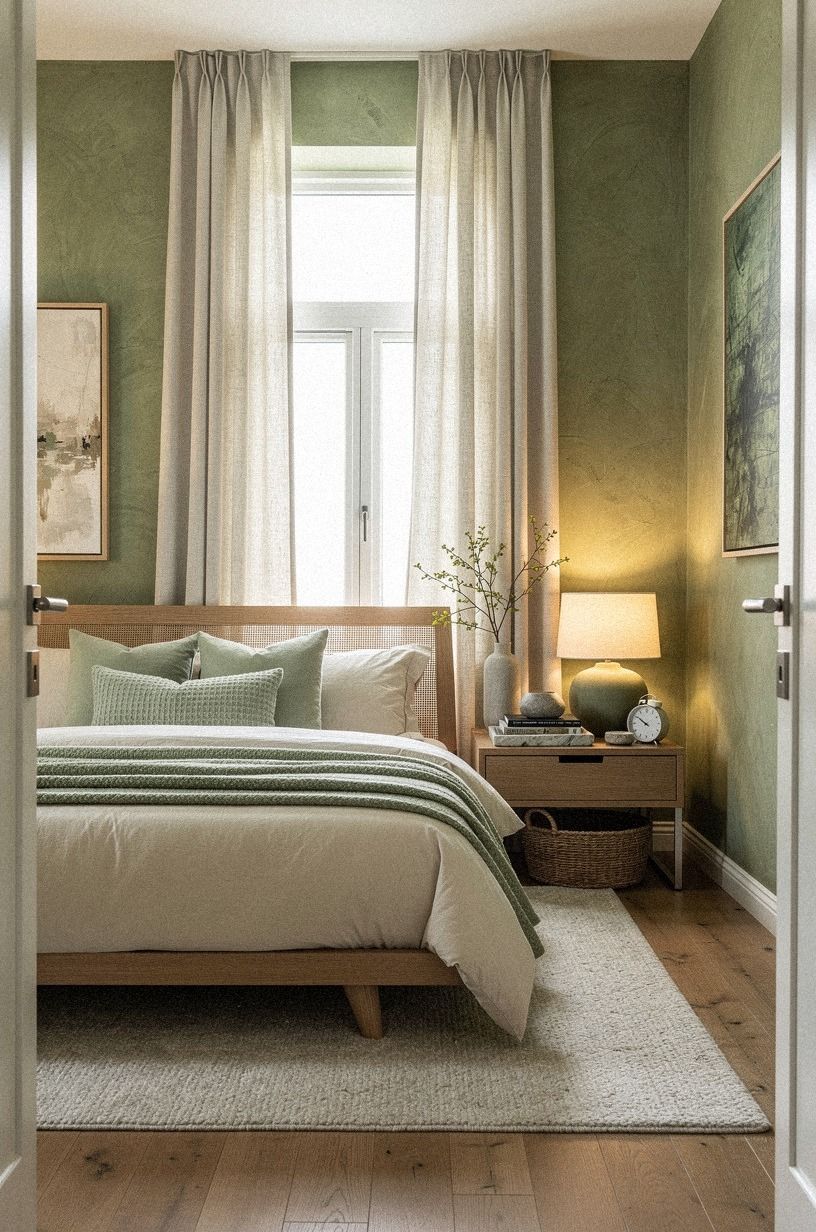
Tiny bedrooms feel tiny in part because curtains hang at the window like a hem that’s too short. Raise them.
Mount the rod 8 to 12 inches above the frame (or at the ceiling if you can), and extend the rod 6 inches past each side. The window now looks twice the size, the ceiling looks taller, and the room breathes.
I’ve measured this in three apartments: same window, same curtains, just hung higher. The room got louder, in a good way, like someone opened a second window nobody knew was there! If you’re styling the whole room, our small-bedroom lighting and curtain guide covers the rest.
Linen drapes in oatmeal do this better than velvet (which absorbs the eye). For a pair that won’t quit, look at IKEA’s AINA curtains at about $50 a pair if you’re on a budget.
Worth the splurge: West Elm’s Belgian Linen at $300 a pair, if you want to spend once and never think about it again. This is one of those “buy once, cry once” moves, and the linen only gets softer with wash.
Renter move: use no-damage tension rods in the inner frame only. You’ll lose the ceiling effect, but you’ll also lose your security deposit, so pick your battle.
4Why does a tiny bedroom still need three light sources?
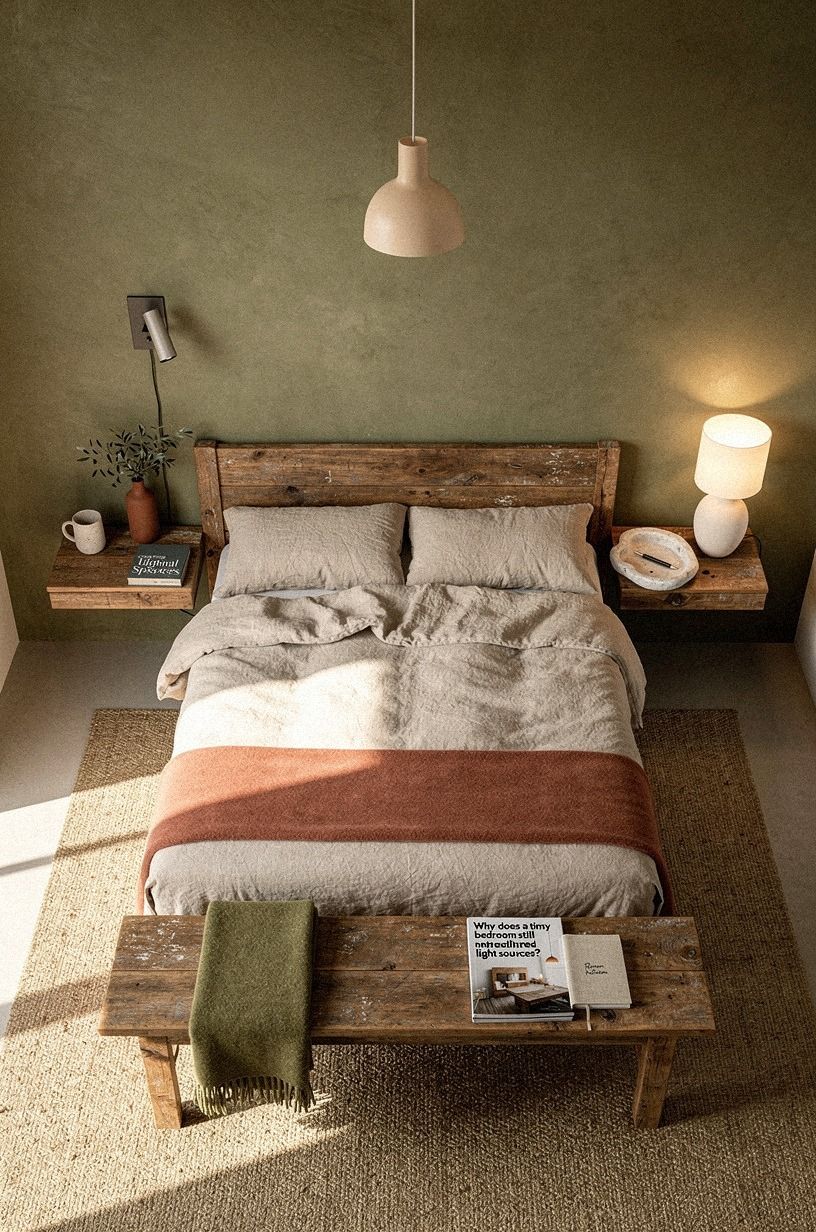
Because one overhead light turns a small room into a dentist office. You need three: an ambient (overhead, on a dimmer), a task (bedside lamp or sconce), and an accent (a candle, a picture light, a small lamp on the dresser). Layered lighting in a small bedroom is what makes the difference between “I sleep here” and “I live here.”
The math is dumb-simple: three sources at low brightness beats one source at high brightness every single time. And your eyes relax when they’re not staring at a single bright thing.
My pick for the bedside lamp: the IKEA HEKTAR at $60, or the Target Threshold Arc Floor Lamp at $120 if you want something with weight. Skip the cool-white bulbs (anything above 3000K). Warm 2700K bulbs make the same room feel like a different apartment.
5Why a Brooklinen linen duvet beats the matched set
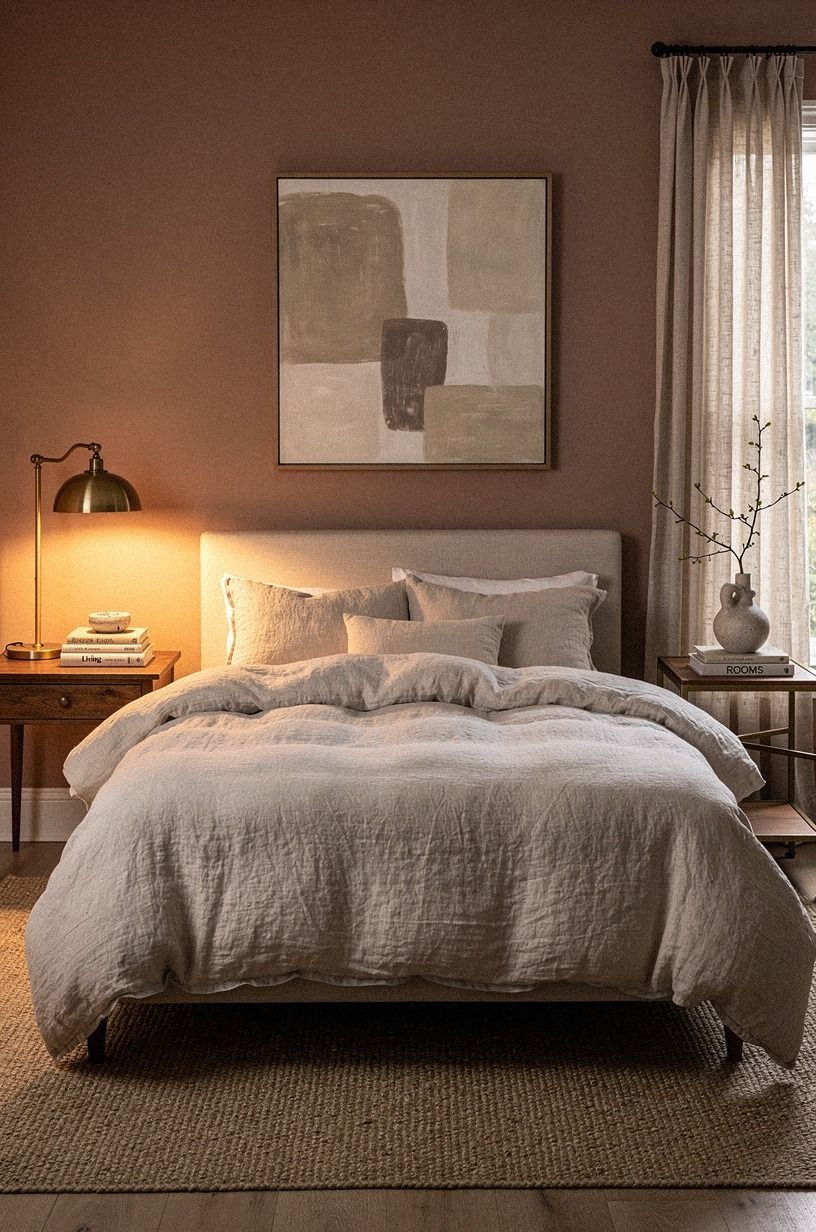
Buying the bed-in-a-bag from one store is the fastest way to make a tiny bedroom look like a dorm. The stylist move is three layers that don’t match but do relate: a flat white cotton sheet as the base, a washed linen duvet in oat or soft clay as the middle, and a chunky knit throw in cream at the foot. The three textures carry the bed, and your eye reads depth.
One flat printed pattern never gives you that.
I used to buy the matching set because it felt easier. Then I stood in a friend’s bedroom, she’d mixed a Brooklinen linen duvet with a Target Threshold waffle coverlet and a vintage wool throw, and realized her $400 bedding looked like $1,500.
The honest answer lives in the three different textures, less in the price tag. You’ll never go back to a matching set once you’ve felt a real linen duvet, and the rumpled look actually saves you from making the bed every morning (which, honestly, nobody does).
Want the budget version? IKEA’s DVALA sheet set at $30 is the softest percale you’ll find at that price, and their LINBLADAN linen-look duvet at $80 mimics the rumpled-luxury look without the splurge. If you’re going all-in on the bed as the focal point, our bedding layering guide shows how to style the whole surface like a magazine.
6The Nightstand Triangle
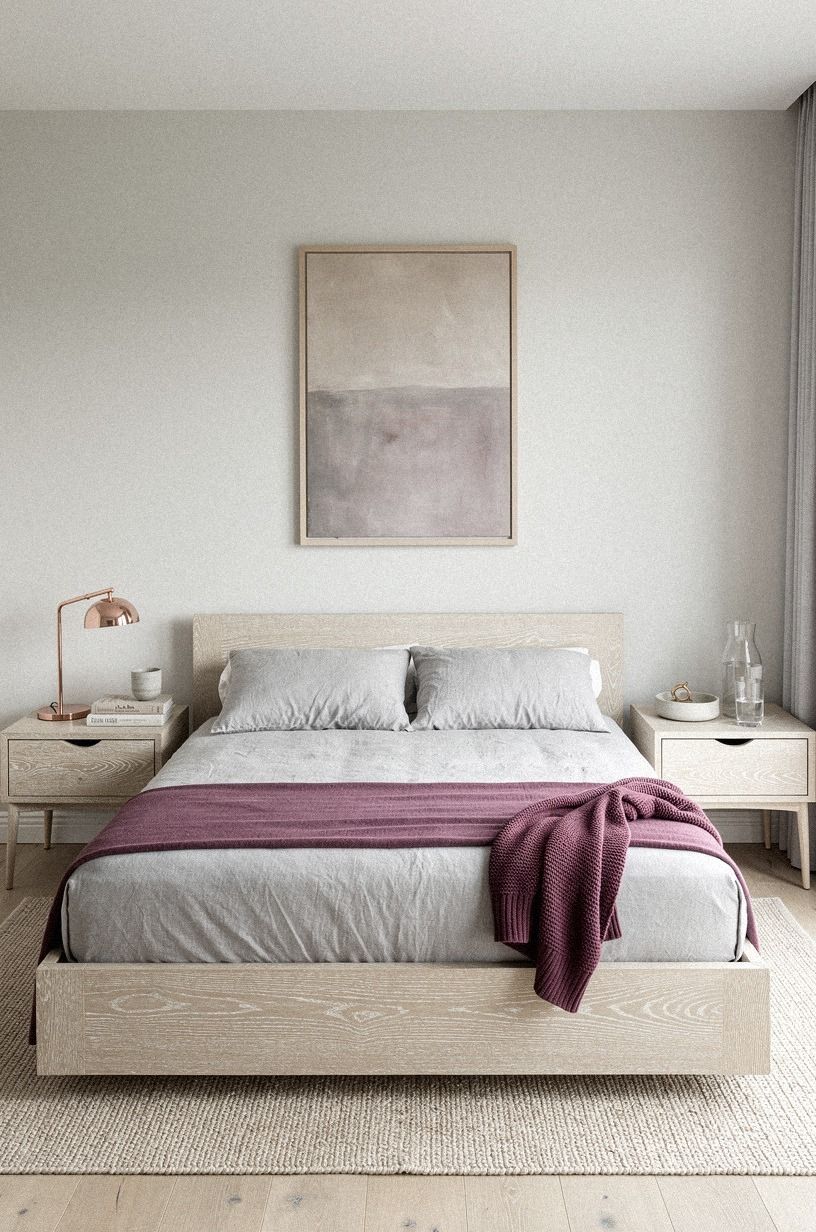
In a tiny bedroom, the nightstand is doing three jobs at once: it’s a lamp stand, a book stand, and a glass-of-water stand. The Nightstand Triangle is the rule that fixes 90% of “I don’t have room for anything” complaints.
Pick the three things you actually reach for at night. For me, that’s a West Elm Modern Ceramic Table Lamp at $130 (no metal, no plastic, no harsh edges), a stack of two books (you read two, not five), and a small Crate & Barrel marble catchall for jewelry or a ring.
Three objects caps it. Eight slides back into junk-drawer territory.
The trap: don’t put your phone on the nightstand. It’s not part of the triangle.
It kills the composition, and you’ll reach for it before you fall asleep, which is the opposite of what a bedroom is for. If you want the whole-room version of this idea, the couple-bedroom layouts guide applies the same restraint.
7Paint one wall Benjamin Moore Inchyra Blue instead of all four
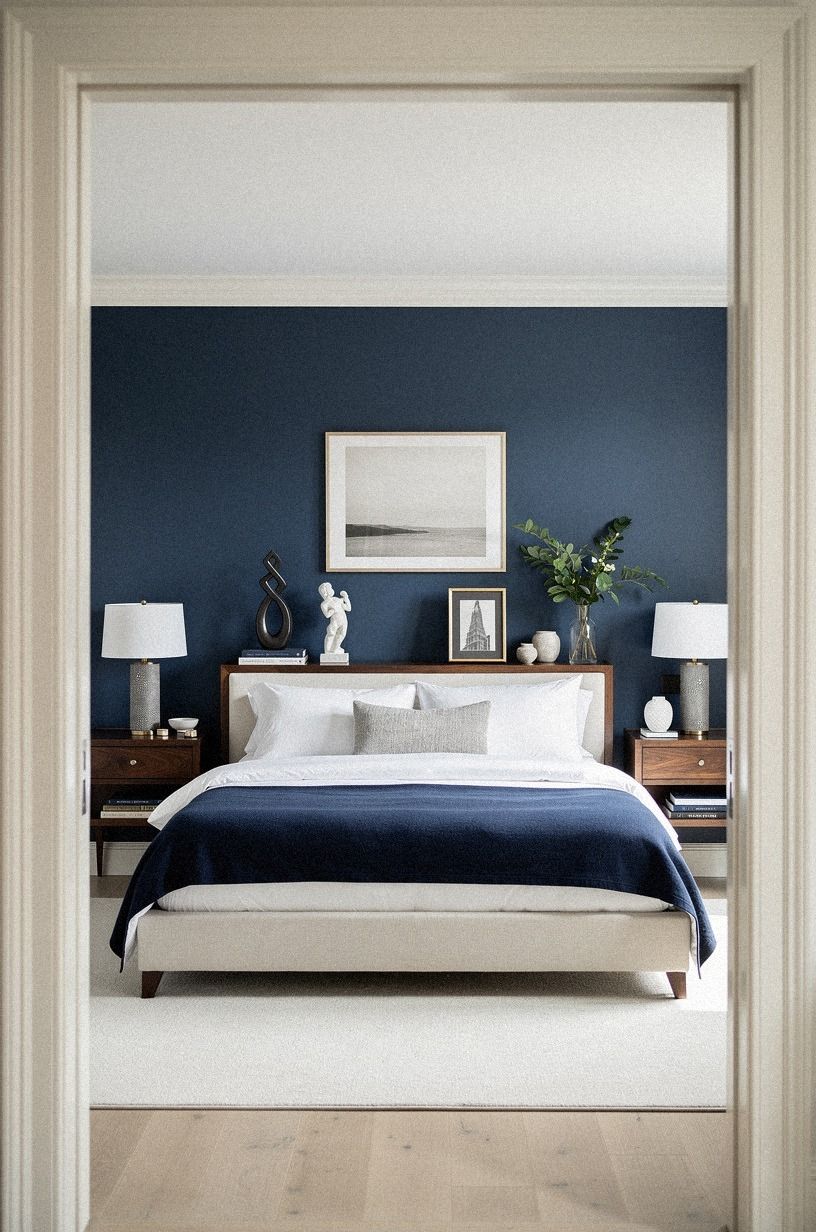
Painting all four walls a dark color in a small room is a bold move that almost never works. It closes the room in.
Painting one wall (the one behind the headboard) in a deep tone, and keeping the other three light, turns the dark wall into an intentional backdrop. All four walls dark and the room turns into a cave.
I’ve tested this on three bedrooms now. The room with one dark wall reads as designed.
The room with all four dark walls reads as someone tried too hard. For a north-facing room, Benjamin Moore Pale Oak OC-20 on three walls plus Farrow & Ball Inchyra Blue No. 289 on the headboard wall is a combination I’d put money on. For a south-facing room, swap the dark for Benjamin Moore Chestertown Buff HC-9 (warm, never yellow).
And if you’re wondering why proportion matters as much as color, the “sofa too big” scale rule explains the same idea from the living room.

8Anchor the room with a 5×7 wool rug instead of going wall-to-wall
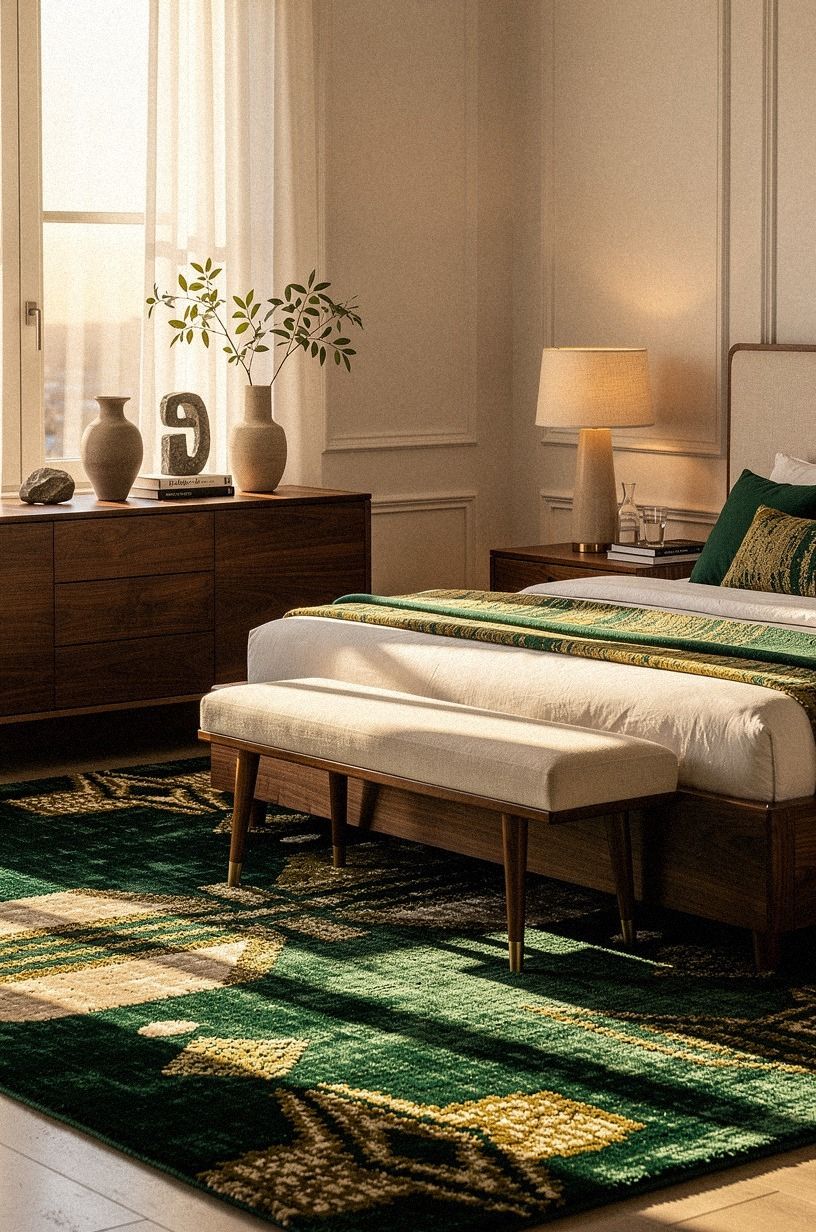
Tiny bedrooms don’t need a wall-to-wall rug. They need a 5×7 wool rug that anchors the bottom two-thirds of the bed and extends 18 to 24 inches past the sides. Anything smaller floats; anything bigger eats the floor.
The wool matters. A wool rug will outlast a synthetic by ten years, it feels better underfoot in bare feet at 6am, and it doesn’t off-gas the way polyester does. The 8×10 focal-point rule, translated from living rooms, applies directly: the rug is the floor’s focal point.
Real talk on price: a real wool 5×7 runs $400 to $1,500. If that’s too much, the IKEA LANGSTED rug at $130 (low-pile, looks better than it should) covers the move without making you choose between a rug and groceries.
The Target Threshold wool-blend 5×7 at $180 is the other affordable move. Both options beat a synthetic by ten years of life and a Saturday of regret.
9Build a reading nook into the dead corner
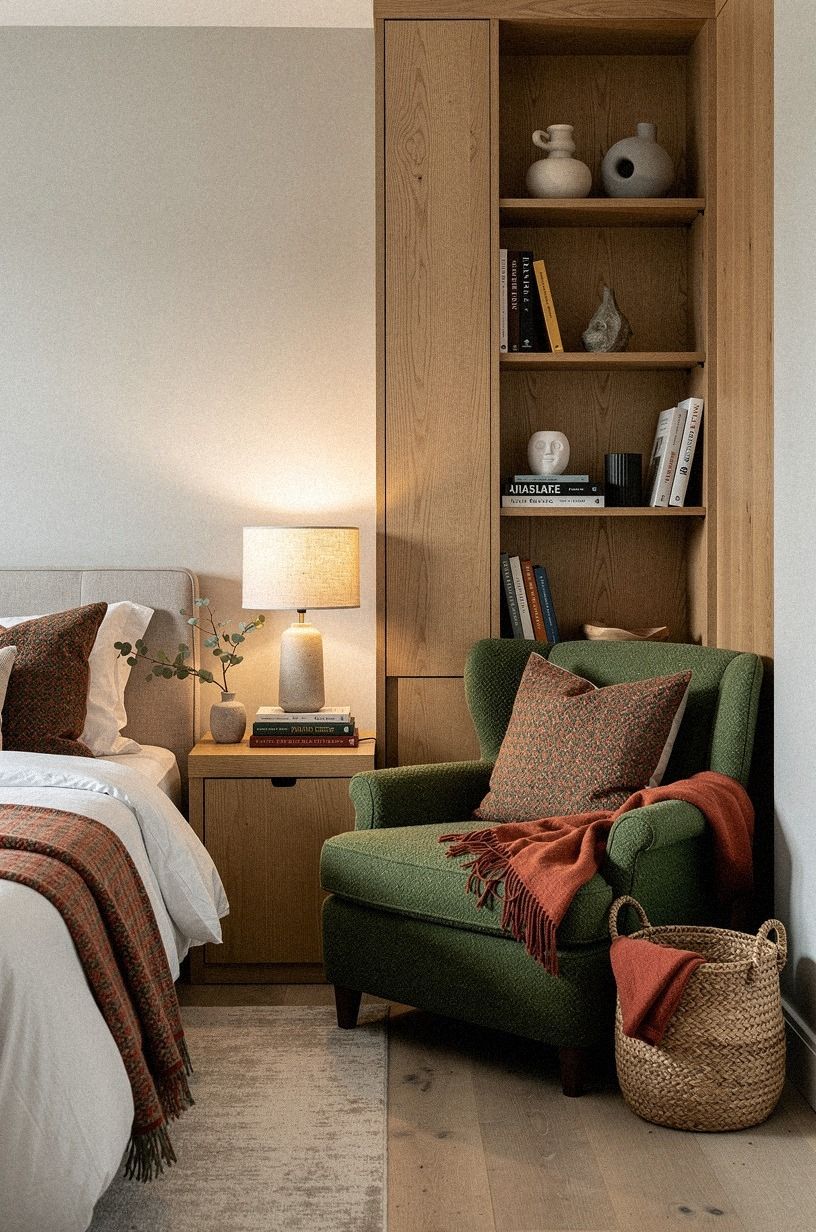
Every tiny bedroom has a dead corner. It’s usually next to the dresser or at the foot of the bed.
Most people leave it empty. The grown-up move is to claim it.
A small accent chair is the start, and yes, the IKEA STRANDMON wingback at $350 is the cheapest grown-up chair on the market, and it’s been in every design magazine for five years for a reason!
A side table that fits between the chair and the wall, and a floor lamp with a warm bulb. Done. You’ve turned dead space into the most-used corner of the room. (This is the spot where morning coffee happens, and where you’ll end up reading, phone forgotten, scroll-free for thirty minutes.) For more on small-space layouts that work for two people, this is the move most people miss.
Heads up: don’t put a TV in this corner. A reading nook and a TV fight each other. Pick one, and if you need the TV, mount it on the wall opposite the bed instead.
10Mix metals instead of buying everything brass
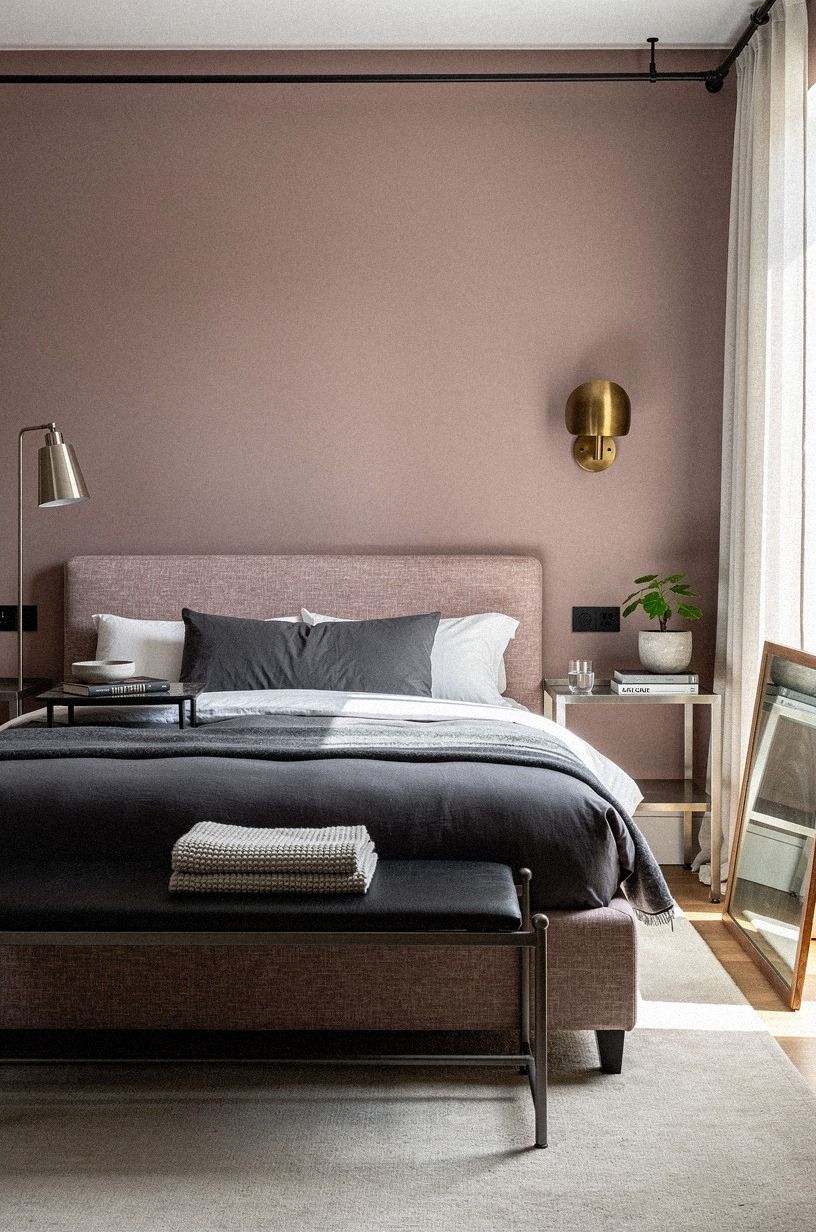
The “all brass” bedroom is overdone. It’s also expensive.
Mixed metals look intentional, and they’re forgiving when you’re buying over time. The rule: pick one warm metal (unlacquered brass, antique bronze, or aged gold) and one cool metal (matte black, brushed nickel, or polished chrome), and never put two of the same finish next to each other.
Bedside lamp in brass. Drawer pulls in matte black. Picture frame in antique bronze.
The room reads as if you’d collected these over years, less a catalog page and more a real bedroom. And when you find a piece you love in a third metal, you can usually incorporate it, because the rule is about what’s next to what, less about how many pieces you own overall.
What I’d skip: the all-brass bed frame. It’s a lot of metal in a small room, and it dates fast.
A Schoolhouse Electric solid brass picture light at $240 ages better than most, and so does a black iron bed or a wood frame with brass accents. And if the room feels off but you can’t name why, it’s usually the scale of the thing that’s off.
The style is rarely the actual problem. The “sofa too big” rule explains the same trap in another room.
11The Three-Surface Styling Rule
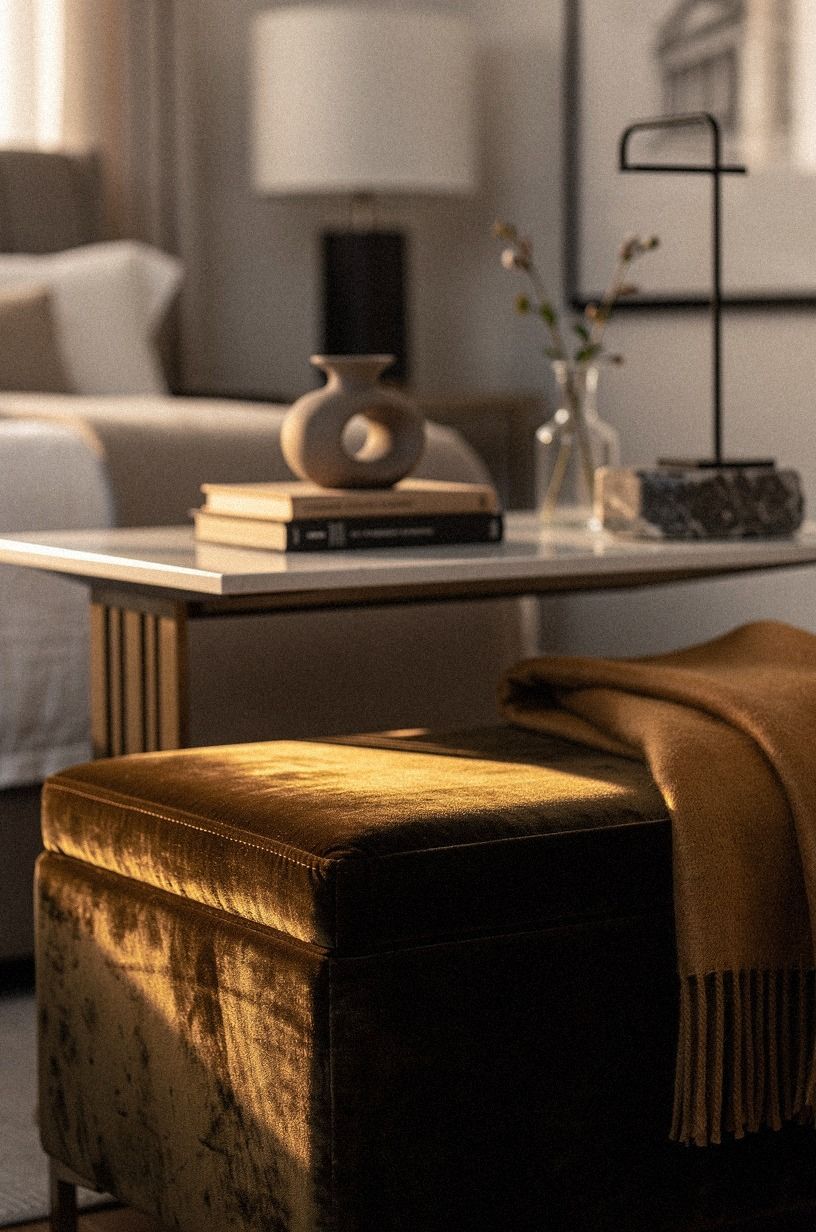
A tiny bedroom turns into a junk show because every surface is doing nothing. Pick three surfaces in the bedroom (the dresser, the nightstand, and one shelf or corner), and style each one with three objects.
Nine objects total, all considered. Try a Schoolhouse ceramic lamp on the dresser, a Crate & Barrel catchall dish for keys, and one stack of two books on the nightstand.
The rest of the surfaces stay empty, and the eye rests somewhere.
I learned this from a hotel room in Lisbon where the entire room had nine objects in it. A folded towel, a small plant, a leather-bound menu.
That’s it! And the room felt more luxurious than my apartment with forty things on every surface. The grown-up move is editing.
Adding is what kills the room. The Three-Surface Rule is a built-in forcing function for it.
If you want the philosophy applied to a bigger project, the spring-change playbook walks through the same restraint from a renter’s perspective.
The trap: nine objects means nine, not eighteen. If you put a stack of books on the dresser and then add a candle, a tray, and a small dish, you’re at four objects on that surface. Reset, regroup.
Three per surface is the cap, not the floor.
12Why a tall headboard changes how small the bed looks
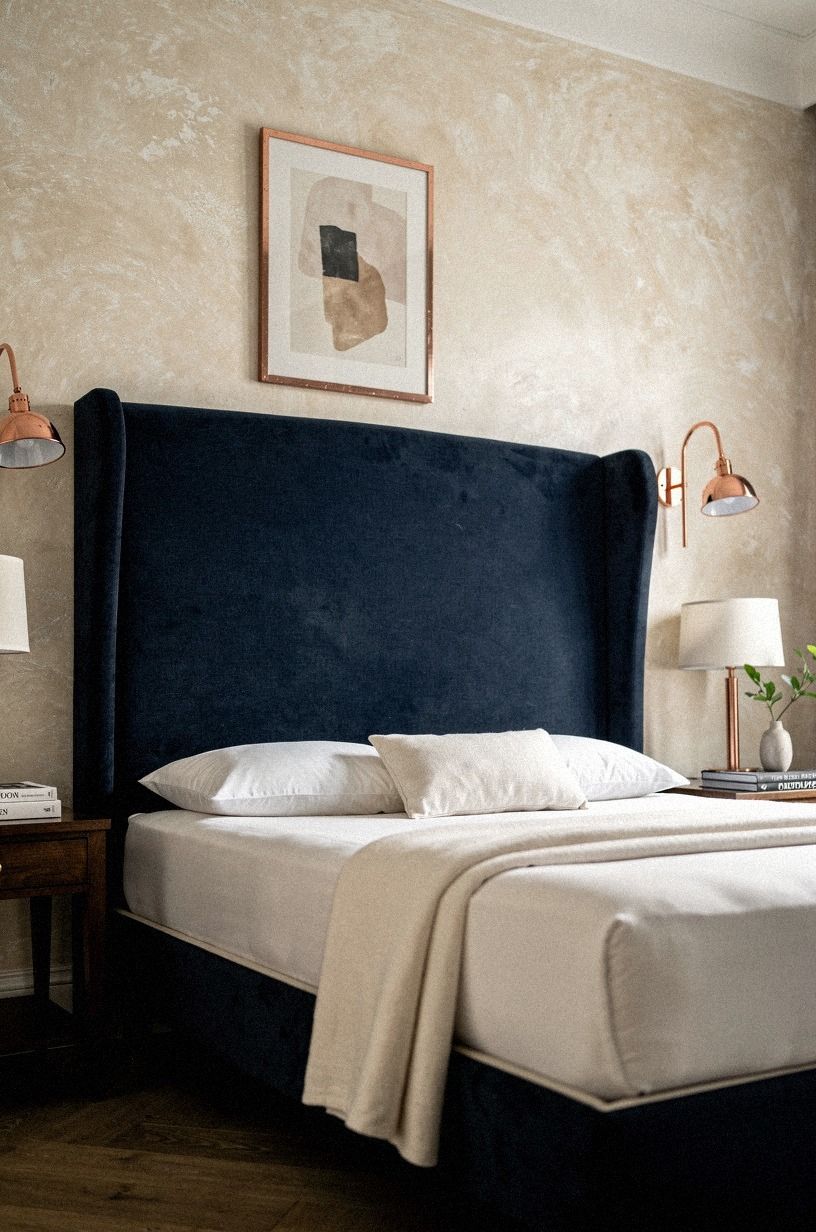
The biggest visual lie in a tiny bedroom is a short headboard. A bed with a 42-inch headboard reads as furniture.
A bed with a 54-inch upholstered headboard reads as architecture. Same mattress, same floor space, but the eye now sees a wall of softness instead of a low slab.
In a 10×10 room, that single vertical surface is what makes the bed feel anchored instead of floating in the middle of the room.
I bought a 54-inch upholstered headboard from Wayfair ($280) for a guest room and the room went from “spare bed” to “hotel suite” with that one swap. What does the work is the proportions: headboard two-thirds the width of the bed frame, height matching the nightstand plus the lamp.
Anything shorter and the bed looks junior, anything taller and it overwhelms. If you’re working with the same problem in a couple’s room where both people want a tall back to lean against, the headboard sizing guide covers the math.
13Swap the overhead fixture for a flush-mount that throws light up
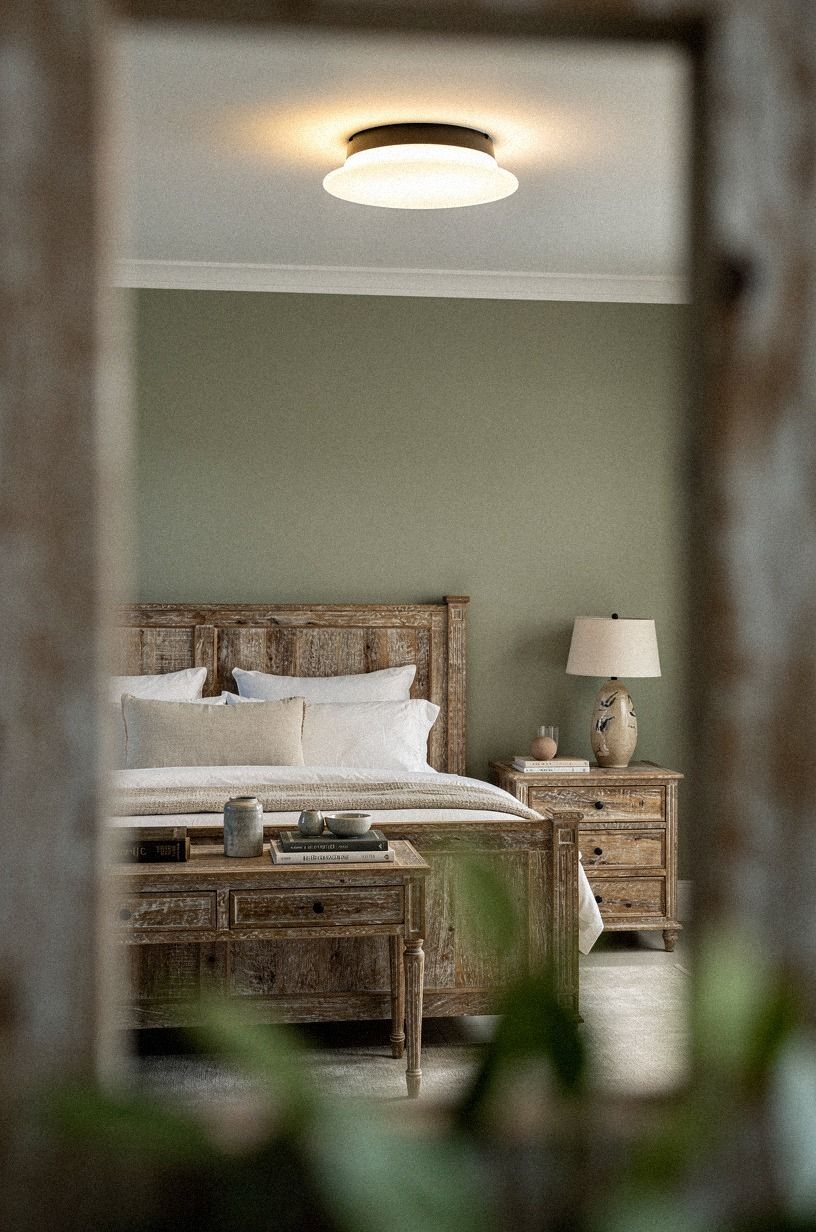
The reason a small bedroom feels like a dorm is almost always the ceiling fixture. That single builder-grade dome light at 4,000K does nothing for the room except prove it exists.
Swap it for a flush-mount that throws light upward (a semi-flush with an open top, or a schoolhouse-style glass globe), and you’ll add five feet of perceived ceiling height. Light bouncing off the ceiling is the cheapest visual cheat in design.
I did this in a 9×10 bedroom with a $90 brass semi-flush from Amazon’s Rivet collection (not an affiliate link, just a real product I bought), and the room felt taller immediately. The dome had been killing it for years. Pair this with the three-source rule above and you’ll stop needing to turn on the overhead at all, which is the real win, because overhead lighting is the single fastest way to make any room feel like an office.
For renters: if you can’t swap the fixture, just change the bulb to a 2700K warm white and add a dimmer (most rental-friendly screw-in dimmers are $20). The light temperature shift alone does 80% of the work.
14Use a slim 6-drawer dresser instead of a wide 4-drawer
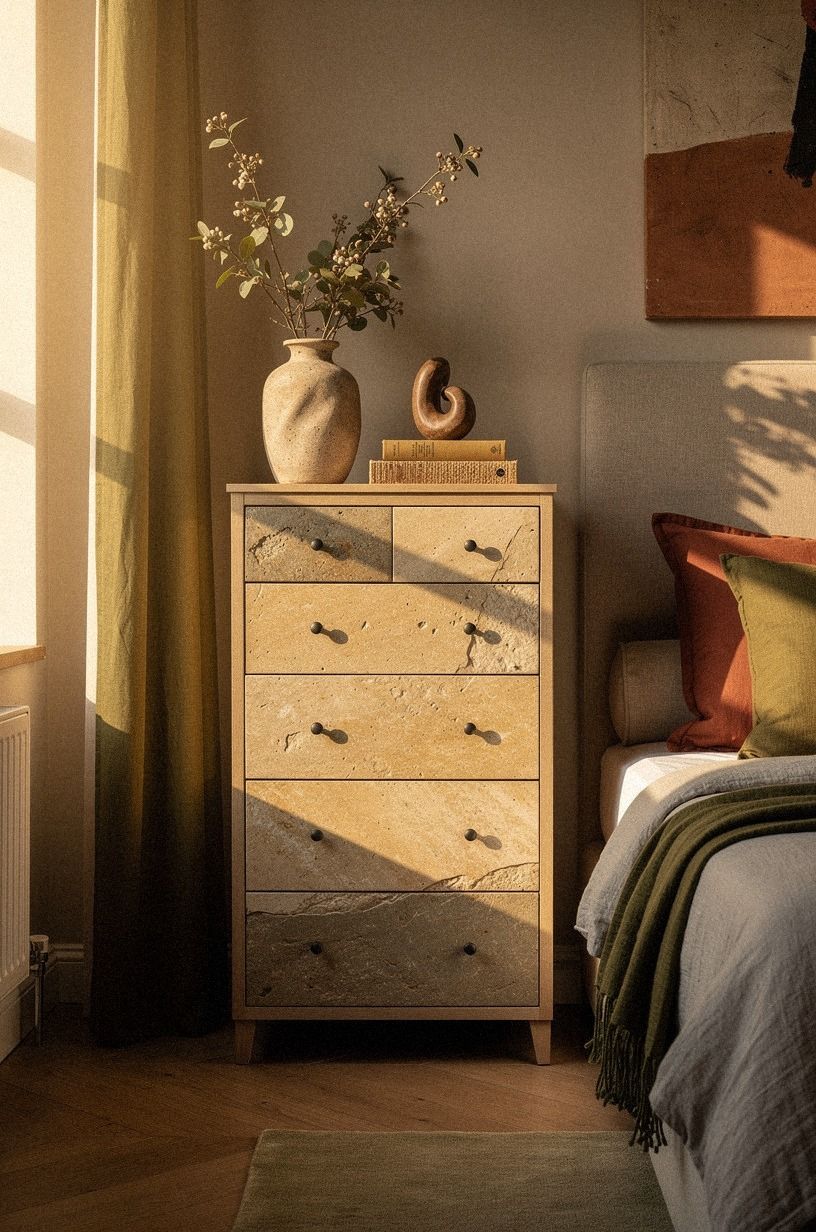
Wide dressers eat a tiny bedroom. The reason is simple: a 60-inch-wide dresser with four deep drawers reads as a wall, and a 30-inch-wide dresser with six shallow drawers reads as a piece of furniture.
Same storage volume, completely different room feel. Vertical storage reads as intentional.
Horizontal storage reads as a barricade.
I keep coming back to the IKEA MALM 6-drawer at $200. It’s narrow (31 inches), tall (48 inches), and the drawers are deep enough for folded sweaters.
In a 10×10 bedroom, it lives where a wide dresser would have made the room feel like a hallway. And because it’s vertical, the surface on top becomes a styling surface instead of a junk drawer.
If you want to know how to dress that surface without falling back on the cluttered look, the nightstand styling rules apply the same restraint to any horizontal surface.
Hardware swap: change the drawer pulls to unlacquered brass cup pulls (about $4 each), and the MALM goes from dorm piece to custom build for under $250.
15Mount the TV on an articulating arm and hide it behind art
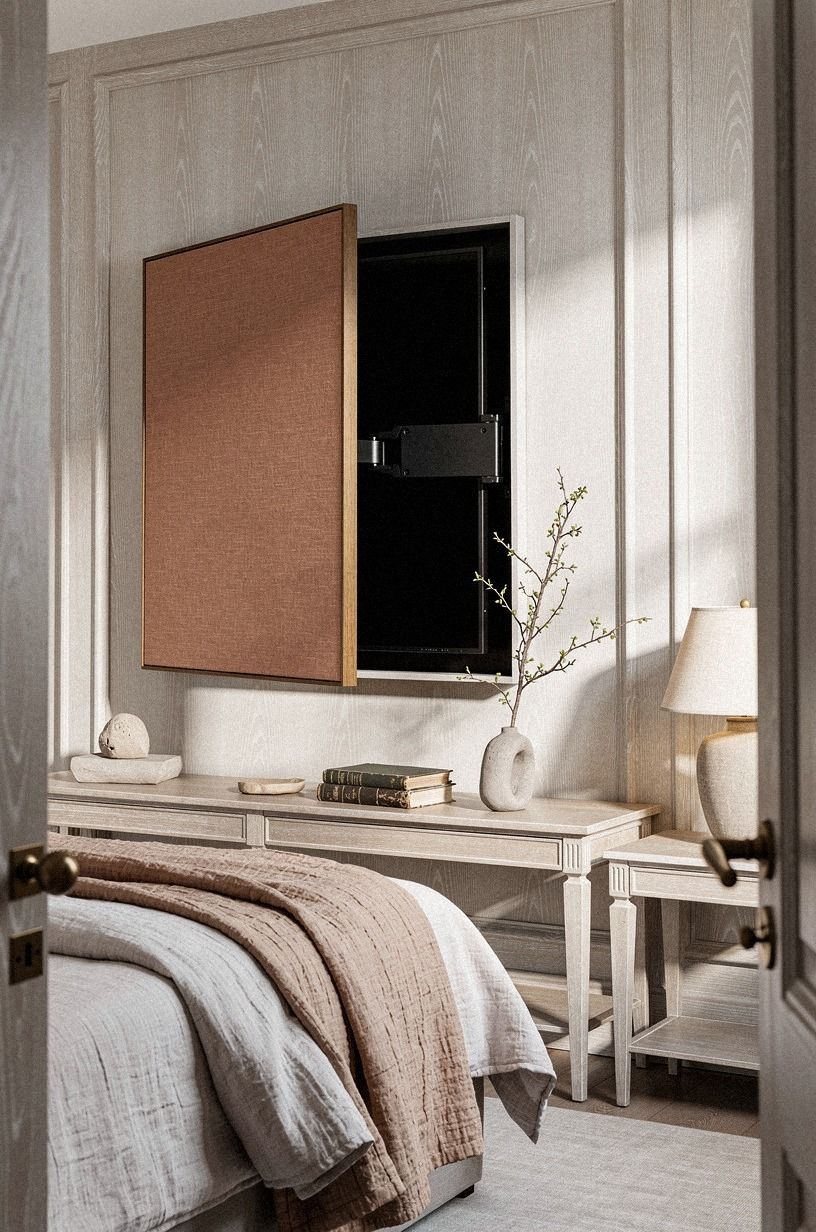
A TV on a dresser is the fastest way to ruin a tiny bedroom’s composition. The black rectangle breaks every styling rule, and the dresser underneath becomes a cable graveyard.
The grown-up move is an articulating arm mount (about $40 from Amazon Basics, no affiliate) that swings the TV out from behind a piece of art when you want it and disappears when you don’t. The room now has a focal point that isn’t a screen.
I did this in my last apartment and it changed how I used the bedroom. Before, the TV was always on.
After, I had to actively pull it out to watch something, and most nights I didn’t bother, honestly. The room went back to reading as a bedroom, less a media room with a bed attached.
The art you hang in front can be anything, but a soft landscape or a moody abstract works best, because the TV behind it disappears almost completely when off.
If you live in a rental and can’t drill into the wall, a full-motion TV cart on casters at $80 from Target does the same job without a single screw hole. A Samsung The Frame TV in matte display mode shows art when the screen is off, which solves half the composition problem on its own.
For the cord: a $15 cable raceway painted to match the wall hides everything. Yes, even renters can paint a raceway.
16Add one plant that’s bigger than you think you need
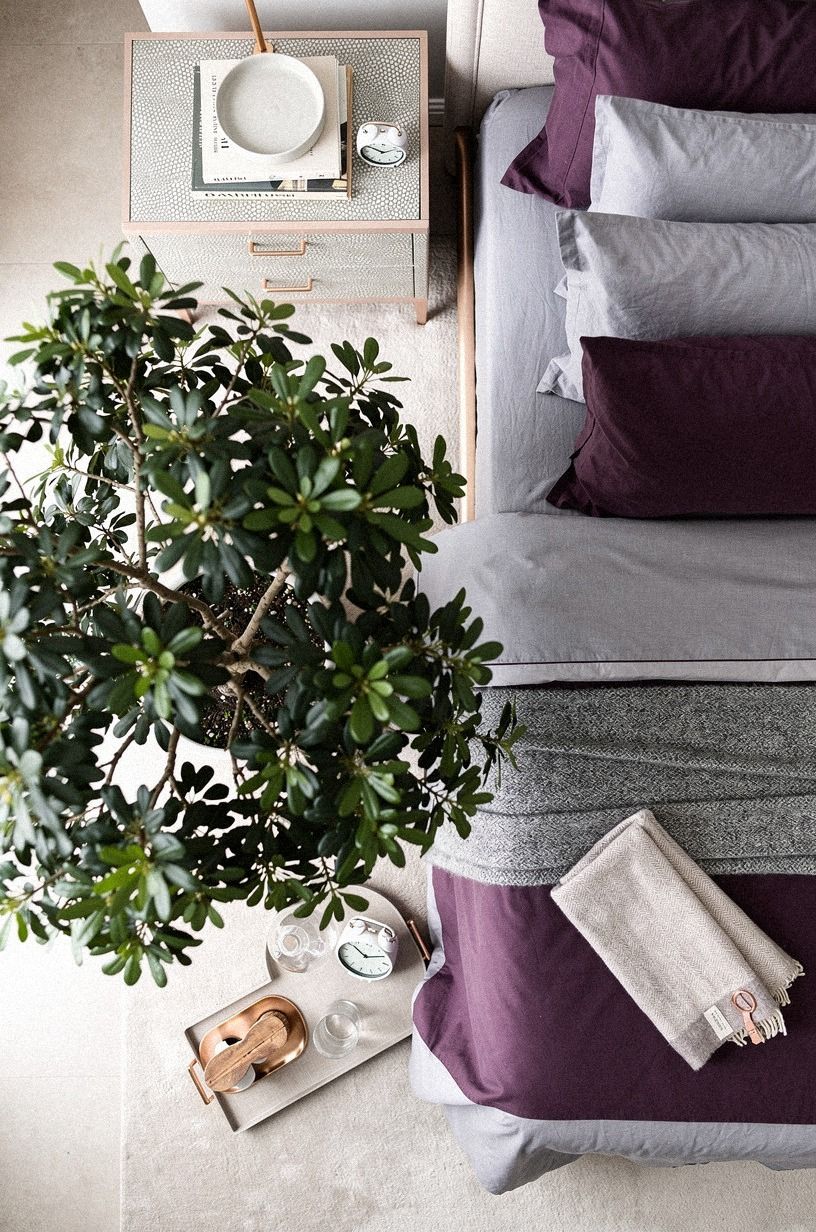
A small plant on a nightstand looks like an afterthought. A 6-foot Costa Farms fiddle leaf fig in a 10-inch starter pot (about $35, and it’ll outgrow the room in two years) in a corner looks like a statement.
The grown-up rule for plants in a tiny bedroom is one large plant. Five small ones scatter the eye.
I’ve kept a fiddle leaf alive for three years in a north-facing bedroom (the real lever is a grow light, less the watering schedule). If a fiddle is too dramatic, a birds of paradise or a rubber plant does the same job and tolerates neglect better. If you’re the type who forgets to water, a large faux olive tree from Target Threshold (about $150) looks real enough that nobody will ask.
For the real plant version, our plant-by-light guide covers which plants won’t die on you.
The move most people miss: the pot matters as much as the plant. A cheap nursery pot in a plastic saucer reads as a college dorm. The same plant in a Crate & Barrel ceramic planter in warm stone reads as styled.
Budget $30 to $80 on the pot, and your plant stops looking like an afterthought.
17Hide the closet door with a curtain instead of bi-folds
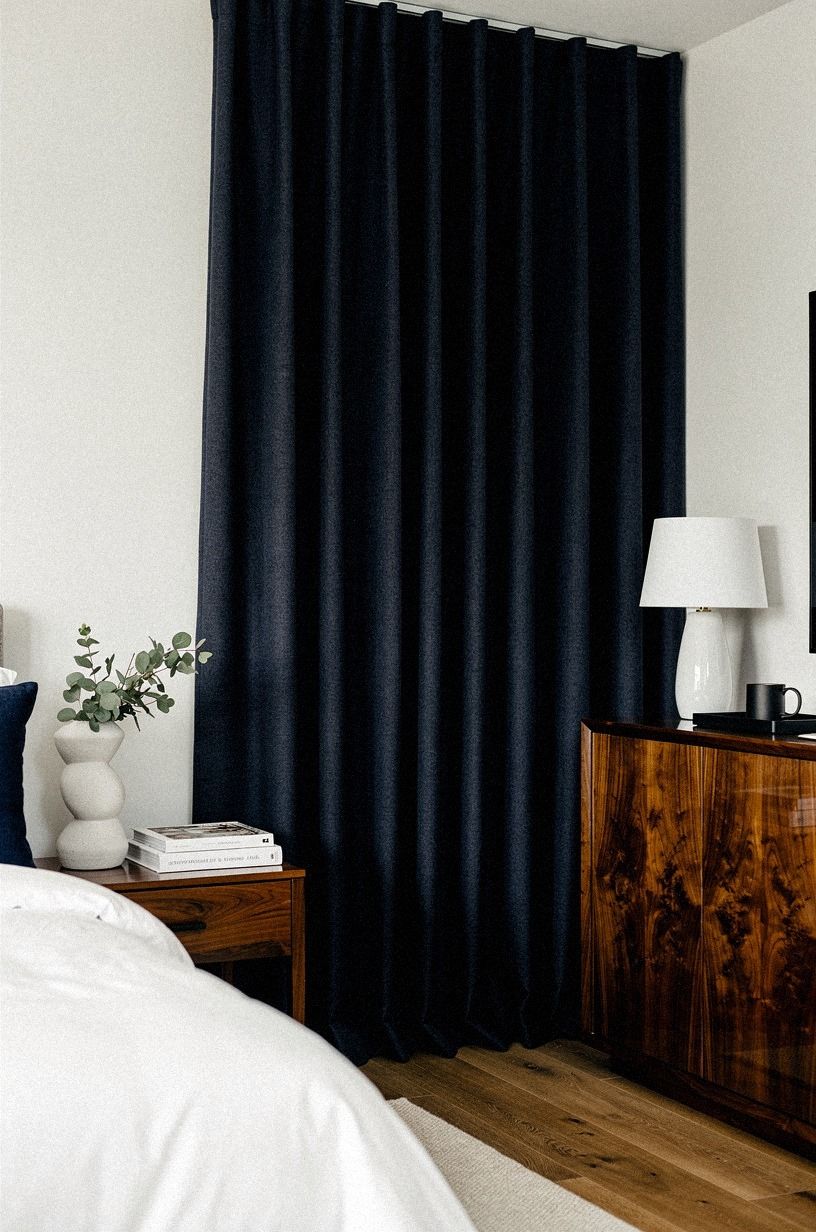
Bi-fold closet doors are the single ugliest feature in most small bedrooms. They’re loud, they swing into the room, and they date the space instantly. If you can’t replace them with a sliding barn door (rental problem), a floor-to-ceiling curtain in the same fabric as your drapes solves it for $40 and a tension rod.
I did this in a rental and the closet went from “eyesore” to “intentional.” A white linen curtain from IKEA’s AINA line (same as the window curtains above), hung from a ceiling-mount rod, hides the bi-folds completely and matches the window treatments. The room now reads as one continuous wall.
With bi-folds, it always reads as “bedroom plus closet.” If you want a more dramatic version, a heavy velvet curtain in emerald or aubergine turns the closet into a feature wall. For more on textile moves that make small rooms feel larger, the curtain-and-window guide has the full rundown.
Two warnings: skip the curtain if your closet has no ventilation (you’ll trap moisture). Skip the door-frame mount. The ceiling is what creates the “feature wall” effect.
18Replace the builder-grade mirror with an arched floor mirror
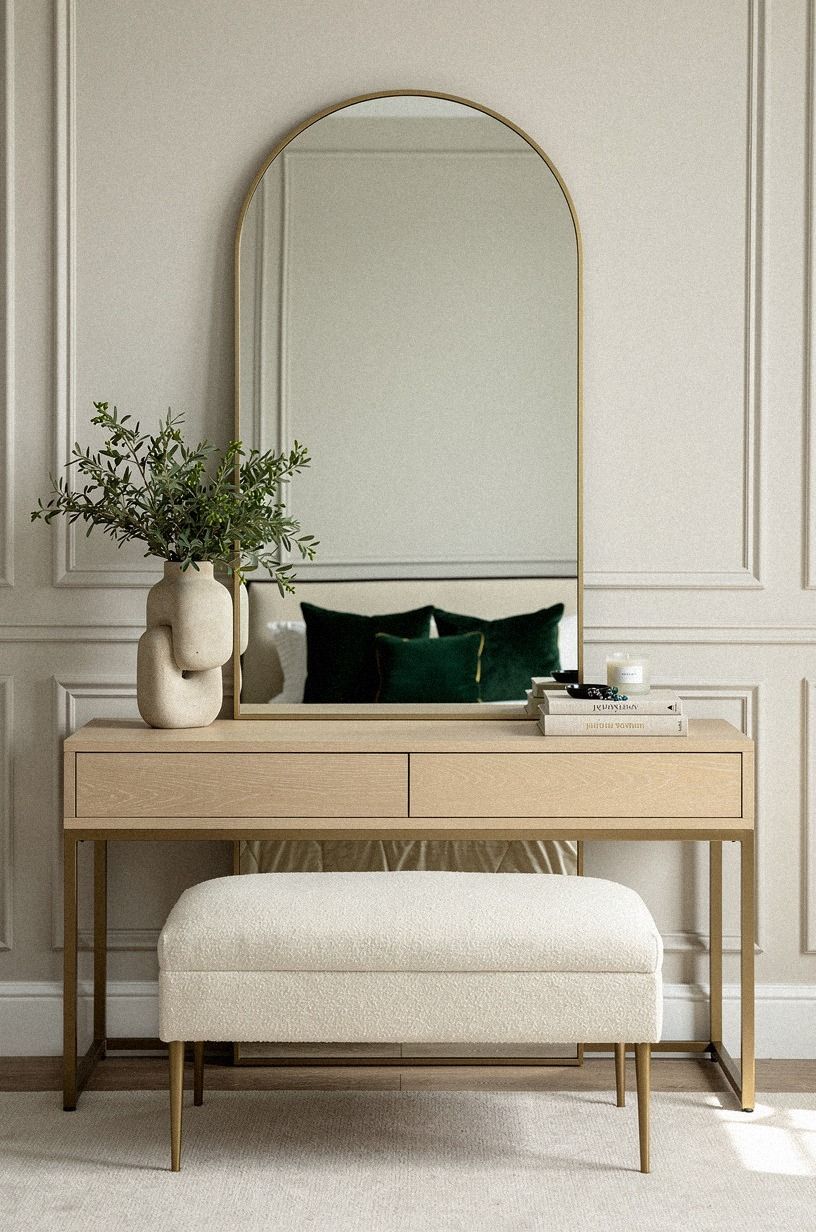
A cheap rectangular mirror above the dresser is functional and forgettable. An arched floor mirror leaning against the wall (between 60 and 72 inches tall) is functional and a piece of art.
In a tiny bedroom, the arched shape softens every hard corner, and the floor-leaning placement means you don’t have to commit to drilling into the wall. The mirror also doubles the light in the room without doubling the cost.
I bought a 65-inch arched mirror from West Elm ($450, worth every dollar) for our guest bedroom, and three people have asked where I got it. The shape is what makes it, period!
A rectangular mirror at the same price would have read as builder-grade. The arch reads as a deliberate design choice.
If $450 is too much, the IKEA NISSEDAL mirror at $60 is rectangular but well-proportioned, and the Anthropologie arched floor mirror shows up on Facebook Marketplace for $200 in most cities if you’re patient. For more on the scale-and-shape math that makes a small bedroom feel intentional, the “sofa too big” principle explains why proportion matters more than size.
Placement tip: leave about 2 inches between the mirror and the wall. That small gap creates the shadow line that makes it read as a real piece of furniture, less a fixture bolted to the wall.
What This Room Really Costs (And What I’d Skip)
Here’s the part most bedroom roundups won’t say: half these ideas are free, and the other half don’t need to happen at once.
The grown-up tiny bedroom isn’t a single shopping trip. It’s a one-thing-per-month project.
The cheapest moves first. Floating the bed, raising the curtains, and the Three-Surface Styling Rule cost nothing, and they change how the room reads before you buy a single thing. If you’ve only got a Saturday and $50, do those three, live with them for a week, and you’ll feel the room shift.
The middle moves cost something, but they’re forever.
A wool rug, real linen drapes, and a good bedside lamp will outlast three trends and three apartments. They end the question.
Financial ROI is almost beside the point. That’s the test: would I rather buy this twice or once?
Buy once.
The expensive moves are the ones I’d skip for the first year. Custom built-ins, a reupholstered headboard, a full furniture set. Those can wait.
They feel like progress, but they lock you into a layout before you’ve lived in the room long enough to know what the room wants.
Here’s a rough tier breakdown for a typical US bedroom refresh:
And a few real prices on what moves the needle most:
The honest answer on whether any of this is worth it: yes, but only if you stop adding things. A small bedroom with ten considered objects beats a small bedroom with fifty “just in case” objects every single time.
The grown-up feeling isn’t about the things. It’s about the restraint.
And if you’re renting through all of this, the spring-change playbook shows the no-damage version.
The Questions Worth Answering First
What is the best way to make a tiny bedroom feel grown-up?
Restraint. Pick three surfaces, style each with three objects, and leave the rest empty. A wool rug, linen drapes, and warm bedside lighting do more for a small room than any matched furniture set.
The grown-up feeling comes from what you didn’t add.
Where can I buy bedroom pieces on a budget?
IKEA for the bones (KALLAX, LACK, MALM, STRANDMON), Target Threshold for the styling layer (lamps, mirrors, decor under $50), and Wayfair for the mid-range upholstered pieces. For second-hand, Facebook Marketplace and local Habitat for Humanity ReStores consistently have great lamps and side tables under $30. The couple-bedroom layouts guide shows how to stretch these pieces across two people’s stuff.
How much does a tiny bedroom makeover cost?
About $200 to $800 for a budget refresh (paint, bedding, shades, art). About $1,500 to $5,000 for a mid-range redo (rug, headboard, drapes, light fixture). $8,000 and up for a full furniture overhaul. The cheapest moves (styling, floating the bed, layering bedding) cost under $100 total.
Can I make a tiny bedroom feel grown-up on a budget?
Yes. Three free moves first: float the bed off the wall, raise the curtains to ceiling height, and apply the Three-Surface Styling Rule (three items per surface, three surfaces total).
Under $100: a new quilt, two linen pillowcases, and a warm bedside bulb will transform the room. For more rental-safe upgrades, that guide covers the no-damage version.
Is a grown-up tiny bedroom worth it in a small space?
Yes, more than in a big one. A small room forces decisions a big room lets you avoid, and the result reads as intentional instead of just furnished.
Pick one warm wall color, one rug size (5×7 minimum), and one good bedside lamp. The room will do the rest.
Is this a good approach for a rental?
Yes, and most of these moves are no-damage. Tension rods for curtains inside the frame.
Peel-and-stick wallpaper on a single accent wall (remove with a hair dryer when you leave). Command strips for art.
The only thing to avoid is painting all four walls in a color the landlord won’t forgive.
What color paint makes a small bedroom look bigger?
Light, slightly warm neutrals. My three highest-confidence picks for a small bedroom: Benjamin Moore White Dove OC-17 (a soft warm white that doesn’t read yellow), Sherwin-Williams Accessible Beige SW 7036 (greige that handles any light), and Farrow & Ball Joa’s White (cooler, for south-facing rooms). Avoid anything with a strong gray or blue undertone in a north-facing bedroom; it goes muddy by 4pm.
Where I’d Start Tonight
If I had to pick one, I’d start with the paint. You can’t layer warmth on top of cold walls, the rug and the lamps will all fight it. Get the color right first, and the room starts to land.