
Think your bedroom is too small to feel like simple bedroom ideas for couples actually work? The rooms worth pinning prove otherwise. Small doesn’t mean cramped. It means you have to be smarter about what stays.
These ten rooms do a lot with a little. Different styles, same result: a space that feels shared without feeling compromised.
Wainscoting That Makes a Small Room Feel Finished
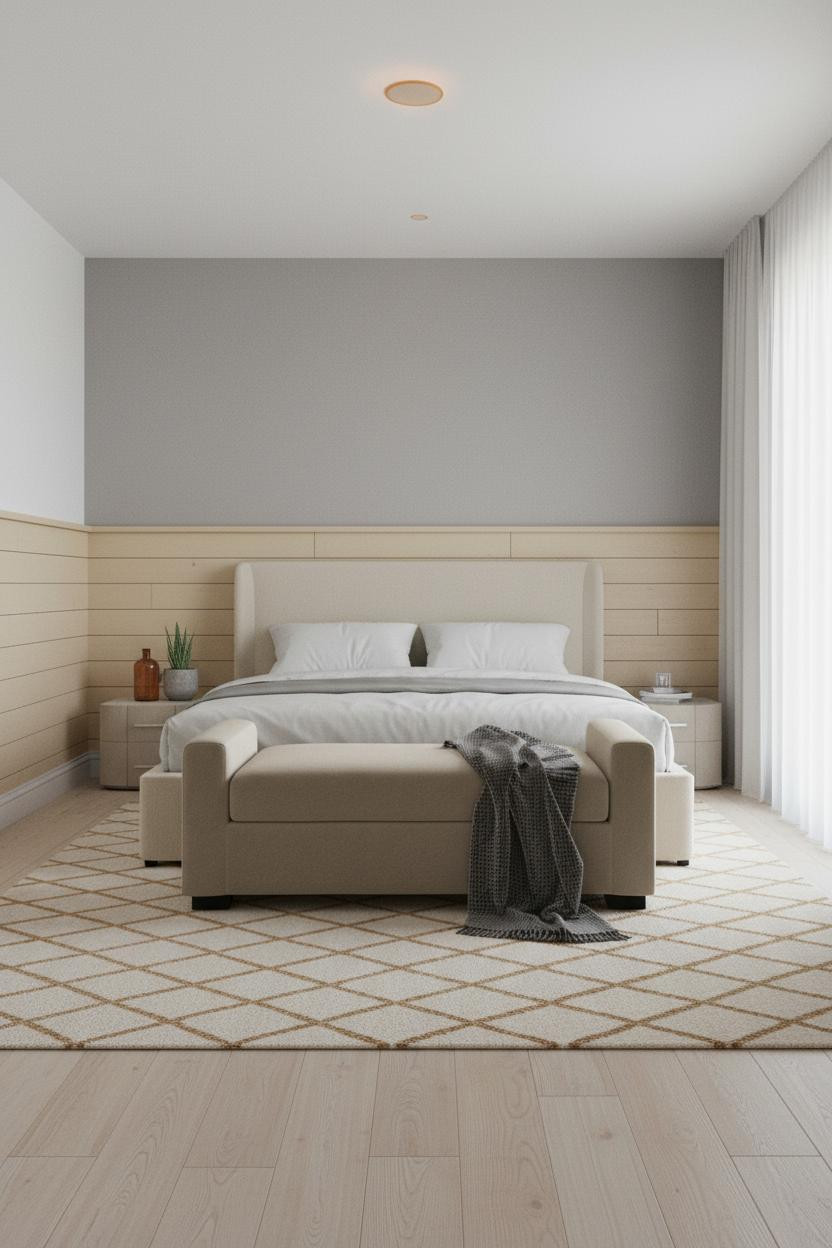


This is the kind of room that makes you want to slow down on a Sunday morning.
Why it feels finished: The cream painted wainscoting adds horizontal rhythm at exactly the height where the eye rests, which keeps the room feeling structured while still feeling calm.
Steal this move: Pair it with stone grey above and pale wide-plank floors below. The three layers do the work so the furniture doesn’t have to.
An Arched Niche Makes a Shared Room Feel Intentional
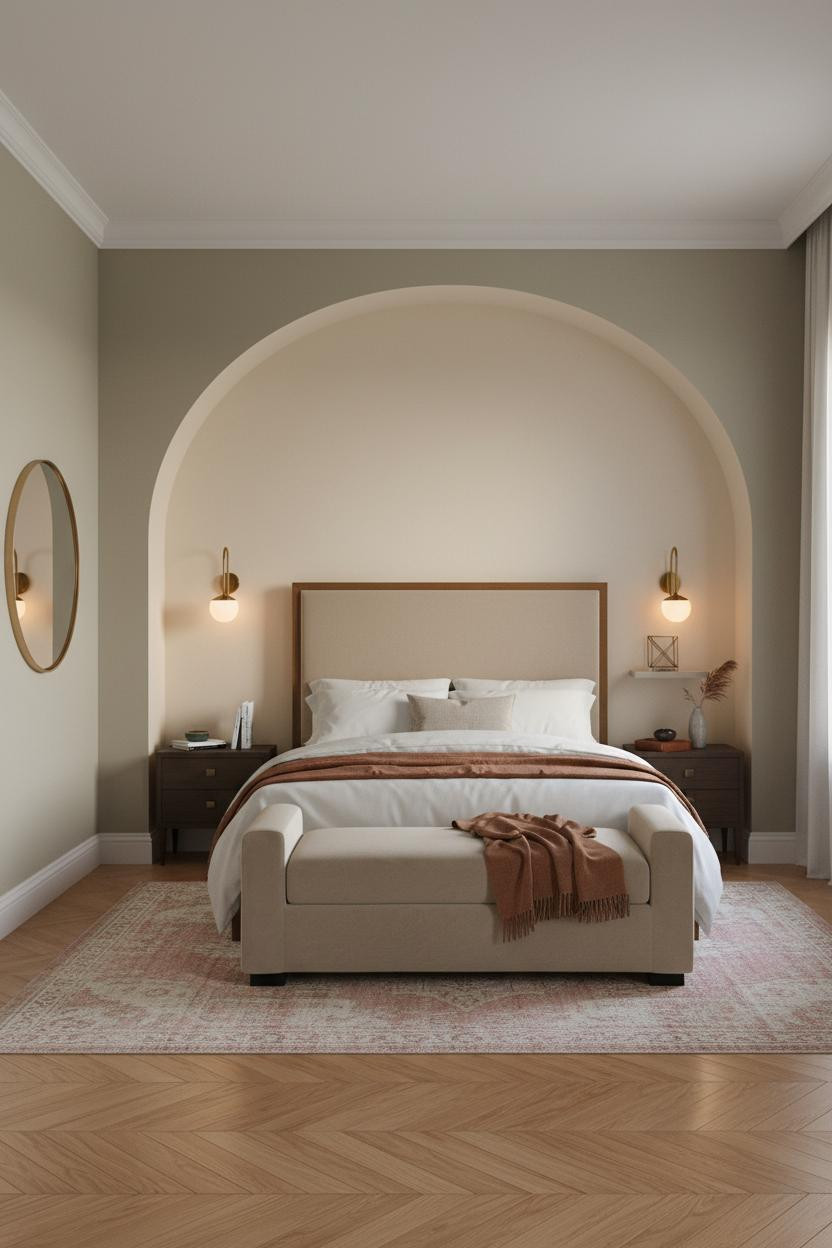

Bold choice. Not every couple will go here. But the ones who do don’t regret it.
An arched niche framing the bed creates the illusion of a dedicated zone in a room with no real square footage to spare. The warm ivory plaster inside the arch catches light differently than the flanking walls, which makes the whole thing feel architectural rather than decorative.
The practical move: Center the bed inside the arch exactly. Half an inch off and the whole effect collapses.
Avoid this mistake: Don’t fill the niche with floating shelves. The open plaster is what makes it breathe.
Built-In Shelving That Earns Its Wall Space
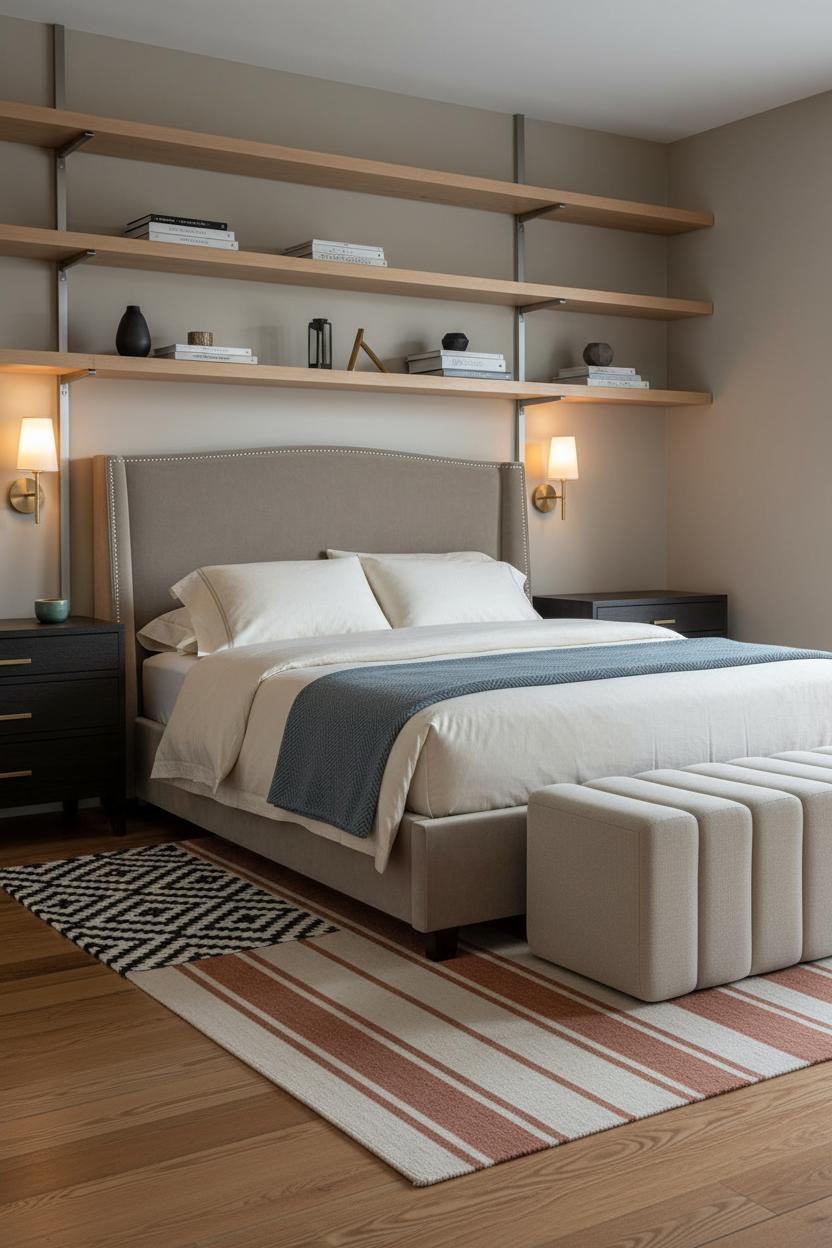

I keep coming back to this one. The shelving above the bed does everything a headboard does, but better.
What makes this work: Natural white oak planks with thin steel brackets stay light enough not to press down on the room, while the horizontal rhythm gives the wall actual structure.
Soft camel walls behind all of it. One warm family, two textures. That’s what keeps it from feeling like a study.
Shiplap That Makes the Room Read Wider
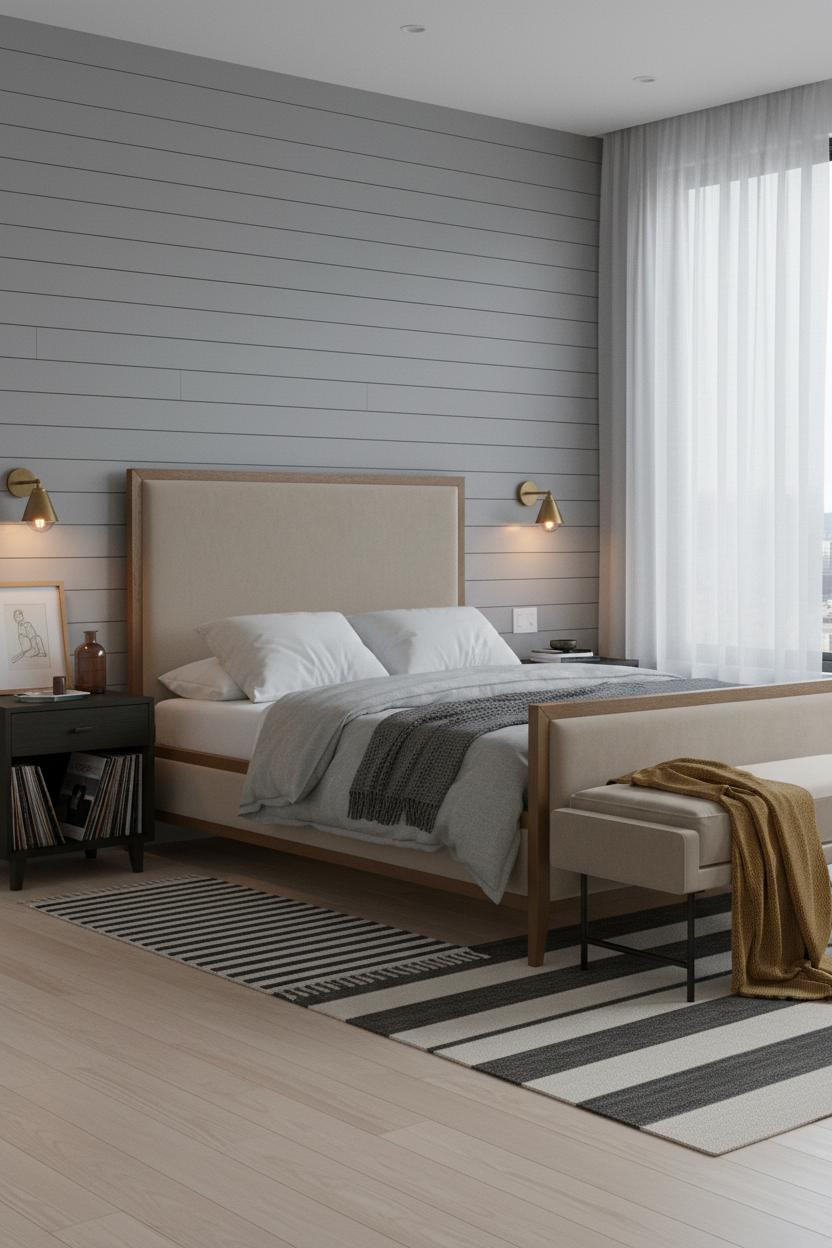
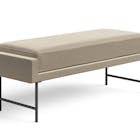
Horizontal lines are honestly one of the easiest tricks in a small shared room.
Design logic: Stone grey shiplap stacked tight and low pulls the eye sideways, which makes the room read wider than the walls actually are. It’s a small move with a disproportionate effect.
Worth copying: Keep the palette cool and tight. A mustard wool blanket at the foot is all the contrast the room needs.
Floating Shelves That Give a Small Room Personality
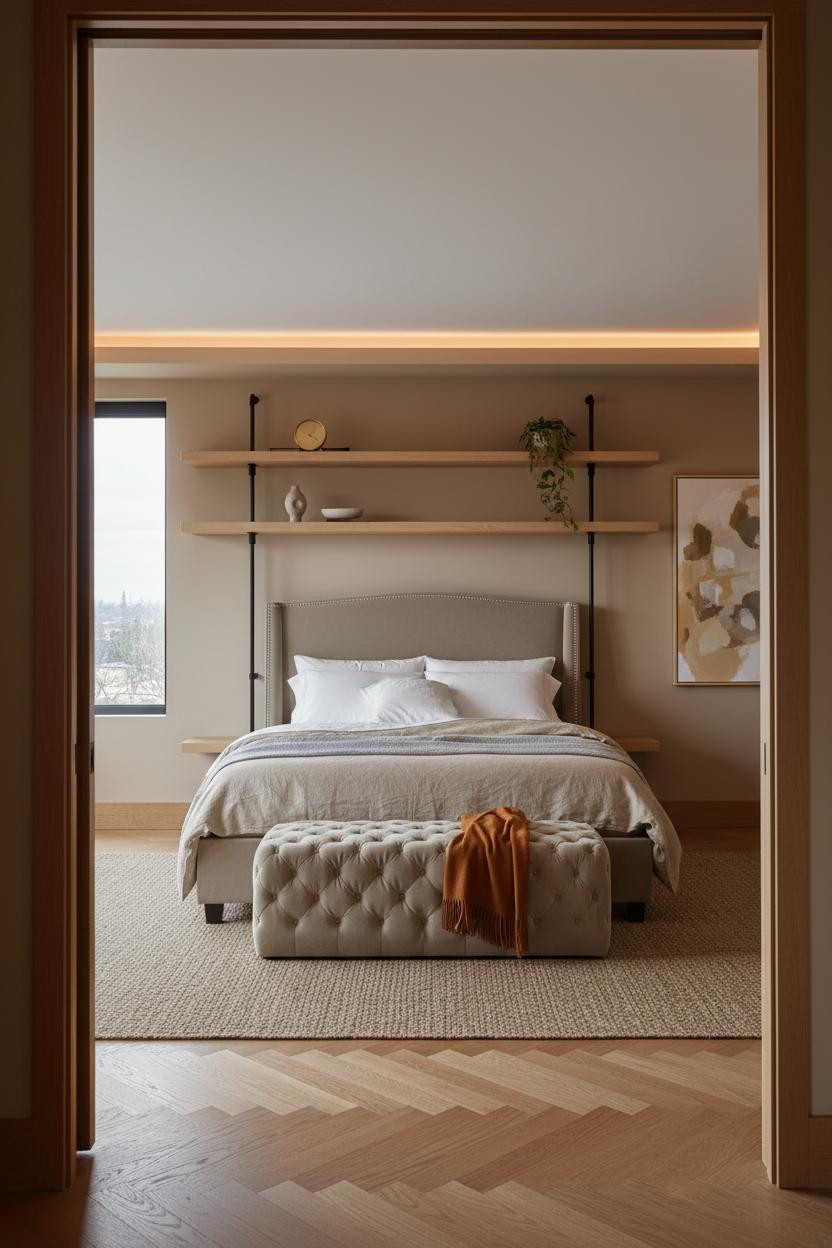

A full-height floating shelf wall sounds like too much. But in a room with warm clay walls, it somehow grounds everything.
Why it holds together: The natural light oak grain stays warm enough to read as furniture, in a way that feels more collected than installed. Black steel brackets keep the shelves from looking heavy against the clay wall.
The easy win: Style the shelves loosely. A brass clock, one trailing plant, a ceramic dish. Nothing too precious or matchy.
Dusty Rose and White Oak for the Couple Who Wants Cozy Without Cute
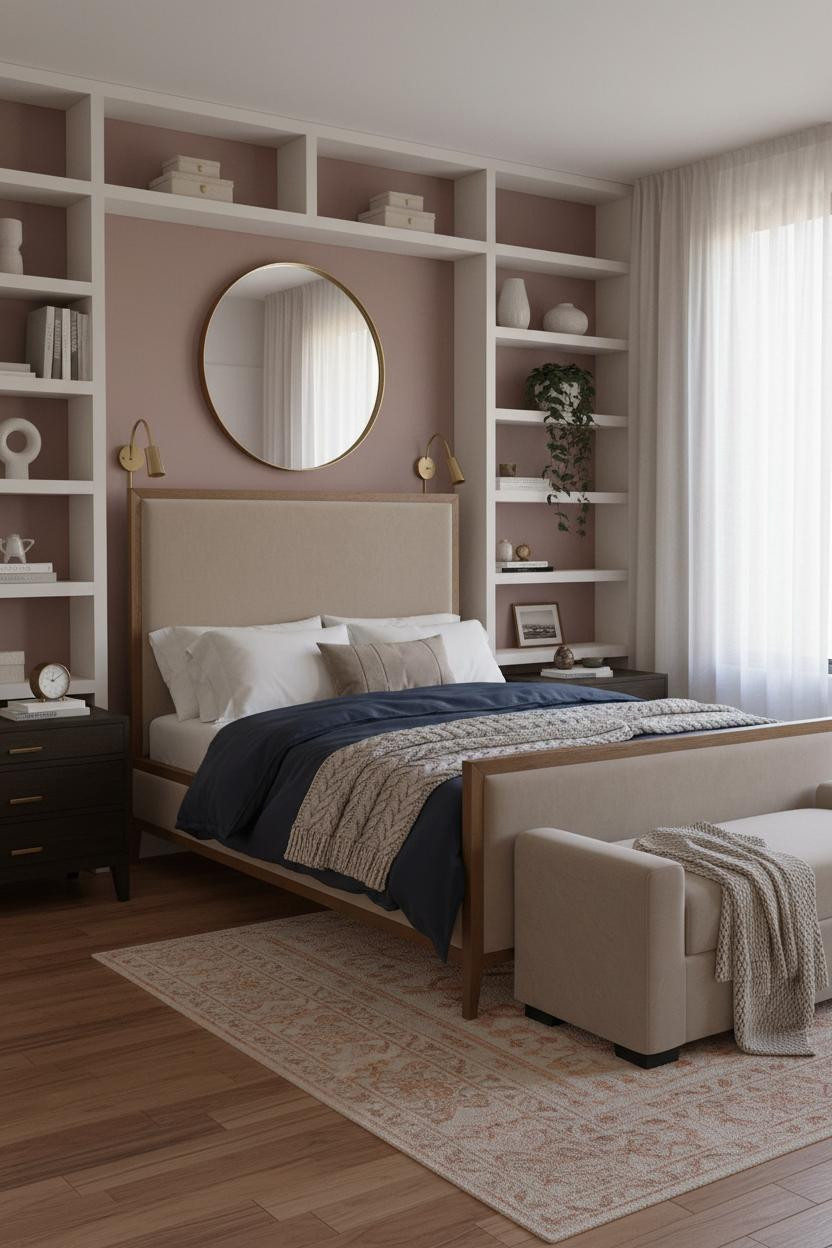
Don’t get me wrong. I was skeptical of dusty rose in a shared room. But paired with warm maple floorboards and a floor-to-ceiling white bookshelf, it reads grown-up.
What carries the look: The built-in shelf wall in painted warm white adds structure that keeps the blush from tipping into something too soft. The room feels calm and cohesive, which is honestly the whole goal.
Pro move: A navy sateen duvet anchors the pink walls without fighting them. Just enough contrast to keep things interesting.
Slatted Oak Panels That Add Texture Without Weight
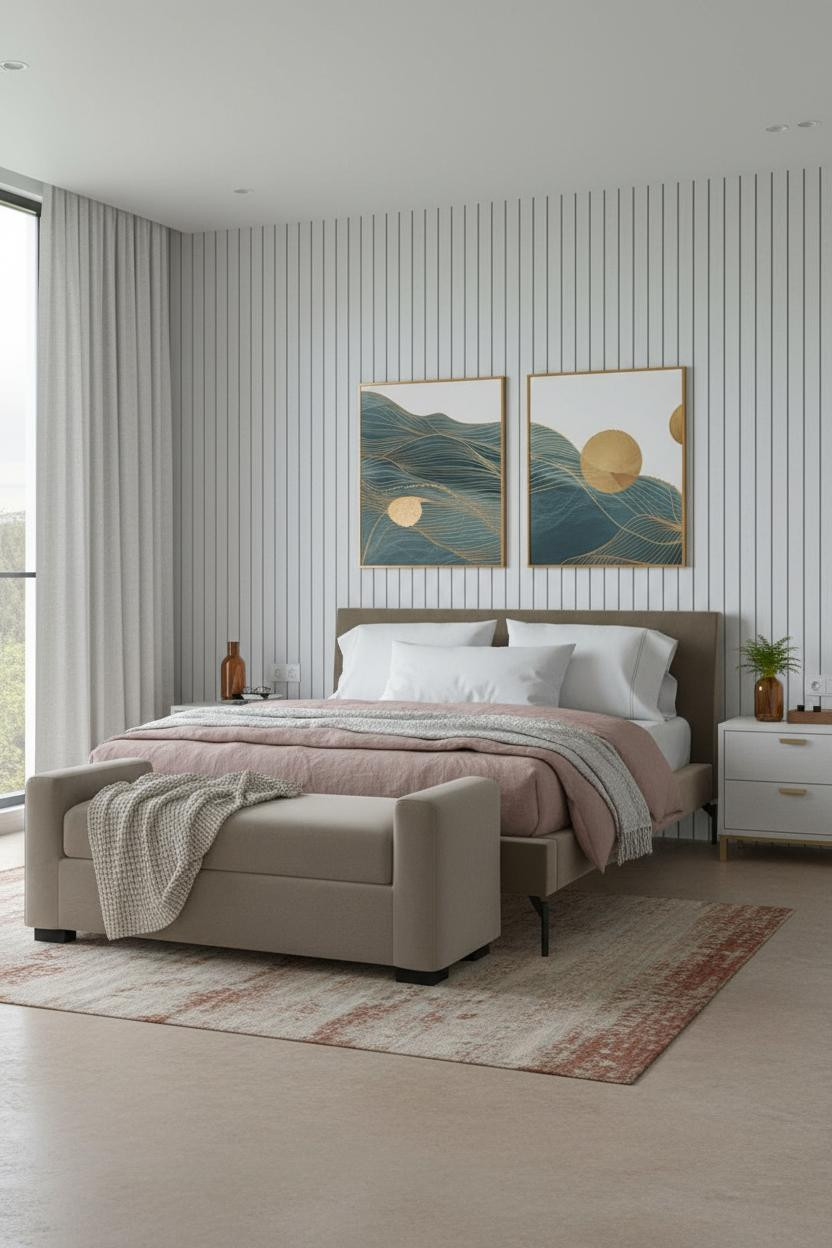

Vertical slatted white oak panels behind the bed give this room architectural depth that no paint color could replicate.
Why it looks custom: The vertical grain catches side light differently at different times of day, which means the wall does more work than you’d expect without adding any visual bulk. The room feels lived-in and intimate because of it.
Floor-to-ceiling linen curtains in pale stone frame the window opposite. The smarter choice in a compact room is always to draw the eye to height, not width.
Textured Plaster for a Coastal Couple’s Room That Isn’t Beachy
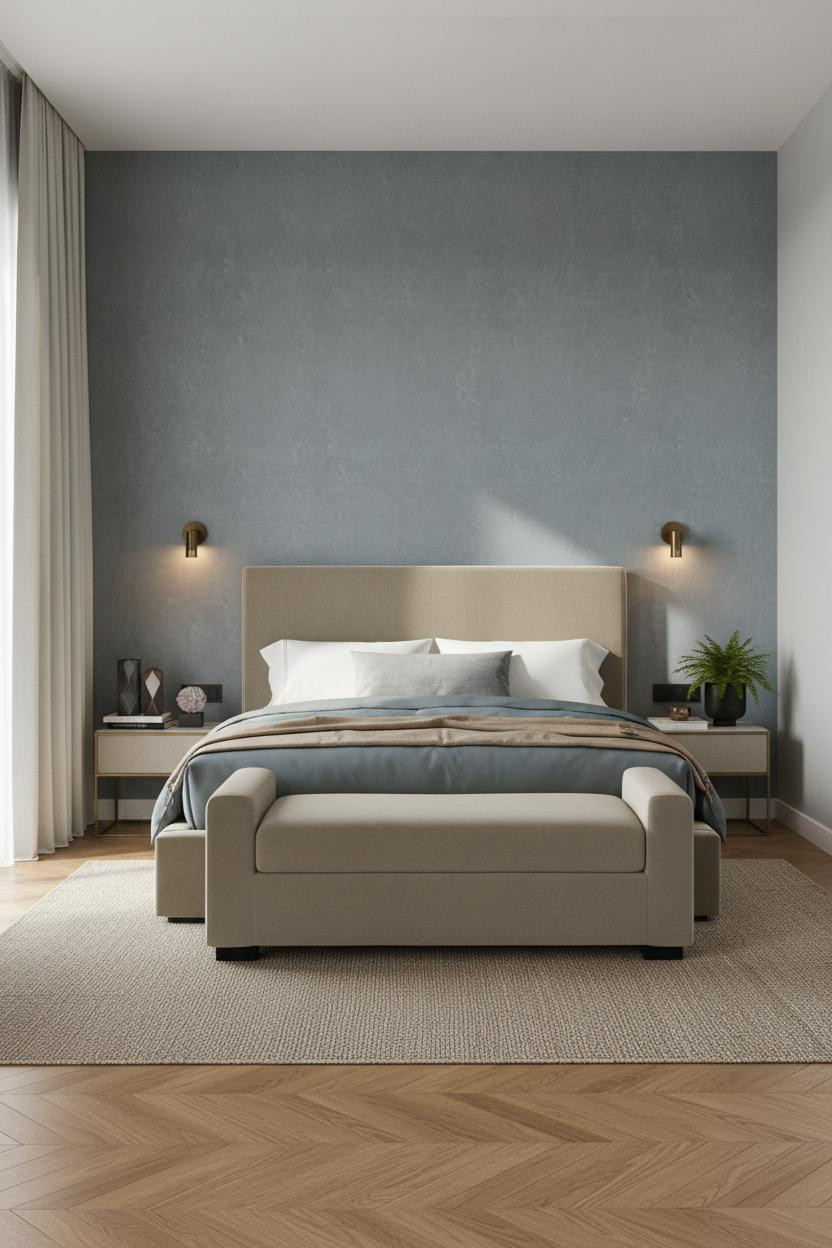

Fair warning. A muted blue-grey plaster wall is one of those things that photographs well and lives even better.
What gives it presence: Raw plaster catches raking light in a way smooth paint doesn’t, so the surface actually changes through the day. It anchors the sleeping zone without needing anything else on that wall.
One smart swap: Skip the coastal accessories. A camel throw and a single potted fern carry the warmth without drifting into theme territory.
Sage Walls and a Floating Shelf That Feel Like a Real Home
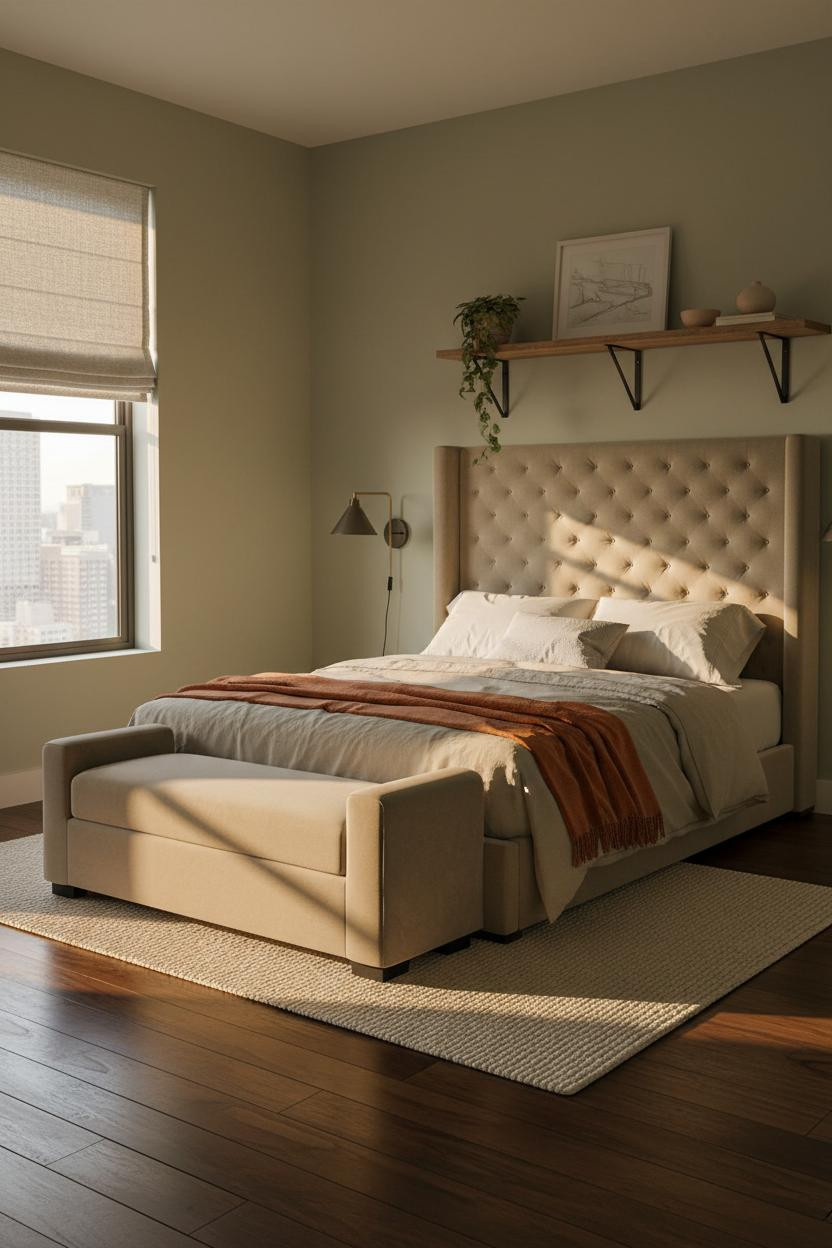

I almost scrolled past this one. Glad I didn’t.
What softens the room: The soft sage walls against dark walnut floorboards creates enough warmth that the room feels collected rather than decorated, while still feeling open enough for two people. A single ash floating shelf above the bed replaces the nightstand clutter most small bedrooms struggle with. A trailing plant and a framed sketch. Nothing more.
Board and Batten in Warm Greige for Japandi-Inspired Couples
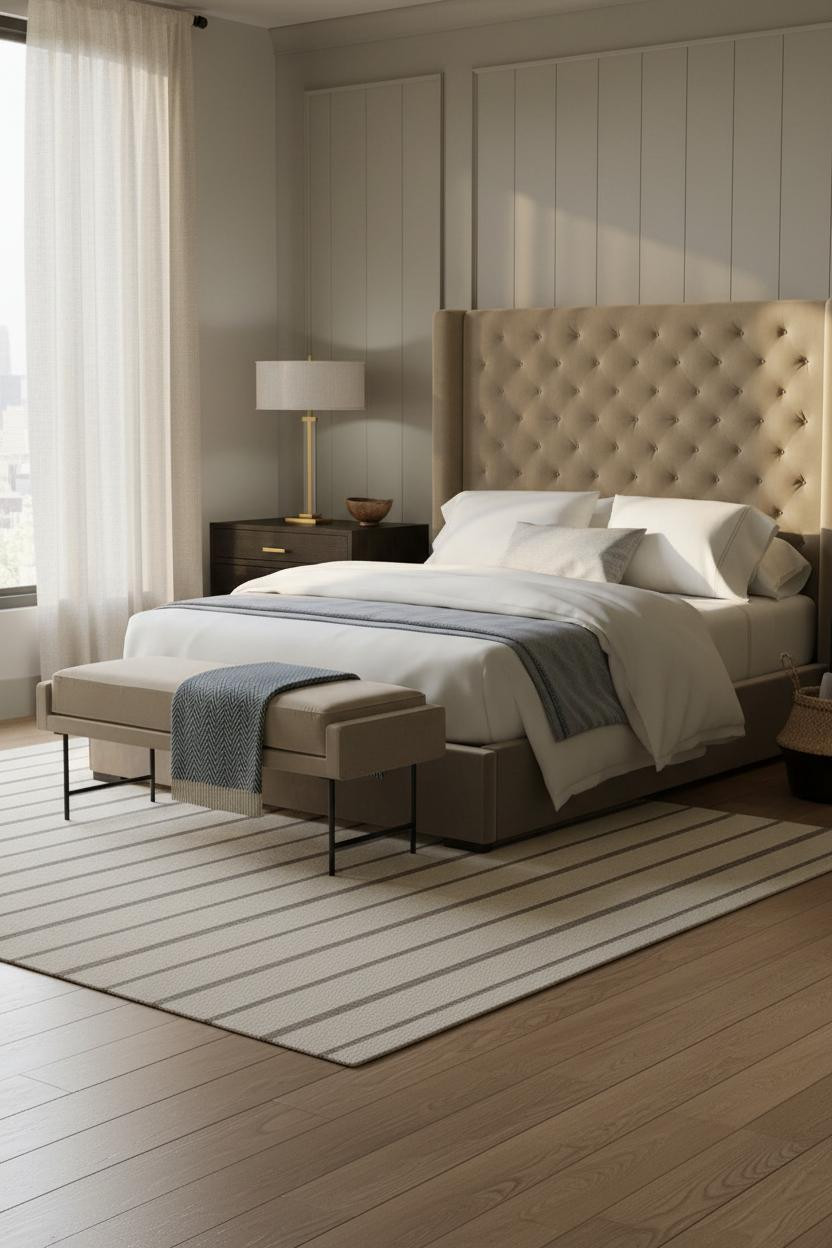
Nothing fancy. That’s the point.
Why it feels balanced: Board and batten in warm greige keeps the wall treatment quiet enough that the bleached oak flooring gets to do its job, and the two together make the room feel warmer than either would alone.
What to borrow: A steel blue herringbone throw at the foot and a terracotta vessel on the floating shelf. Two things, opposite temperatures, and the room just works.

Our #1 Pick
Saatva Classic Mattress
America’s best-selling online luxury innerspring. 365-night trial, lifetime warranty, free white glove delivery.
Shop Saatva Classic
Why Luxury Bedrooms Always Feel Better
Walls get repainted. Textiles get swapped. But the mattress stays, and that’s actually where a shared room earns its keep. The Saatva Classic has dual-coil support that holds up when two people sleep at different weights and schedules. And the Euro pillow top is soft without losing structure the way cheaper foam does over time.
The breathable organic cotton cover matters more than people think. Especially when two people share a bed through every season. It doesn’t trap heat. The room feels calm at night because the bed actually is.

The rooms people actually live in, the ones that feel shared without feeling compromised, start with a bed worth coming back to. Start there. The rest follows naturally from good choices, not more of them.