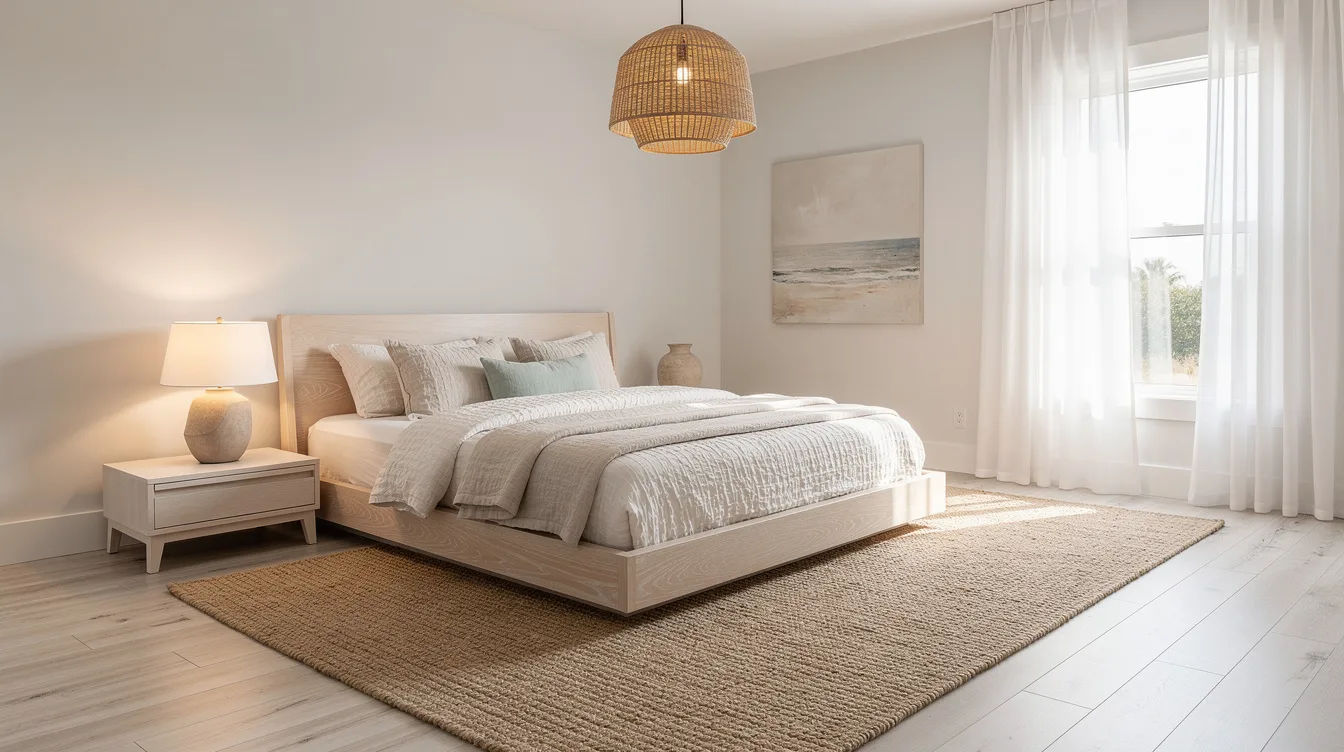
I can always tell when a coastal bedroom is trying too hard. The room has white bedding, maybe a blue throw, but the nightstand is jammed with shells, the furniture feels bulky, and the whole thing looks flatter in person than it did in the mood board.
The elegant version is quieter than most people expect. It uses pale wood, breathable fabrics, careful spacing, and just enough color to hint at the coast without spelling it out.
Start With a Soft Sand-and-White Palette
The easiest way to miss the elegant version of coastal style is to push the color too hard. I’d keep the base quiet: white, cream, sand, and light gray, then add one restrained accent like pale blue or seafoam.
A typical coastal bedroom in 2026 looks calmer when the walls and bedding stay mostly light, and the contrast comes from texture instead of color. Seafoam paint works best in small doses, on one pillow, one throw, or a single accent chair, not across the whole room.
Leave Enough Space Around the Bed
Good coastal rooms always feel airy, and that starts with circulation, not decor. For a queen mattress, a typical elegant layout needs about 24 to 30 inches of clear space on each long side and at the foot of the bed.
If you have a king, give it more breathing room, closer to 31 to 35 inches per side, or the room will feel crowded fast. A standard bedroom is often around 129 to 172 square feet, which is enough for a queen bed, two light nightstands, and a dresser if you resist oversized furniture.
Choose Pale Wood Furniture With Light Visual Weight
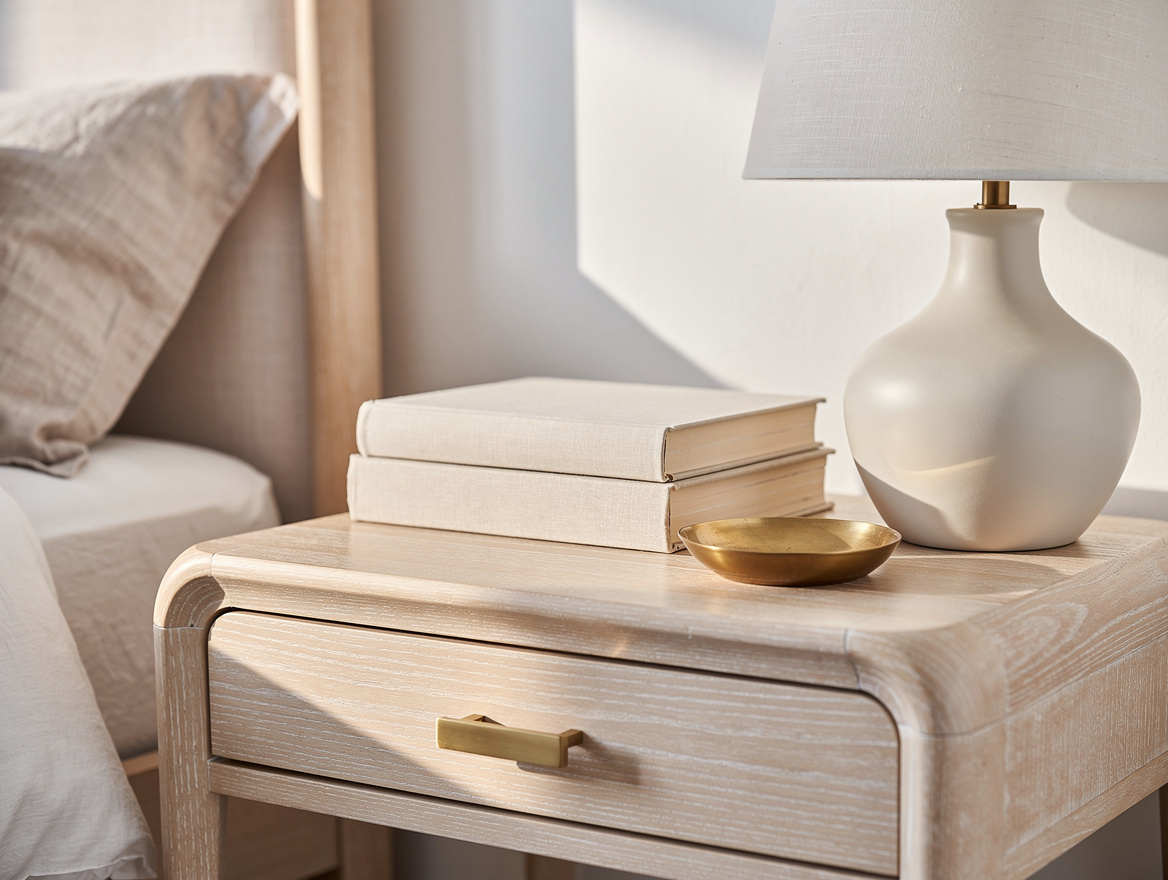
The furniture should do a lot of the styling work. Pale oak, whitewashed finishes, and simple frames look more expensive than heavy dark wood in a coastal bedroom.
A bed frame is usually about 4 to 8 inches longer and wider than the mattress, so plan for that before you shop. I’d look at an IKEA bed frame in a pale wood tone first, because that category typically lands around the mid-market sweet spot and doesn’t overload the room visually.
Nightstands should stay slim, usually about 18 to 24 inches wide and 14 to 18 inches deep. Open bases or narrow legs are better than chunky boxy shapes, especially in compact rooms around 108 to 129 square feet.
A dresser across from the bed usually works best at roughly 47 to 59 inches wide and 18 to 20 inches deep. Pale oak veneer or off-white painted wood keeps the wall from feeling too solid.
Layer Linen, Cotton, and One Natural Rug
This is where the room starts feeling elegant instead of generic. Coastal style gets depth from fabric, so I’d build the bed with white or off-white linen, then add cotton layers and just one muted color accent.
A stonewashed linen bedding set from Amazon or IKEA will usually cost less than a designer version and still give you that relaxed, matte texture. Typical mid-range linen bedding often falls in the roughly $175 to $380 range, which is one of the smartest upgrades in the room.
Under the bed, a natural rug grounds everything without adding pattern noise. A 6-by-9 or 8-by-10 jute rug is the coastal move that keeps working, and mid-market options commonly land around $220 to $650 depending on size and weave.
Skip shiny satin comforters and overstuffed decorative pillows. Two sleeping pillows, two euro shams, and one accent pillow are usually enough for a cleaner hotel-like finish.
Use Blue or Green as a Controlled Accent
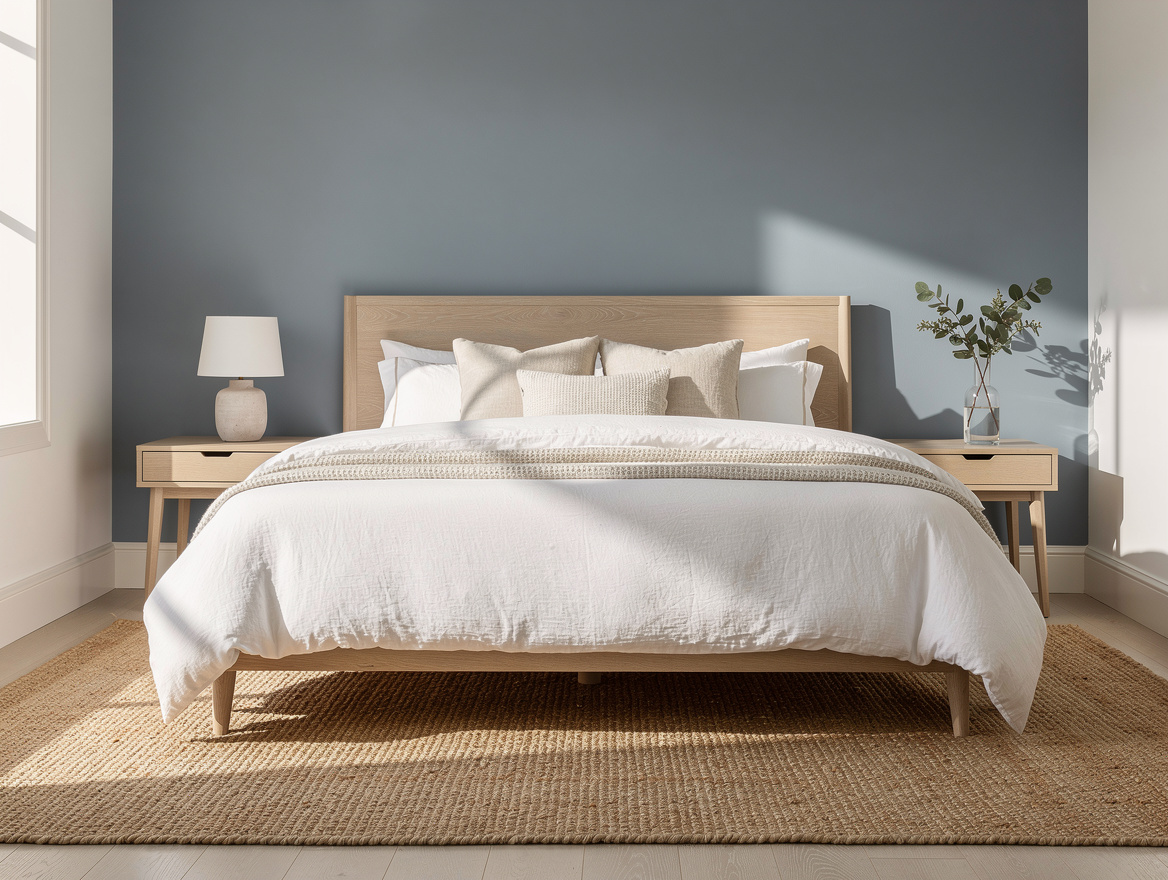
One muted accent wall can work, but it has to stay soft. Dusty blue, washed blue-gray, or eucalyptus green feels current; bright navy on every textile does not.
If your bed wall is about 10 to 11.5 feet wide, you have enough width to center the bed and keep the room balanced. A simple paneled feature behind the headboard wall can add architecture without needing busy art or beach-themed accessories.
I’m firmly against turning coastal into a theme park. One blue note is elegant, five blue notes plus rope decor and shell prints starts reading like a vacation rental.
Bring In Texture Through Rattan and Matte Metals
Elegant coastal bedrooms need contrast, just not loud contrast. That’s why rattan, wicker, ceramic, brushed brass, black, and nickel matter more than novelty decor.
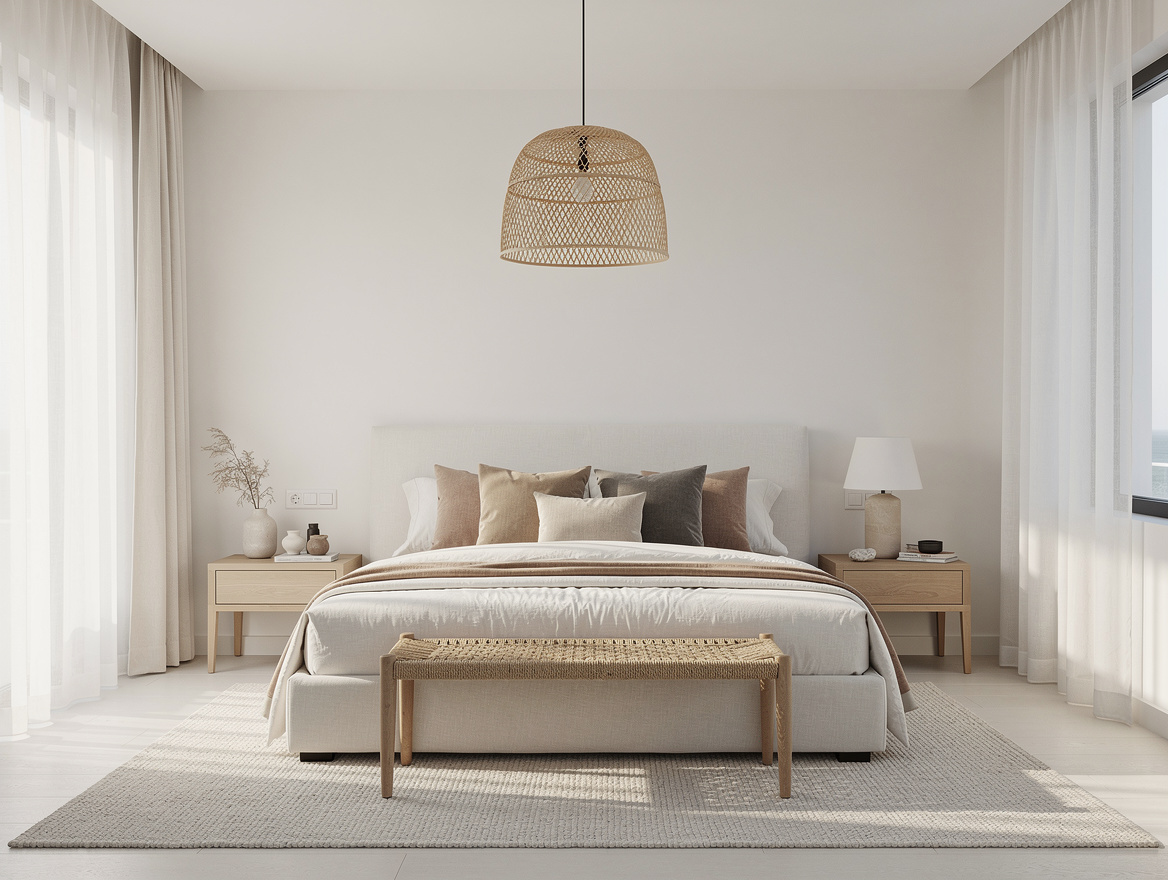
A bench at the foot of the bed usually looks right when it’s around 47 to 55 inches long and 16 to 18 inches deep. A woven rattan bench or a linen-upholstered version adds texture while keeping the footprint light.
For lighting, a woven pendant paired with two simple bedside lamps is enough in most rooms. A typical mid-market lighting mix from Target, Lowe’s, or IKEA often runs about $220 to $650 total, and that’s money better spent than on extra wall decor.
Matte finishes are the key here. Brushed brass lamps or soft black sconces add definition without making the room feel glossy or formal.
Edit the Decor Until the Room Feels Calm
This is the part most people skip. An elegant coastal bedroom usually has fewer objects than you think, because the materials, proportions, and light are already carrying the room.
One framed print, one ceramic vase, one tray, maybe one lantern, that’s enough. A ceramic table lamp with an off-white shade does more for the mood than a shelf full of shells ever will.
Even in a larger primary bedroom, around 172 to 237 square feet, I’d keep surfaces mostly open. The second a dresser top gets crowded, the whole room loses that breezy, expensive feeling.
If you’re budgeting the full look without the mattress, a typical total for a polished mid-market setup is roughly $1,650 to $3,850. That range is realistic if you mix Target, IKEA, Amazon, and maybe one nicer anchor piece from Wayfair.
Begin with the bed zone first: bedding, rug, and circulation. Once those three pieces feel calm and balanced, the rest of the coastal look gets much easier to finish without drifting into beach-house cliché.
Mia Carter writes about small-space living and budget home makeovers. She has restyled three rentals and tests most ideas in her own 45 sqm flat.