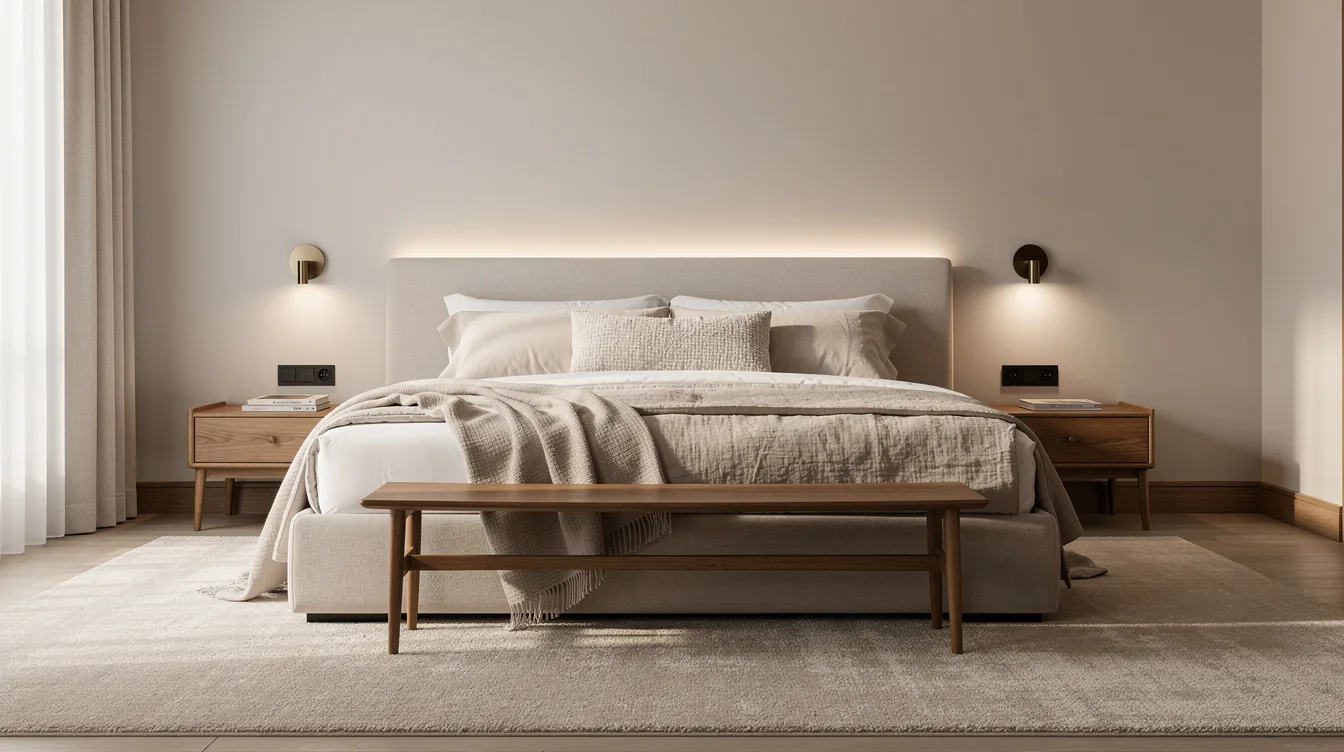
I know the exact moment a bedroom stops feeling restful: when the nightstand is crowded with cables, the overhead light is too sharp, and the bed somehow looks flat even after you make it. That mix of glare, clutter, and skimpy bedding makes a room feel unfinished fast.
A stylish luxury retreat usually isn’t about stuffing in more furniture. It’s warm minimalism, better materials, layered light, and a bed setup that feels closer to a hotel than a spare room.
Start With the Bed Wall and Real Clearance
I always start with the wall behind the bed, because that one decision controls whether the room feels calm or crowded. A luxury bedroom usually needs a clear focal point, and the bed wall is where that happens.
For a king-size bed, a typical comfortable layout gives you about 32 to 40 inches of walking space around the sides and foot. If your wall is roughly 102 to 126 inches wide, you can center a king and still fit two nightstands without the room feeling pinched.
An upholstered frame works better than a bare metal one if you want that hotel mood. The IKEA TUFJORD bed is a smart starting point because it adds shape and softness without pushing the room into fussy territory.
I’d skip oversized bedroom sets completely. One strong bed wall, two matching tables, and enough breathing room already reads more expensive than too much furniture.
Layer Hotel-Style Bedding Instead of Chasing More Decor
The easiest luxury upgrade is the one you feel at 11 p.m., not the one you notice for five seconds on Instagram. Good bedding changes the whole room faster than art, wallpaper, or a bench at the foot of the bed.
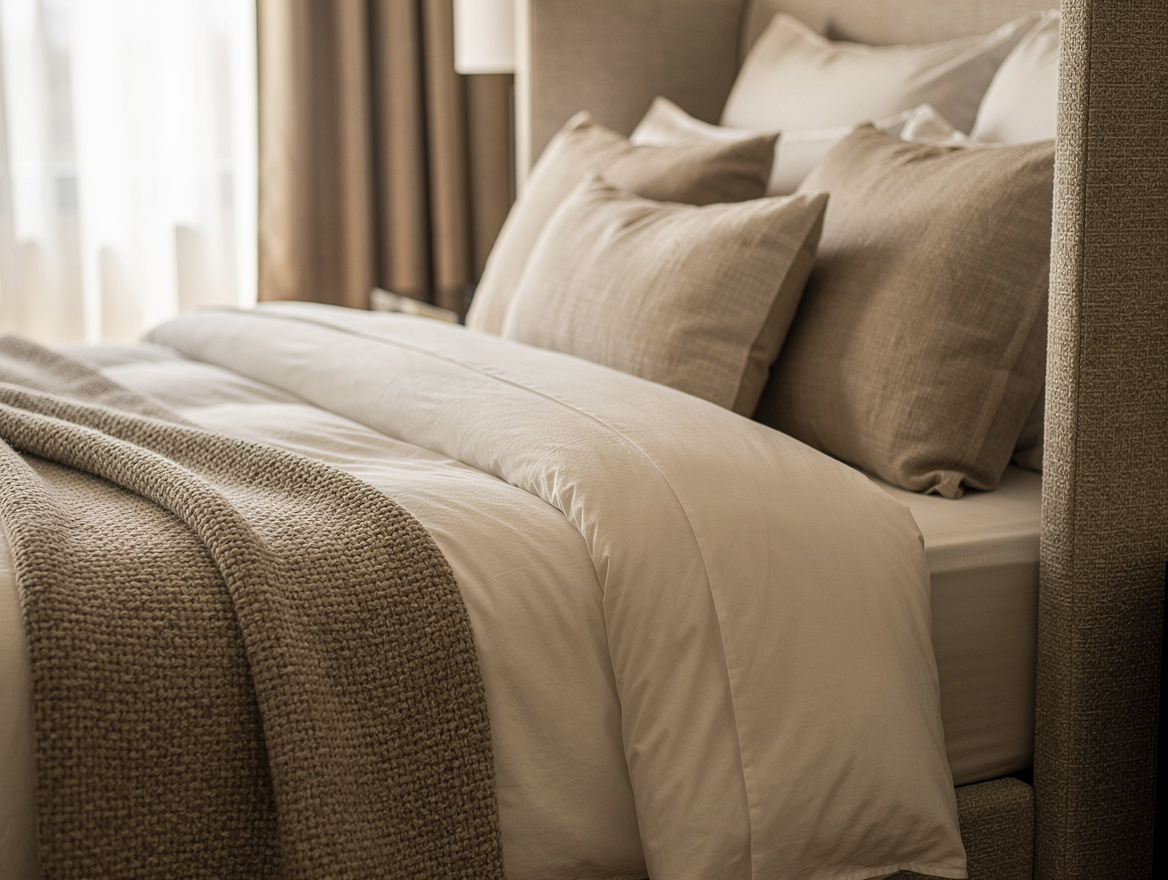
A hotel-style setup is simple: crisp cotton sheets, a lofty duvet, two large Euro pillows, two sleeping pillows, and one textured throw. A typical king duvet is about 104 by 90 inches, and that fuller scale looks richer than skimpy bedding that barely covers the mattress.
I like the value equation at Costco for sheet sets, because you can often get a soft king set for around $90 to $140. If you want a warmer, more relaxed finish, a linen blend from Target gives the bed that slightly rumpled look that feels current rather than over-styled.
Keep the palette tight: ivory, oatmeal, taupe, maybe one cocoa or charcoal accent. Luxury usually looks quieter than people expect, and that restraint is exactly why it works.
Use Tactile Materials to Make Neutrals Feel Expensive
A beige room can look rich, or it can look flat and forgettable. The difference is texture, not more color.
I’d mix at least three touchable surfaces around the room: an upholstered headboard, linen curtains, and a wool-style rug. Add one extra note, maybe a leather bench or a bouclé chair, and the whole space starts to feel layered instead of plain.
Wayfair is useful here because you can find upholstered benches and accent chairs in the $180 to $500 range, which is often enough to create one statement moment. I’d rather buy one solid tactile piece than scatter five cheap accessories across every surface.
Rugs matter more than people think in a bedroom. For a king bed, a typical large rug around 8 by 10 feet or 9 by 12 feet lets the sides and foot land on something soft, and that single move makes the room feel finished the second you step out of bed.
Build Layered Lighting, Not One Harsh Ceiling Glow
Nothing kills a retreat vibe faster than a bright overhead bulb bouncing off pale walls. If the room only has one light source, it will never feel high-end at night.
I like a three-part setup: soft overhead light, low bedside light, and hidden accent light. A warm LED strip behind the headboard or under the bed frame adds that subtle hotel glow, and a typical 2700K to 3000K color temperature keeps it flattering instead of icy.
You can do this without a custom contractor package. Home Depot and Lowe’s both carry dimmable smart bulbs and LED tape options that often start around $20 to $50, and that’s money well spent because lighting changes every finish in the room.
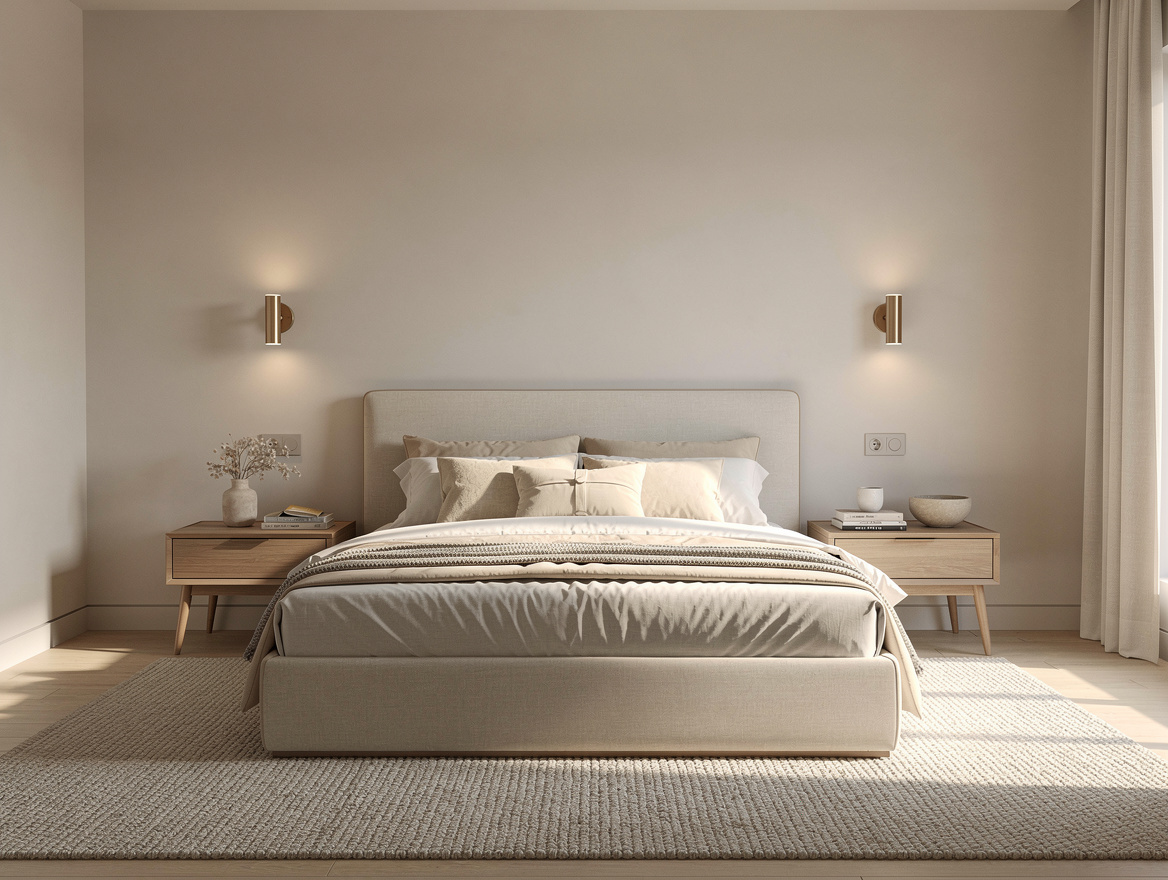
For bedside lighting, I prefer wall sconces over chunky table lamps when space is tight. They free up the nightstand, look cleaner, and make the whole setup feel intentional.
Choose One Statement Piece and Let It Carry the Room
Luxury bedrooms usually have one thing that holds your eye for an extra beat. It might be a tall channel-tufted headboard, a dramatic chandelier, or oversized art, but it should feel deliberate.
If your bed is simple, make the statement a large mirror or a sculptural bench. Amazon and Wayfair both have oversized mirrors and upholstered benches in the roughly $150 to $400 range, and those pieces do more visual work than another basket or tray ever will.
I’m firm on this part: pick one star, then calm everything else down. When every item tries to be special, the room stops reading as luxury and starts reading as expensive clutter.
A good statement piece also helps the budget. Typical full-room luxury bedroom budgets can range from about $5,000 to $35,000 depending on size and finishes, so focus your money where the eye lands first.
Hide Visual Noise With Smarter Storage and Softer Finishes
A retreat feeling has a lot to do with what you don’t see. Chargers, laundry, extra blankets, and random packaging can undo great furniture in a day.
I’d use closed storage wherever possible: a low dresser, matching nightstands with drawers, and baskets only for the few things you grab often. A room feels more luxurious when surfaces stay mostly clear, especially the top of the dresser and both sides of the bed.
IKEA is still one of the easiest places to get that built-in look on a real-world budget. Simple wood-tone dressers, wardrobe systems, and drawer organizers can make a basic room feel custom if the finish palette stays consistent.
Then soften the perimeter with floor-length curtains. Curtains hung high and wide make standard windows feel taller, and that visual height is one of the cheapest ways to fake a suite-level bedroom.
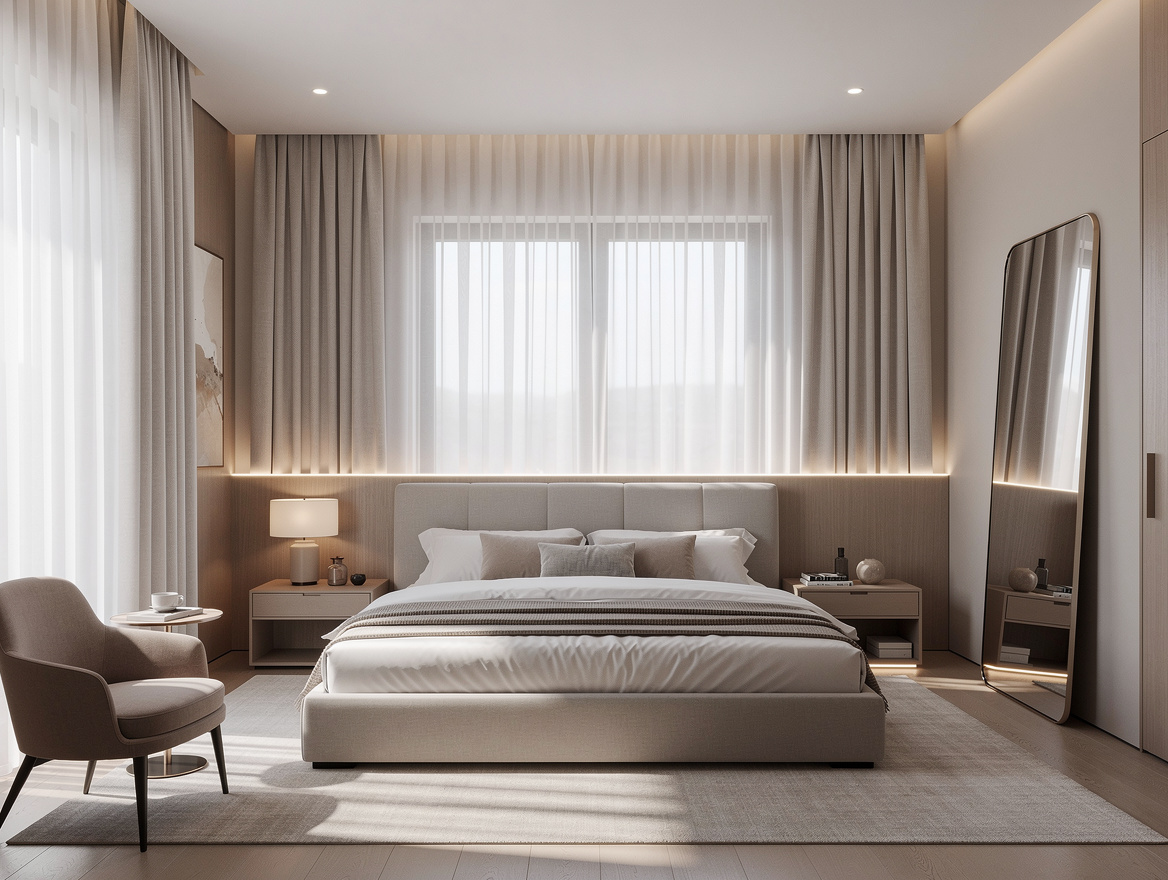
If you want the fastest upgrade, fix the bed first, then the lighting, then the floor under it. Those three moves do more for a bedroom than a cart full of small decor ever will.
Mia Carter writes about small-space living and budget home makeovers. She has restyled three rentals and tests most ideas in her own 45 sqm flat.