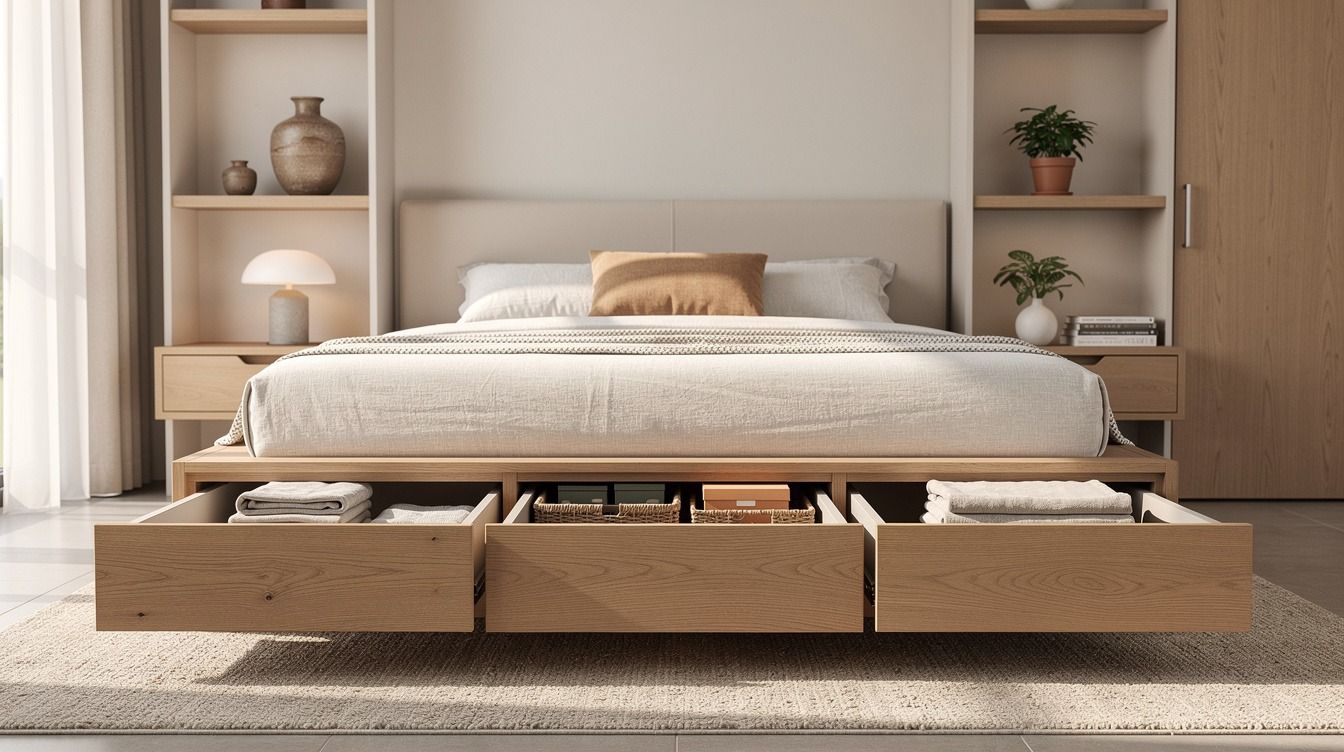
Small bedroom storage ideas free up floor space fastest when they lift storage into the bed, the wall, and the door instead of dropping another bulky piece into the room. I learned that after crowding one tiny bedroom with a cute extra chest that made the whole place harder to walk through. The fix wasn’t more furniture. It was better placement, and these 11 ideas are the ones I’d copy first, plus a few bonus moves that quietly became favorites once the room started working.
- Build drawers into the platform bed
- Mount nightstands with hidden compartments
- Slide baskets beneath a skirted bed
- Frame the headboard with storage towers
- Use peg rails for bedside essentials
- Add a storage bench under the window
- Tuck rolling bins under low furniture
- Install corner shelves above the dresser
- Choose a wardrobe with mirrored doors
- Hang fabric pockets behind the door
- Style a ladder rack for folded layers
- Try a luggage rack instead of an extra chair
- Mount a pull-out drawer inside the closet
- Pick furniture in the same finish as your wall
- Use a slim tray to clear the nightstand top
- Hang a narrow shelf above the doorway
- Style a stool that hides the cables
- Go vertical with two-inch wall shelves behind the door
- Lean a slim entry shelf in the corner
- Pick storage with the room you already have, not the room you want
1Build drawers into the platform bed
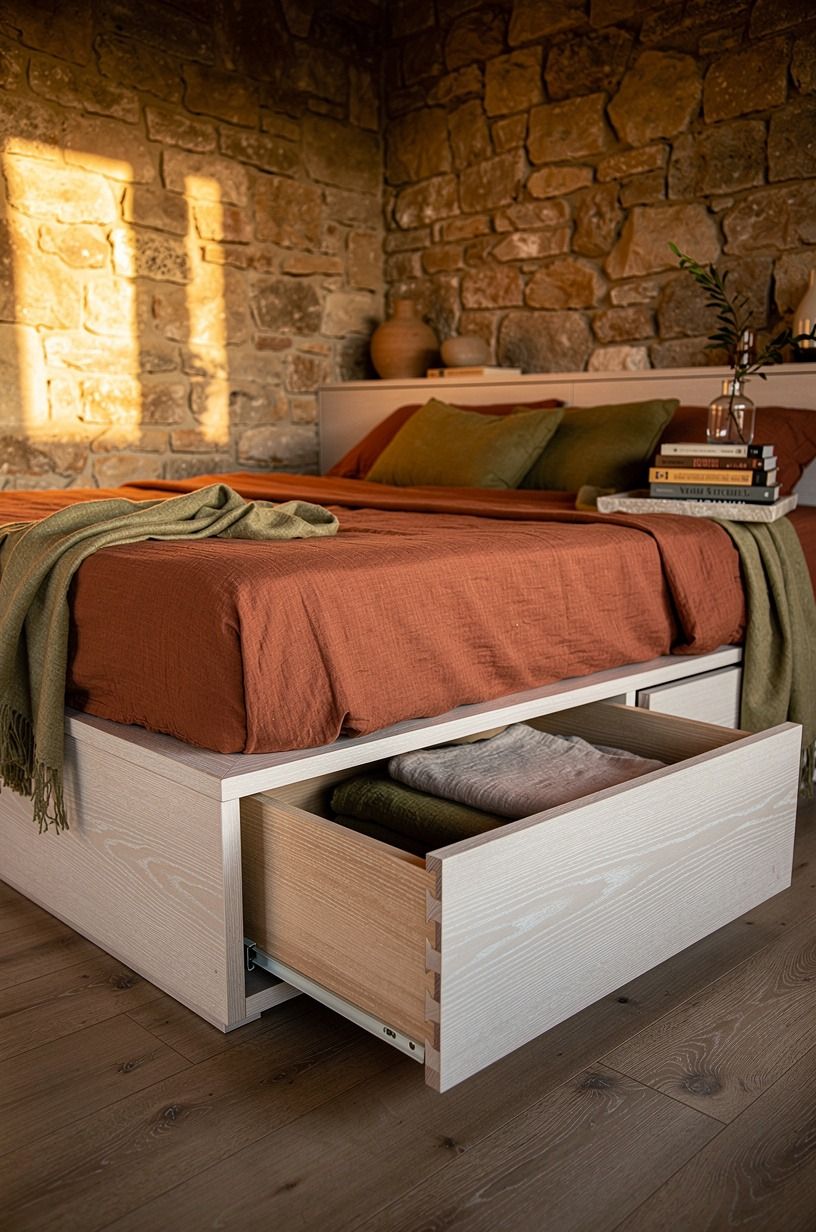
Start with the biggest object in the room. Your bed already claims the center of a small bedroom, so the smartest storage move is making that footprint work harder instead of adding a second dresser that nibbles away at your walking path.
A low platform with full-extension drawers in natural white oak keeps the floor line calm because the storage disappears into the base. If you’re working with a queen at 60×80 inches, you can usually fit two deep drawers per side and still keep the bed visually light.
I like flush pulls here because knobs at shin height get annoying fast. Most of these drawer platforms run $1,200 to $3,800 depending on wood and labor, which feels steep until you price the dresser it replaces.
Honest, sturdy, quietly luxurious.
But you should also match the drawer front color to the bed frame, not contrast it. The diagonal room view in the photo works because everything reads as one long built-in move, not a bed parked on top of storage bins.
If your layout still feels pinched, look at these small bedroom layouts that make the room feel bigger before you size the frame. And skip open cubbies under the bed.
Dust wins every time.
2Mount nightstands with hidden compartments
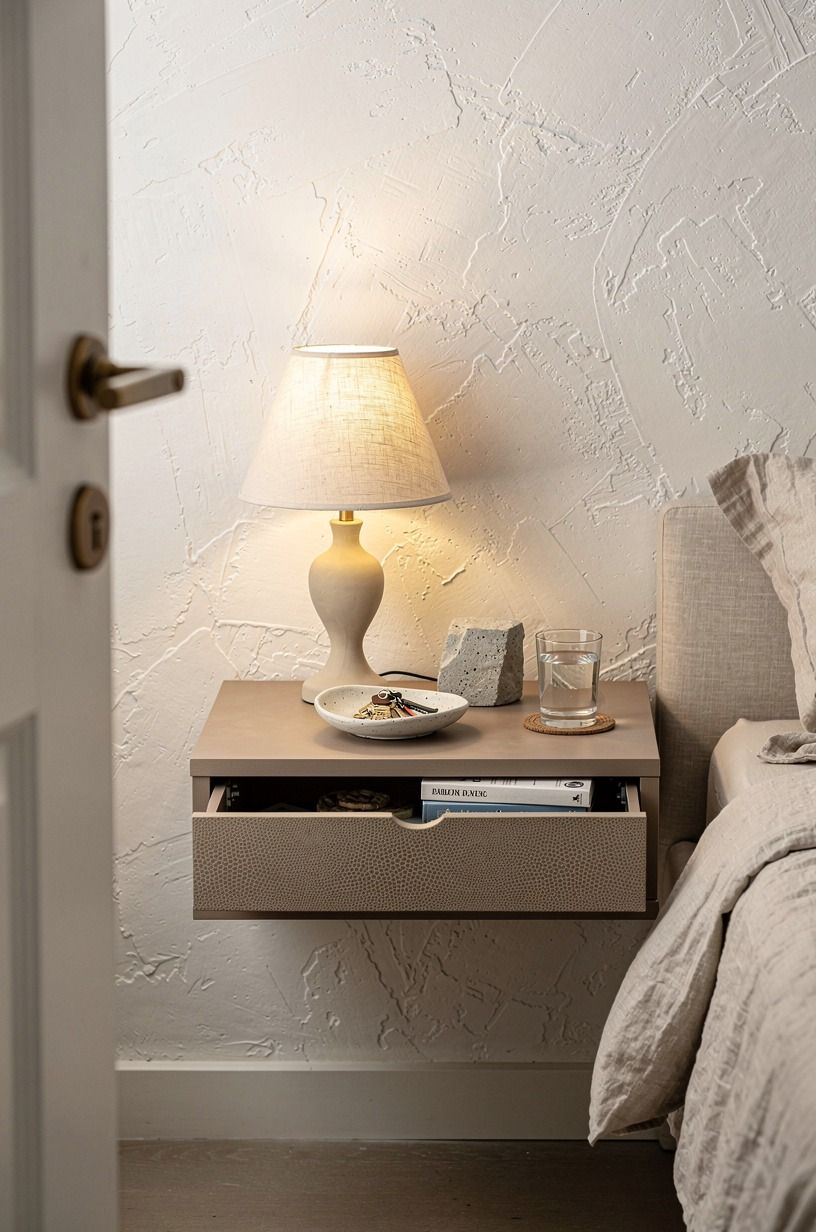
Wall-mounted nightstands buy you breathing room in two ways at once. You get storage at hand height, and you keep the floor visible underneath, which is what makes a small bedroom feel less boxed in the second you walk through the door.
Keep the top close to mattress height, usually 24 to 28 inches, so your hand lands naturally at night. A floating box in clay-painted maple with a flip-down or side-hinged hidden compartment feels calmer than a chunky two-drawer table. I prefer that hidden door for chargers, lip balm, and the ugly little things you use every night but never want to see.
If you’re willing to spend on the upgrade, look for solid-wood boxes with soft-close hinges, the kind that feel like furniture, not dorm gear. Warm, sculptural, gentle on the eye.
You should keep the styling edited. One lamp. One book. One dish.
That’s enough. If you need more than that, the bedroom is asking for deeper storage elsewhere, not a fatter nightstand. The soft tone in the photo would look great against Benjamin Moore Pale Oak OC-20, especially if you want the wall and the table to melt together. For another room that uses floating storage well, this small bathroom storage roundup shows the same visual logic.
But don’t mount the box too high, or you’ll feel it every night.
3Slide baskets beneath a skirted bed
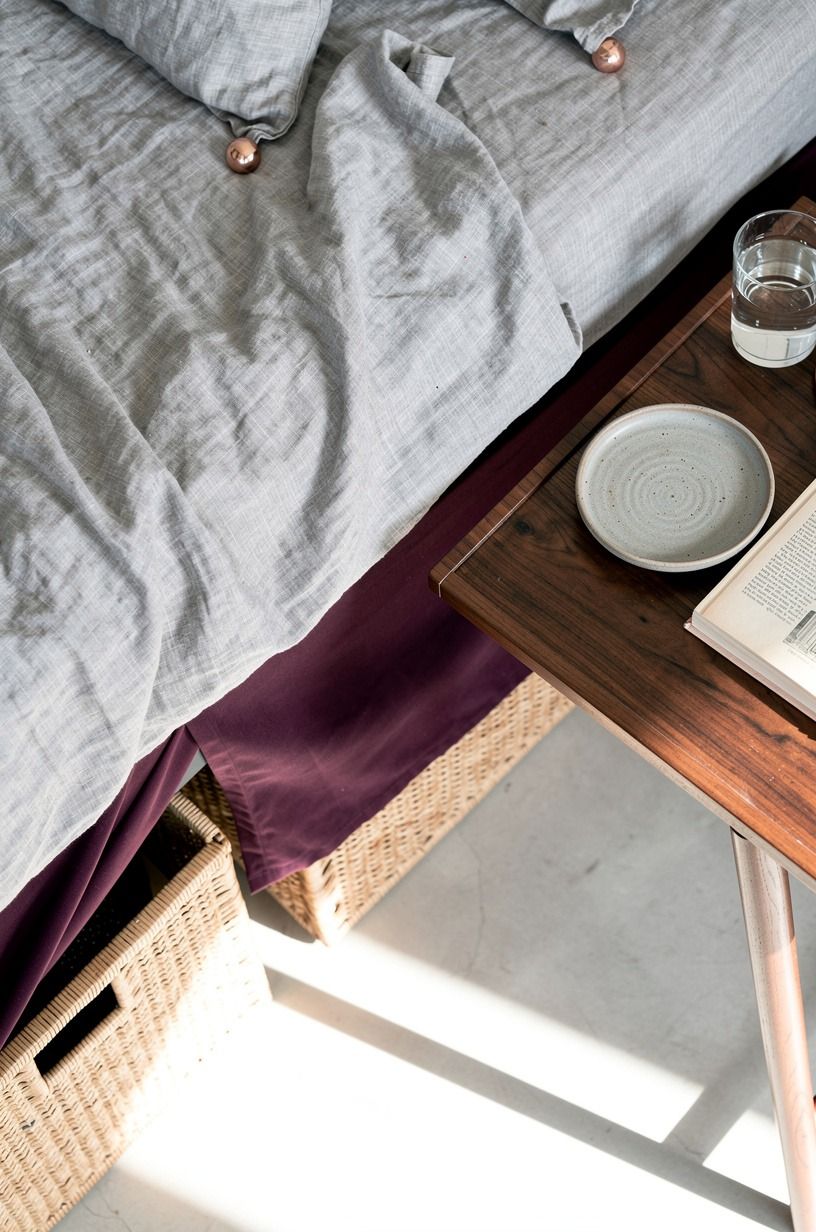
This is the softer version of under-bed storage, and I think it’s underrated. If you don’t want to commit to custom drawers, a long bed skirt and a row of structured baskets let you hide bulk without making the room feel improvised.
The key is using baskets that hold their shape. Water hyacinth storage baskets or tightly woven seagrass look intentional from above, and the overhead photo proves why the skirt matters.
You don’t see clutter first. You see one clean line of fabric, then storage doing its job underneath.
A set of three good baskets lands around $80 to $180, and that’s a real value when you compare it to a single rolling drawer unit. Soft, warm, quietly pretty!
Use this for off-season layers, extra pillow covers, or shoes in dust bags, not everyday items you’ll tug out every morning. A washed Belgian flax linen skirt in oatmeal keeps the whole thing airy, and it’s easier to live with than a crisp tailored skirt that wrinkles the second you touch it. If your room needs even more hidden storage ideas, these small bedroom ideas that make every inch feel intentional pair beautifully with a skirted bed.
I wouldn’t use floppy fabric bins here. They collapse, and then the whole move feels tired.
4Frame the headboard with storage towers
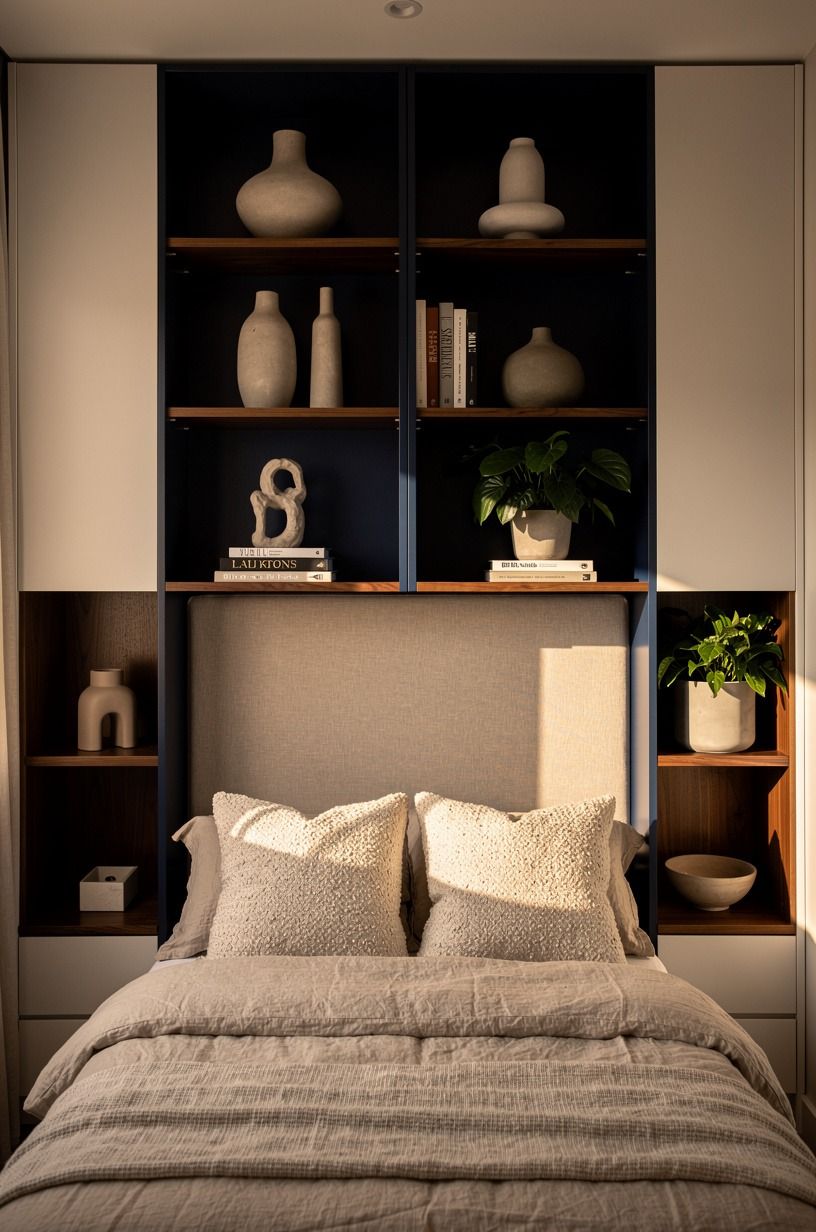
When the wall behind the bed is your only real vertical surface, use it.
5Use peg rails for bedside essentials
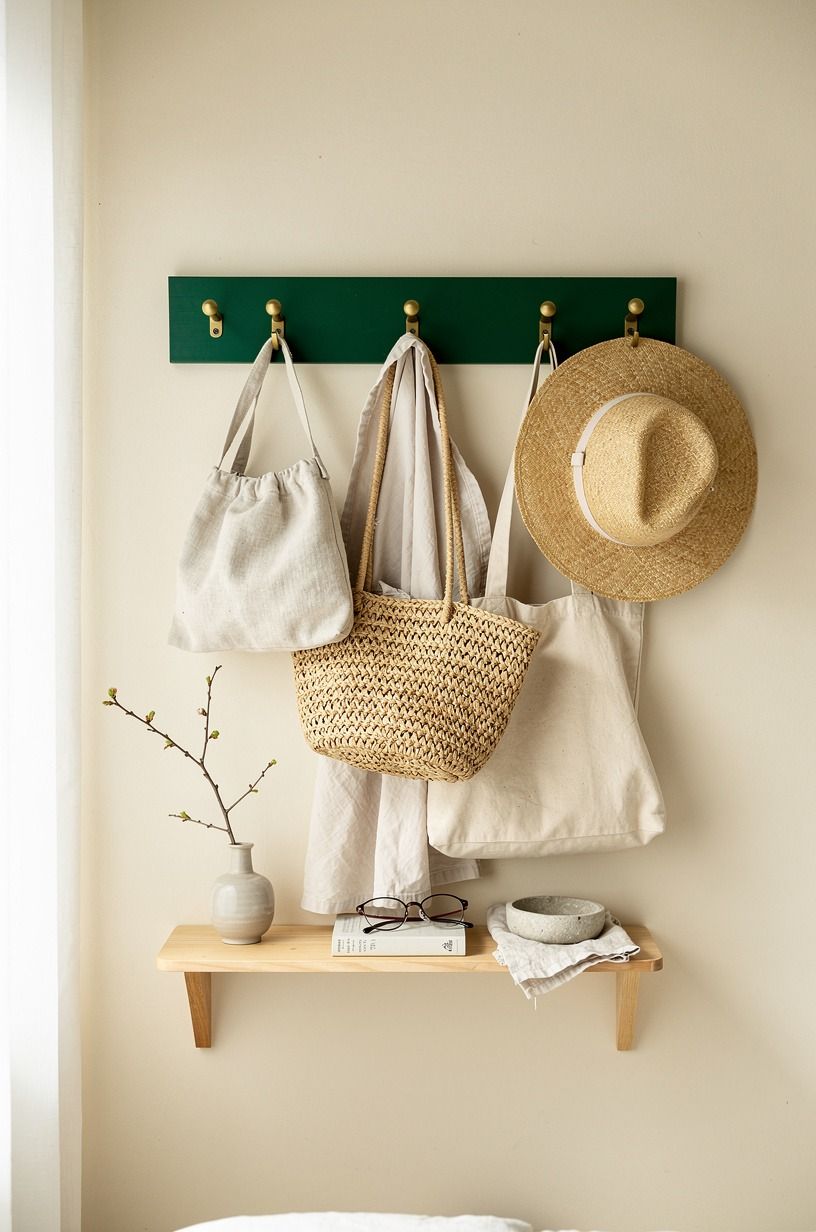
This is one of those moves that looks simple because it is simple. A peg rail gives you vertical bedside storage without adding depth, and that matters when every extra inch beside the bed steals from the walkway.
A slim rail in cream-lacquered ash can hold a fabric pouch, headphones, a small reading light, and even tomorrow’s shirt if your closet is packed. I like this better than stacking random hooks because the line stays orderly, especially in a front-facing setup like the photo where everything is visible at once.
But keep it restrained. Too many pegs and the wall starts looking like a mudroom. Most peg rails cost $40 to $150, which makes them one of the cheapest storage wins in the whole room.
Mount it high enough that pillows don’t hit it when you sit up. And give your eye one soft thing under the rail, maybe a tiny floating shelf or a linen-covered headboard edge, so the wall doesn’t feel hard from top to bottom.
A warm wall shade like Sherwin-Williams Accessible Beige SW 7036 helps the rail blend in. If you enjoy low-profile storage moves, these small bedroom DIY ideas that make the space work have the same do-more-with-the-wall energy. And if you’re renting, peg rails with two small anchors are about as reversible as storage gets.
Calm, soft, and cheap!
6Add a storage bench under the window
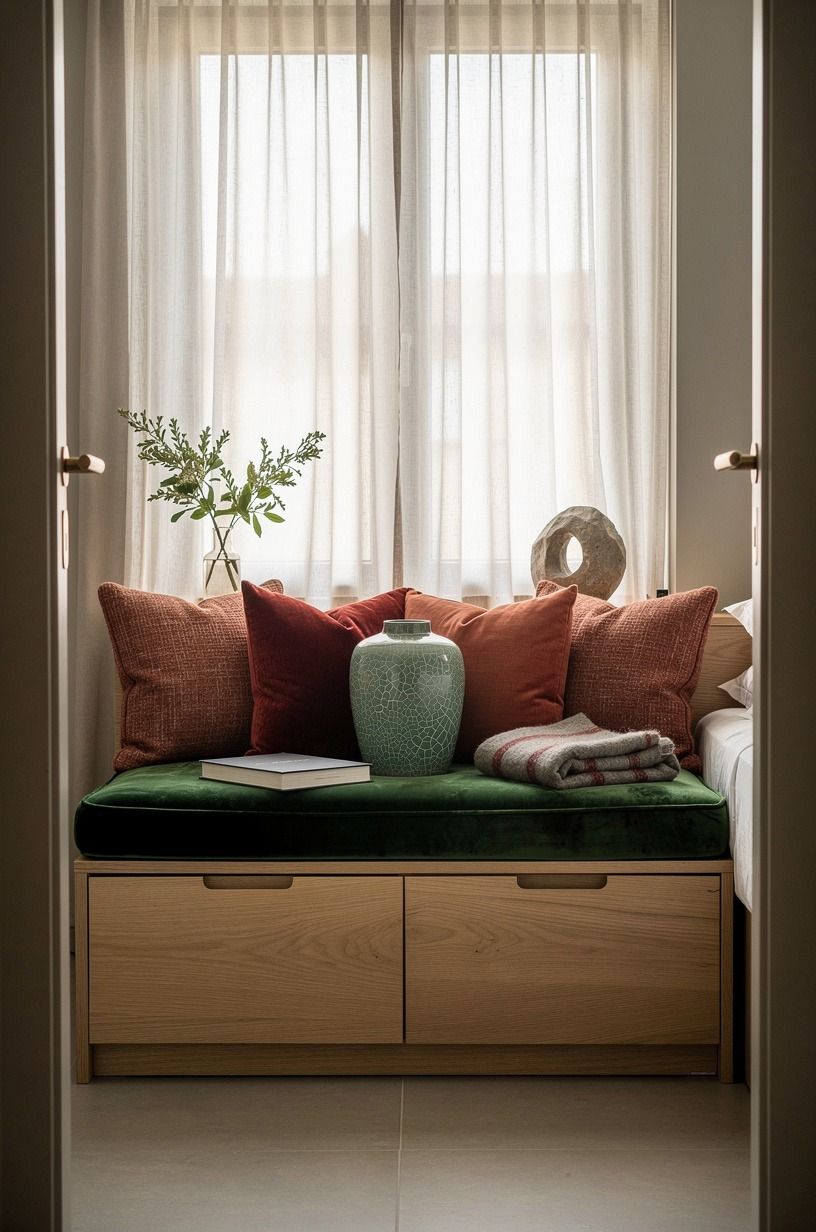
The window zone gets wasted all the time, which is wild in a small bedroom.
7Tuck rolling bins under low furniture
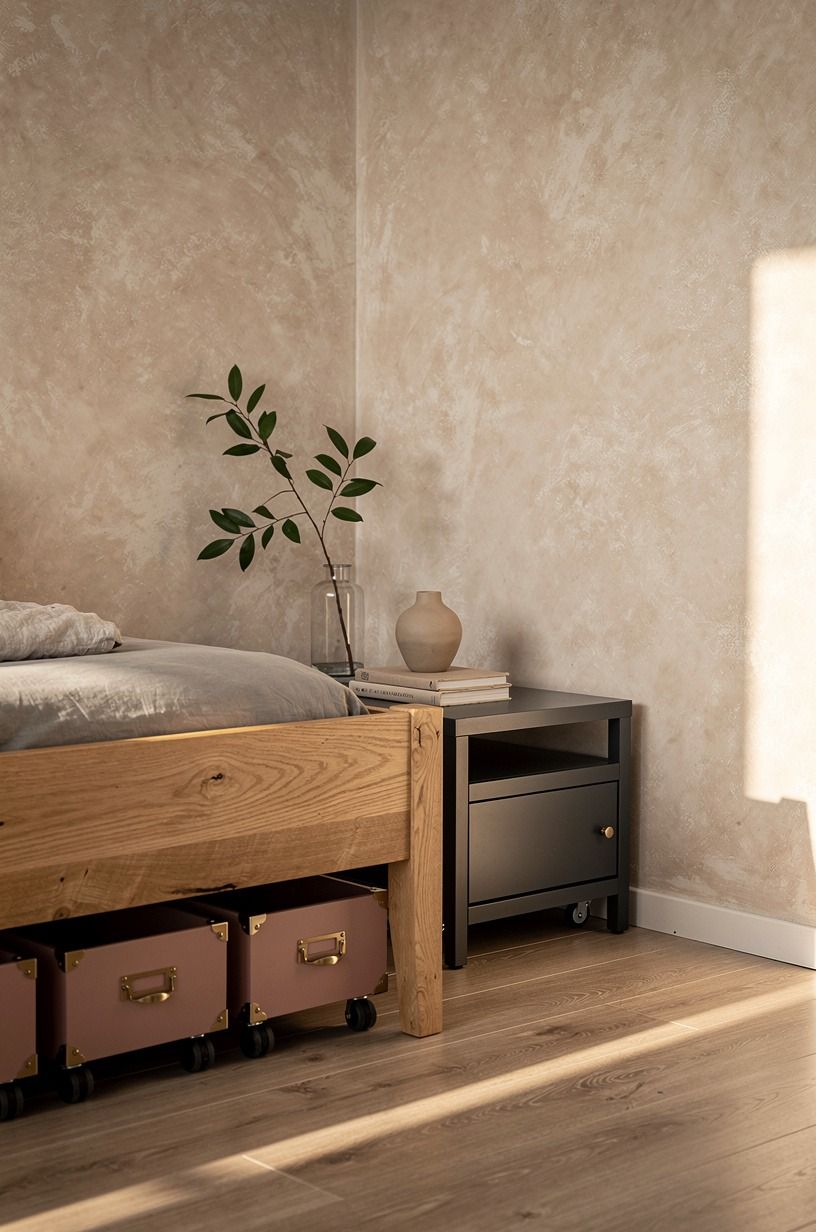
Rolling bins aren’t glamorous, but they can be excellent when you stop pretending they need to be invisible masterpieces. Under a low dresser, a bench, or even a console, they turn that hard-to-reach strip near the floor into usable storage you can pull out in one motion. Sleek, quiet, and unobtrusive.
Choose bins in charcoal powder-coated steel or canvas over plastic if the furniture sits exposed in the room. The photo’s low dark furniture works because the bins feel like part of the same palette, not emergency containers from the garage. I use this zone for workout gear, spare linens, or gift wrap, things you want nearby but not on display.
A set of two good rolling bins lands around $60 to $140, and you can move them when you rearrange.
You should measure the furniture clearance before you buy a thing. Even half an inch matters here. And if the piece has legs that visually float, the bins need to look intentional or the whole corner feels like a compromise.
For another example of using low zones smartly, this kitchen storage guide for small spaces translates the same rule to base cabinets. But don’t roll these under the bed if the bed already has drawers. One zone, one job.
8Install corner shelves above the dresser
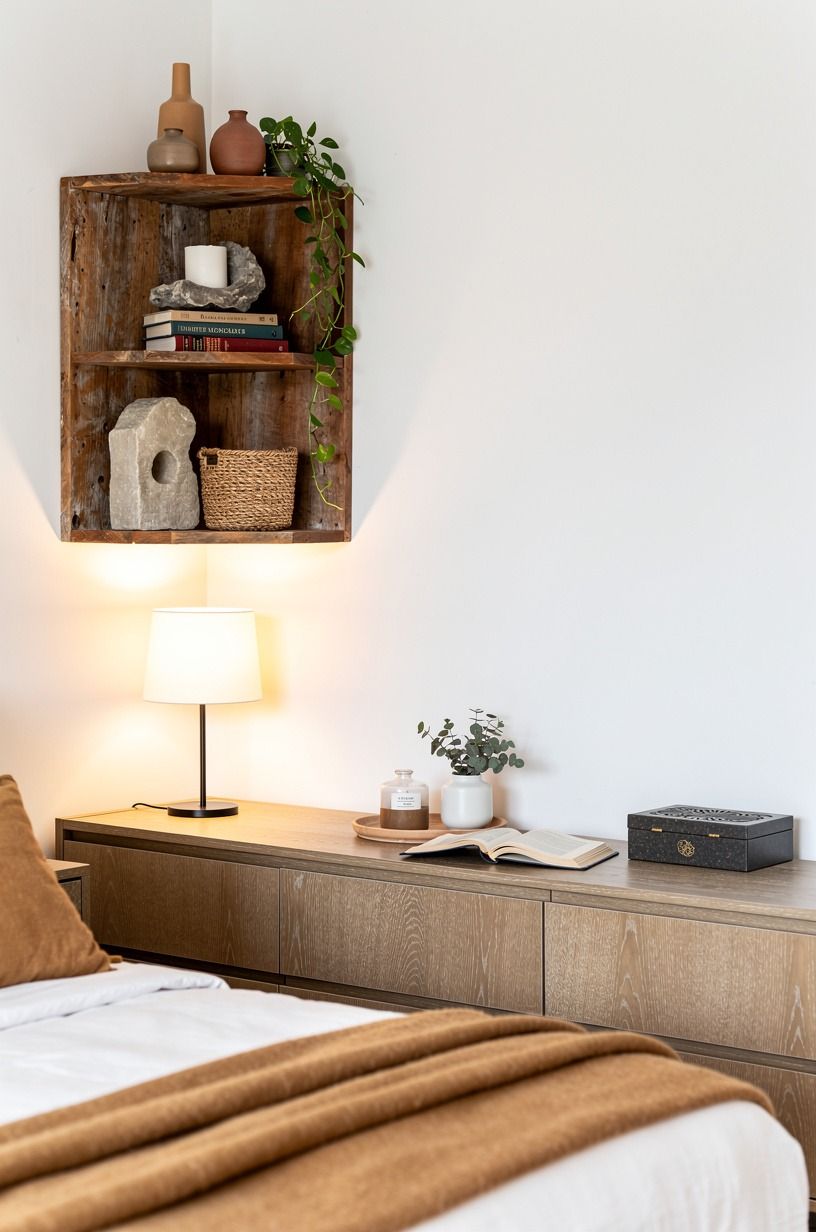
Corners can carry more than people give them credit for. If your dresser already owns one wall, corner shelves above it let you stack upward with almost no extra footprint, and the room feels finished instead of top-heavy. Layered, warm, balanced, and quietly architectural.
Use shelves with a little thickness. White oak corner shelves at 10 to 12 inches deep look sturdier than skinny floating triangles, and they hold baskets, folded knits, or jewelry trays without wobbling. I also like this move because it gives your dresser a reason to stay edited.
The overflow goes up, not across the top. Most corner shelf sets cost $80 to $300, which makes them a cheap upgrade for the amount of storage they quietly add.
Warm lamplight helps a lot here. The three-quarter view in the photo feels relaxed because the shelves, dresser, and lamp work as one composed wall instead of three unrelated items.
If your room layout is awkward, these small gaming setups that work in a bedroom are weirdly helpful for understanding vertical zoning. And if you paint the wall in Benjamin Moore Pale Oak OC-20, the shelf shadows stay soft instead of choppy.
9Choose a wardrobe with mirrored doors
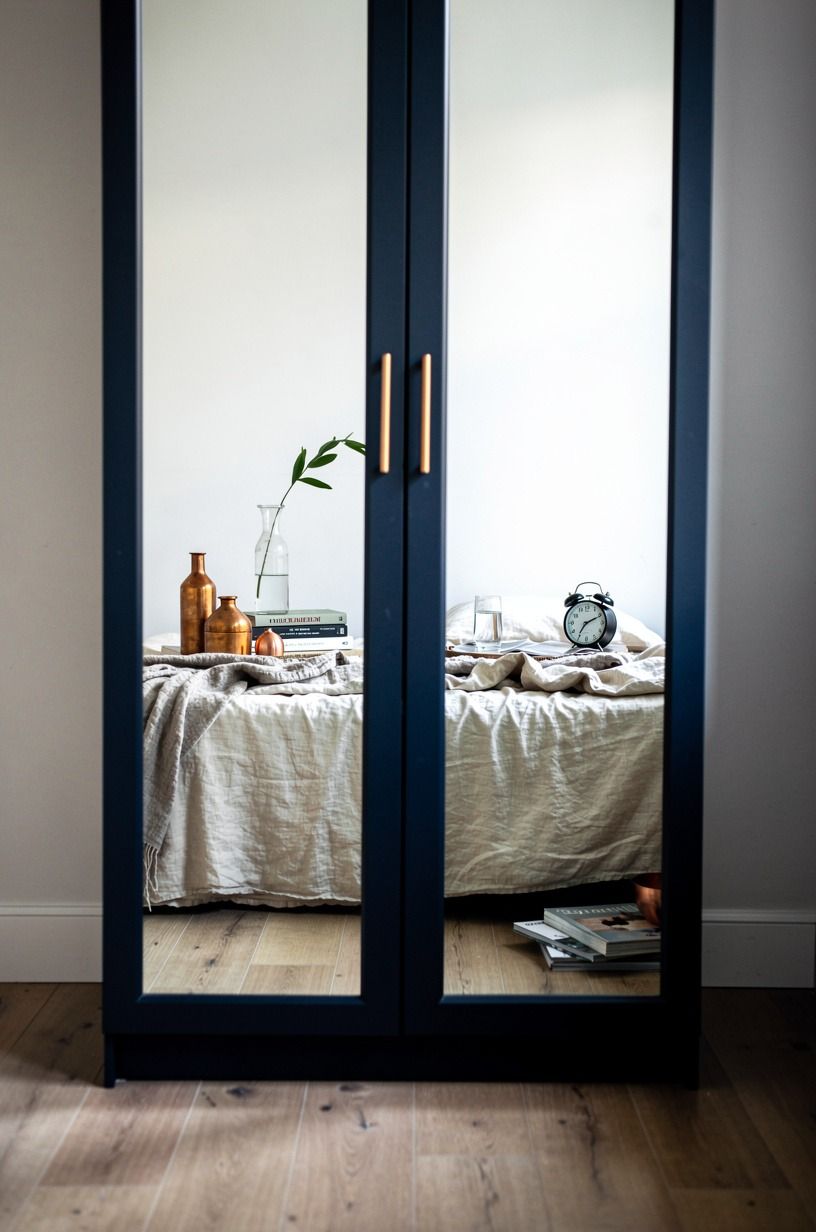
A mirrored wardrobe is one of the few big storage pieces I’d gladly use in a tiny bedroom because it solves two problems at once. You get closed storage for the mess, and you bounce light back into the room without finding space for a second mirror. Bright, airy, and generous with the room’s light.
The part that matters is door style. Full-height mirrored panels on a clean frame in soft ivory laminate or painted wood feel sharper than broken-up little panes. In a small room, too many mullions make the reflection busy, and busy is the opposite of what you’re after.
I also think mirrored doors work best when the rest of the furniture stays matte. A 36-inch-wide mirrored wardrobe runs $700 to $2,200, and the value is real when you factor in the mirror it replaces.
You should place the wardrobe where it catches window light rather than reflecting the bed straight back at you all day. That’s what gives you the floor-level drama in the photo without turning the room into a mirror maze. For renter-friendly layout help, these mezzanine bedroom ideas for small spaces make the same point about reflection and openness.
I’d skip mirrored nightstands if you do this. One reflective giant is plenty.
10Hang fabric pockets behind the door
Behind-the-door storage only works when it stays quiet. The overstuffed shoe organizer everyone can see from the hallway is not the goal.
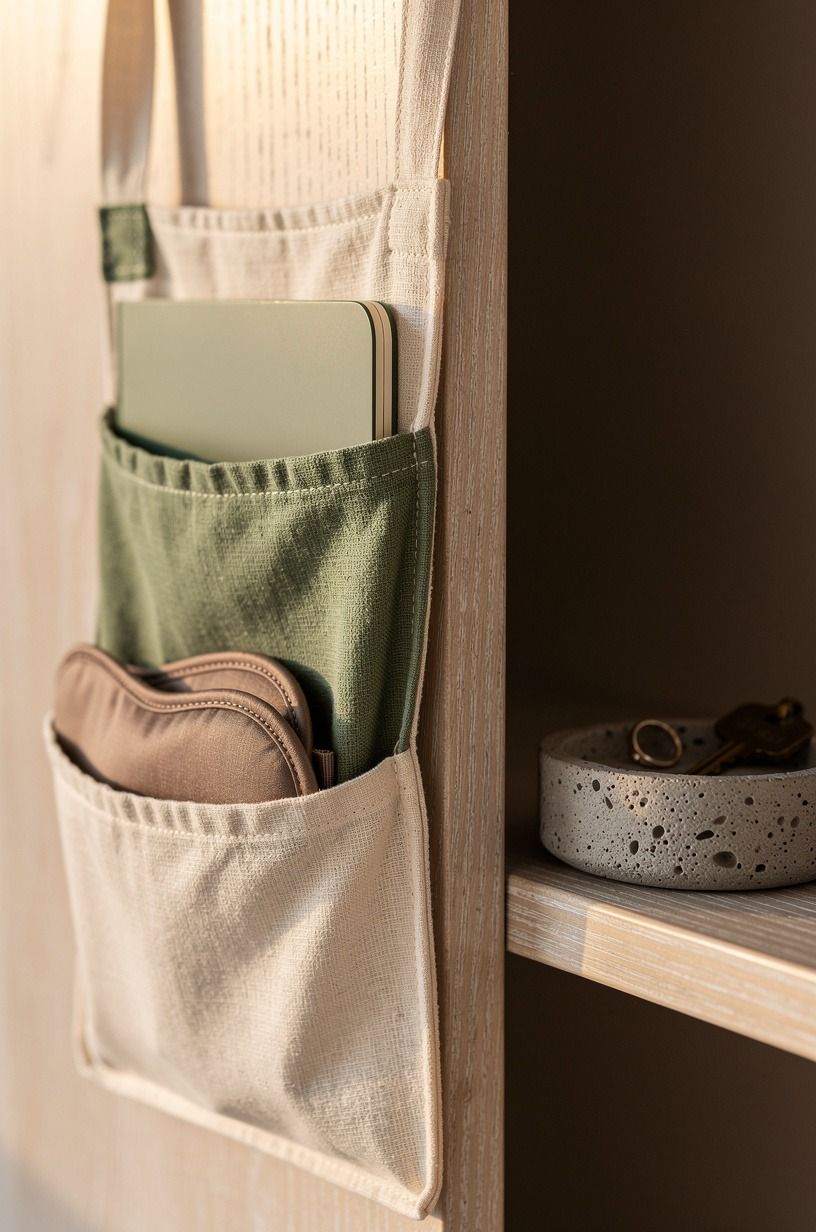
A softer panel with a few generous pockets gives you hidden utility without turning the back of the door into visual noise. Soft, textured, quietly useful.
I like panels made from heavy cotton canvas or quilted linen because they hang flatter and photograph better than slick nylon. Use them for chargers, a lint roller, socks, beauty tools, or the little bedtime things that usually scatter across the nightstand. The close-up photo sells texture, not bulk, and that’s exactly the right instinct.
Most fabric pocket organizers cost $25 to $80, which makes them one of the cheapest moves on the whole list.
And if you’re renting, this is one of the easiest upgrades on the list. No wall damage. No floor space lost.
No drama! And if your bedroom is short on closet room too, these small bathroom storage ideas are worth a look because the same pocket logic works in tight daily routines. Keep the fabric near your wall color, maybe washed flax beige, and the whole setup almost disappears.
11Style a ladder rack for folded layers
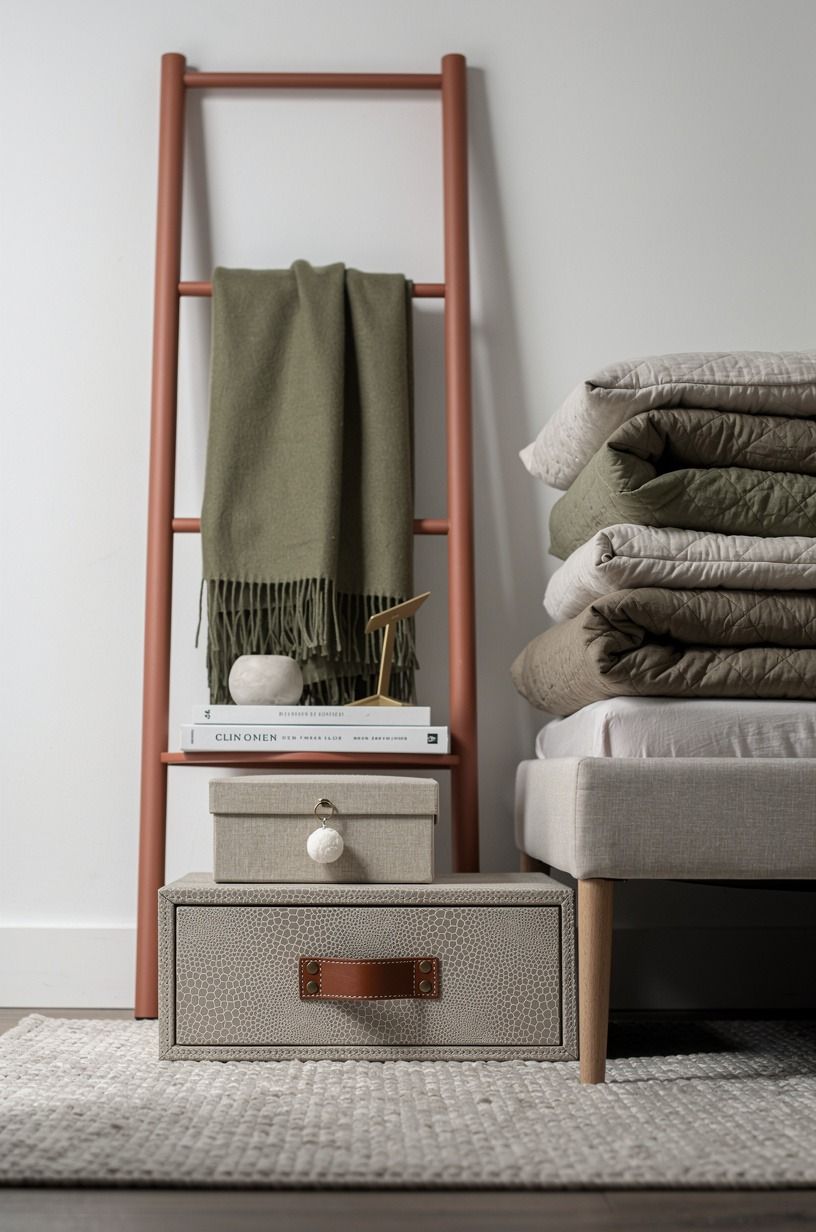
A ladder rack is open storage, yes, but it still earns a place in a small bedroom when you use it with discipline.
12Try a luggage rack instead of an extra chair
This is the move I tell everyone about after they’ve already lived with their tiny bedroom for a year. A leather-or-canvas luggage rack gives you a place to set tomorrow’s outfit, a damp towel, or a folded throw without claiming permanent floor space. It folds flat and slides behind the door or under the bed when you don’t need it, and that’s the part that matters in a small room.
Quiet, charming, and timeless.
Pick one in aged walnut or unlacquered brass hardware so it reads like furniture, not airport gear. Most decent luggage racks cost $80 to $220, which makes them a quietly affordable swap if you’ve been using an extra chair as your holding zone.
And if you entertain, it doubles as guest luggage storage in 10 seconds flat. Skip the chrome-and-black hotel versions.
They look harsh against linen bedding.
13Mount a pull-out drawer inside the closet
If your closet already has a single rod and one shelf, a pull-out drawer unit installed below the shelf adds storage the room didn’t have room to fit. Think of it as the closet version of the platform-bed drawers, just tucked behind a door. Sleek, hidden, and quietly luxurious.
Look for units with full-extension ball-bearing slides so the back of the drawer is actually reachable. Soft-close hardware is worth it here because slamming drawers at 6am wakes up everyone. A two-drawer pull-out typically costs $150 to $450 installed, and the value is huge compared to the next alternative, which is another freestanding dresser eating floor space.
If you’re renting, there are tension-rod versions that don’t require anchors, but they’re not as solid. I’d save those for socks and tights, not jeans.
And keep the drawer depth under 18 inches or the door won’t close all the way. This is one of the few upgrades where the cost stays modest and the payoff feels permanent.
14Pick furniture in the same finish as your wall
This is the move that designers use to make small rooms look bigger without removing anything. When the nightstand, dresser, and headboard all sit close to the wall color, the furniture recedes and the walls feel farther away. The same logic in reverse works for ceilings in low-ceiling rooms.
If your walls are in the Benjamin Moore White Dove OC-17 family, choose furniture in soft cream, bleached oak, or pale ash. For deeper walls like Farrow & Ball Studio Green or Sherwin-Williams Cascades SW 6483, pick matte black or stained walnut for the contrast pieces instead of fighting the wall. The value isn’t in the furniture, it’s in how the room reads at a glance.
Calm wall + calm furniture = calm room. Calm wall + loud furniture = the storage steals the attention, and so does the mess on it.
It’s also one of the cheapest moves on the list because you don’t buy anything new. You just commit to keeping finishes in the same family when you do replace pieces.
I made this change in a rental once with $0 spent, just by swapping a yellow-toned dresser for a grey-toned one from Marketplace. The room looked 20 percent bigger. Worth it, every time.
15Use a slim tray to clear the nightstand top
The nightstand top is where small bedrooms go to die. Charger, lip balm, water glass, book, hair tie, three pens, and a watch pile up in 48 hours.
A single small tray in brushed brass or travertine gives that mess a defined zone, and the room feels calmer instantly. Polished, warm, and quietly luxurious.
Keep the tray around 8 by 12 inches, large enough for the everyday things but small enough to leave breathing room on the nightstand. A solid tray costs $25 to $90, and it pays you back every single time you drop your keys in one motion instead of searching. Pair it with a small dish for jewelry and you’re done.
I rotate between a brass tray in summer and a darker stone one in winter, mostly because the warm metal looks bright in spring light.
The other quiet benefit is that the tray photographs well, so if you ever style the room for a listing, the bedside stays clean in one shot. Worth it for the everyday feel, not just the photo.
16Hang a narrow shelf above the doorway
Doorways waste vertical space. A 6-inch-deep shelf running the width of the door frame at the top gives you storage for books, baskets, or a row of small plants, and it doesn’t intrude on the room at all because it’s already above head height. Subtle, airy, and quietly intentional.
I like shelves in white oak with a 1-inch lip to keep things from sliding, or a slim blackened steel version if the room has darker accents. The shelf itself runs $60 to $180 for an average door, and most installs take under an hour. If you’re renting, version this with two small L-brackets and three wall anchors, and the patch is invisible when you move.
The thing to avoid is going too deep. Anything past 8 inches starts pressing into the door swing or looking chunky.
Keep it shallow and styled, and the doorway becomes the quietest storage zone in the room. The bonus payoff is the doorframe suddenly looks intentional, not just a hole in a wall.
17Style a stool that hides the cables
Chargers, power strips, and the inevitable cable mess under the nightstand kill the calm of a small bedroom faster than almost anything.
18Go vertical with two-inch wall shelves behind the door
Tiny strip. Huge payoff.
A 24-inch-tall run of 2-inch-deep shelves tucked flat against the wall just behind the door stores books, candles, or folded socks without eating an inch of floor space. Think of it as the bedroom’s quiet little pocket, the kind you don’t notice until you need it.
I use mine for the things I always lose. The reading glasses.
The hair tie. The sleep mask.
A solid wood version costs $40 to $90 for a small run, and the value shows up the first night you find your book in three seconds instead of ten. Beautiful little upgrade, and almost invisible when you keep the styling edited.
Worth it!
19Lean a slim entry shelf in the corner
This is one of my favorite tiny-bedroom moves and it costs almost nothing. A narrow shelf unit, 8 to 12 inches wide, leans into a corner and holds tomorrow’s outfit, a stack of books, or a basket of chargers. It’s the closest thing to a closet you can get without giving up floor space.
Warm, generous, and quietly lived-in.
Most slim leaning shelves cost $60 to $180, and the install is just lean and load. I keep mine near the door so the morning routine happens in one spot, not across the room. The room feels calmer the second the morning pile lands in one place.
20Pick storage with the room you already have, not the room you want
Worth it because most people shop for the dream bedroom and end up with furniture that doesn’t fit the actual one. Honest take: the storage that works is the storage that matches the bed you sleep in, the closet you already own, and the doorway you walk through every day.
Pick pieces that solve your real bottlenecks, not the ones in a magazine spread. A $40 peg rail does more than a $400 cabinet that doesn’t quite fit the wall. That’s the rule I trust now, and the room feels better every single time I follow it.
The Hidden-Edge Budget Map
If you’re wondering what this kind of upgrade costs, the short answer is less than a full furniture reset and more than a random basket haul. The money goes furthest when you put it into one built-in-feeling move, then keep the rest simple.
A few numbers help you make better calls. A nightstand should land near mattress height at 24 to 28 inches.
A rug should extend 18 to 24 inches past the bed. A wool 8×10 rug usually runs $400-$1,500, and washed-linen bedding often lands around $150-$450. A custom platform with drawers typically costs $1,200 to $3,800, which is where most of the value lives.
That’s why I’d spend first on storage shape, not decorative extras.
Why does the One-Clear-Floor Rule work?
I’ve come to think of small-bedroom storage as a floor problem more than a stuff problem. You can own the same number of sweaters, books, chargers, and extra pillowcases, but if the floor line stays open, your body reads the room as easier. That’s what people mean when they say a bedroom feels bigger.
They usually aren’t talking about square footage. They’re talking about friction (especially at night).
The mistake I made in my own first tiny bedroom was buying helpful little pieces that were only helpful one at a time. A cute trunk at the foot of the bed. A narrow shelf beside the dresser.
A stand for bags near the door. None of them were awful on their own. Together, they made the room feel like a relay race.
I was always stepping around something, even though the room looked styled in photos.
What changed everything was choosing storage that stayed inside existing edges. Under the bed.
Beside the headboard. Behind the door.
Over the dresser. Once the storage moved into the architecture of the room, the bedroom got calmer fast.
And calmer is the real luxury in a small space, not the number of bins you can brag about fitting inside it.
And you should also decide what deserves prime storage. Everyday layers close to the bed.
Backup bedding higher up. Sentimental clutter somewhere harder to reach, or not in the bedroom at all.
Real talk: a tiny bedroom doesn’t need smarter containers nearly as much as it needs better hierarchy. If the floor stays open and the daily things land within one step of where you use them, the room starts feeling generous again. That’s the rule I trust now, and it has not let me down yet.
The Seen-Storage Test: Storage You See Over Storage You Feel
Some storage works on paper and still feels wrong in the room. That’s usually the stuff you see first and use second: towering plastic drawers, extra carts, or another freestanding cube jammed into a corner because it was on sale. You get more capacity, sure, but you lose ease.
But the better storage is the kind you feel before you notice. A mirrored wardrobe that throws light back.
A bench that holds blankets but reads like architecture. A peg rail that replaces tabletop clutter.
A ladder rack that climbs the wall instead of spreading across the floor. If you keep asking yourself, will I see this first or feel the room first, the answer gets much clearer. That little shift matters in a rush!
Worth it because the storage works with the room, not against it. And that matters more than any organizing bin ever has.
The Questions I Get Asked Most
What is the best small bedroom storage idea for a small bedroom?
A platform bed with built-in drawers is still my first pick because it uses the biggest footprint you already own. More storage without more furniture is the win. If you want a faster version, a mirrored wardrobe from these small bedroom layouts that make the room feel bigger comes in right behind it.
Where can I buy small bedroom storage pieces on a budget?
Start with IKEA for the practical basics, then check Target, Wayfair, and Facebook Marketplace for solid wood benches or wardrobes that just need paint. These small bedroom DIY ideas help if you plan to upgrade the finish yourself. Secondhand wood often looks better than cheap new laminate, and your budget stretches further when the bones are good.
How much does a small bedroom storage makeover cost?
Most refreshes land around 100 to 300 dollars if you’re swapping in baskets, a peg rail, or fabric pockets and painting what you already own. Custom bed drawers or storage towers cost more, but the floor-space payoff is bigger, and the value is permanent. The free move is always editing what stays in the room, and that’s where a lot of people skip the easiest savings.
Can I create this kind of storage on a budget?
Yes, and I’d start with what does not require new square footage. Use the wall, the bed base, and the back of the door first.
Slide baskets under a skirted bed, hang fabric pockets, and clear your nightstand top before you buy one more storage box. These intentional small bedroom ideas show how far editing alone can go.
Is it worth adding built-in-looking storage in a small space?
Yes, because a tiny room rewards anything that keeps the floor line open. Hidden or wall-hugging storage makes the room feel easier to move through, and that matters more in a small bedroom than it does in a large one. Keep the tallest piece on one wall so the room still exhales.
Is this a good idea for a rental?
Yes, if you stick to reversible moves. Floating-style pieces, fabric pockets, peg rails with minimal anchors, and ladder racks are all renter-friendlier than bulky furniture.
Skip permanent millwork and lean on pieces you can take with you when your lease is up. For more renter-minded planning, see small bedroom ideas that make tiny rooms feel like a retreat.
Where I’d Start First
If I had to pick one, I’d start with built-in drawers in the platform bed. They solve the mess where it starts, and you can’t fake that payoff with prettier baskets. Pin that idea for later, then study your layout before buying anything else.