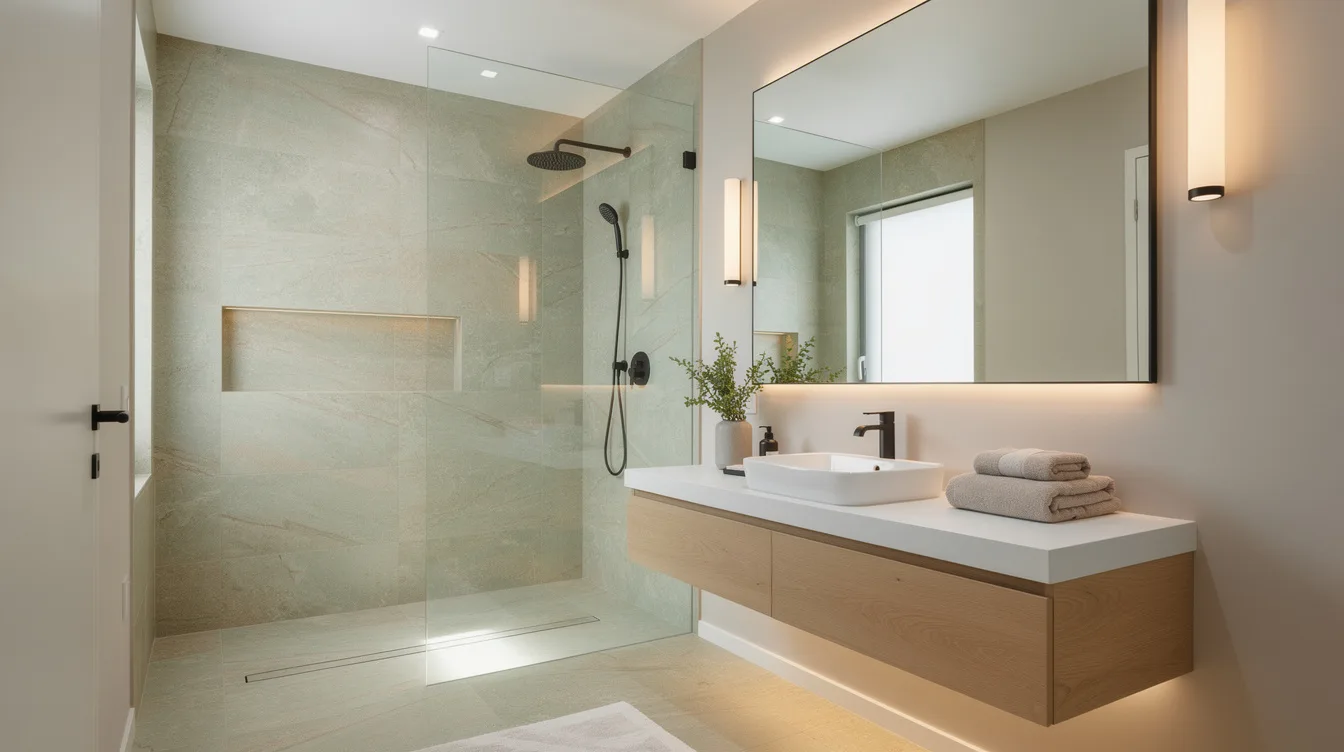
I can tell in about five seconds when a bathroom is fighting itself. The vanity is too bulky, the overhead light is harsh, and every bottle ends up lined across the sink because there is nowhere else for it to go.
The best bathrooms right now feel quieter than that. They borrow from spa design, warm natural materials, and pared-back storage, but they still have to survive toothpaste, damp towels, and rushed weekday mornings.
Start With a Calm, Open Layout
I always look at the floor first, because a cramped bathroom usually has too many visual stops. A floating IKEA vanity, one wall color, and a clear path to the shower make even a 5-by-8-foot room feel less busy.
For a full remodel, a typical bathroom budget often starts around $3,300 to $6,500 for a smaller basic space and climbs to about $13,000+ once you add custom storage, better tile, and upgraded plumbing fixtures. That range matters because layout fixes get expensive fast when drains and supply lines move.
If the room is tight, I would keep the toilet where it is and spend money on sightlines instead. A wall-hung mirror, a slim vanity, and fewer objects on the counter do more for the feel of the room than one fancy statement piece.
Choose a Walk-In Shower Over a Busy Mix of Fixtures
A walk-in shower is still the easiest way to get that hotel-spa mood at home. A typical complete shower install often lands around $1,600 to $4,400, depending on tile, glass, and whether you use a low-profile pan or a fully built wet-room base.
I like a matte Home Depot rain shower head paired with one fixed glass panel instead of a framed enclosure. It looks cleaner, and it cuts down on all the metal lines that can make a small bathroom feel chopped up.
If you have room, add a small bench or even a ledge in porcelain tile. It is practical, it holds products, and it gives the shower that intentional built-in look that cheap remodels usually miss.
A freestanding tub can be gorgeous, but I would only do it if the room truly supports it. Typical tubs often run about $450 to $1,650 for a standard model, while sculptural freestanding versions can jump well above that without improving how the room works day to day.
Warm Up the Room With Wood Looks and Stone Tones
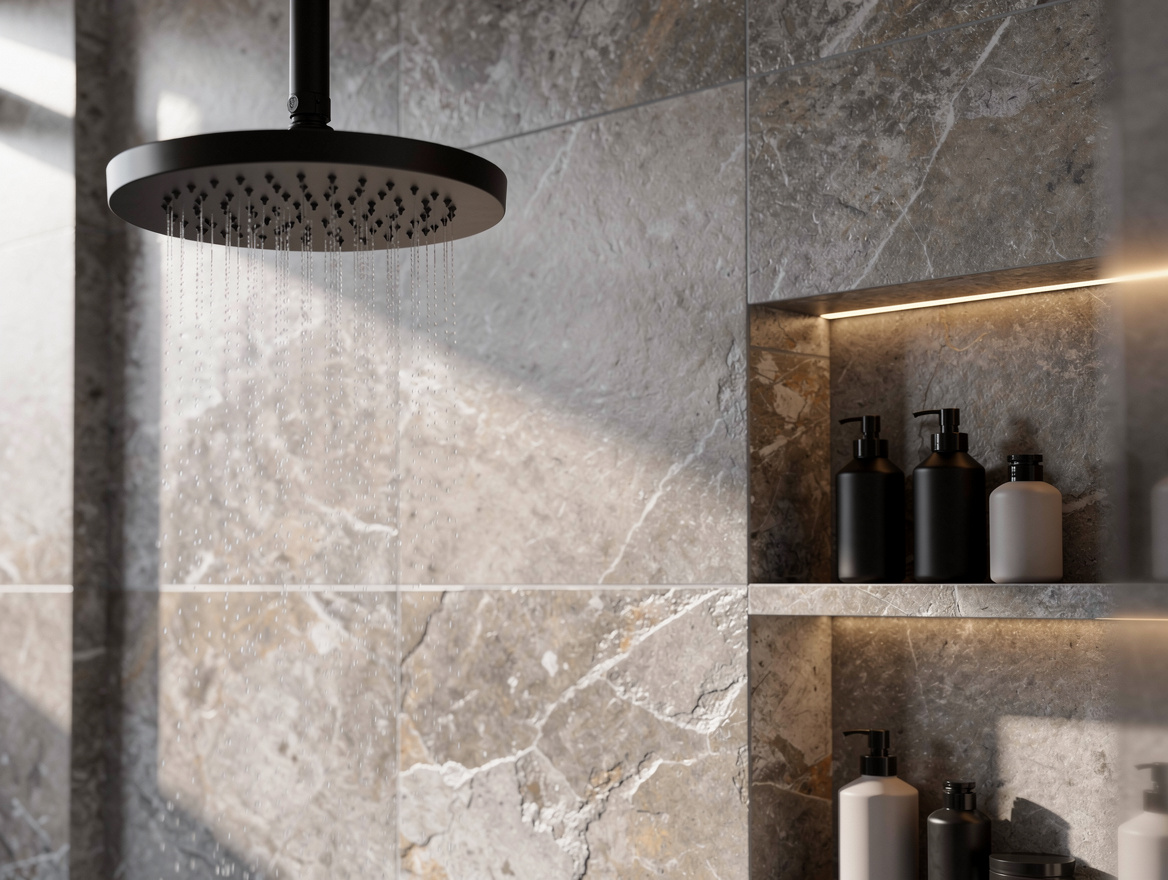
The bathrooms that feel current right now are softer, warmer, and less icy white. I would start with wood-look tile, sandy paint, or a muted sage tone before I even think about decor.
This is where biophilic design actually earns its keep. A light oak vanity, a stone-look floor, and one real plant on a stool make the room feel grounded without turning it into a fake tropical set.
Large-format 24-by-24-inch tile or 24-by-48-inch wall tile is worth a look because fewer grout lines make the room read bigger. Typical tile and installation costs often average about $45 to $130 per square foot on a midrange project, so I would use the bigger format on the main wall and go simpler elsewhere.
If you want texture, use it in one place. A ribbed ceramic wall tile or a microcement-look finish on the vanity wall is enough, and I think that reads far more expensive than mixing four patterns in one small room.
Pick a Floating Vanity With Better Storage Than You Think
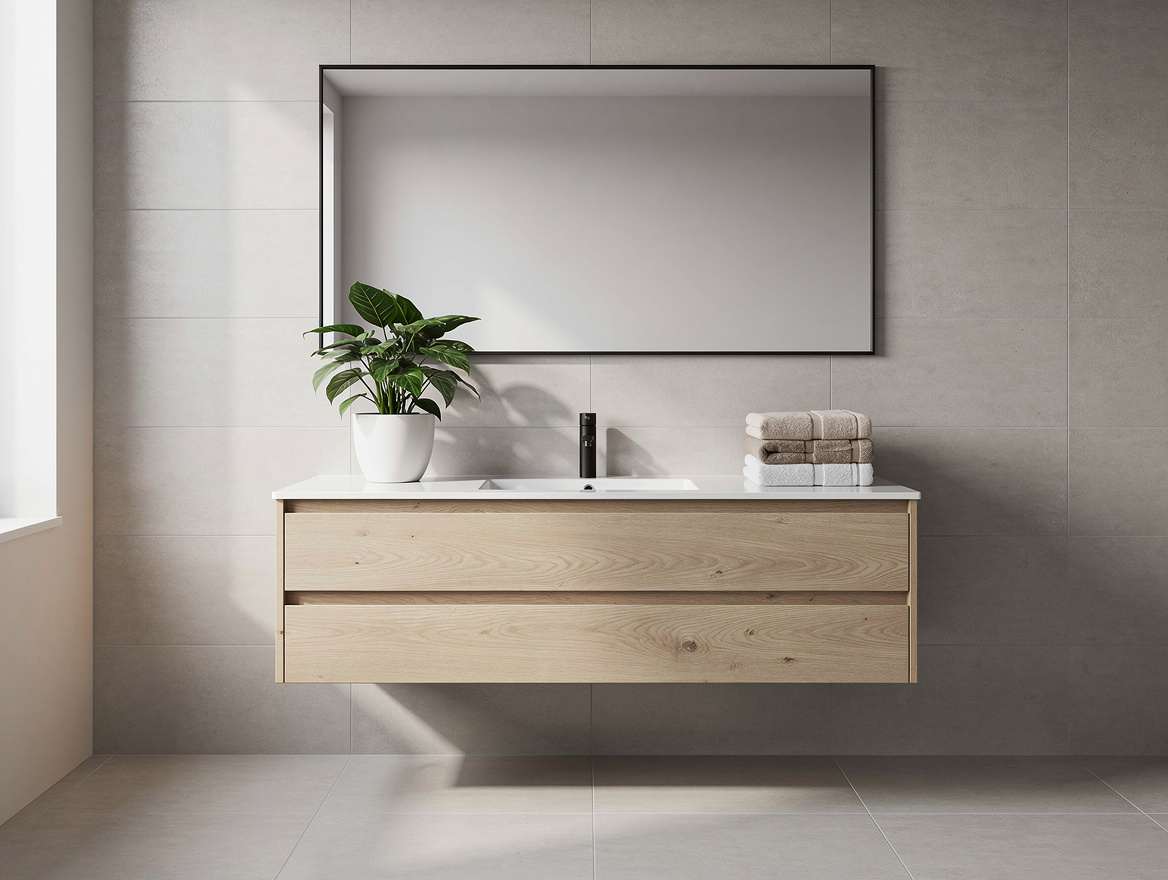
A bathroom starts looking messy when the vanity cannot hide daily clutter. I would rather buy one solid Wayfair floating vanity with deep drawers than spend the same money on cute baskets that still leave everything visible.
A typical vanity and mirror setup often runs around $450 to $2,200, depending on width, countertop material, and drawer hardware. That is one of the smartest places to spend because it changes storage, style, and your morning routine all at once.
For a Japandi feel, I like light wood fronts, soft corners, and an integrated white sink. For a darker look, charcoal oak or black-brown wood with brushed metal hardware feels richer than glossy black cabinets, which can read a little too showroom for me.
If you are renting, a vanity swap is not always possible, so go after the mirror and hardware instead. A thin framed Target mirror and matching towel hooks can shift the whole look without opening a wall.
Layer the Lighting Instead of Relying on One Ceiling Fixture
Bad bathroom lighting ruins good materials. One bright ceiling light makes tile look flat and faces look tired, which is the opposite of the soft spa effect most people want.
I prefer a mix: a dimmable Lowe’s ceiling fixture, vertical mirror lighting, and a warm LED strip under the vanity if the budget allows. The underglow sounds extra, but in a dark bathroom it gives you that quiet nighttime light you actually use.
An anti-fog Amazon mirror is one of those upgrades that feels more useful than luxurious until you live with it. The same goes for a heated towel rack, especially if the room has little ventilation and towels stay damp too long.
If you want drama, use lighting with restraint. A dark bathroom with brushed brass or stainless details and one continuous LED line at the niche or mirror edge feels polished, while too many glowing features start to look like a showroom display.
Spend More on the Surfaces You Touch Every Day
When money gets tight, I cut decorative extras before I cut the tactile stuff. Faucet handles, drawer pulls, the shower controls, and the floor under bare feet matter more than a trendy stool or a stack of styled jars.
A suspended toilet setup typically costs about $650 to $1,300 installed, so I would not force it into a tight budget unless you really want the cleaner wall-mounted look. A standard toilet with a slimmer profile can still look sharp if the rest of the room is edited well.
For the best buys, I would mix sources on purpose: a Costco towel set, an Ace Hardware handheld shower for function, and a better vanity light from Home Depot. That split keeps the room from feeling cheap without pushing every decision into luxury pricing.
If the full remodel number feels high, build the spa feeling in layers. Start with the shower zone, the vanity, and lighting, because those three moves usually change the room more than replacing every single finish at once.
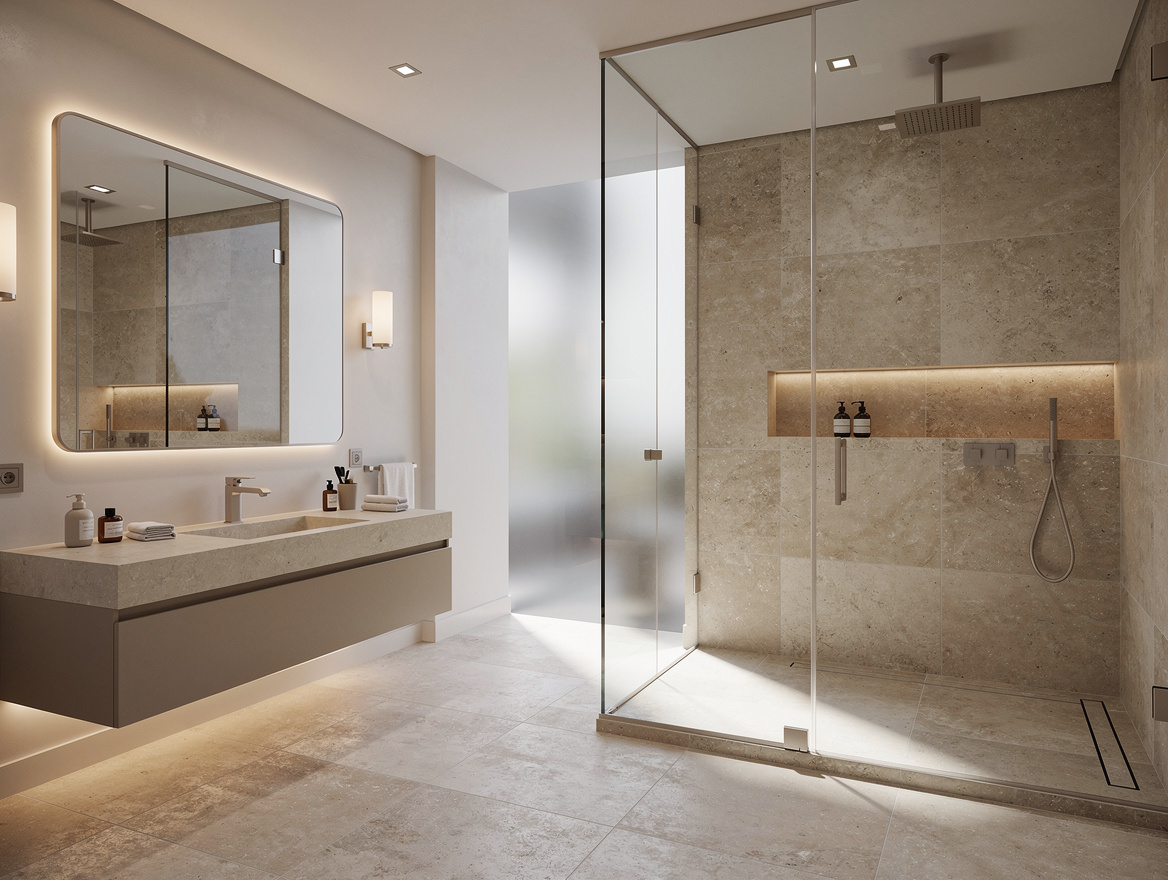
Begin with the shower wall and the vanity, then judge everything else against that mood. If a finish or accessory makes the room feel busier, skip it and keep the calm.
Mia Carter writes about small-space living and budget home makeovers. She has restyled three rentals and tests most ideas in her own 45 sqm flat.