I know how this decision usually starts: you stand in the driveway with six paint chips, the roof looks browner than it did in the store parking lot, and the beige siding suddenly feels impossible to read. Exterior color is expensive enough that a wrong choice can annoy you every single time you pull in.
The good news is that the strongest 2026 schemes are not random. Most of them fall into three clear families: high-contrast neutrals, warm earth tones, and deeper heritage colors that still feel safe for everyday neighborhoods.
Start With a High-Contrast Black and Cream Palette
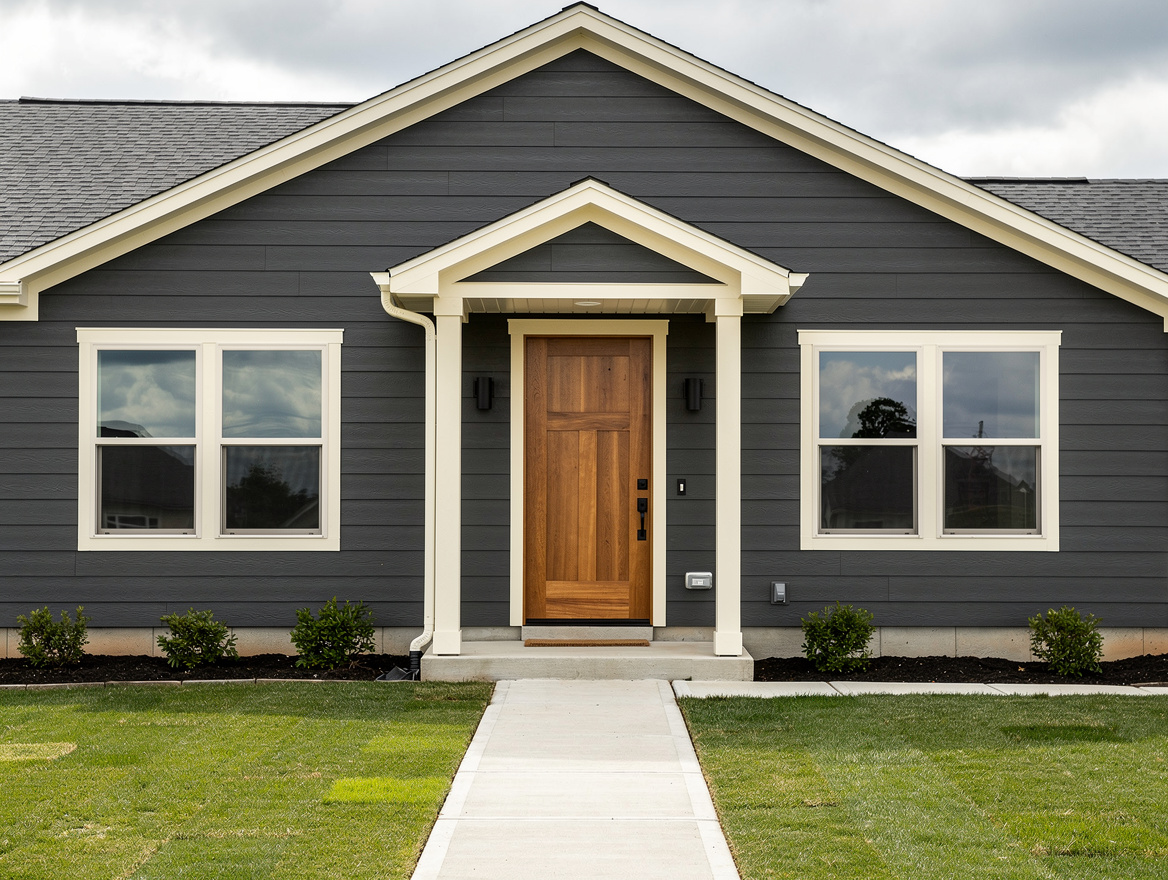
If your siding has clean lines and your porch lights already read a little modern, a dark body can make the whole house look sharper fast. I still think Sherwin-Williams Tricorn Black SW 6258 works because it looks crisp, not flat, when it gets paired with creamy trim.
For trim, Sherwin-Williams Alabaster SW 7008 keeps the contrast strong without turning the house into a hard black-and-white checkerboard. Add a wood-stained door or Urbane Bronze on shutters and you get a look that feels current without trying too hard.
This scheme is big on modern farmhouse and simple rectangular facades for a reason: it photographs well and hides visual clutter. The caution is obvious, dark paint shows dust and fading sooner in full sun, so this is where I would not cheap out on the coating.
A mid-tier or premium exterior paint typically pencils out at about $2 to $4 per square foot of paintable surface in 2026, and that range makes sense here. Black exteriors are unforgiving, so a bargain gallon is usually false economy.
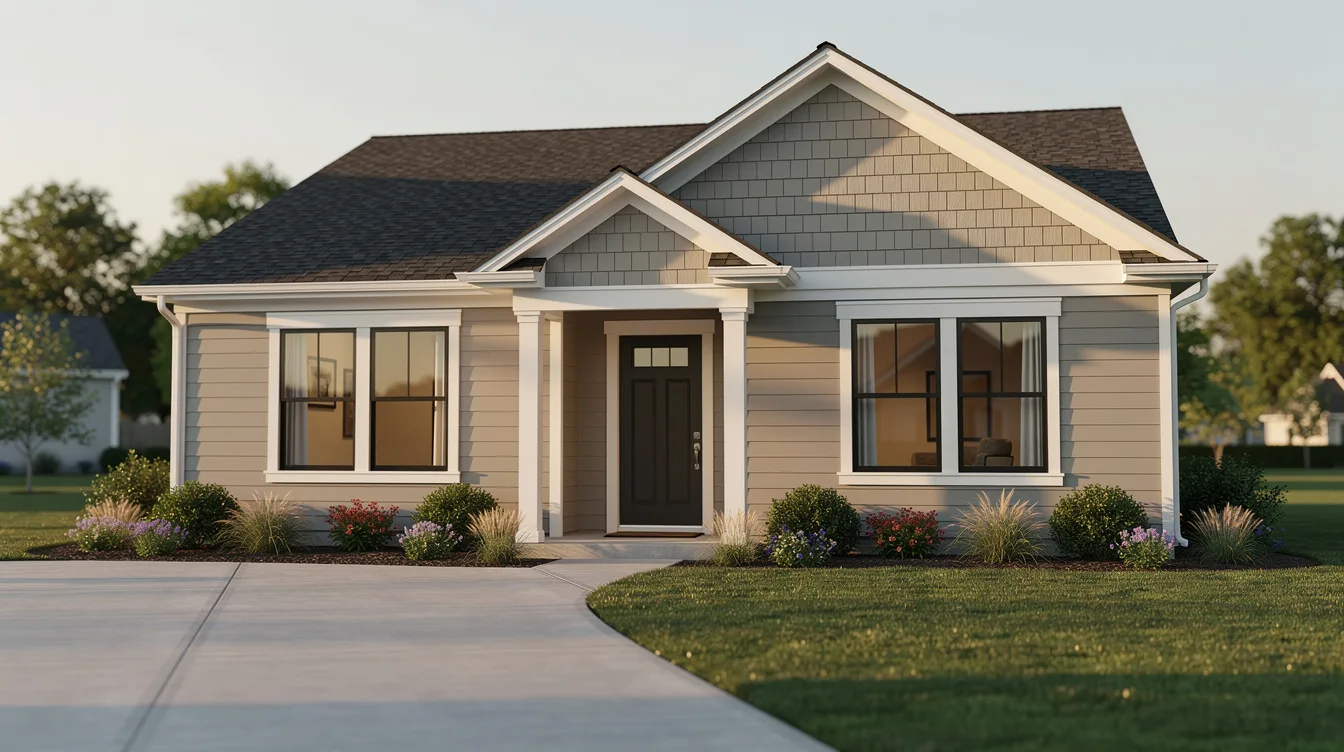
Warm Up a Plain Front Elevation With Greige and White
Some houses do not want drama, they want calm structure. A soft neutral body like Behr Swiss Coffee can make older siding, mixed materials, or awkward garage placement feel more cohesive.
Pair it with Behr Ultra Pure White on trim and keep the accents matte black on railings, house numbers, and light fixtures. I like this route when the roof is already a medium brown or charcoal, because it does not fight what is expensive to replace.
This is the easiest family to live with if you care about resale and HOA comments. Greige and off-white also handle shifting daylight well, which matters more than people admit when a house looks creamy at noon and dingy by 6 p.m.
For most owner-occupied homes, a mid-tier line in the $55 to $75 per gallon range is the sweet spot. It is usually enough durability without paying top-tier prices just to say you did.
Use Sage Green to Make Traditional Details Feel Fresh
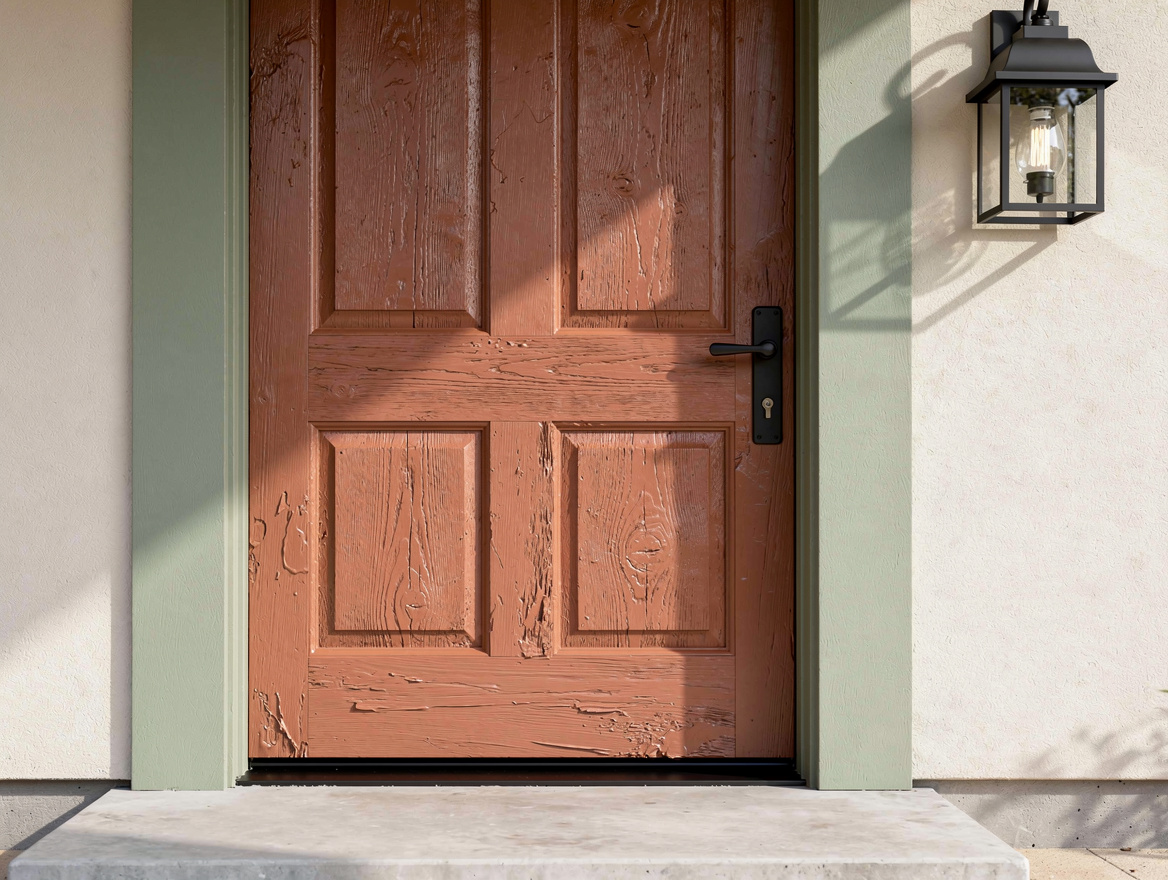
When a house has shutters, a porch, divided-light windows, or brick steps, sage usually looks more natural than stark gray. Benjamin Moore Saybrook Sage HC-114 has that muted depth that feels settled instead of trendy.
Trim in Benjamin Moore White Dove OC-17 keeps it bright, then a front door in Benjamin Moore Cottage Red CC-94 brings in a terracotta note that feels warm, not cute. I like this combination more than navy on traditional homes because it is softer on large elevations.
This is one of the strongest 2026 color families because warm earth tones are everywhere right now, and they are easy to tie into stone, red brick, or weathered concrete. The palette also hides pollen and dust better than bright white bodies do.
If you are budgeting the whole job, a typical 2,000-square-foot home often lands around $3,500 to $9,000 with labor and materials. That spread is wide, but prep work and siding texture really do change the math.
Lean Into Olive and Stone for a Classic, Quiet Look
Olive is the move when you want character without making the house the loudest one on the block. Sherwin-Williams Artichoke SW 6179 gives you color, but it still reads grounded next to mature landscaping and stone paths.
On the trim, Sherwin-Williams Roman Column SW 7215 softens the whole composition. Add aged bronze hardware and dark brown shutters, and the house gets that collected look that works especially well with brick, fieldstone, or warm beige roofing.
I would pick this over a cooler gray-green almost every time for suburban exteriors. Cooler greens can go flat fast, while olive holds onto some warmth even on cloudy days.
Material cost matters here because textured siding and trim details eat paint. A DIY repaint for a typical house usually means about 12 to 18 gallons plus tools and prep, which often lands near $1,000 to $1,800 before you price your own time.
Choose Deep Navy When You Want Color Without Chaos
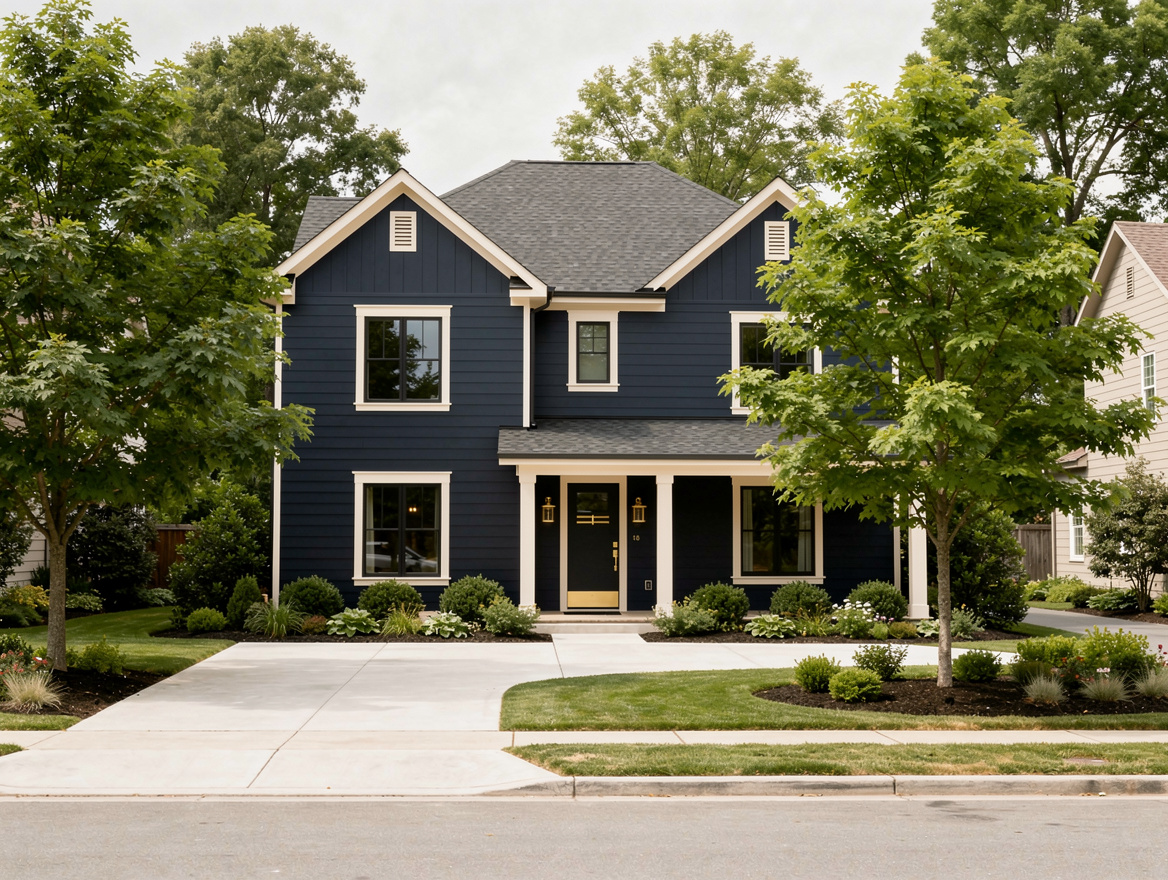
Navy is still one of the safest saturated colors for an exterior, especially if you want something stronger than gray but less earthy than green. Benjamin Moore Hale Navy HC-154 remains a smart pick because it has enough depth to feel tailored, not nautical-themed.
Trim it with Benjamin Moore Chantilly Lace OC-65, then use a natural wood front door and a few brass fixtures. That mix keeps the palette from getting too cold, which is the main mistake people make with dark blues.
This scheme fits colonial, coastal, and simple boxy houses surprisingly well. It is also more HOA-friendly than people expect when the trim stays warm white instead of bright refrigerator white.
If you live in heavy sun, salt air, or strong freeze-thaw cycles, this is where premium paint can earn its keep. Lines like Sherwin-Williams Duration or Benjamin Moore Aura generally sit around $70 to $90 per gallon and are often worth it for a paint-once mindset.
Try Terracotta and Sage for a House That Feels Lived In
Terracotta is the bolder earth-tone option, but it does not have to look southwestern or theme-y. A body color like Benjamin Moore Cottage Red CC-94 gets more versatile when you pair it with green instead of more red or tan.
Using Benjamin Moore Saybrook Sage HC-114 on trim creates a softer edge, and an off-white porch ceiling plus black lanterns keeps the entry crisp. I like this scheme most on stucco, brick, or houses with a lot of trees around them, where warm clay tones feel believable.
It is not the universal pick, and that is exactly why it works. On the right house, terracotta has more personality than another safe greige exterior, while still landing in the broader 2026 warm-earth movement.
As a rule, standard single-family exterior jobs often range from about $2,000 to $8,000, while larger or more detailed homes can push much higher. If your siding has trim bands, brick edges, or multiple gables, assume the upper half of the range, not the lower one.
Begin with the part of the house you are not changing, usually the roof, stone, or brick, then choose one of these six schemes that actually works with it. Spending for better paint matters, but getting the color family right matters first.
Mia Carter writes about small-space living and budget home makeovers. She has restyled three rentals and tests most ideas in her own 45 sqm flat.