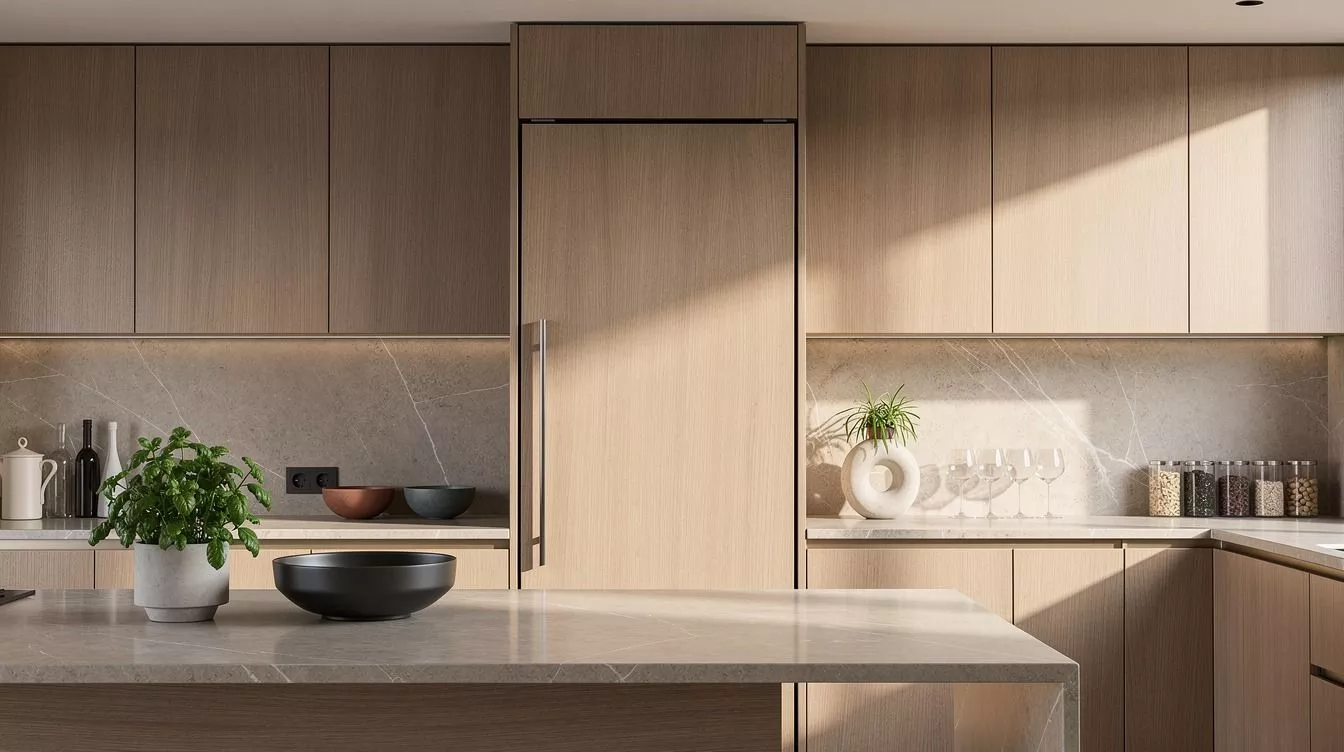
How to hide a kitchen door without losing pantry space usually comes down to one smart move: make the door behave like the wall around it. I learned that after fighting a clunky pantry swing in a narrow galley where every inch mattered and the 42 to 48 in clearance rule was already tight. You don’t need a fantasy remodel. You need alignment, restraint, and one finish you trust.
- Start with a pantry door disguised as cabinetry
- Anchor the fridge wall with matching hidden panels
- Layer beadboard across a concealed pantry entry
- Hang shallow spice rails on the detail door
- Build a flush door into tall kitchen storage
- Paint the hidden pantry door like the walls
- Wrap cabinet molding across the concealed opening
- Slide a pocket door behind pantry shelving
- Frame the door with floor-to-ceiling shaker panels
- Hide the entrance inside a coffee station wall
- Continue backsplash tile over the pantry door
- Install push-latch hardware for a handleless look
- Camouflage the door with vertical wood slats
- Tuck appliance storage behind a seamless panel
- Mirror upper cabinet lines across the doorway
- Blend a butler pantry behind arched millwork
- Use reeded glass panels for a soft disguise
- Finish with toe-kick lighting under the hidden wall
1Start with a pantry door disguised as cabinetry
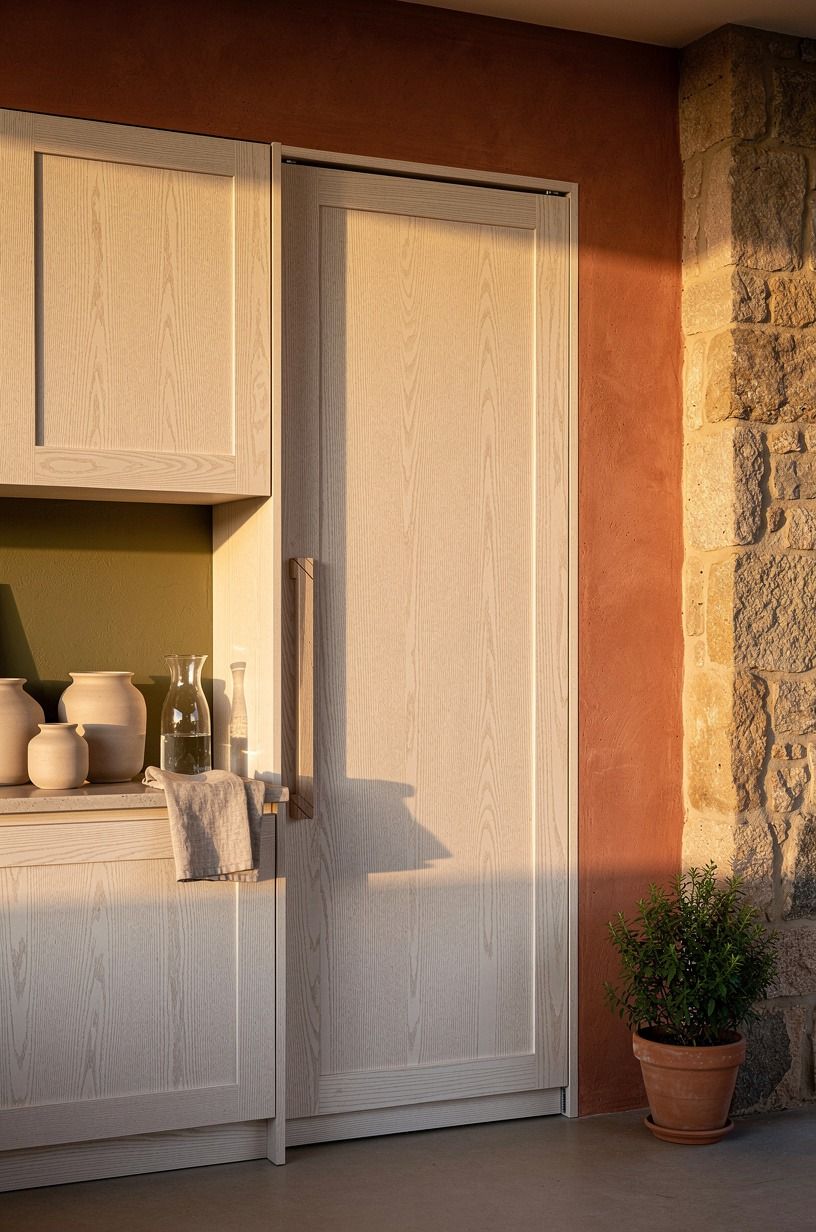
The easiest win is starting with a pantry door that reads like the cabinets before it reads like a door. In a terracotta, stone, and olive kitchen, I like cerused white oak panels because the grain gives you warmth without making the seam louder.
If your pantry sits near a run of uppers, match the rail width first, then the finish. You’ll notice the disguise works best when your eye catches rhythm, not hardware.
And I use what I call the Two-Line Rule here. Keep the vertical reveals consistent, then let the horizontal drawer lines die into the hidden panel so your brain files the whole wall as storage. If your counters are the standard 36 in height, carry that visual line right into the door face with a painted oak seam that doesn’t interrupt the run.
And yes, I’d skip a contrasting knob. It announces itself the second you walk in.
If you want more layouts, my favorite examples in hidden pantry door ideas for a seamless kitchen show how quiet this can look.
2Anchor the fridge wall with matching hidden panels
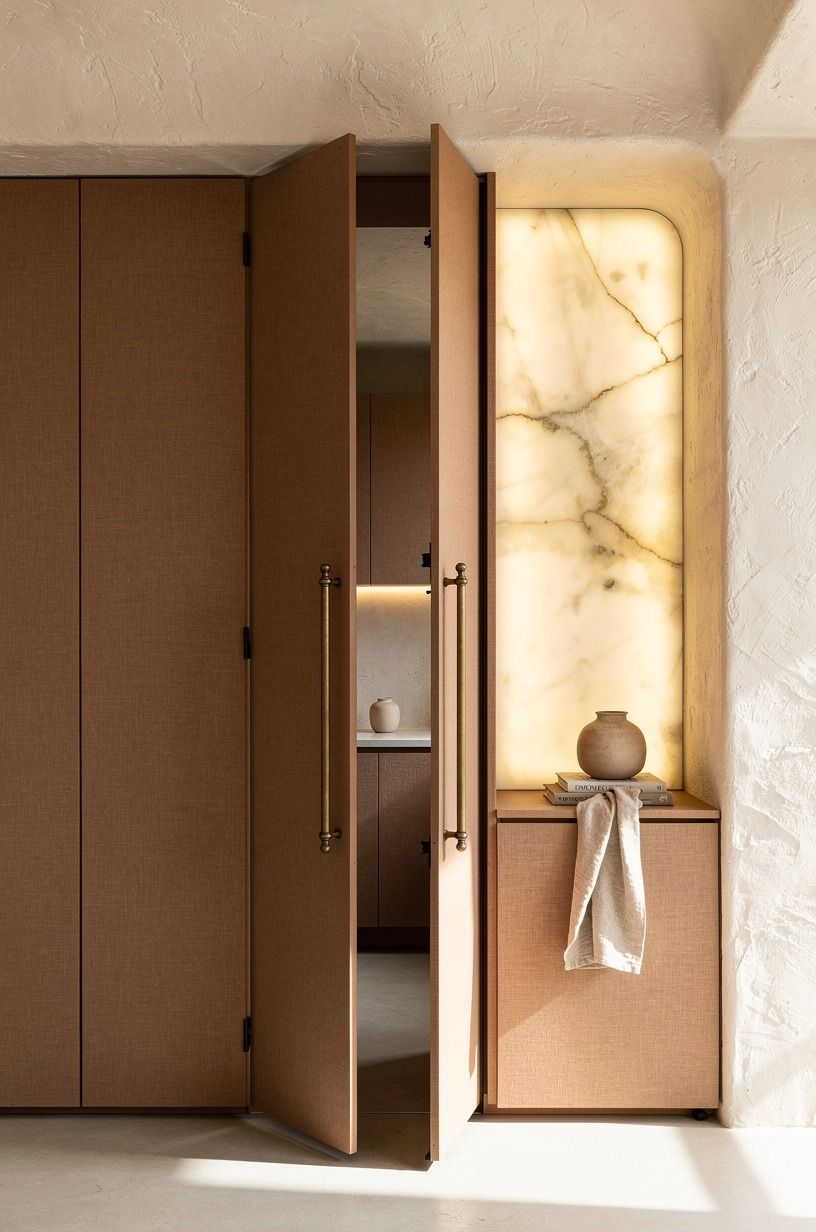
A fridge wall is where a concealed door can feel most convincing because you already expect tall planes and deeper shadows.
3Layer beadboard across a concealed pantry entry
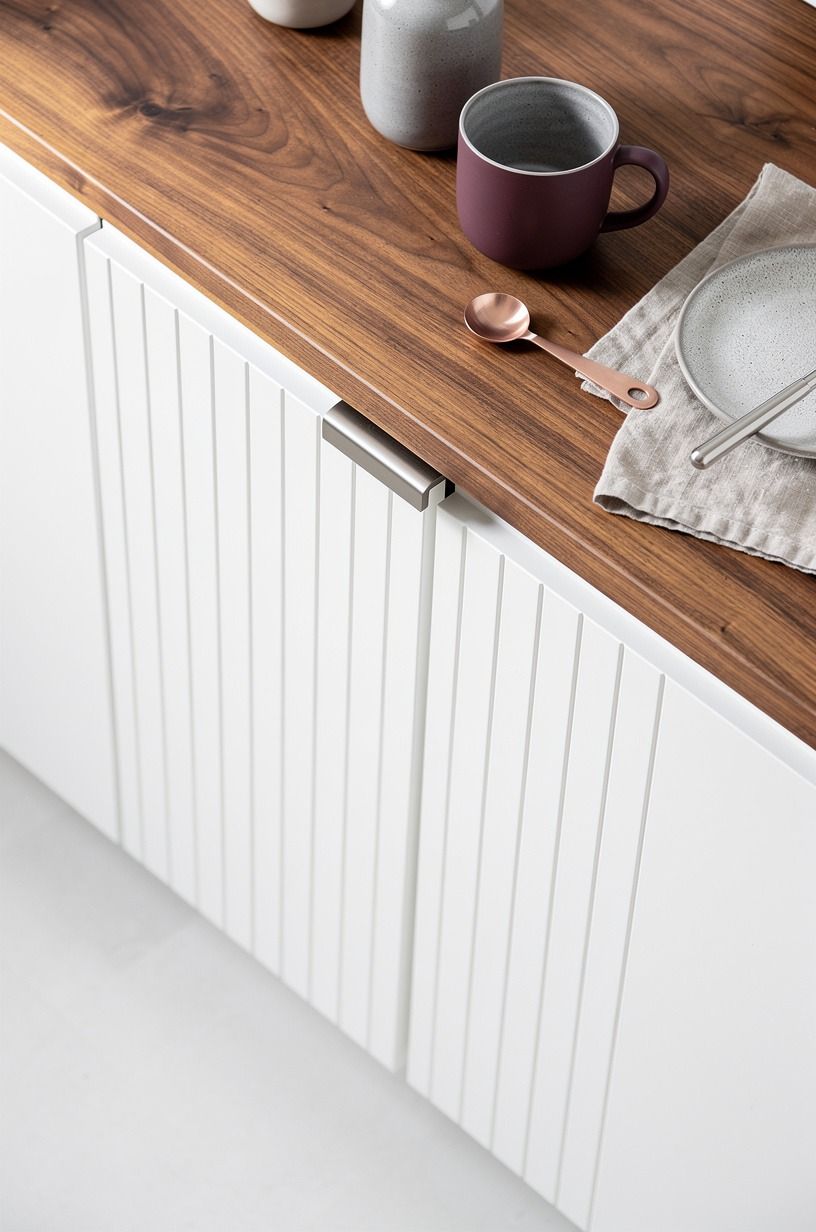
Beadboard helps when the wall needs texture more than polish. On a bright work-zone edge, run book-matched walnut counter on one side, then carry slim bead spacing across the concealed entry so the whole plane reads as one crafted surface.
You want the grooves to keep moving without a hiccup. That’s the move your eye follows long before it notices a door swing.
I wouldn’t use chunky cottage bead here unless the whole kitchen is already leaning there. Thin, even profiles feel cleaner next to plum and gray tones, especially when the worktop has a strong walnut figure and a thin beadboard profile keeps the rhythm crisp. Keep the bead lines plumb, and stop the panel buildup short of interfering with the 18 in backsplash zone above the counter.
If you’re comparing textures, hidden door ideas for the kitchen pantry beyond has a few examples that prove a little texture goes farther than another paint color.
4Hang shallow spice rails on the detail door
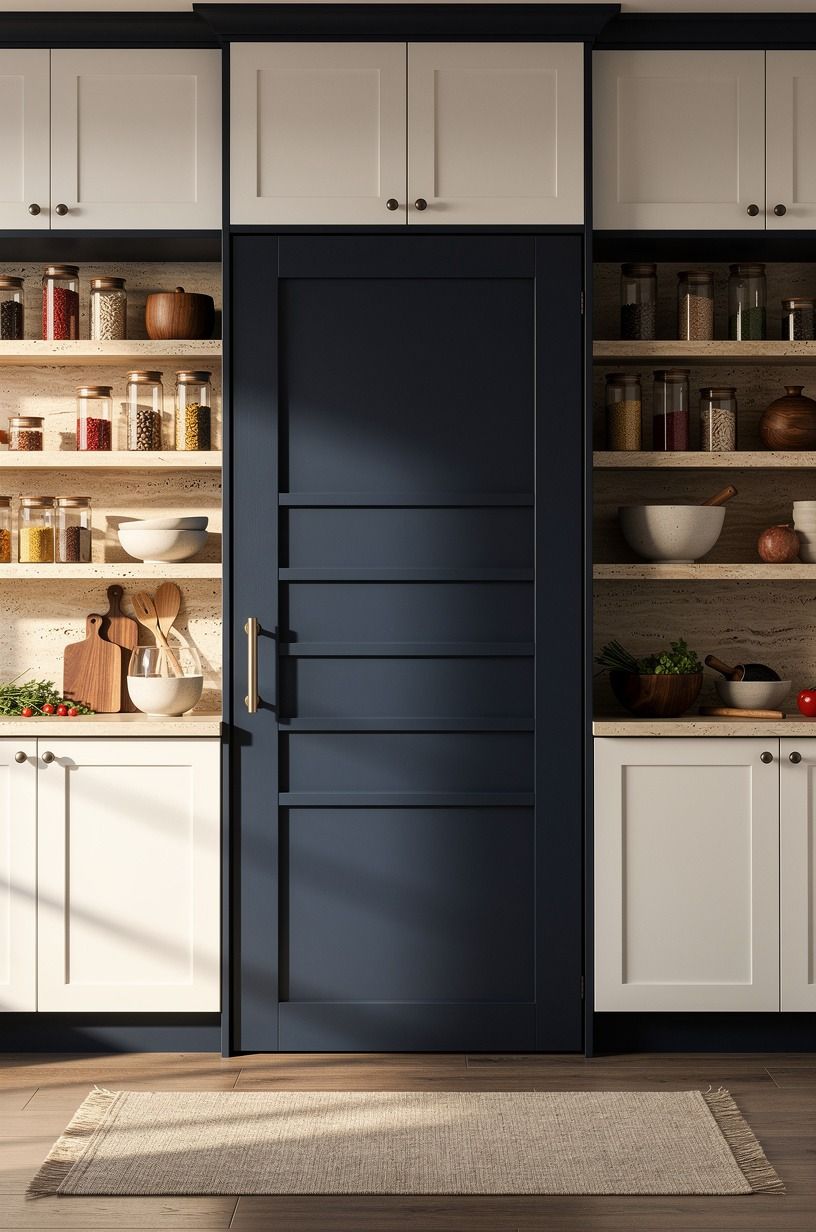
If the door sits in a practical zone, let it earn its keep. Shallow spice rails can hide the panel beautifully as long as you stay disciplined about depth, and by disciplined I mean really shallow.
Think glass jars, walnut accents, and nothing that projects far enough to clip adjacent cabinetry. In a navy and white setup with warm travertine shelves, that extra layer makes the opening disappear into daily function.
Keep the rails light, screwed into a reinforced slab, and limited to spices or tea tins you reach for often. I learned this the hard way in a narrow pantry door where oil bottles made the swing feel heavy and awkward. Don’t do that.
Small jars. Clean labels. A little repeated glass, especially clear spice jars that don’t visually bulk up the panel.
For more wall-to-door camouflage, I keep going back to hidden pantry door ideas for a seamless kitchen because the best versions always look useful first and clever second.
5Build a flush door into tall kitchen storage
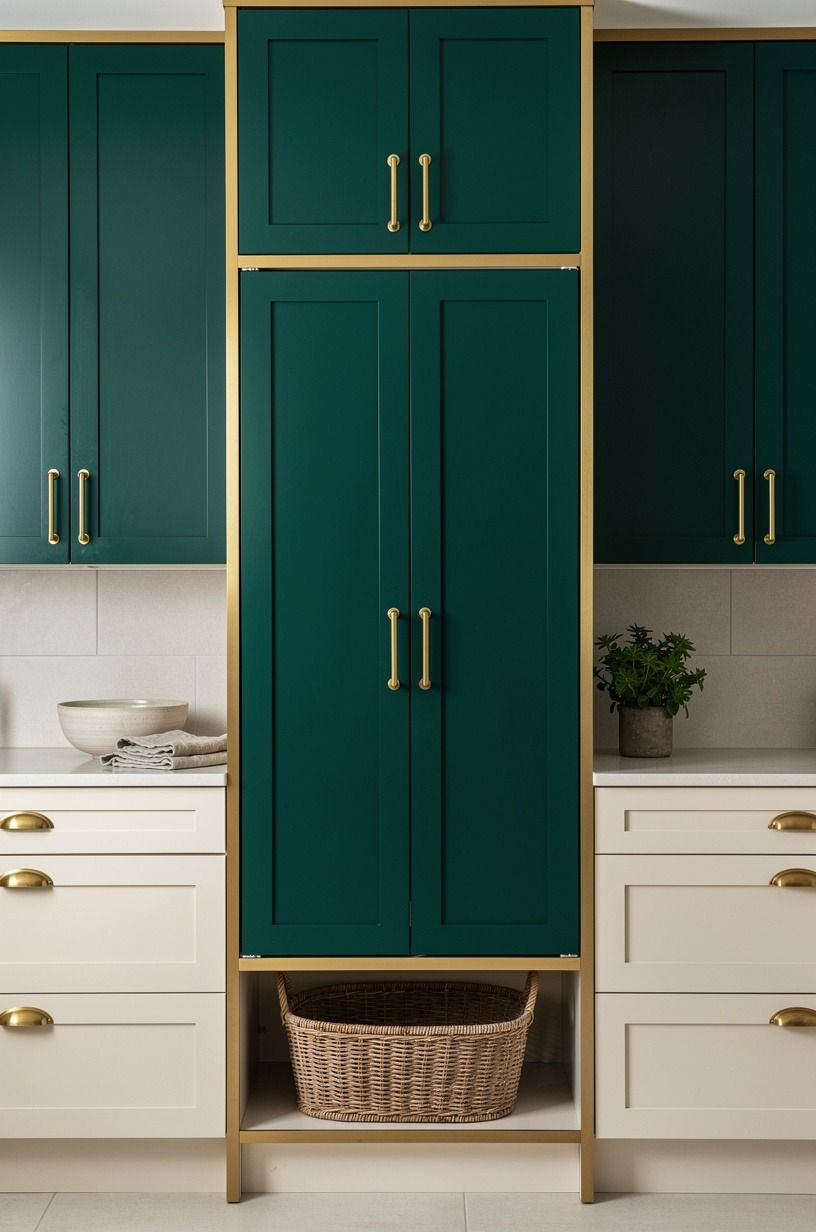
When you have a full storage wall, a flush door is usually the smartest choice because it lets you hide the opening inside a bigger composition.
6Paint the hidden pantry door like the walls
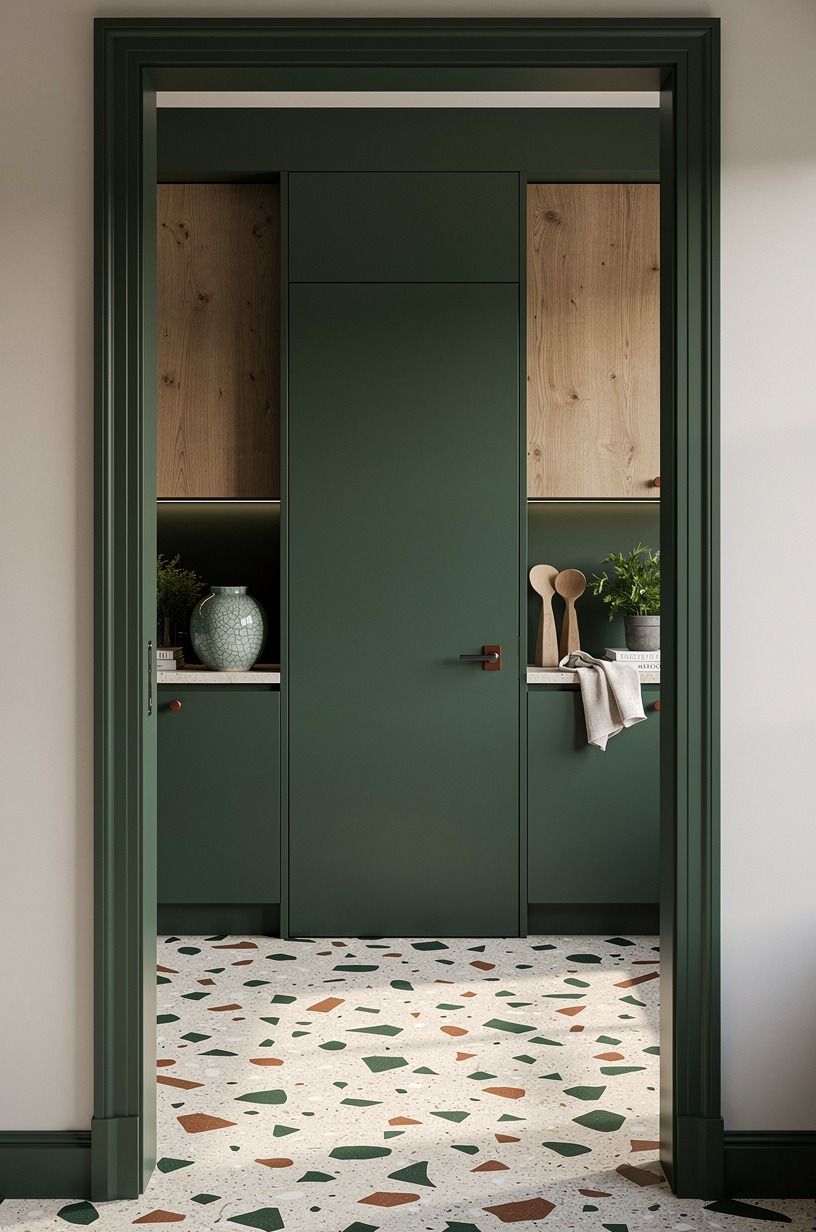
Sometimes paint does more than millwork. If the kitchen already wraps in one moody tone, carry that exact color over the pantry door and the trim so there isn’t a visual break for your eye to grab.
Farrow & Ball Studio Green is especially good for this because it has enough depth to blur seams without flattening the room. In a forest green kitchen with rust accents and natural oak, the effect feels cocooning fast.
You still need restraint. Skip a fresh white frame unless the rest of the room repeats it somewhere, because contrast around the opening ruins the whole point.
I also like matte or estate finish paint here because it softens reflections on a door face. But test the color in your actual light first.
A shade that looks rich at noon can go almost black by dinner. For more tonal ideas, hidden room pantry ideas behind the kitchen shows how a dark wall can stay warm when oak and rust keep it grounded.
7Wrap cabinet molding across the concealed opening
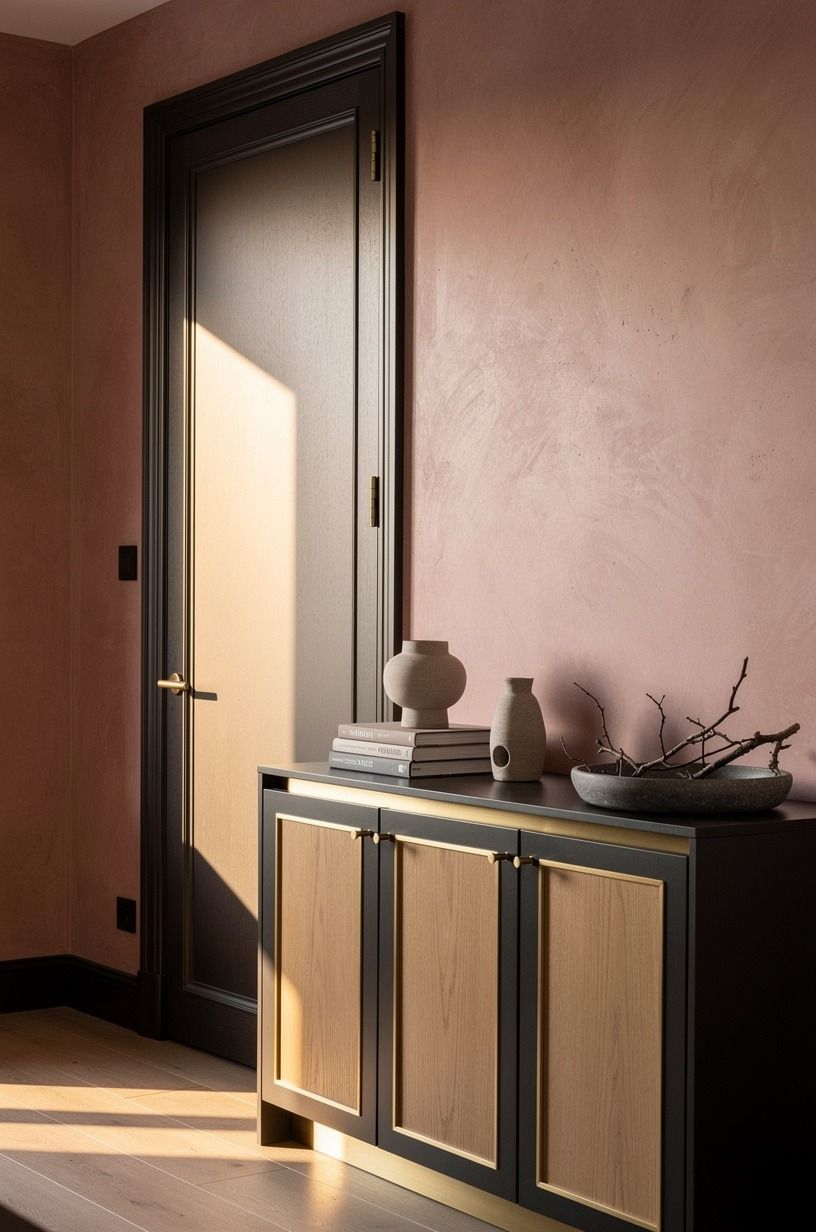
Molding only works if you commit to continuity. Run the cabinet molding straight across the concealed opening and let the seam fall inside the pattern so the door reads like one more panel in the wall. In a dusty rose, charcoal, and brass composition, hand-glazed tile nearby gives you enough life that the hidden seam can stay understated.
You don’t need a flourish. You need repeat.
I think people overcomplicate this step. The reveal has to stay tight, yes, but the bigger mistake is choosing molding that is too proud for the door thickness.
Then the panel telegraphs itself every time light rakes across it. Use a cabinet molding profile that matches the surrounding cabinetry, and keep the touchpoint discreet.
If you want to compare panel-heavy examples, hidden door ideas for the kitchen pantry beyond gives you a good range without pushing you into fussy territory.
8Slide a pocket door behind pantry shelving
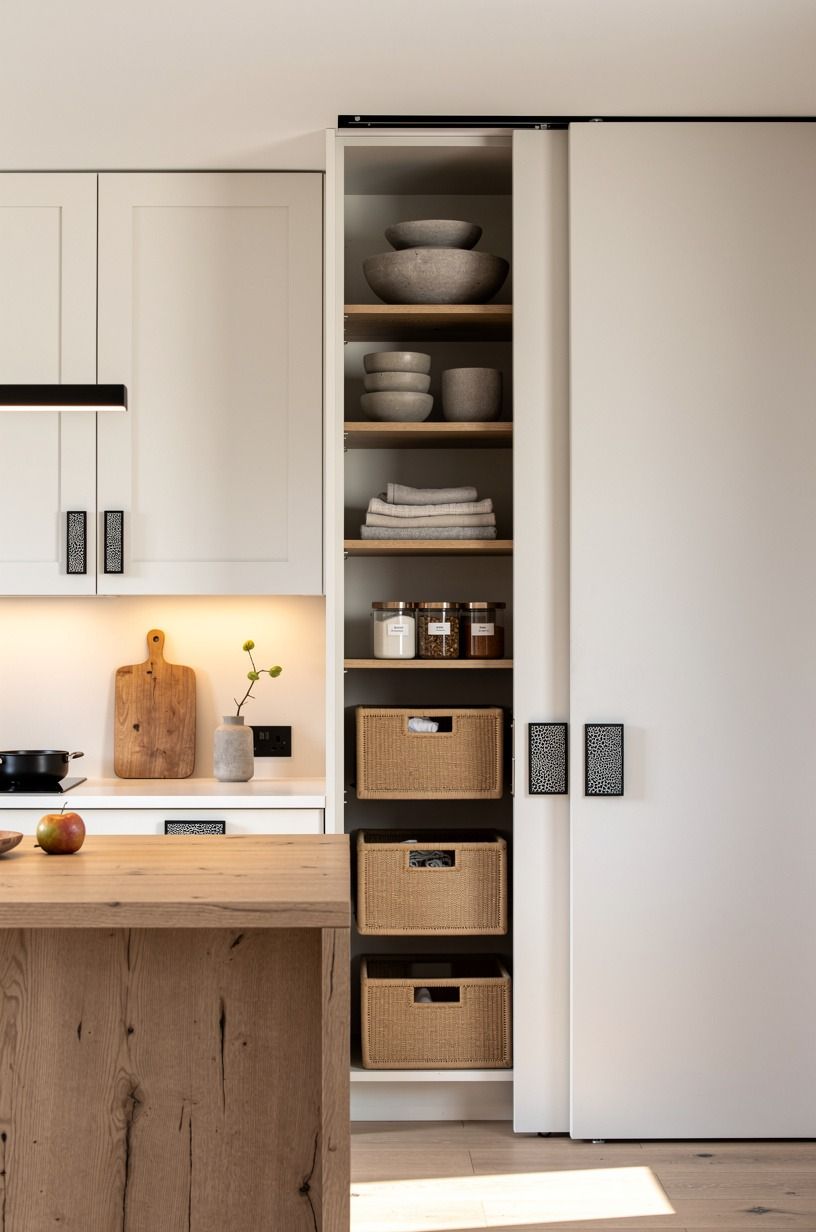
If a swing door keeps eating your walkway, a pocket door can be the upgrade that finally gives the kitchen back to you. Behind pantry shelving, the hidden panel slides out of the way and leaves the storage face doing all the visual work. In a warm white kitchen with camel baskets and black accents, I love a few shagreen-inset pulls on the visible drawers because they make the practical side feel dressed, not bare.
But pocket systems aren’t cheap, and they’re not always the first move I’d make. If your clearances are already squeezed and you can’t afford another door arc, a pocket track system is the one time I’d say it’s worth it.
Keep the shelving shallow enough that you can still reach baskets easily, and don’t crowd the opening with oversize bins. Need more small-space concealment ideas?
Hidden pantry door ideas for a seamless kitchen gets into the same kind of efficient planning you want here.
9Frame the door with floor-to-ceiling shaker panels
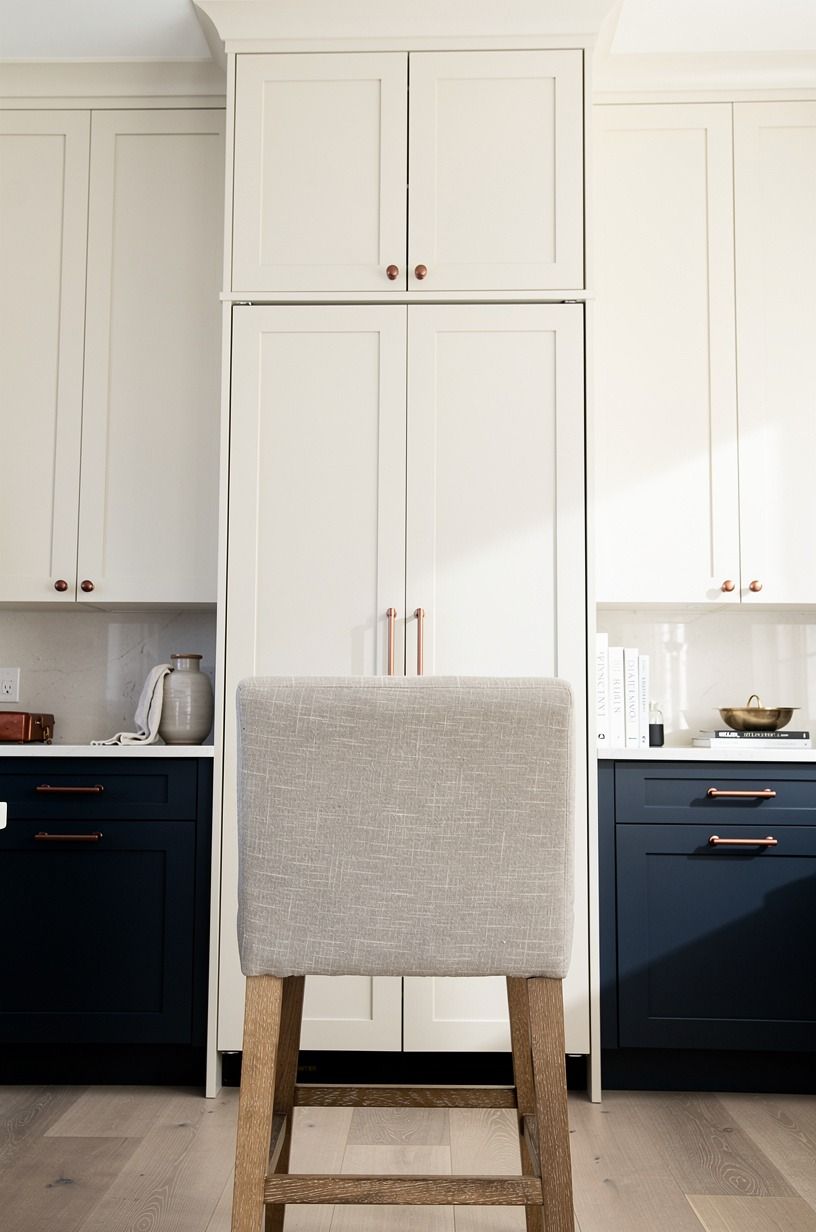
Floor-to-ceiling shaker panels do two things at once: they make the wall feel taller, and they give the hidden door a pattern to disappear into. In a midnight blue, copper, and ivory kitchen, the panel grid becomes the architecture. Your eye follows the rhythm upward instead of stopping at the opening.
That’s why this move feels so polished from a low viewpoint.
Sizing matters more than flair. Don’t make one narrow mystery panel in the middle of chunky shaker frames or the imbalance will nag at you forever.
I like keeping the hidden leaf proportional to the neighboring stiles, then letting Benjamin Moore White Dove on the ceiling and trim lift the darker cabinetry while a shaker grid holds the wall together. But here’s the catch: if the kitchen is already busy with competing grids, I’d skip this.
Another framework can make the whole room jittery. When you want cleaner references, tv wall with hidden door ideas conceal a whole room helps you think about large panel geometry.
10Hide the entrance inside a coffee station wall
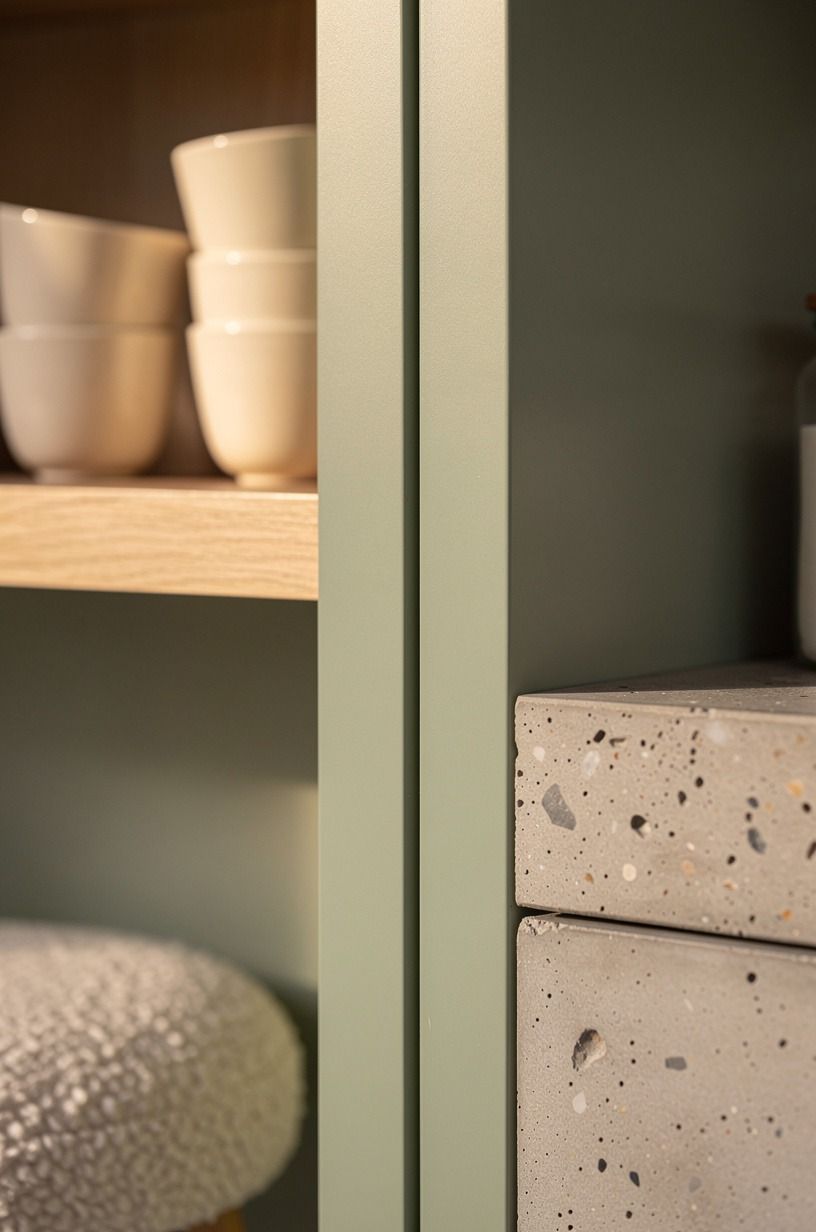
A coffee station is one of my favorite places to bury a doorway because people already expect little moments of interruption there. Shelves, mugs, appliances, and a recessed niche give you cover.
In a sage green station with warm cream cups and natural wood shelving, a concealed gap can vanish if the verticals stay clean and the shelf spacing lines up. I like Sherwin-Williams Evergreen Fog here because it makes the niche feel soft instead of sugary.
Use what I call the Morning Routine Rule. Put the things you touch daily on the visible side, then keep the hidden entrance side visually lighter so the door opens without fighting clutter. If you’re using uppers above the station, echo their bottom line across the doorway and corral the mugs on a compact espresso tray.
And yes, you should keep the espresso setup compact. One machine, a grinder, a tray.
That’s enough! If you want more inspiration for integrated pantry walls, hidden room pantry ideas behind the kitchen is full of useful restraint.
11Continue backsplash tile over the pantry door
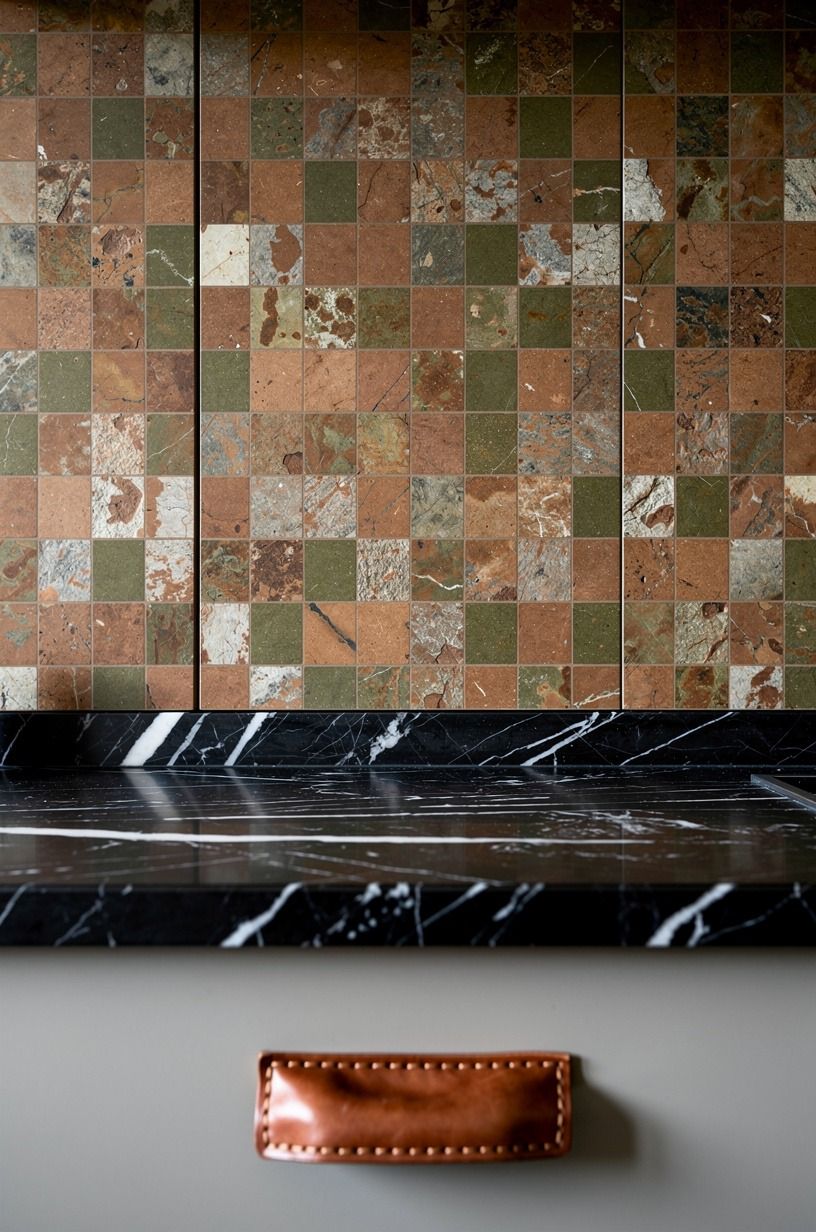
Tile over a pantry door can look incredible if the substrate is right and the door hardware is planned early.
12Install push-latch hardware for a handleless look
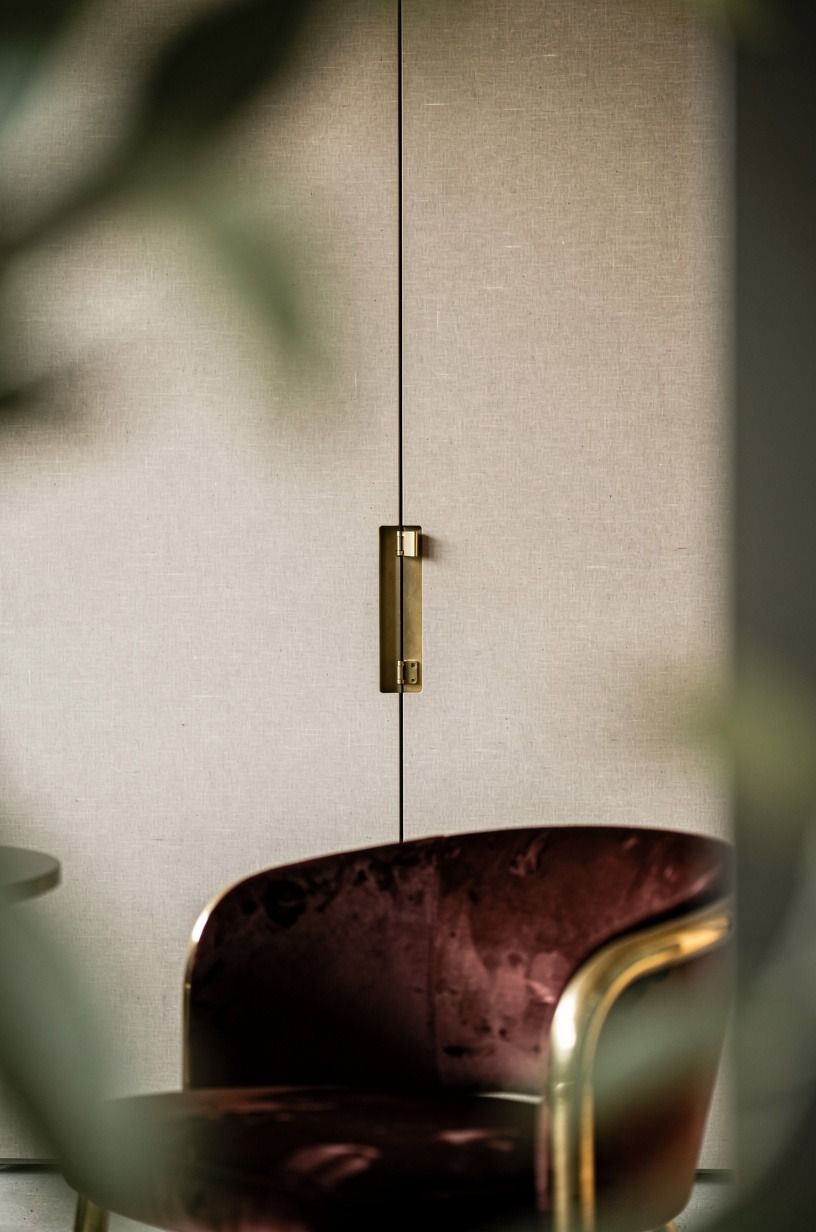
Push-latch hardware is one of those details that seems minor until you live with it. On a clean panel in clay and linen cabinetry with aged brass nearby, losing the handle can be exactly what keeps the seam from reading like a regular door.
The surface stays quiet. The opening stays useful. And the whole wall feels calmer because aged brass is working elsewhere, not crowding the hidden leaf.
This is where I’d rather spend a little more for a premium push latch that feels crisp. Cheap push latches get annoying fast, and you shouldn’t have to shoulder-check your pantry to open it. If your project is still in planning, these baseline costs help set expectations:
I also think handleless looks better when the surrounding wall is edited down. Fewer decorative objects. Cleaner counters.
More patience. For a broader look at concealment that depends on restraint, hidden door ideas for the kitchen pantry beyond is a useful reference.
13Camouflage the door with vertical wood slats
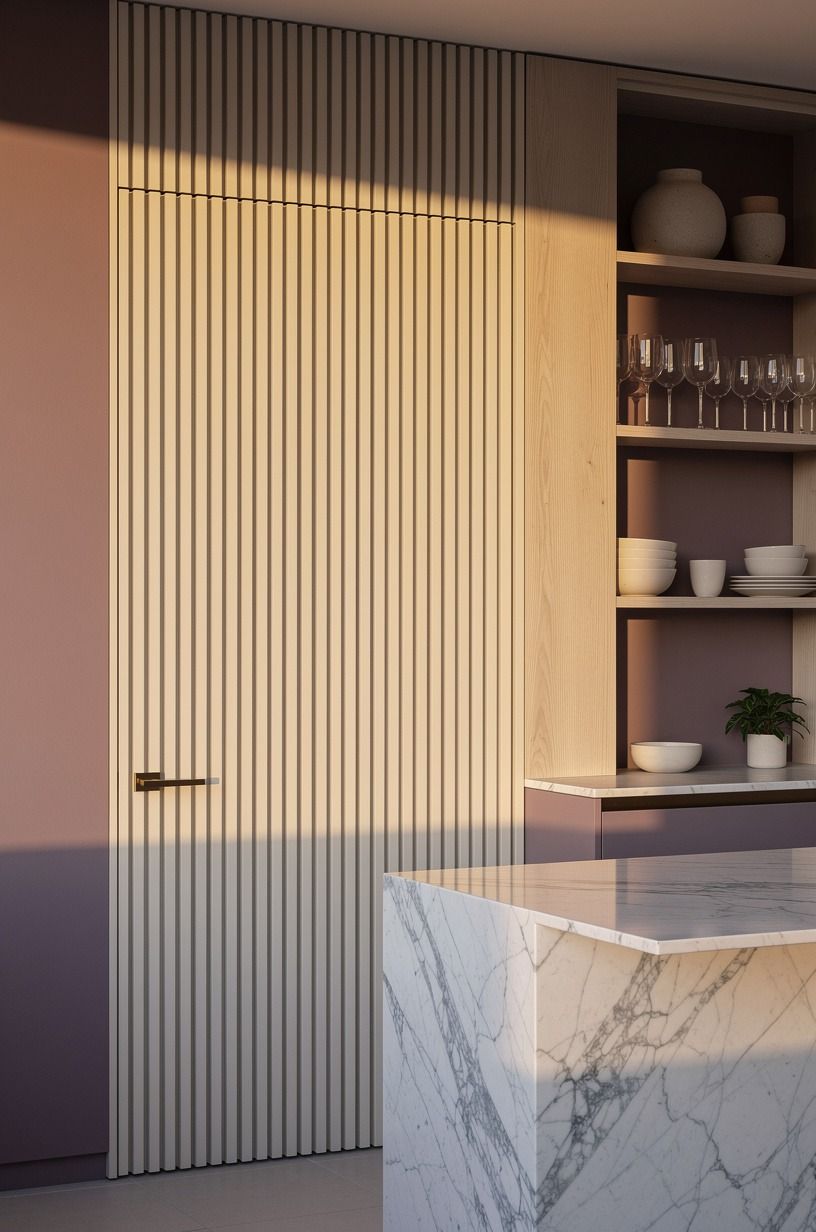
Vertical slats are great when you want the wall to feel architectural instead of just disguised. Run the slats across the concealed opening at even spacing, and suddenly the door becomes one slice of a larger texture.
In a plum, gray, and rose-gold kitchen with a Carrara marble counter, vertical oak slats bring warmth without competing with the stone veining. The wall feels taller right away.
I wouldn’t stain the slats too orange. That old honey tone can turn the whole move into a time capsule.
Keep a muted white oak finish and let the hardware disappear. If the kitchen has a lot of hard edges, this is a smart way to add rhythm without another color.
But be honest about dust. Slats need a quick swipe now and then (worth it, though).
For more examples where texture hides a seam, hidden pantry door ideas for a seamless kitchen is one I come back to.
14Tuck appliance storage behind a seamless panel
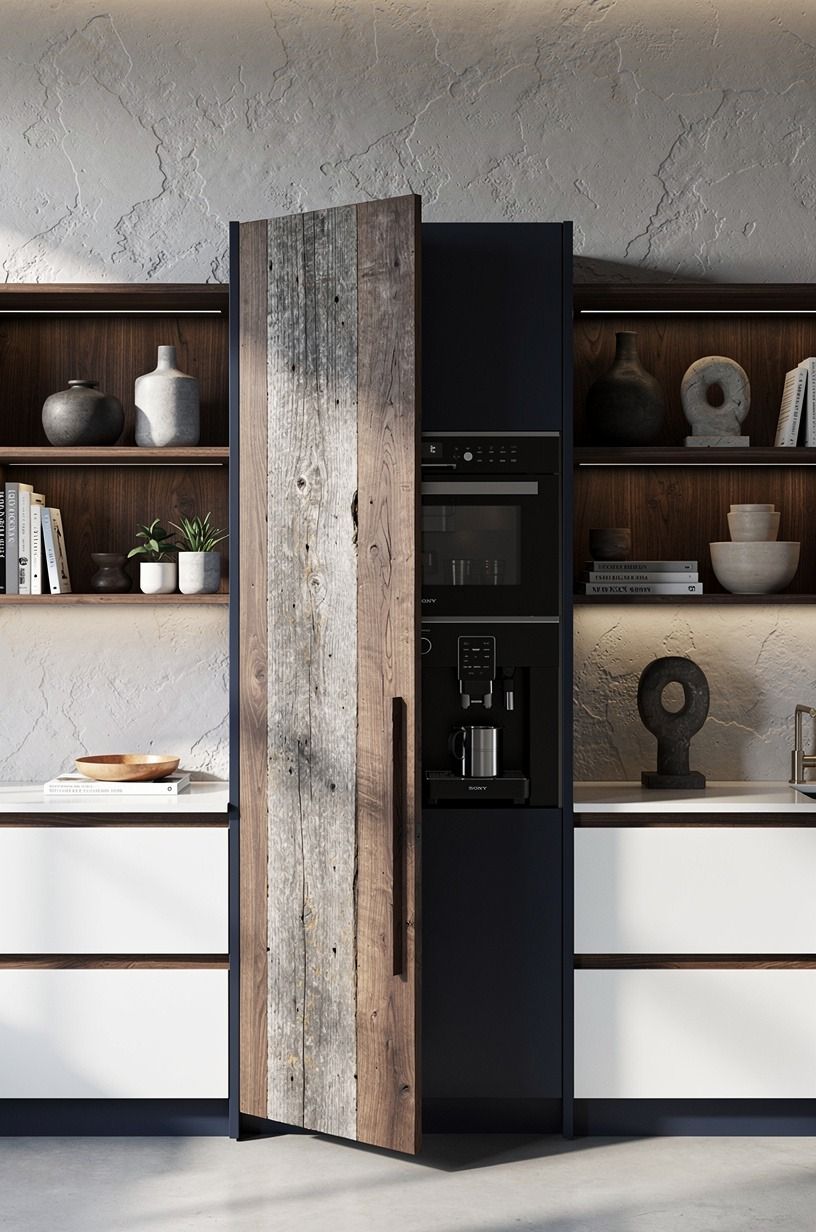
An appliance wall hidden behind a seamless panel can make a busy kitchen feel twice as settled.
15Mirror upper cabinet lines across the doorway
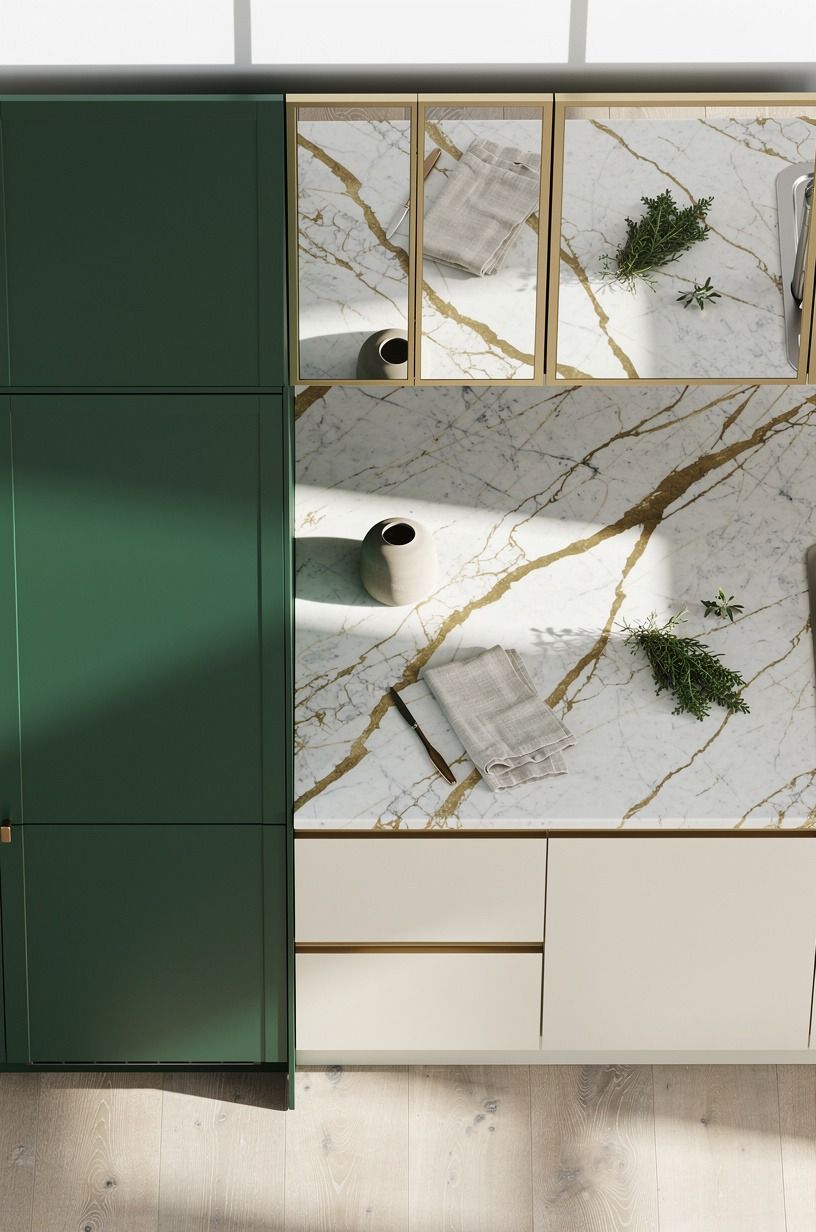
One of the cleanest concealment moves is simply mirroring the upper cabinet lines across the doorway so the grid stays intact. From overhead, this reads incredibly calm because the eye sees structure before it sees access.
In an emerald, gold, and cream wall, repeating the cabinet breaks around the concealed pantry keeps everything organized. A little cream lacquer nearby softens the deeper tones and stops the wall from feeling too stern.
This is less about decoration and more about discipline. Keep aligned cabinet rails, keep the reveals even, and don’t let a random filler piece ruin the pattern.
If your uppers are 30 to 42 in tall, repeat that proportion honestly instead of faking a tiny cap just to chase symmetry. But once you get the lines right, the whole kitchen settles down.
Need proof? Hidden door ideas for the kitchen pantry beyond shows how much cleaner a room looks when the geometry stays uninterrupted.
16Blend a butler pantry behind arched millwork
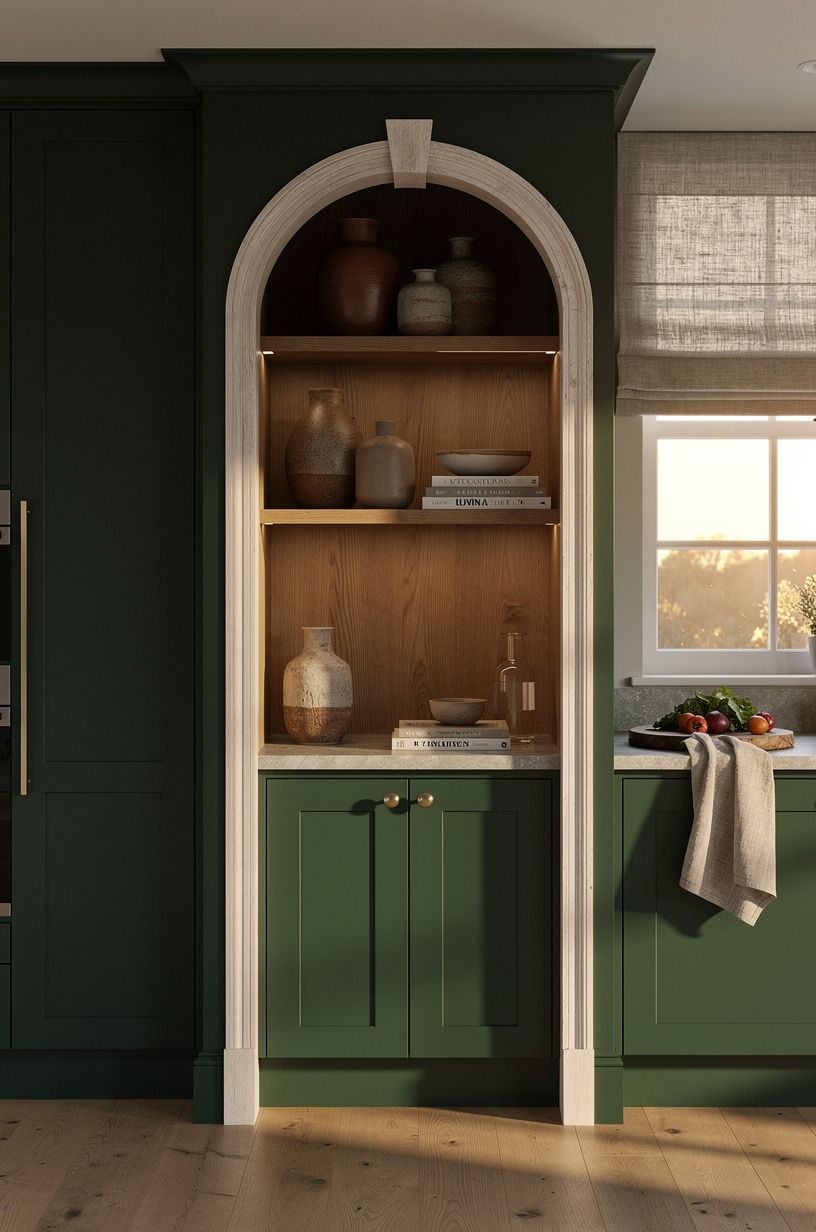
An arched opening changes the mood immediately. Instead of feeling sneaky, the hidden door starts to feel storied, almost like part of the house was always there waiting to be noticed.
In a forest green, rust, and natural oak kitchen, cerused white oak trim tracing the arch gives the wall a soft old-house confidence without pushing it into stage-set territory. That’s a hard balance, and it matters.
I think arches work best when the rest of the room stays pretty simple. If every line is curved, the shape loses its magic.
Let the arch be the star, then hide the operating seam inside the millwork where shadows already live and protect a clean arched radius. And don’t rush the curve. A clumsy one looks cheap faster than almost anything else.
For more hidden transitions that still feel architectural, tv wall with hidden door ideas conceal a whole room is helpful in an unexpected way.
17Use reeded glass panels for a soft disguise
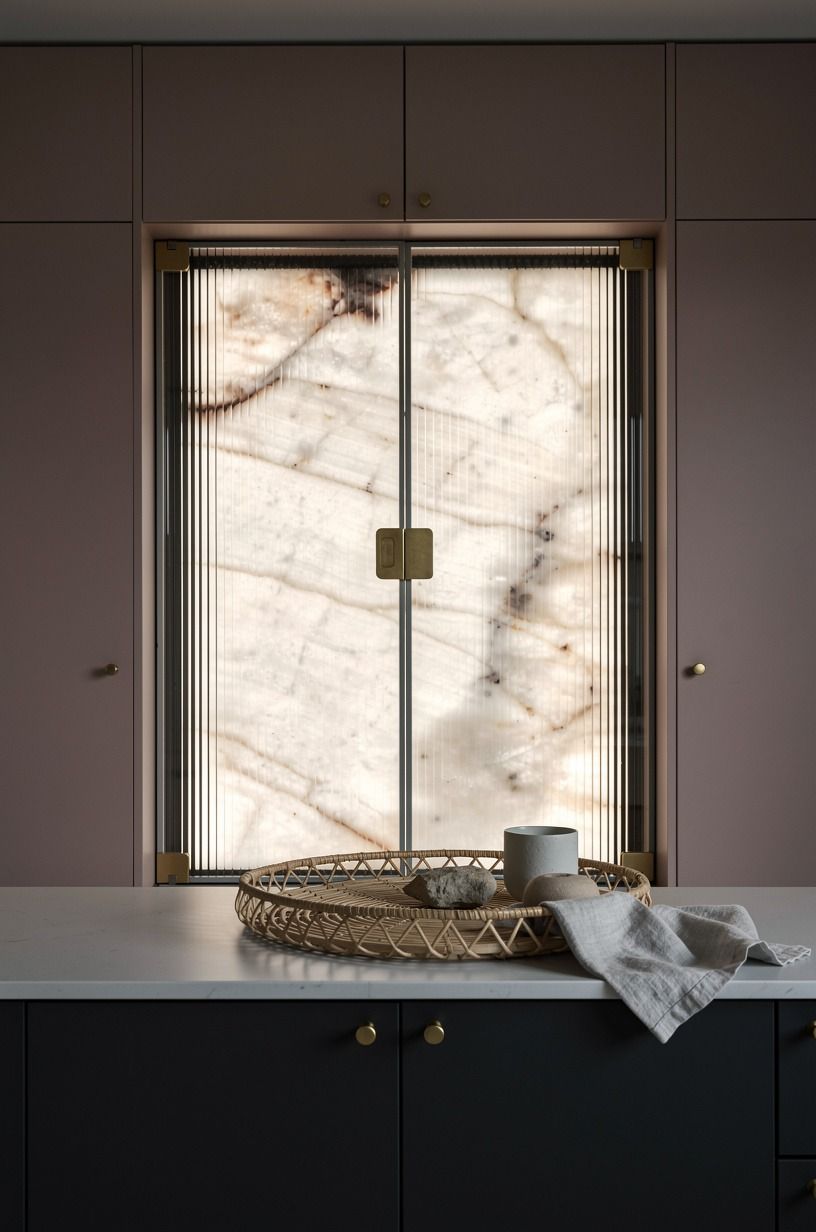
Reeded glass gives you concealment with a little glow, which is useful when a full solid panel would make the wall feel heavy.
18Finish with toe-kick lighting under the hidden wall
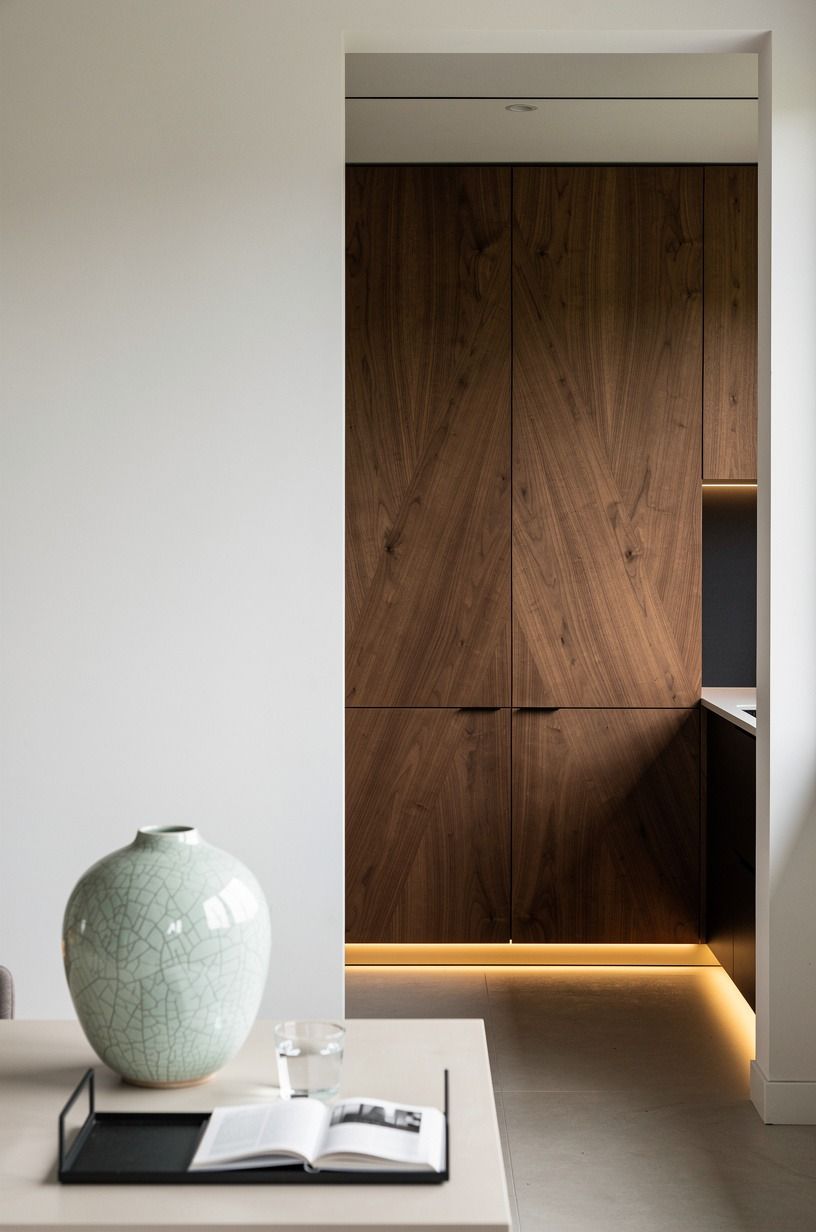
Toe-kick lighting is the last move, not the first one, but it can be the thing that makes the whole hidden wall feel finished. A soft strip under warm white cabinetry and camel accents pulls the eye low, which means the concealed opening above has less pressure on it. In a doorway view toward book-matched walnut panels, LED toe-kick lighting gives you that hotel-quiet glow people always notice.
Keep the light warm, dimmable, and tucked far enough back that you see the effect, not the strip. I like this especially when the hidden wall runs long and dark because a warm LED strip gives the floor wash enough depth to keep it from feeling flat.
But don’t use lighting to rescue a bad panel design. It won’t.
Get the wall right first, then add the glow. It matters!
If you want more ideas that hide storage without feeling cold, hidden door ideas for the kitchen pantry beyond is worth saving.
Why hidden kitchen doors work better when the room gets quieter
The best hidden kitchen doors aren’t about showing off. They’re about lowering the visual noise so the useful parts of the room can breathe.
I’ve seen homeowners chase the gimmick version of this idea, the one where the reveal is so dramatic that the kitchen starts feeling like a set piece. It never ages well. What does age well is a quiet cabinetry wall that lets your tile and light do their jobs without interruption.
That’s the real payoff. Not magic.
Relief.
If you asked me where people overspend, I’d say they usually spend too early on the obvious statement and not enough on the boring alignment work. Door thickness. Reveal consistency. Concealed hinges.
The depth of the panel profile. Those are not glamorous decisions, but they’re the ones you’ll feel every single day. And if the room is small, they matter even more because your mistakes sit right in front of you at breakfast. I went back and forth on this in my own planning more than once, because the expressive option is tempting.
It just isn’t usually the right one.
My rule is simple: pick one hero move, then quiet the rest. Maybe that’s the arched millwork. Maybe it’s the tile carried over the panel.
Maybe it’s just a wall painted in Farrow & Ball Studio Green with no hardware at all. Once you’ve picked that move, every other choice should protect it instead of competing with it.
That’s why I don’t love mixing reeded glass, dramatic molding, slats, and a contrast finish on the same hidden door wall. You can do it.
You probably shouldn’t.
And here’s the part nobody respects enough. A daily-use pantry door has to feel good when you use it. If the latch sticks, if the swing is awkward, if the shelves bang into the trim, you’ll stop caring how pretty it looked on install day.
Pretty fades fast when a pantry annoys you twice a day. So yes, make it warm.
Make it quiet. Make it yours.
But make it work first, because that’s what turns a clever idea into a room you’ll keep loving in five years. Every single time!
The Questions I Get Asked Most
What is the best Hidden Door Ideas for the Kitchen [Pantry & Beyond] for a small kitchen?
A panel-matched pantry door is usually the best small-kitchen move because it keeps the wall visually flat and doesn’t spend extra floor space. The biggest benefit is calm.
– IKEA-style flat fronts – Push-latch opening – Painted seam, not contrast trim
Where can I buy Hidden Door Ideas for the Kitchen [Pantry & Beyond] pieces on a budget?
Start with IKEA, Target, and Wayfair for fronts, rails, and lighting, then check Facebook Marketplace for solid wood cabinet doors you can repaint. The win is lower spend without fake-looking materials.
– Flat-pack storage pieces – Peel-and-stick backsplash sheets – Secondhand oak or shaker fronts
How much does a Hidden Door Ideas for the Kitchen [Pantry & Beyond] makeover cost?
Most homeowners spend about $300 to $1,500 for a cosmetic version and much more if cabinetry moves. The budget-friendly path is keeping the boxes and changing the face.
– Paint and hardware first – Peel-and-stick tile second – New panels only if the wall needs them
Can I create a Hidden Door Ideas for the Kitchen [Pantry & Beyond] on a budget?
Yes, and you really can start small. The best cheap upgrades are visual, not structural.
– Paint the door to match the wall – Add a push latch – Repeat cabinet molding or shallow rails
Is a Hidden Door Ideas for the Kitchen [Pantry & Beyond] worth it in a small space?
Yes, especially in a tight kitchen where every visible break feels louder. The value is better flow and less visual clutter. Keep the opening near prep, and don’t waste your 42 to 48 in circulation with a door swing that steals it.
Is Hidden Door Ideas for the Kitchen [Pantry & Beyond] a good idea for a rental?
Yes, if you keep it reversible. The rental-safe version is all about surface changes.
– Removable peel-and-stick finish – Tension-shelf styling nearby – No-drill adhesive lighting where allowed
Where I’d Start First
If I had to pick one step, I’d start with painting the door to match the wall. It’s the cheapest move, and a bad seam disappears faster under one deep color than under any fancy hardware. Pin that first, then decide if the millwork is even necessary.