
Hidden cocktail bar ideas for at-home mixology work best when you treat them like storage first and theater second. I learned that after hiding bottles in one flimsy console that rattled every time a guest reached for a coupe. Your bar can disappear, still pour well, and still make the room feel warm. That’s the whole point.
- Start with a closed walnut cocktail armoire
- What does fluted millwork do for a wall?
- Build a bespoke cabinet around the fireplace
Before You Start: The Two-Wood Rule
Before you buy anything, decide which two wood tones will carry the room. If your living room already has medium walnut on the floor, you don’t need a third random brown fighting for attention. I’d keep the bar in walnut veneer or painted millwork, then let one lighter note, like cerused oak or cane, soften it.
You also want your measurements early so you don’t end up with a bar that’s deeper than the seating zone can handle. A sofa usually runs 35 to 40 in deep, a coffee table sits 16 to 18 in tall, and your rug wants front legs on it in an 8×10 or 9×12 size. If the bar pushes those basics out of place, it’s too big.
What you’ll want nearby before you start: – Painter’s tape for marking door swings and clearances – Aged brass sample or hardware pull so your metals stay consistent – A tape measure and a tray, because bottle height catches people out fast
- Start with a closed walnut cocktail armoire
- What does fluted millwork do for a wall?
- Build a bespoke cabinet around the fireplace
- Hide bottles inside a marble topped credenza
- Why smoked glass beats clear every time
- Hang framed art above a drop front bar
- Tuck a mirrored tray inside the media unit
- Install pocket doors around a dry bar
- Paint the reveal in glossy espresso lacquer
- Brass rails vs chrome: which one wins the niche?
- Slide ribbed glass panels across the bottles
- How an IKEA STOCKHOLM reads richer than its price tag
- Backlight the hidden shelves with warm LEDs
- Where do navy art books actually help the disguise?
- Fold-down shelf vs open shelf: which one earns its place?
- Why Farrow & Ball Studio Green feels more architectural than black
- Sculptural pulls vs flat knobs: the difference you actually feel
1Start with a closed walnut cocktail armoire
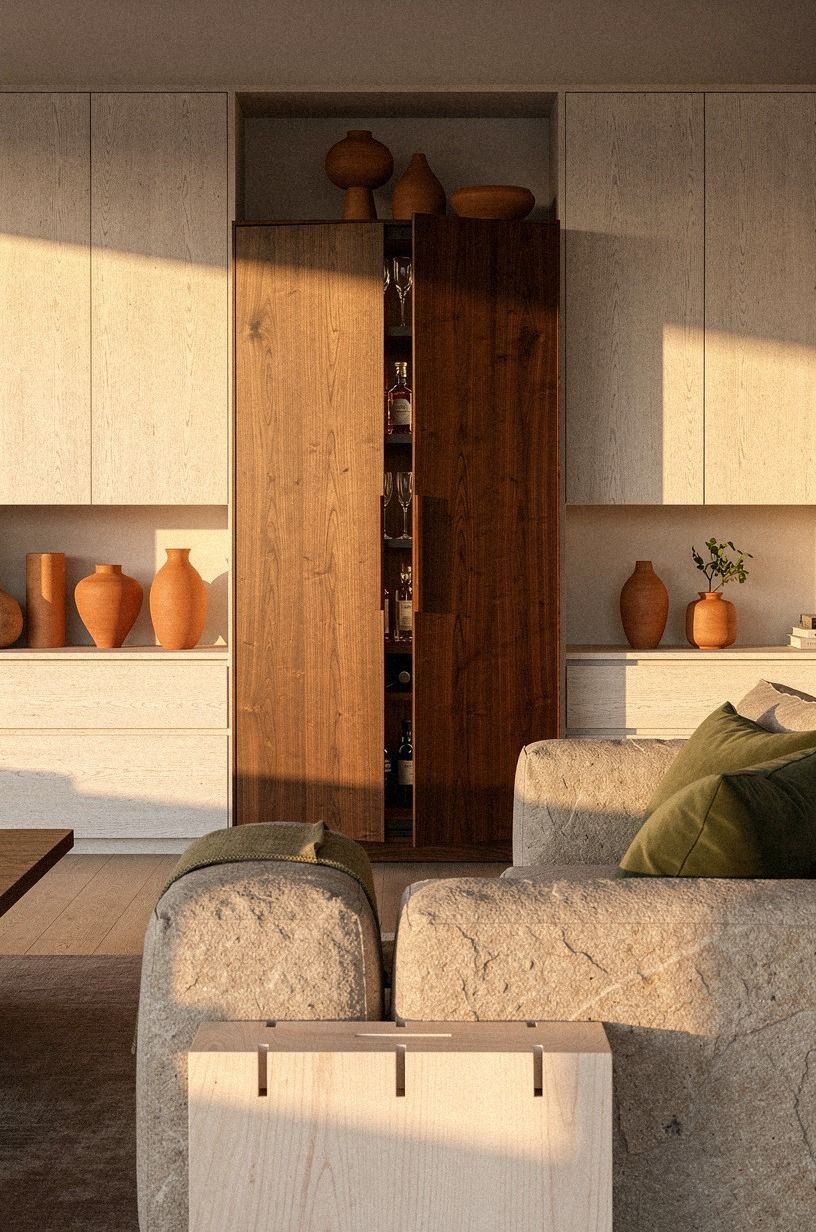
Start with a fully closed piece, not an open shelf you hope will read tidy later. A centered walnut cocktail armoire gives you instant order, and that slim reveal at the doors lets you hint at glassware without showing every label. If you’re trying to get the same discreet mood as a sleek tucked-away setup, this is the easiest first move.
Inside, give yourself a real working stack: shakers at hand level, taller bottles below, coupes above. I made the mistake once of using a shallow vintage cabinet, and my mixing glass clipped the hinge every time.
You don’t want that. A model like West Elm Mid-Century Bar Cabinet feels richer than flimsy mirrored versions because the wood weight reads calm from across the room.
2What does fluted millwork do for a wall?
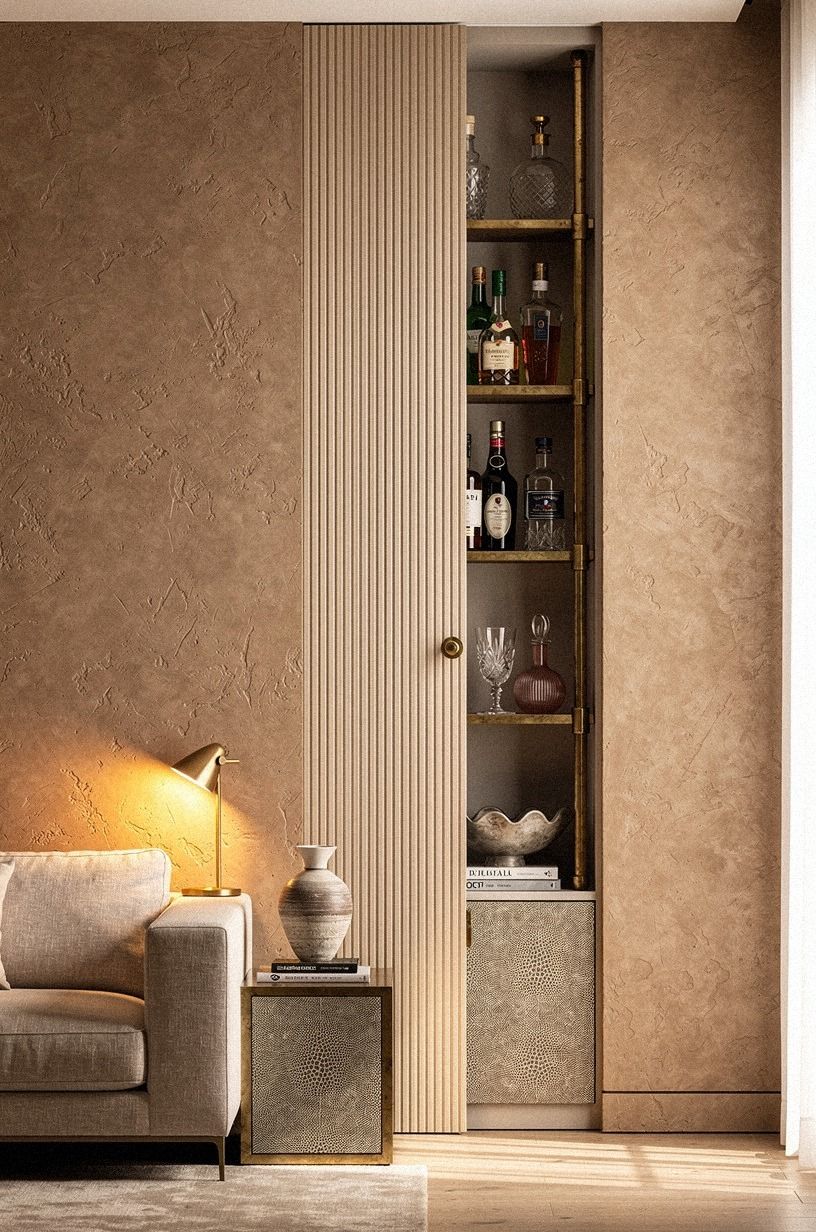
Anchor the hidden bar where your eye already expects architecture. Fluted panels do that beautifully because the grooves create shadow even when the bar is shut, so you get rhythm without announcing storage.
If one panel slides just enough to reveal bottles and a rail, your room feels deliberate, not gadgety. But keep the opening narrow.
For color, I’d rather paint those panels Sherwin-Williams Evergreen Fog SW 9130 than bright white. White makes the reveal feel like a closet.
Evergreen Fog keeps the whole wall quiet while aged brass catches the little flash you want. If you like concealed rooms with attitude, the mood overlaps nicely with this speakeasy home bar guide.
A few details matter more than people think. – Aged brass rails inside the opening – Fluted oak slats with tight spacing – Matte bottle labels turned inward so the reveal stays soft
3Build a bespoke cabinet around the fireplace
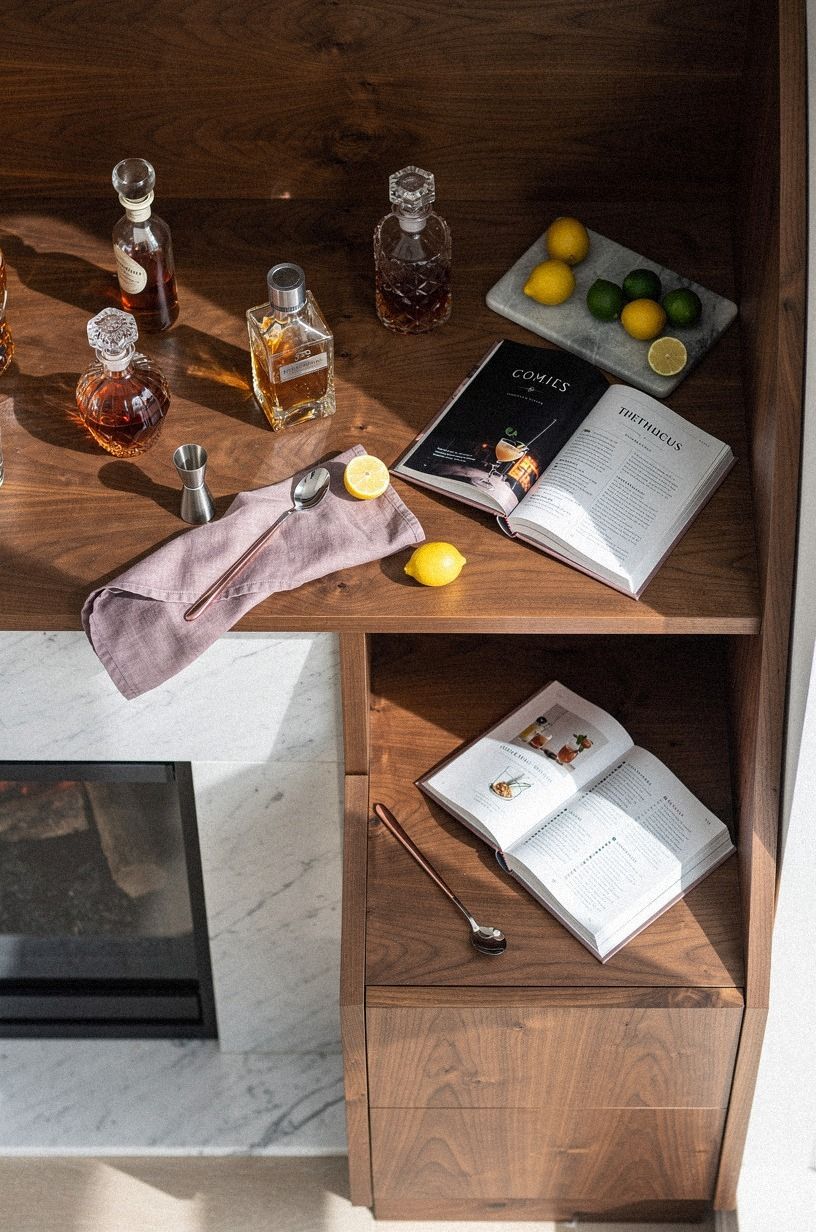
Build around the fireplace only if the cabinet behaves like part of the hearth, not a sidecar. In an overhead view, you can see how a bar works best pushed to one side of a marble hearth with enough breathing room for decanters, citrus, and tools. You need that edge space so your prep doesn’t take over the room.
I’d skip fake symmetry here. True symmetry sounds safe, but a custom Calacatta Gold marble hearth already brings enough order.
Let the cocktail side carry the bottles and the other side carry books or a lamp. If you’re weighing a fireplace-adjacent layout, study the restraint in this hidden wet bar setup and keep your millwork quieter than the stone.
When I see bespoke bars fail, it’s almost always because the shelves are too deep and the fireplace stops feeling important. Keep the bar compact. Let the hearth stay boss.
4Hide bottles inside a marble topped credenza
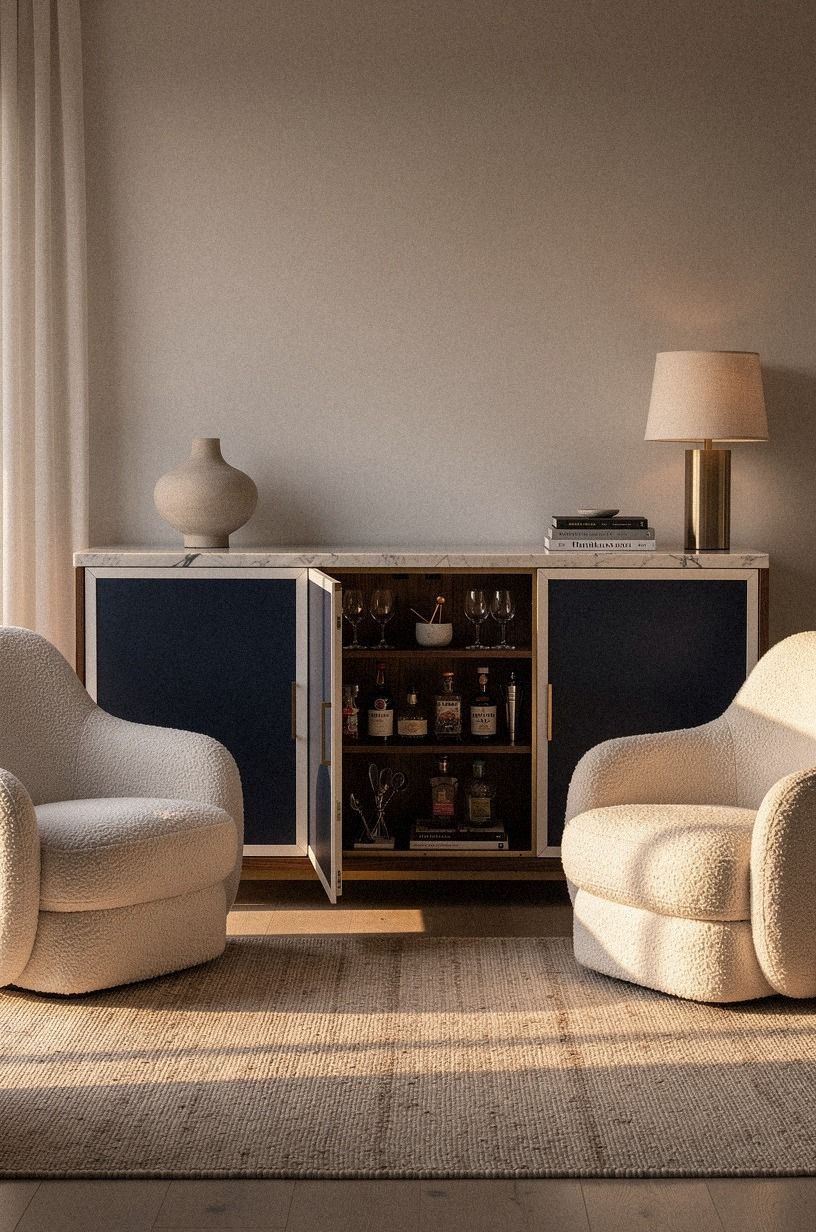
A front-on credenza works when the top is doing one job and the inside is doing another. Outside, your marble topped credenza should read like regular living room furniture with lamps, books, or one bowl. Inside, that’s where the bottles, jigger, and glassware live.
You want the reveal to feel crisp when that center door opens, not chaotic.
In a navy, white, and walnut room, I like a stone top with warm movement over flat bright marble. Benjamin Moore Revere Pewter HC-172 on the wall keeps the contrast gentle if your credenza is dark. And yes, you can borrow ideas from this tucked-away bar article if you need shelf spacing cues.
One more thing. Keep your pour bottles on a tray so you can lift the whole setup out when you host. That’s faster, and your credenza doesn’t end up smelling like old citrus peel.
5Why smoked glass beats clear every time
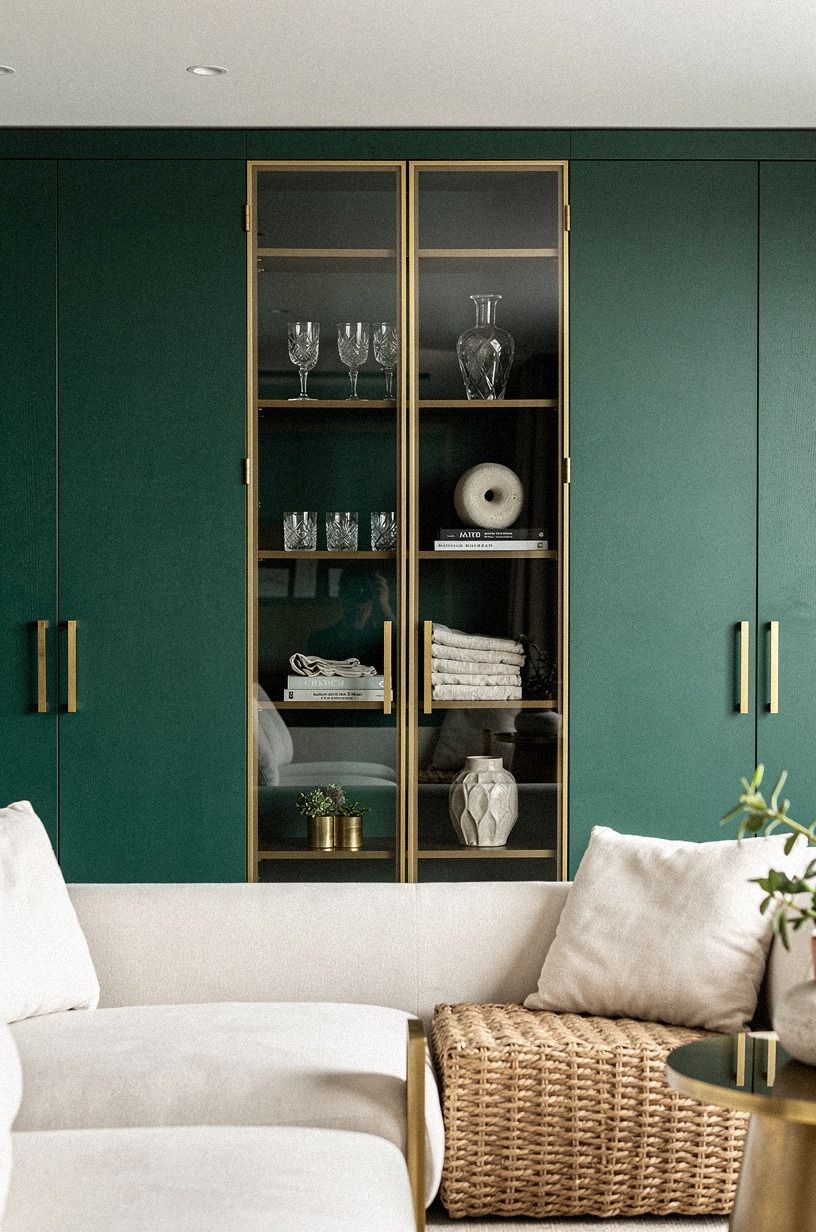
Smoked glass is for people who want the bar to disappear in daylight and glow a little at night. That’s why it works over brass shelving in an airy wall niche.
You still see shape, not clutter. I’d choose smoked glass over clear every single time because clear turns your hidden bar into a shop display, and that’s not the mood.
The brass inside wants restraint. One rail line, slim bottle spacing, maybe two coupe rows.
If you pile in too much, the negative space vanishes and the doors stop helping. You can see the same less-is-more instinct in this speakeasy home bar layout, where the room feels rich because not everything is shouting.
But keep the smoked glass soft enough that you read silhouettes first. That’s the whole reason this move feels expensive.
6Hang framed art above a drop front bar
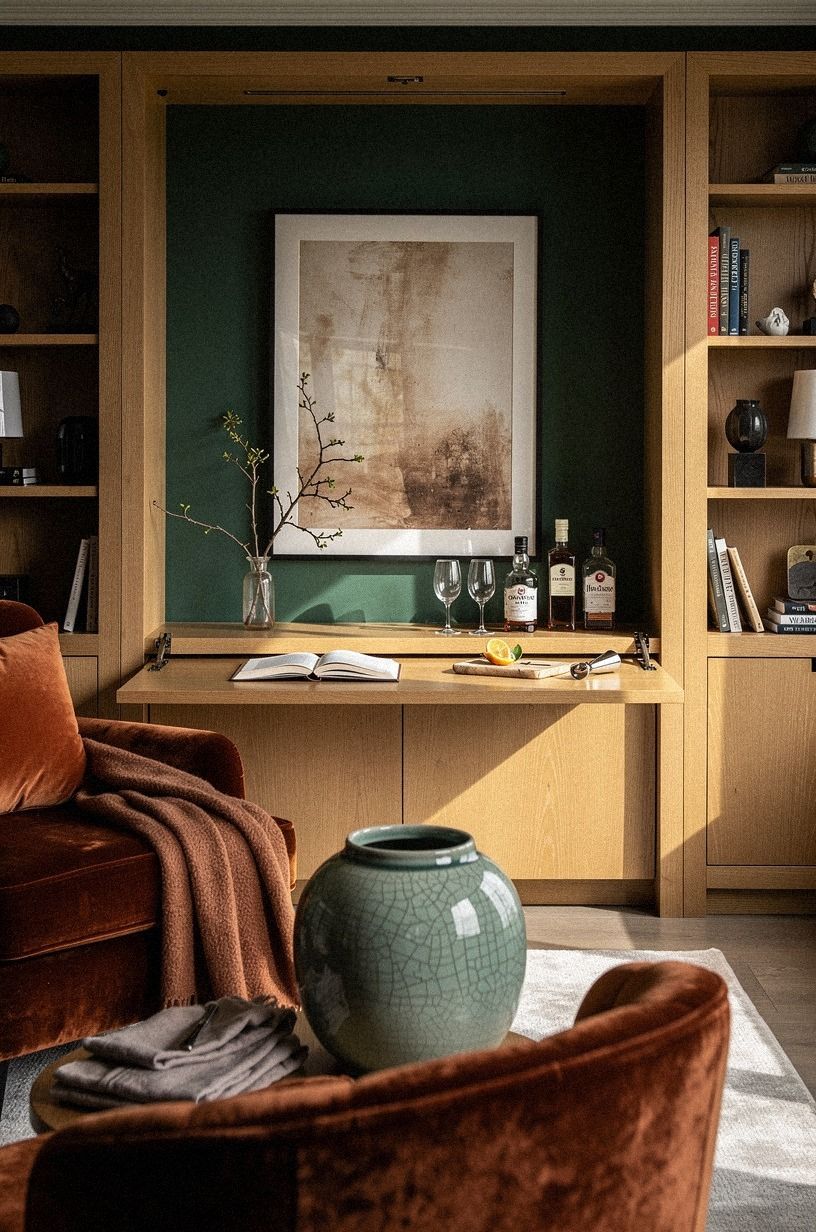
Hang art above the bar when you need disguise, not decoration. A drop-front cabinet under framed artwork reads like a normal console until you lower the shelf, and that doorway view matters because guests clock the art first. You want the wall to feel finished before anyone notices the pour setup.
Make the art bigger than the cabinet by a little, not a lot. I like one wide frame or a tight pair with real weight, then the shelf below in a darker stain so the eye stays calm. If your room leans classic, the theatrical side of this speakeasy bar story helps you judge how much drama is enough.
And please don’t hang tiny prints over a wide bar. One gallery-weight frame will beat three flimsy ones every time. Ask me how I know.
7Tuck a mirrored tray inside the media unit
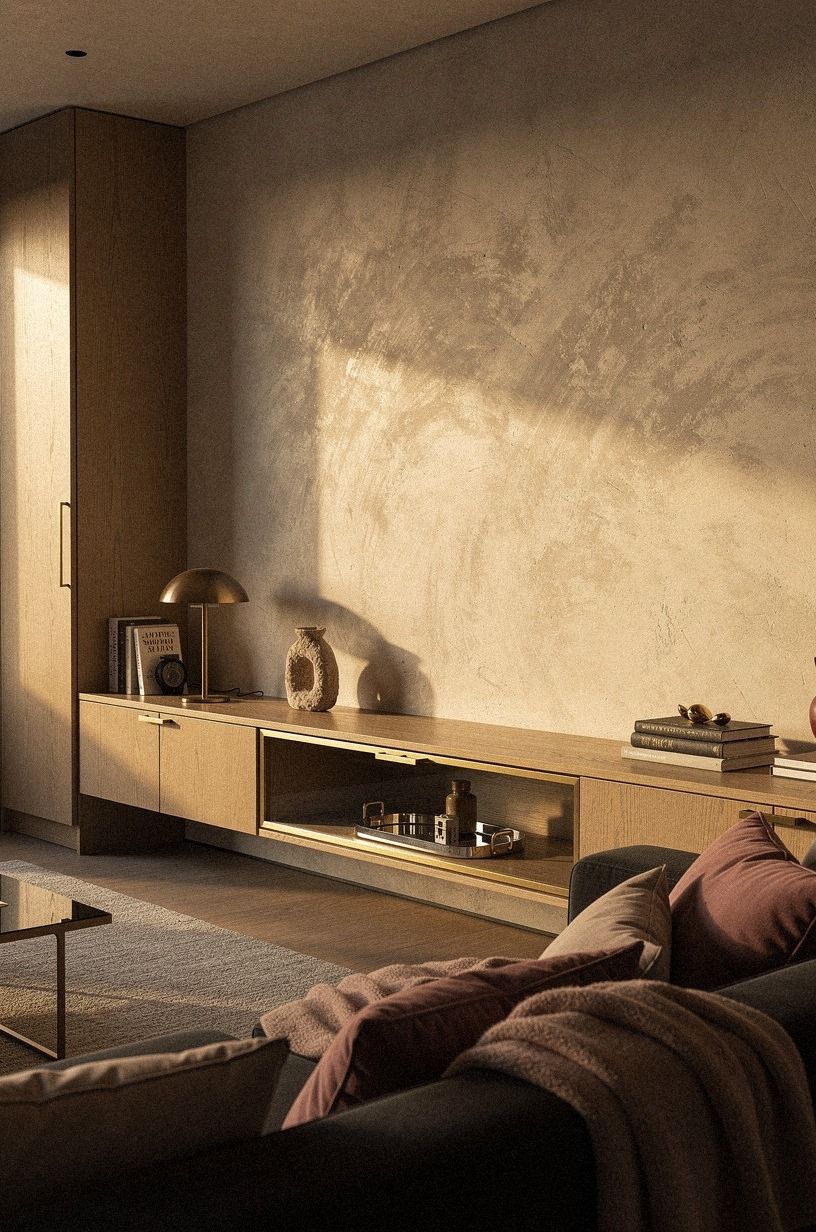
Tuck your active bar supplies inside the media unit if you only mix on weekends and don’t want another piece of furniture.
8Install pocket doors around a dry bar
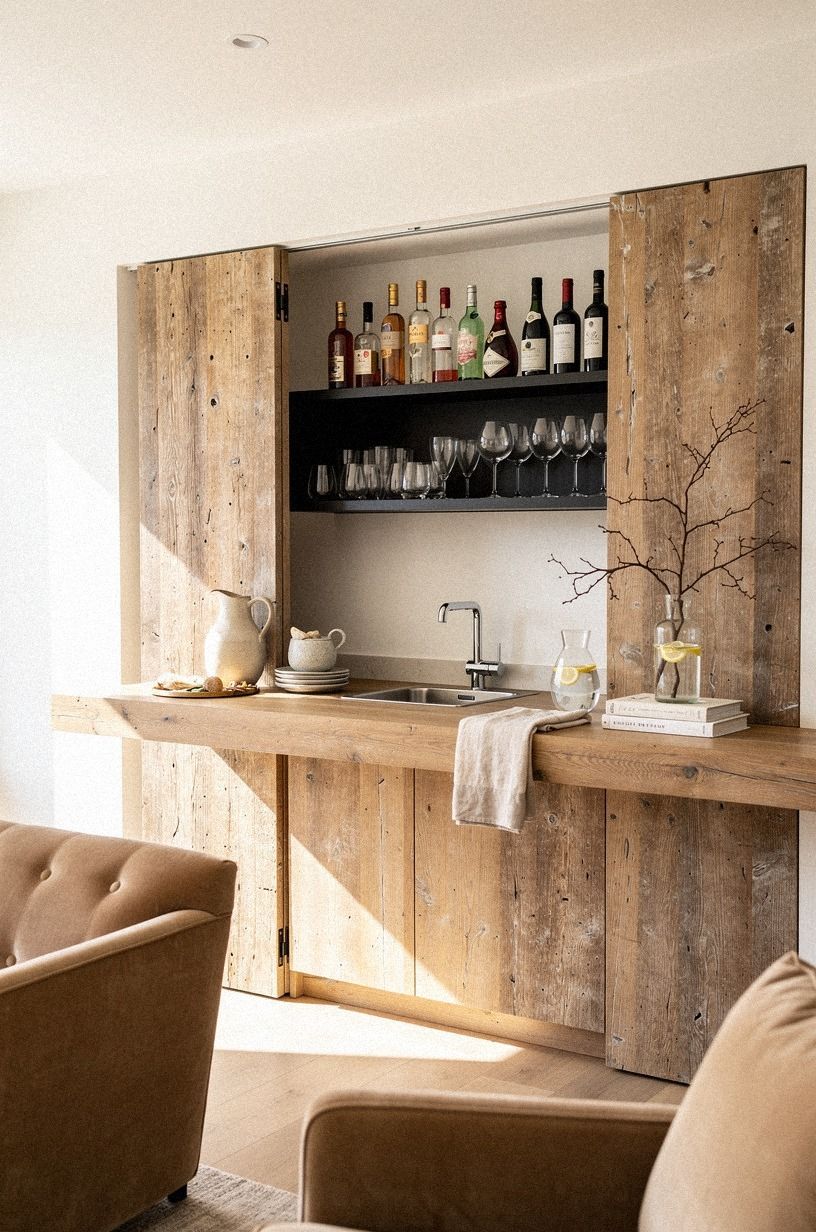
Pocket doors are worth it when you want a full dry bar without seeing it all day. Slide one weathered teak pocket door back and you’ve got bottles, glassware, even a sink tray, but close it and the room goes quiet again. That’s a better investment than bi-fold doors, which always look a little apologetic.
You do need enough side clearance for the doors to disappear cleanly. Mark that with tape first, because once millwork starts, you’re committed.
I’d pair teak with cream walls or Farrow & Ball Hague Blue No.30 nearby if you want the grain to feel warm instead of orange. For hidden-door inspiration, this speakeasy home bar article shows why reveal moments land harder when the frame is tailored.
Pocket doors also help renters think differently. Even if you can’t build them now, you can mimic the idea with sliding panels later.
9Paint the reveal in glossy espresso lacquer
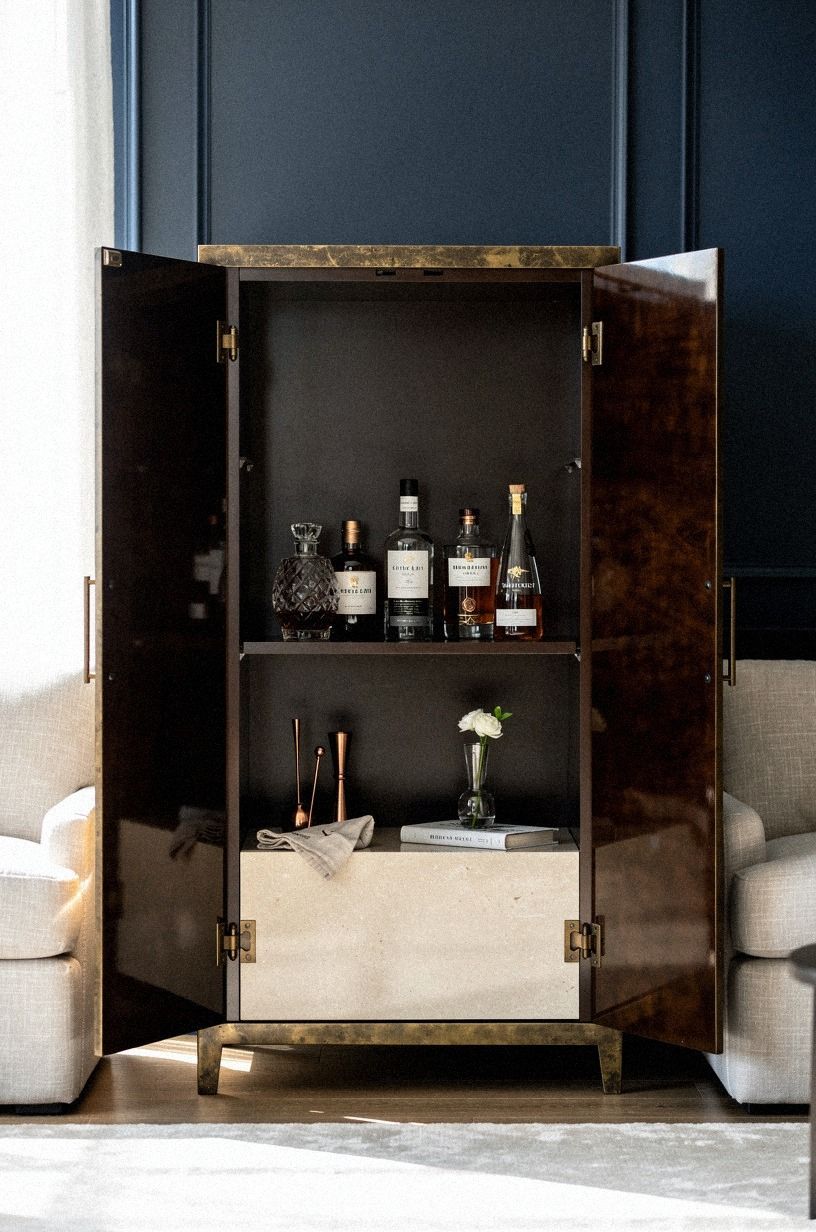
Glossy espresso lacquer works because the bar looks deeper than it is.
10Brass rails vs chrome: which one wins the niche?
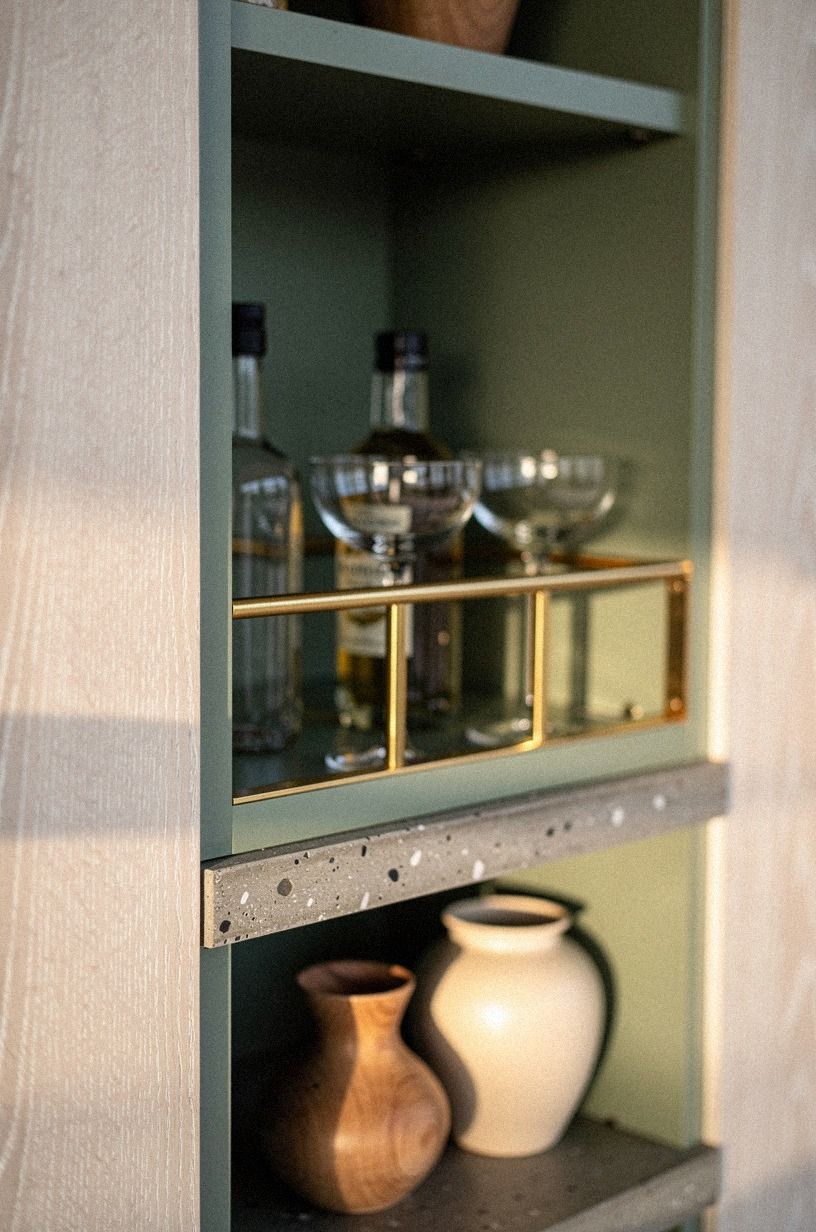
A bookcase niche can hold a bar if the bottles are restrained and the detailing is sharp. Brass rails solve both problems because they keep slim bottles and coupes from drifting forward, and they tell your eye this little zone has a purpose. In a macro detail, brass rails against sage shelving look tailored, not fussy.
Here, color matters more than size. I love rails against sage green millwork with a cerused oak surround because the metal looks warmer and the wood keeps it from going slick.
Would I use chrome instead? No, because chrome pushes the niche toward bathroom energy, and that kills the room. For more hidden niches, this sleek tucked-away bar article is useful.
Use slim bottles only.
11Slide ribbed glass panels across the bottles
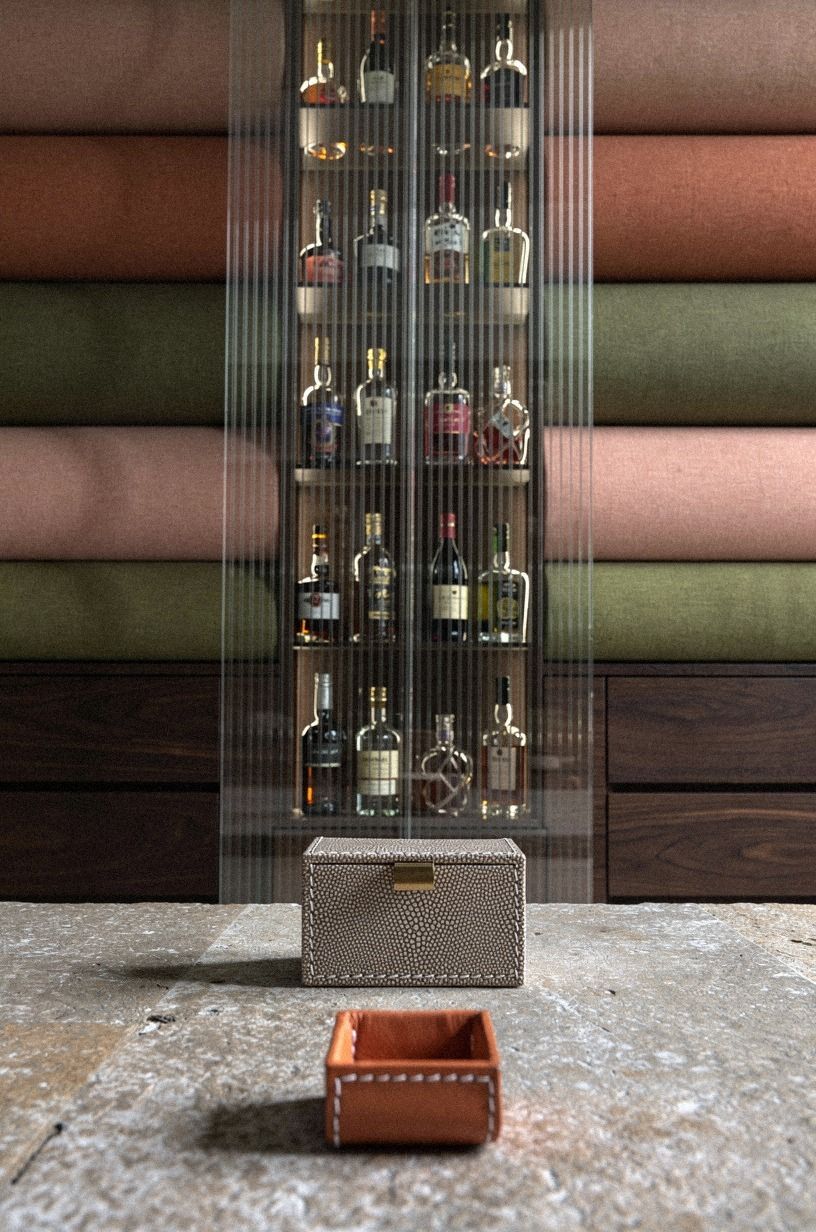
Ribbed glass is the compromise for people who don’t want full opacity and don’t want display either. As the panel slides across, you still read shape and tone, but the labels blur and the bar settles down. On a low stone-level view, ribbed glass panels feel architectural in a way plain cabinet doors don’t.
Keep the frame simple, especially if the stone surface below has movement. A honed slab with natural pitting already gives you enough texture.
I wouldn’t add fussy hardware too. And if you’re chasing that hidden-but-glamorous line, you can borrow the softer mystery from this speakeasy home bar setup.
Let the honed travertine carry the grit and let the glass do the veil. You don’t need another flourish.
12How an IKEA STOCKHOLM reads richer than its price tag
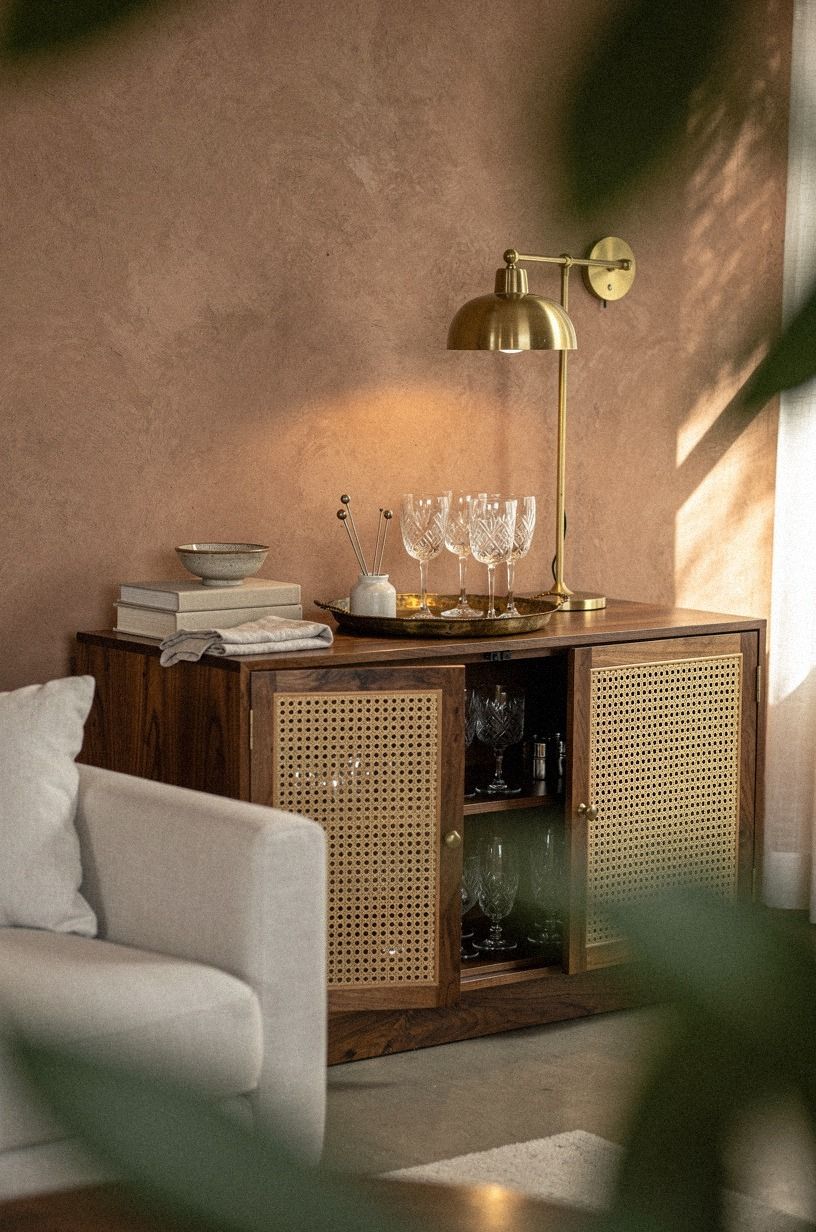
Cane is useful when your room needs softness more than polish. A cane-front console keeps stemware and tools tucked away, but the weave lets the piece feel lighter than solid wood. Framed through indoor foliage, one slightly open cane console door looks relaxed, and that matters if your living room already has a lot of hard lines.
I’d use cane for glasses, napkins, and the prettier bottles, not the heavy back stock. Cane dents and flexes more than people expect.
A piece like the IKEA STOCKHOLM cabinet can get you the shape, then you style it with a better tray and warmer hardware. If small-space concealment is your problem, this hidden wet bar guide helps you think through the mix.
Honestly, that cabinet punches well above its weight if you give it a coat of paste wax and switch the knobs.
13Backlight the hidden shelves with warm LEDs
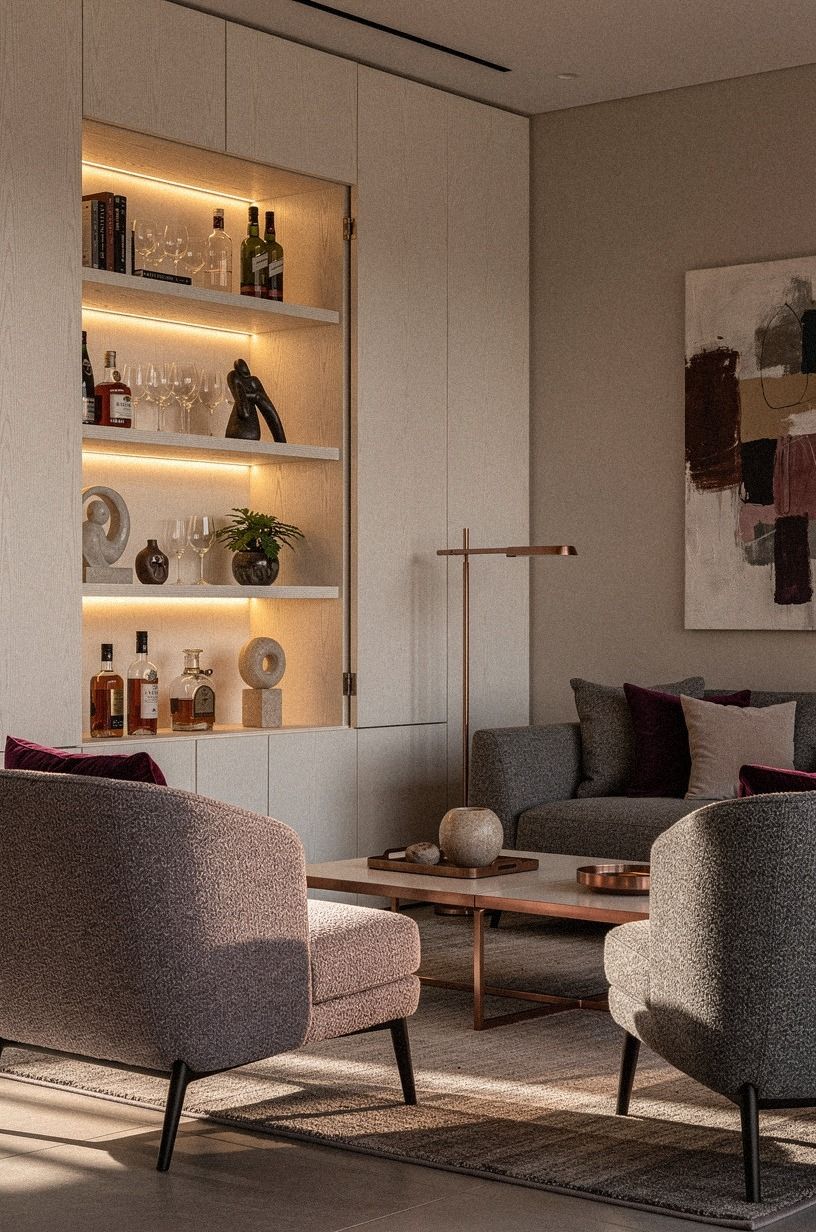
Warm LEDs make the bar feel intentional after dark, which is when you use it anyway. In a wide diagonal room shot, that soft line of light inside the shelves pulls your eye without turning the whole wall into a spotlight.
Aim for warm, not icy. LED strip lighting should feel amber on the bottle shoulders, not blue on the labels.
Here’s the thing: backlighting works best when the rest of the living room has at least one more warm source. A table lamp, a shaded floor lamp, maybe a fireplace nearby.
If the bar glows alone, it looks staged. I keep coming back to this speakeasy home bar mood because the room glow is layered, not isolated.
And yes, dimmers matter here. One table lamp and a low dimmer will beat a brighter strip every time!
14Where do navy art books actually help the disguise?
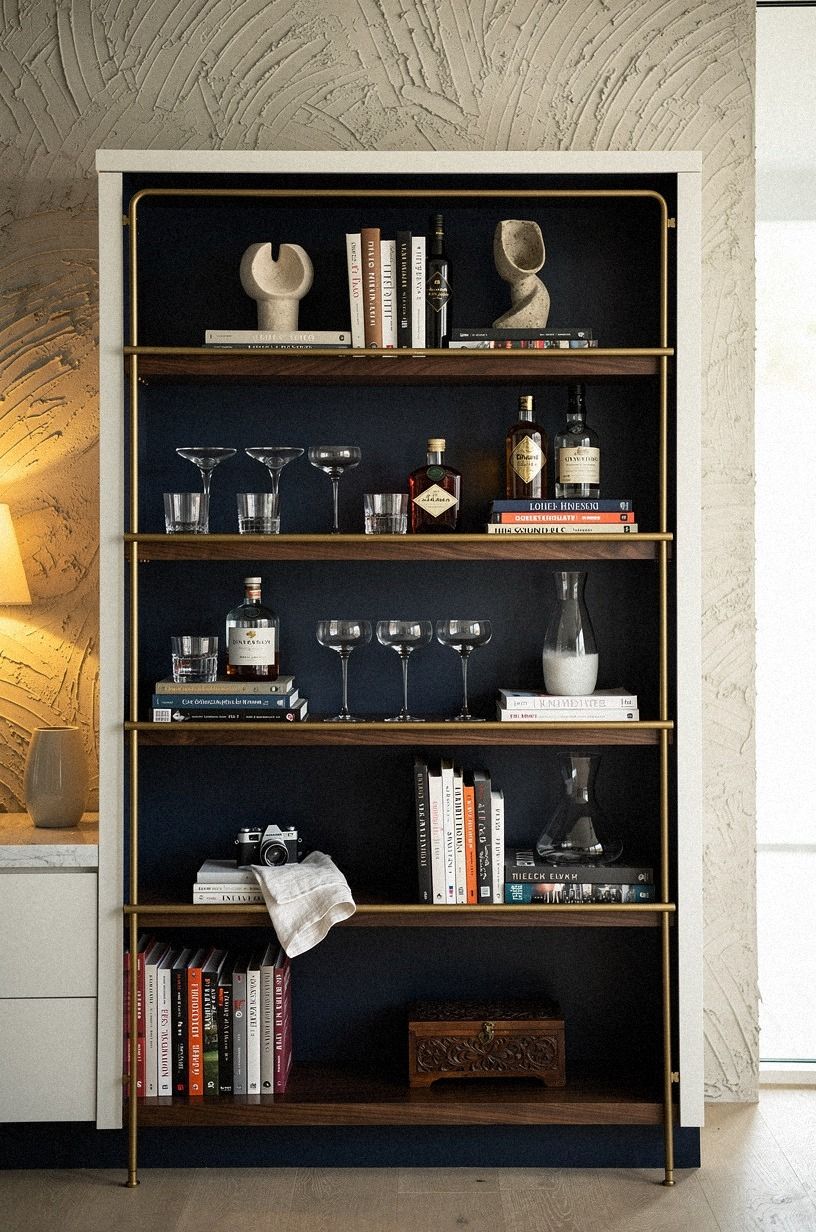
Books in front of glassware work because they hide the lower half of the bar while keeping the upper silhouette visible. From a first-person approach, a stack of art books against a navy and walnut unit makes the whole thing read like regular living room styling. Hardcover books are doing camouflage duty here, and they do it well.
Choose books with real spine weight and mellow colors, then stand them in front of the less attractive bottles. I wouldn’t use fake decorative boxes because you can spot the fraud from the hallway. Mix one horizontal stack, one vertical row, and leave breathing room for stems behind.
If you like layered disguise, this tucked-away wet bar article is full of useful cues.
The disguise works best when the navy art books are tall enough to cover the bottle shoulders but not the whole silhouette.
15Fold-down shelf vs open shelf: which one earns its place?
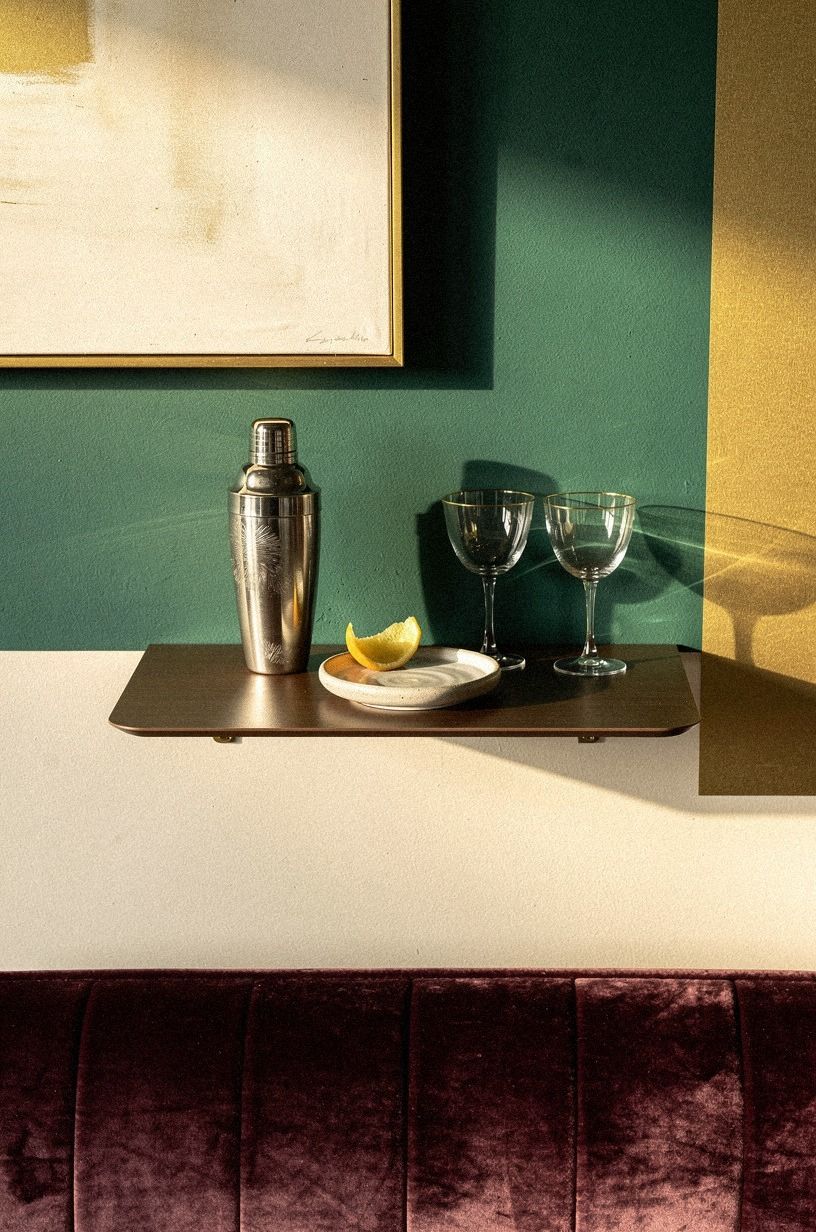
A fold-down shelf is smart when you want the bar to exist only when you’re pouring. In an overhead flat-lay, a small shelf under artwork on an emerald, gold, and cream wall reads neat because every item has a boundary. The shelf drops, you mix, it closes, and the room goes back to being a room.
Don’t make it deeper than you need. Your mixing glass, one board, maybe two coupe stems, that’s it.
Anything more and the hinge starts working too hard. I like a painted panel in emerald lacquer with aged brass stays so the action feels crisp when you open it.
For tiny zones, the compact thinking in this hidden wet bar setup is worth studying.
An open shelf gives you access; the fold-down gives you discretion. They’re not the same promise!
16Why Farrow & Ball Studio Green feels more architectural than black
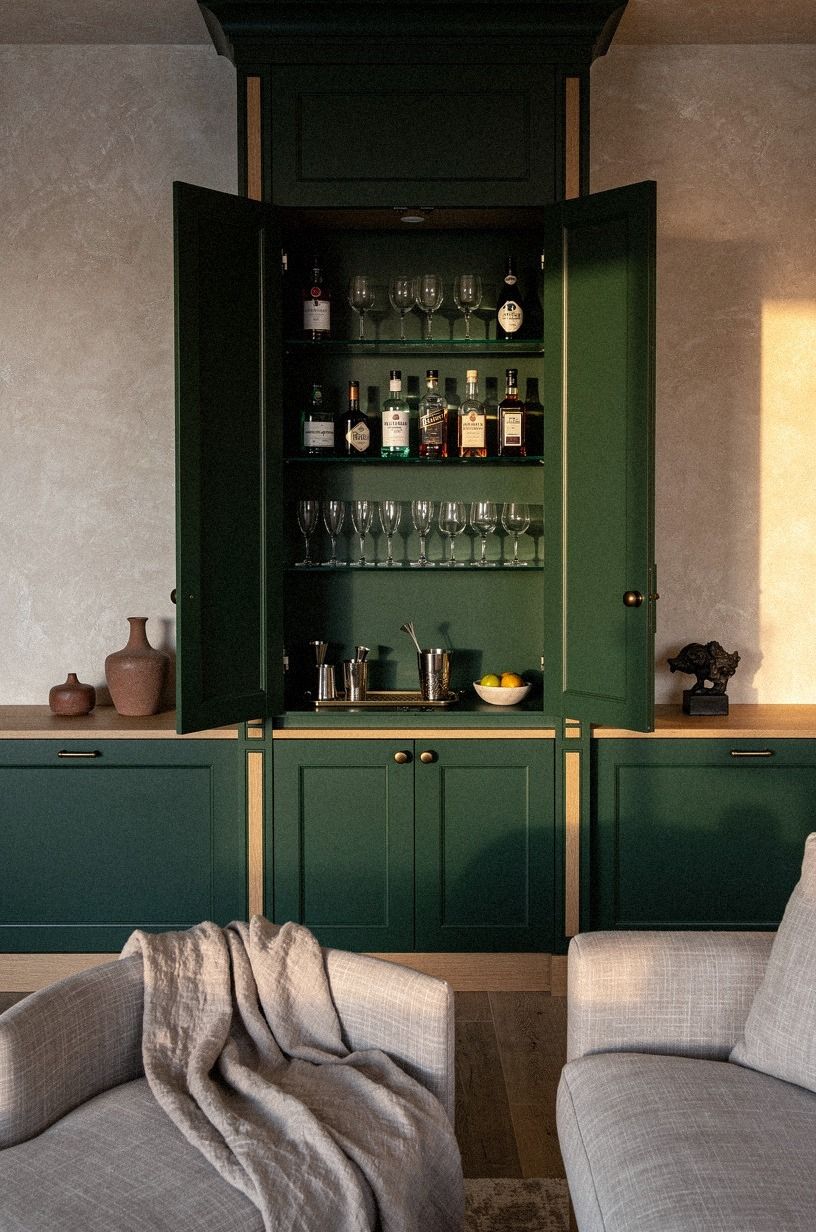
Tailored millwork is what makes a hidden bar feel built in, not bought in a panic. In a 45-degree editorial view, forest green cabinetry wrapping the bar gives you a full-room answer: shelves, storage, and a reveal that belongs to the architecture. If you can afford one custom move, this is the one I’d save for.
Color does heavy lifting here. Forest green cabinetry with brass pulls feels grounded, especially if your sofa and rug are already neutral.
I prefer this to black because black can flatten corners by 3pm, while green still shows depth. If you want a room that whispers instead of poses, the restraint in this speakeasy home bar look is a good compass.
A few specs keep it believable. – 3/4-inch solid white oak shelves if you want visible wood strength – Inset door fronts if you’re chasing a quieter, older-house feel – Unlacquered brass pulls if you want the touchpoints to age well
17Sculptural pulls vs flat knobs: the difference you actually feel
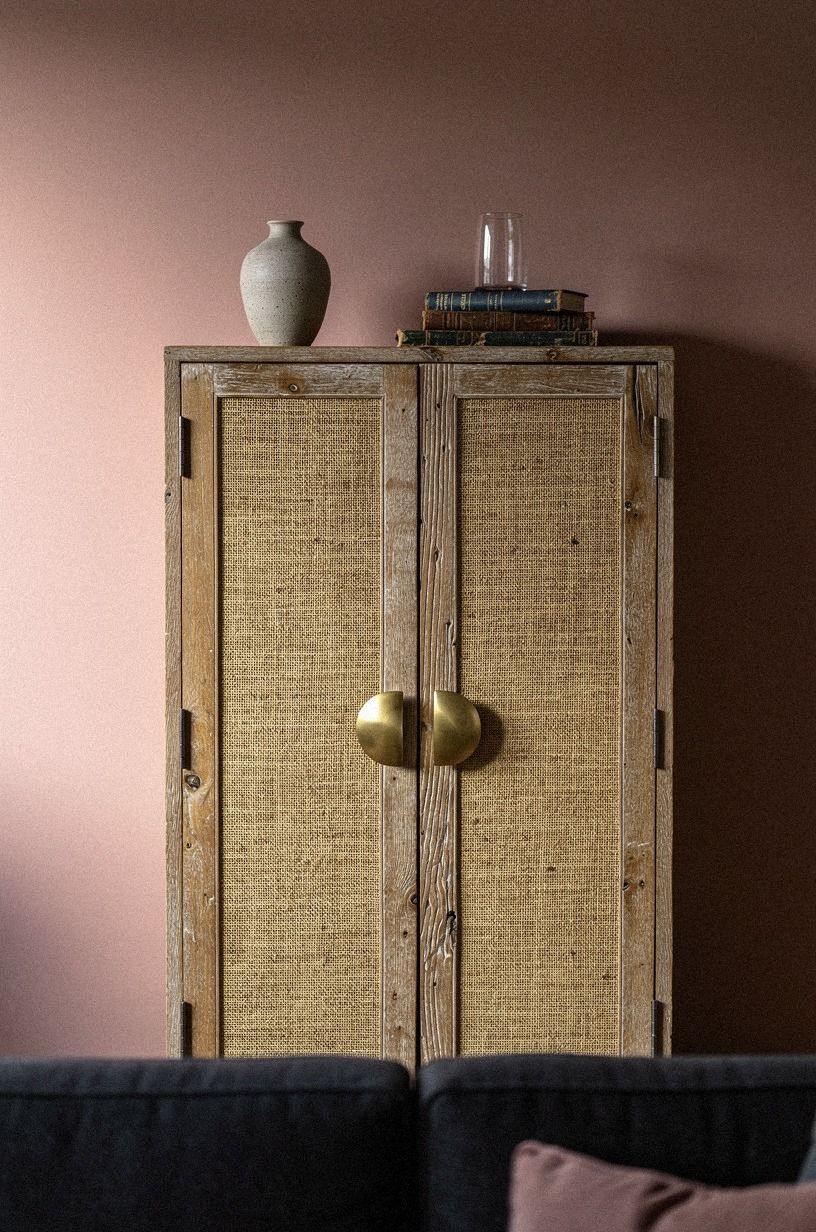
Close the cabinet with hardware that looks intentional even when the bar disappears. In a frontal living room shot with generous negative space, sculptural pulls become the whole story, so they need to earn it. Brass hardware with shape, weight, and a little shadow says the doors hide something worth opening.
I’d spend more here than on novelty glassware, no question. Cheap pulls are the part you touch every single time, and they tell on the whole piece.
A simple cabinet can look expensive if the handle feels good in your hand. But the reverse is true too.
Great wood, bad hardware, and the illusion falls apart.
Choose sculptural pulls with some heft and a clean backplate. That tiny tactile moment is what guests remember. Hold one in-store before you commit!
Why the Reveal Rule Works Better Than a Bigger Bar
The mistake I see most often is treating a hidden bar like a mini kitchen. People chase more shelves, more gadgets, more bottle storage, then wonder why the living room feels busy even with the doors shut. I don’t think the answer is more capacity.
I think it’s better editing. A hidden bar earns its keep when it gives you one graceful pour station and then gets out of the room’s way.
I’ve tried the opposite. I loaded a cabinet once with every syrup bottle, backup tonic, extra shakers, and a stack of glasses I never used.
It looked impressive for about a day. Then it started feeling like office supply storage, just shinier.
The version that lasted was the one with less inside: six or seven bottles I reached for, one mixing glass, one jigger, one towel, coupes on the top shelf, everything else somewhere else.
That’s why I keep coming back to what I think of as the Reveal Rule. The closed view matters more than the open one.
Your room lives with the shut cabinet 95 percent of the time, so the outside should read calm, architectural, and a little bit inevitable. If the reveal is dramatic but the closed view is clunky, you’ve built a performance, not a living room. And honestly, living rooms don’t forgive that.
There’s also the money piece. A bigger bar pushes you toward more custom work, more lighting, more stone, more hardware, and then suddenly you’re in a whole-room project.
A quieter bar lets you spend where people feel the difference: one good cabinet, real hardware, proper lighting, and a finish you won’t be tired of by next fall. That’s the version I’d defend.
It’s less stuff, more atmosphere, and a lot easier to keep looking good with tailored millwork.
The Questions I Get Asked Most
What is the best Hidden Cocktail Bar Ideas for At-Home Mixology for a small living room?
A closed walnut armoire is usually the best choice for a small living room because it gives you full concealment without custom work. If you want something narrower, a bar inside an IKEA STOCKHOLM cabinet also works. Keep the piece against a solid wall so your traffic path stays clear.
Where can I buy Hidden Cocktail Bar Ideas for At-Home Mixology pieces on a budget?
Start with IKEA, Target Threshold, and Wayfair for the cabinet shell, then upgrade the tray and pulls yourself. Facebook Marketplace is worth checking for solid wood credenzas. I also like reusing older dining storage because the proportions feel less flimsy than flat-pack bar carts.
How much does a Hidden Cocktail Bar Ideas for At-Home Mixology makeover cost?
Most hidden bar makeovers land somewhere between $300 and $1,200 if you’re repainting, styling, and upgrading one cabinet. Mid-range versions with better furniture and lighting often sit between $2,500 and $8,000. Free wins count too: editing bottles, moving books forward, and reworking a tray.
Can I create a Hidden Cocktail Bar Ideas for At-Home Mixology on a budget?
Yes, and the cheapest wins are often the smartest. Use books as camouflage, reuse a media unit, and swap ugly hardware first. Add one tray, one warm lamp, and one better bottle edit.
That’s usually enough to make the bar feel deliberate without jumping into millwork. Big payoff, small spend!
Is a Hidden Cocktail Bar Ideas for At-Home Mixology worth it in a small space?
Yes, it’s worth it because a small room benefits from fewer visible objects and stronger zones. Concealed storage keeps the living room calmer, and a bar behind doors can still pour beautifully. Put it near the seating area, not across the room, so you don’t break the conversation flow.
Is Hidden Cocktail Bar Ideas for At-Home Mixology a good idea for a rental?
Yes, if you stick to no-damage moves. Use a freestanding cabinet, peel-and-stick back panels, removable puck lights, and a tray that lifts out in seconds.
I’d avoid hardwiring or stone tops in a rental. Save your money for hardware, paintable inserts, and good styling.
Start Here, The Quiet-Luxe Test
If I had to pick one step, I’d start with the closed walnut armoire. You can’t fake that settled, furniture-first look with open shelves and hopeful styling. Get the closed shape right first, then layer the brass, glass, and light.
That’s what makes the whole room land.