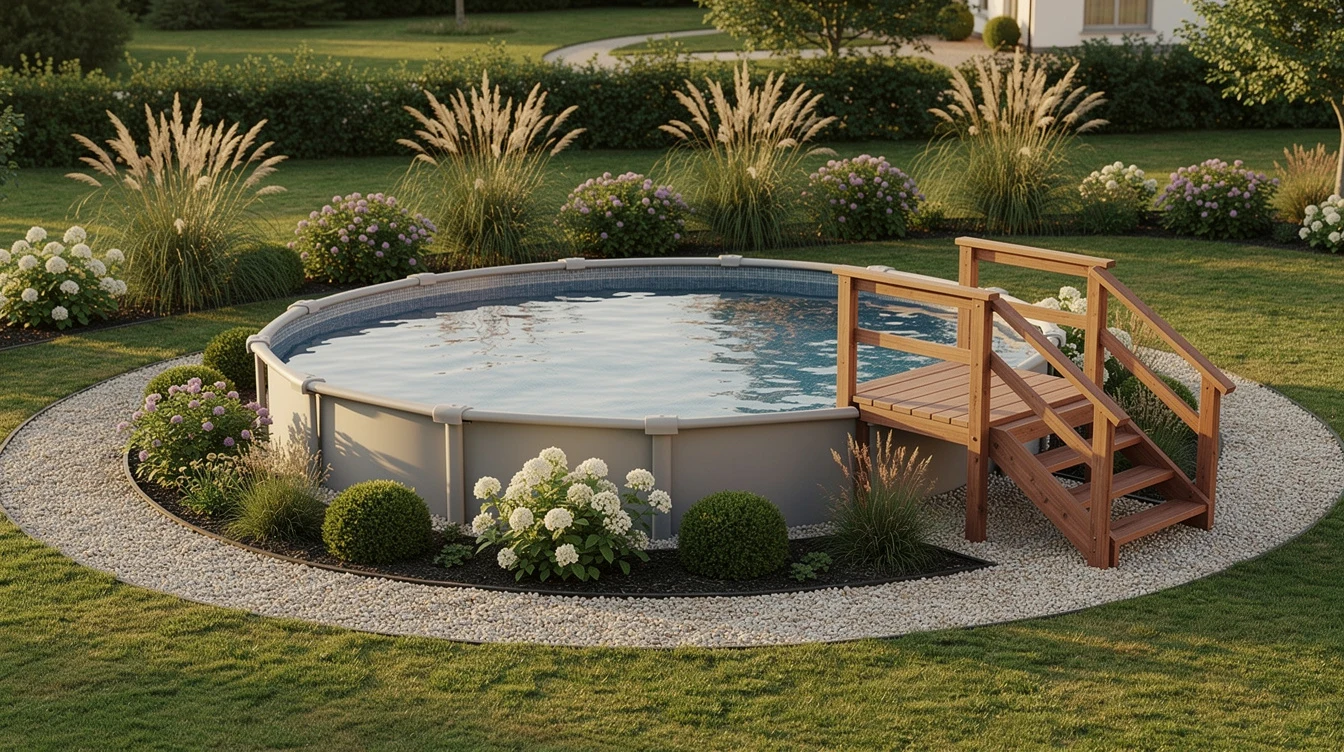
My first above-ground pool sat on bare grass for two summers, and it looked exactly like what it was: a vinyl cylinder fighting a losing battle against mud rings and weed invasion. The water was fine. Everything around it was a mess. Fixing that meant thinking in layers, not one big makeover, and spending money where it actually showed.
Here’s how I built a perimeter that makes a 5, 6 m steel-frame pool look settled in, without pretending it’s in-ground or blowing the budget on a full deck.
- ✓Gravier autour du mur pour stopper la boue
- ✓Plateforme d’entrée 3×4 m là où se trouve l’échelle
- ✓Plantes en hauteurs décalées, pas une seule haie
- ✓Mur de soutènement seulement si le terrain est en pente
Start with a Gravel Ring Before You Build Anything Fancy
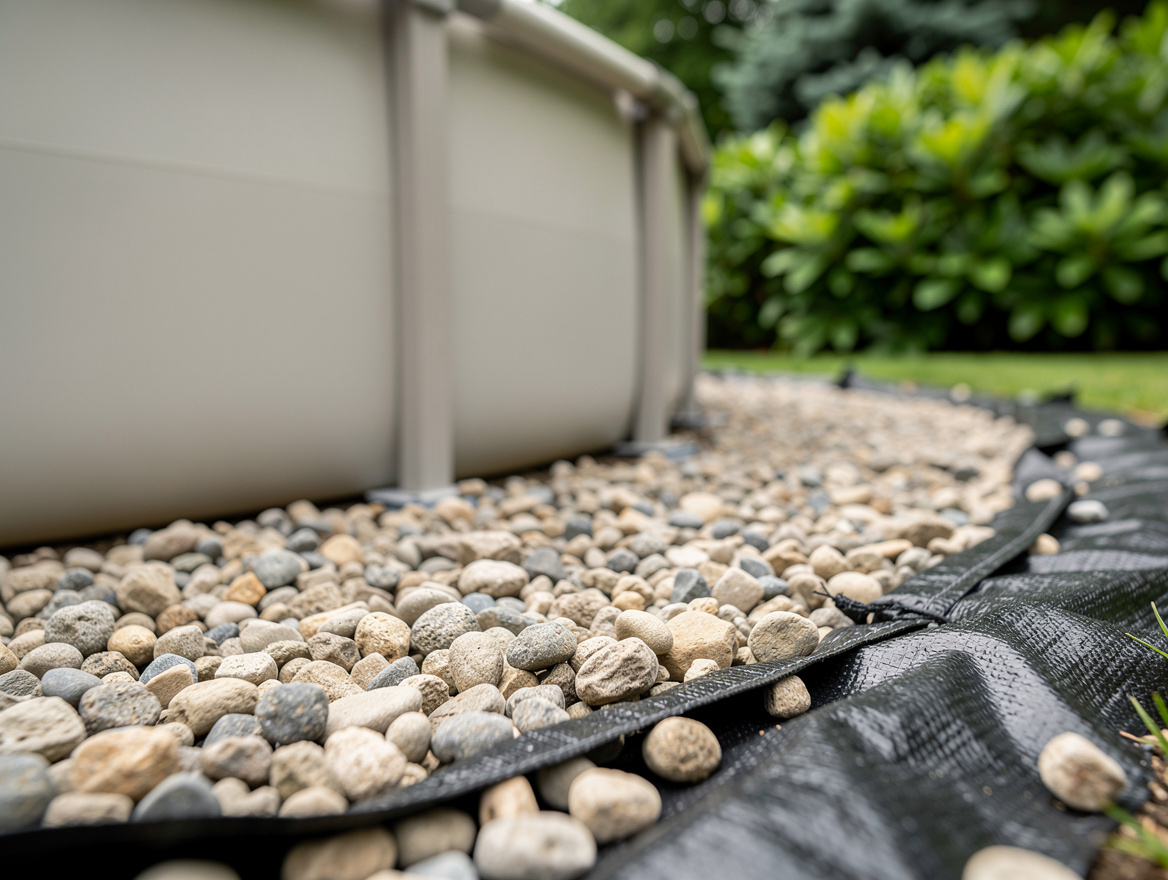
My neighbor’s pool looked like a spaceship landed in her lawn until she ringed it with pea gravel and thuja shrubs. A 50, 80 cm band of crushed stone around the wall stops splash mud and gives you a clean maintenance zone. Weed barrier fabric underneath is non-negotiable, or you’ll be pulling grass from gravel every weekend. For a typical 5, 6 m round pool, you’re looking at roughly 7, 15 USD per 80 sq ft of coverage at 2 inches deep. Add a row of evergreen screening and a few flowering perennials, and the whole perimeter runs about 200, 600€ if you DIY the planting. It’s the cheapest layer that makes the biggest difference.
Add a Partial Deck Where People Actually Enter
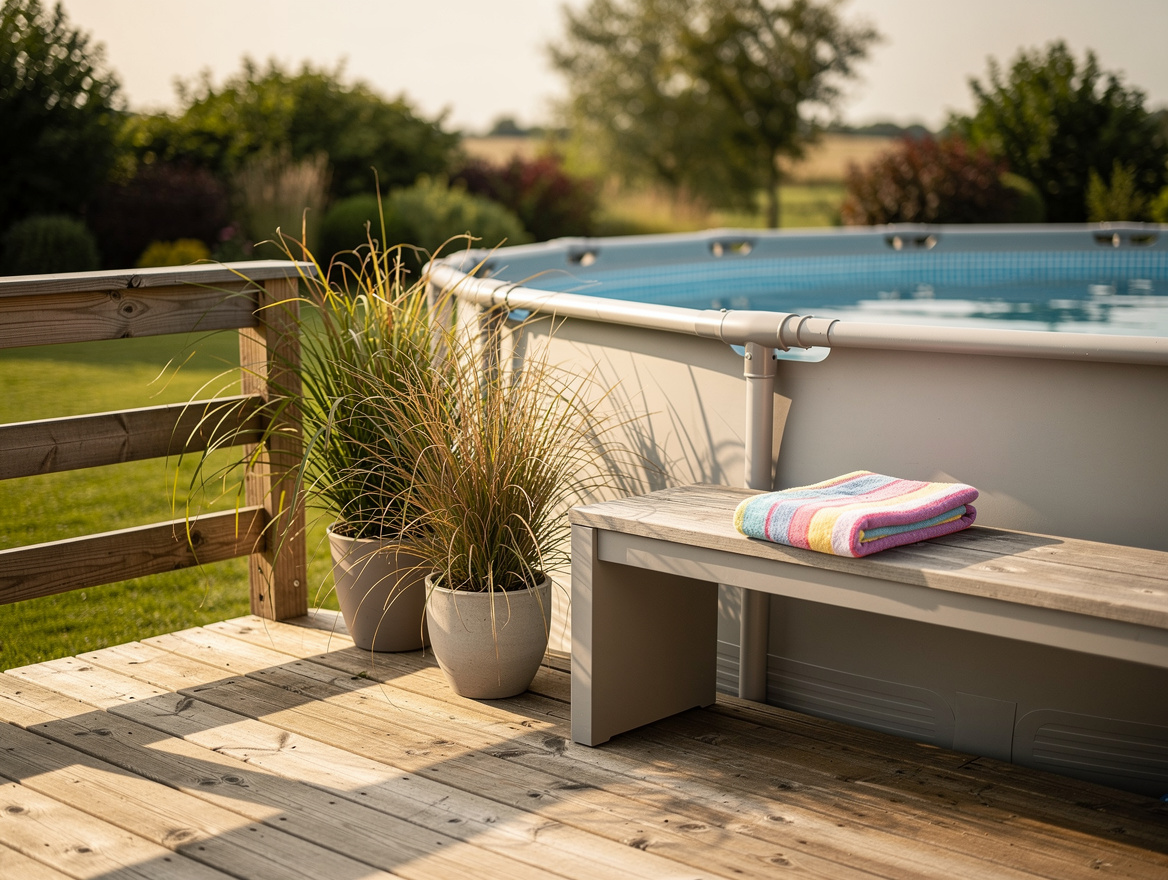
A full wrap-around deck is overkill for most budgets. Instead, build a 3×4 m entry platform in treated pine or composite boards right where the ladder sits, then leave the rest in gravel or pavers. Treated pine lumber runs roughly 80, 150€/m² in materials, so that modest platform hits about 1,000, 1,800€ in wood and fasteners. Composite pushes closer to 150, 250€/m², but you skip the annual staining ritual. Tie the deck height to your pool’s top rail, add a small bench for towel storage, and suddenly the pool reads as intentional rather than temporary.
Hide the Wall with Layered Planting, Not Just One Hedge
One straight hedge looks like you’re hiding something. Better: stagger heights. Low ornamental grasses in front, mid-size laurel or photinia behind, then maybe one small tree or tall grass cluster to break the line. The pool wall disappears behind volume and texture, not a green fence. Keep plants 60, 80 cm back from the wall to prevent root damage and let air circulate. Mulch or gravel between plantings cuts maintenance and stops the weed explosion that happens when you leave bare soil near water.
Build a Retaining Wall Only If Your Plot Demands It
Sloped yard? Don’t fight the grade. A short sleeper retaining wall or concrete block wall on the high side lets you level the pool area without importing tons of fill. Tier the planting above the wall with shrubs and grasses that cascade slightly, so the structure reads as garden feature, not engineering fix. A small decorative wall around part of the perimeter typically runs low thousands if you hire it out, hundreds in materials if you DIY with pressure-treated sleepers. Don’t build higher than you need: 40, 60 cm often handles the grade shift without dominating the space.
Choose Your Pool Material Based on How Long You Plan to Stay
Steel-frame pools with vinyl liners are the entry point, but they rust. Resin or composite frames cost more upfront but handle chlorine and weather better. If you’re renting or testing the waters, a soft-sided Intex or Bestway frame pool at 300, 800€ gets you 2, 5 seasons. For permanent installation, a Trevi 211 steel or hybrid pool in 5.5 m round runs about 3,405 USD pool-only in 2026. The 6.4 m round, the common “party” size, hits roughly 3,870 USD. Match your landscaping ambition to the pool’s lifespan: don’t build a 6,000€ deck around a pool you’ll replace in three years.
Light the Perimeter, Not Just the Water
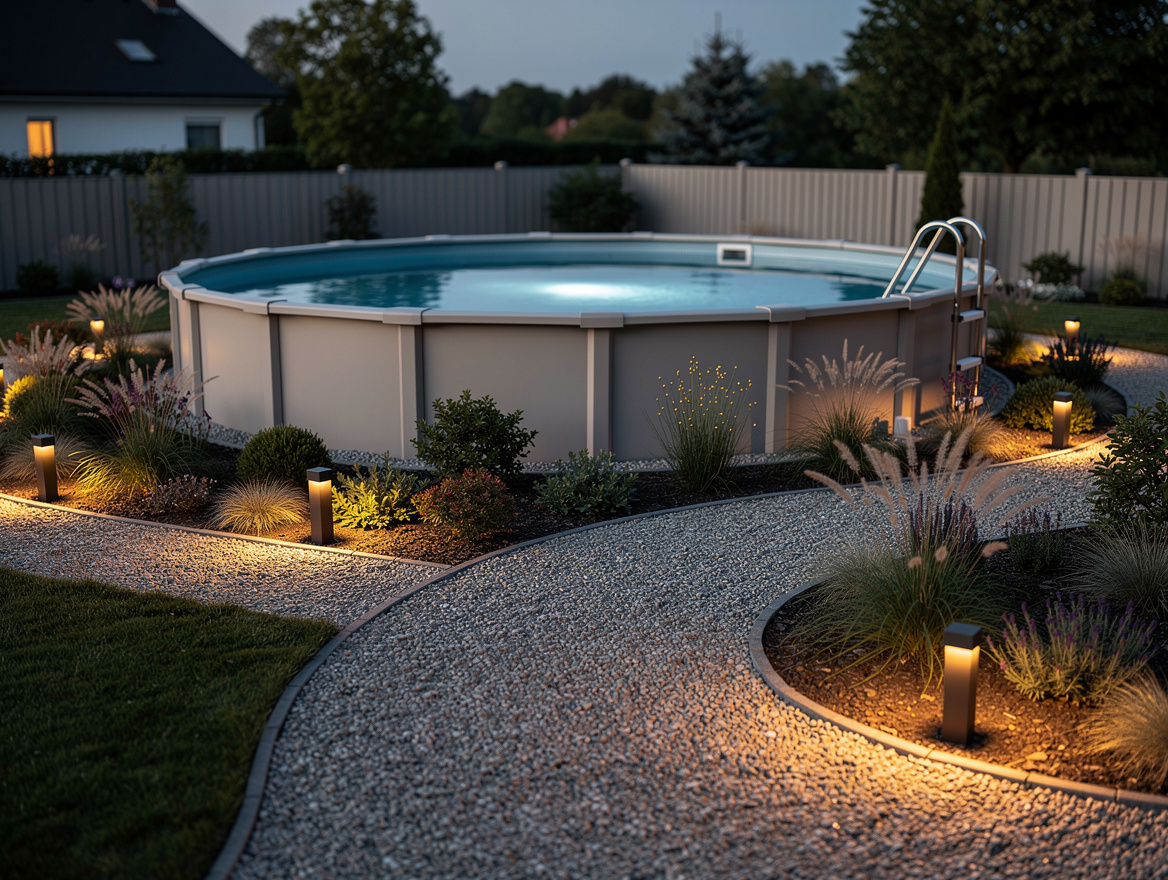
Pool lights are fine, but the magic happens when you wash light across the gravel, plants, and deck edges. Solar spike lights along the gravel ring are cheap and zero-wiring. For something sharper, low-voltage LED path lights tucked among shrubs create depth and make the pool area usable after dark. Avoid anything that shines directly into swimmers’ eyes from the perimeter. The goal is to make the pool feel like a destination, not a bright hole in the yard.
7-15 USDpour 80 sq ft à 5 cm de profondeur
If I had to pick one place to start, I’d spend the weekend on the gravel ring and weed fabric. Everything else, the deck, the plants, the lighting, layers on top of that clean base. Without it, you’re just decorating a mud pit.
Mia Carter writes about small-space living and budget home makeovers. She has restyled three rentals and tests most ideas in her own 45 sqm flat.