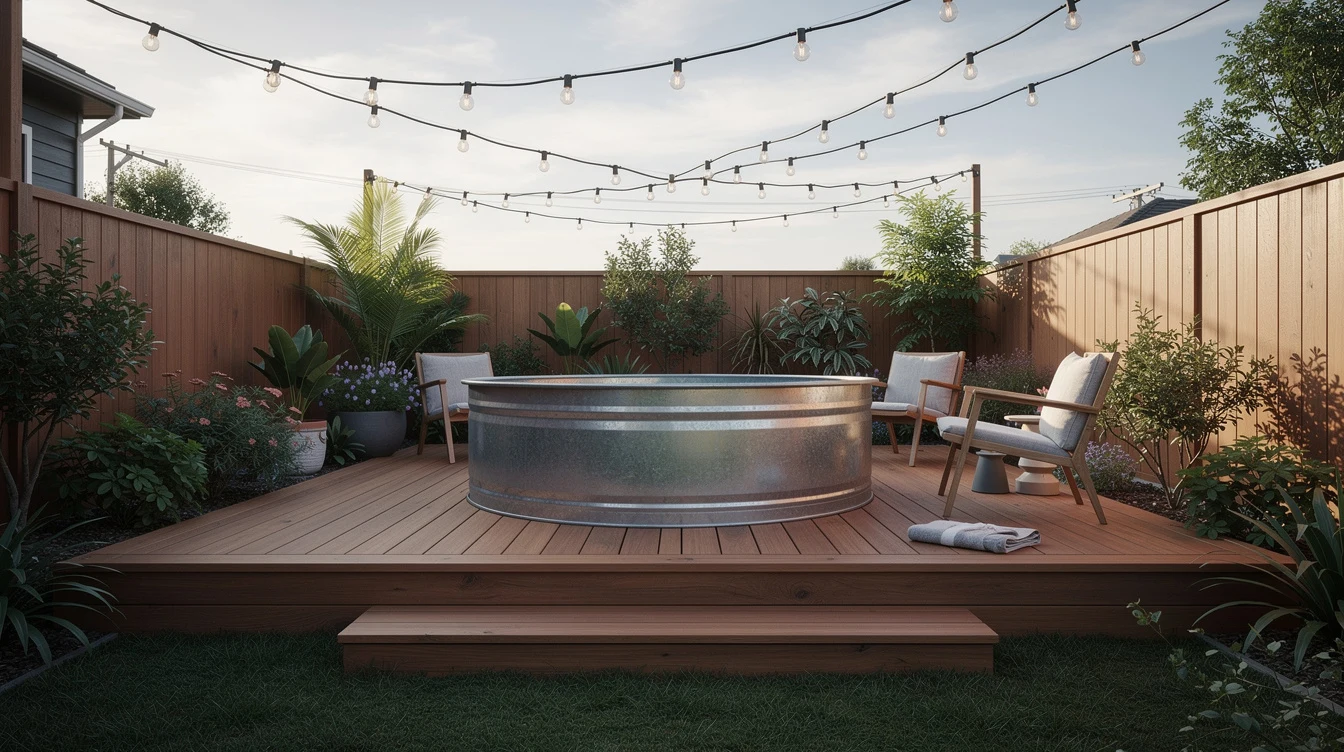
My backyard is 18 feet wide. I measured it three times hoping the number would grow. It didn’t. What grew instead was a stubborn refusal to accept that a pool required a suburban estate and a landscape architect named something with a silent vowel. Small backyards don’t disqualify you from swimming. They just force you to stop pretending.
Start by Measuring What You Actually Have
My backyard is 18 feet wide. That number sat on a Post-it for three weeks while I stared at pool brochures showing families doing cannonballs into rectangles bigger than my entire lot. The reality check came when I paced it out: a 6′ x 10′ plunge pool footprint would leave room for a narrow path and one chair. That’s not defeat. That’s the starting line.
- ✓Small backyards don’t disqualify you from swimming. They just force you to stop pretending.
- ✓A 6′ x 10′ plunge pool footprint would leave room for a narrow path and one chair. That’s not defeat. That’s the starting line.
- ✓The pool itself is a hole with water. The materials around it determine whether you use it twice or twenty times a month.
Most small pools that feel usable need at least 8 feet on their shortest side. A typical Intex Prism Frame at 10′ round fits where a shed used to sit. For permanent builds, Thursday Pools’ Sea Turtle at 9.5′ x 19.5′ demands more commitment but still threads into lots where standard 15′ x 30′ vinyl pools would eat your garage.
Pick the Cheapest Option That You Won’t Hate in August
Portable pools get ugly fast if you cheap out too hard. The Intex Prism Frame at roughly $200 for a 10′ round x 30″ deep model is honest about what it is: one summer, maybe two, then gratitude when you drag it to the curb. I’ve seen them go gray and sag by Labor Day.
Step up to a Bestway Power Steel 22′ x 52″ frame pool and you’re in the $1,200 to $1,800 range. Thicker walls. Better pump. A friend in Austin ran one for four years on a concrete pad with a DIY deck wrap. It doesn’t look like a resort. It looks like a smart person who likes swimming and hates debt.
$2,800total avec pompe, filtre, deck basique et guirlandes — pas les $500 promis par Pinterest
Build Character with a Stock Tank Pool
This is where I landed. A galvanized steel stock tank, typically 4′ to 8′ in diameter, runs $120 to $465 for the tank itself. The full setup, pump, filter, basic deck, string lights that make it photographable, pushed my total near $2,800. Not the $500 Pinterest promises. The tank doesn’t come with a hole for plumbing. Someone has to cut that and not ruin the thing.
My tank is 8′ round, 2′ deep. It’s a sitting pool. A drinking-wine pool. A pool for one person to float with a noodle. The water heats fast in Texas sun, so I built a crude shade frame with cedar 2x4s and outdoor canvas. Total pool aesthetic: ranch supply meets slightly desperate creativity. I love it more than any $60,000 cocktail pool I’ve seen on Instagram.
Go Permanent with a Cocktail Pool That Knows Its Job
Cocktail pools, usually 8′ x 12′ up to 12′ x 24′, 3′ to 5′ deep, are built for standing, sitting, cooling off. Not laps. Not Marco Polo. The fiberglass entry-level builds typically run $30,000 to $60,000 installed, which is where I stopped considering them. But if you’re already redoing a backyard and the budget exists, the format makes sense.
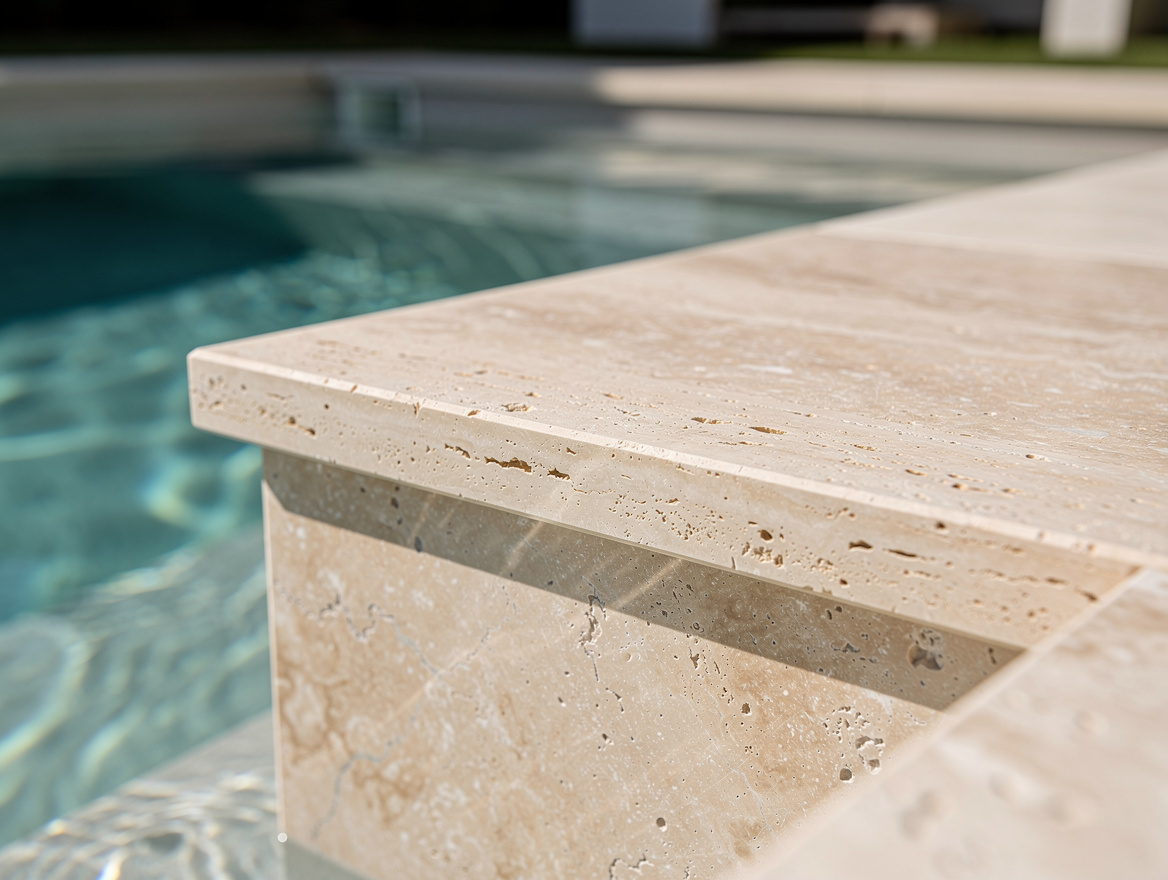
What separates tolerable from good is the surround. A travertine coping edge. One bench seat at 18″ depth for lounging. A small tanning ledge that doesn’t waste the limited real estate. The pool itself is a hole with water. The materials around it determine whether you use it twice or twenty times a month.
Consider a Container Pool for Narrow Lots
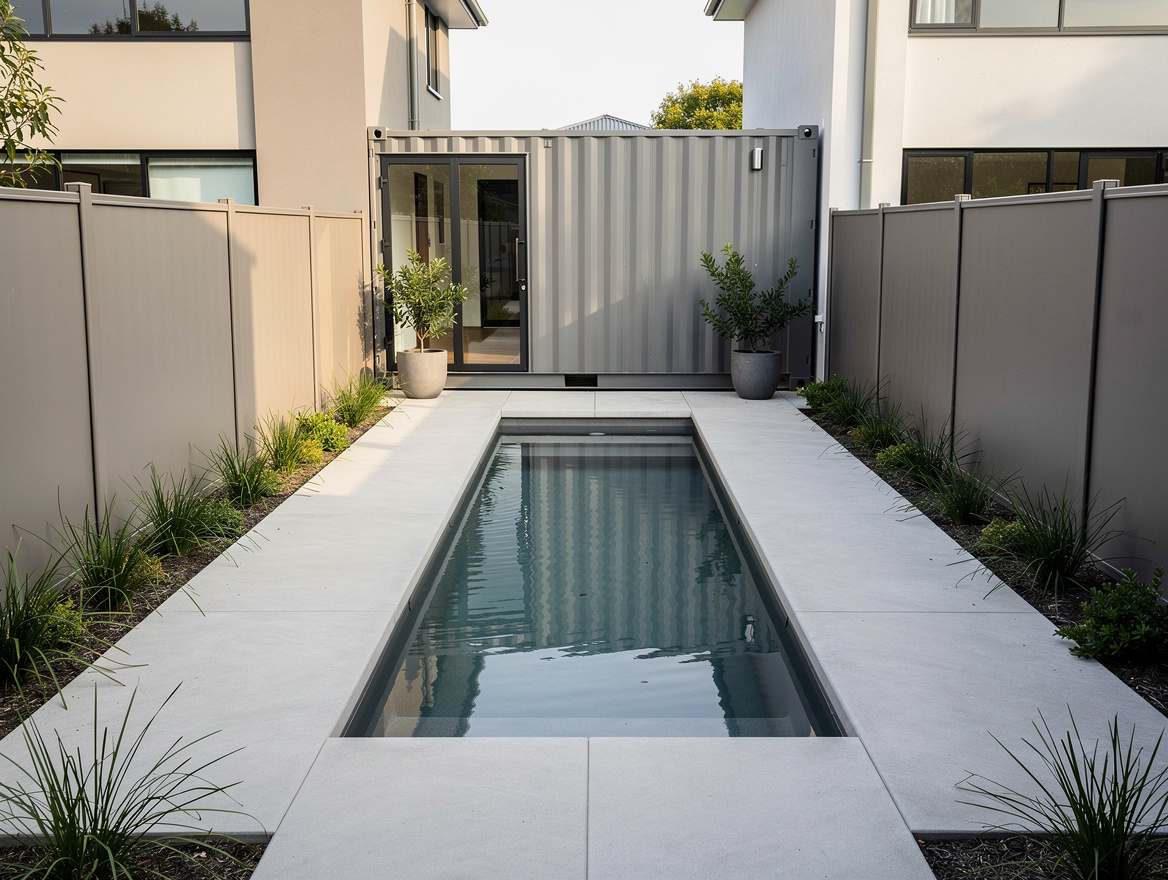
An 8′ x 20′ shipping container pool starts around $28,000 installed, often pushing toward $40,000 with cutouts, windows, and proper filtration. The format is brutally honest: a steel rectangle, usually 8′ wide, 20′ to 40′ long, dropped or craned into your yard. No curves. No pretending.
The appeal is speed and visual punch. A container pool reads as architecture, not landscaping. For modern houses with flat roofs and concrete yards, that coherence matters. For my 1940s bungalow, it would look like a shipping container in a garden. I crossed it off. But on a 12-foot-wide city lot in Phoenix or Los Angeles, it’s often the only permanent pool that physically fits.
Price the Reality, Not the Fantasy
The split is brutal and real. Portable and temporary: a few hundred to maybe $5,000 if you go elaborate stock-tank. Permanent small inground: typically $20,000 at the absolute floor, more often $35,000 to $85,000 depending on material and how much your local installers are swamped. A small vinyl liner inground at 12′ x 24′ commonly lands at $45,000 to $70,000. Concrete gunite cocktail pools start around $75,000 and climb with any custom shape.
I budgeted $3,500 for my stock tank build and spent $2,800. The $700 cushion went to a better pump than I planned. Typical pool budget accuracy: imaginary. Actual: add 20% for the thing you forgot, which is always the thing that keeps the water clear.
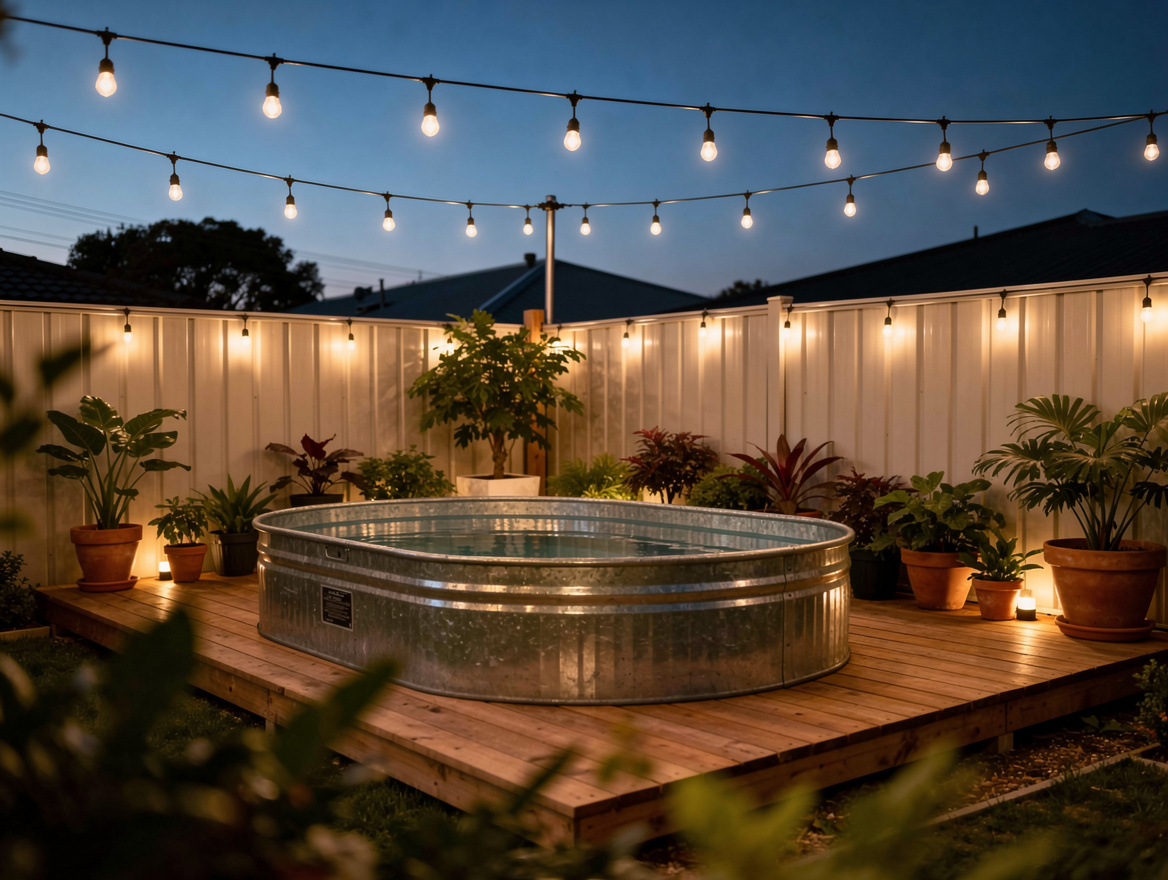
If I had to pick one starting point for most small yards, I’d build a stock tank pool with a real deck and a pump that isn’t the cheapest on Amazon. It’s not forever. It’s not impressive. But it’s water you own, in a space that isn’t a football field, and that counts more than any brochure promise.
Mia Carter writes about small-space living and budget home makeovers. She has restyled three rentals and tests most ideas in her own 45 sqm flat.