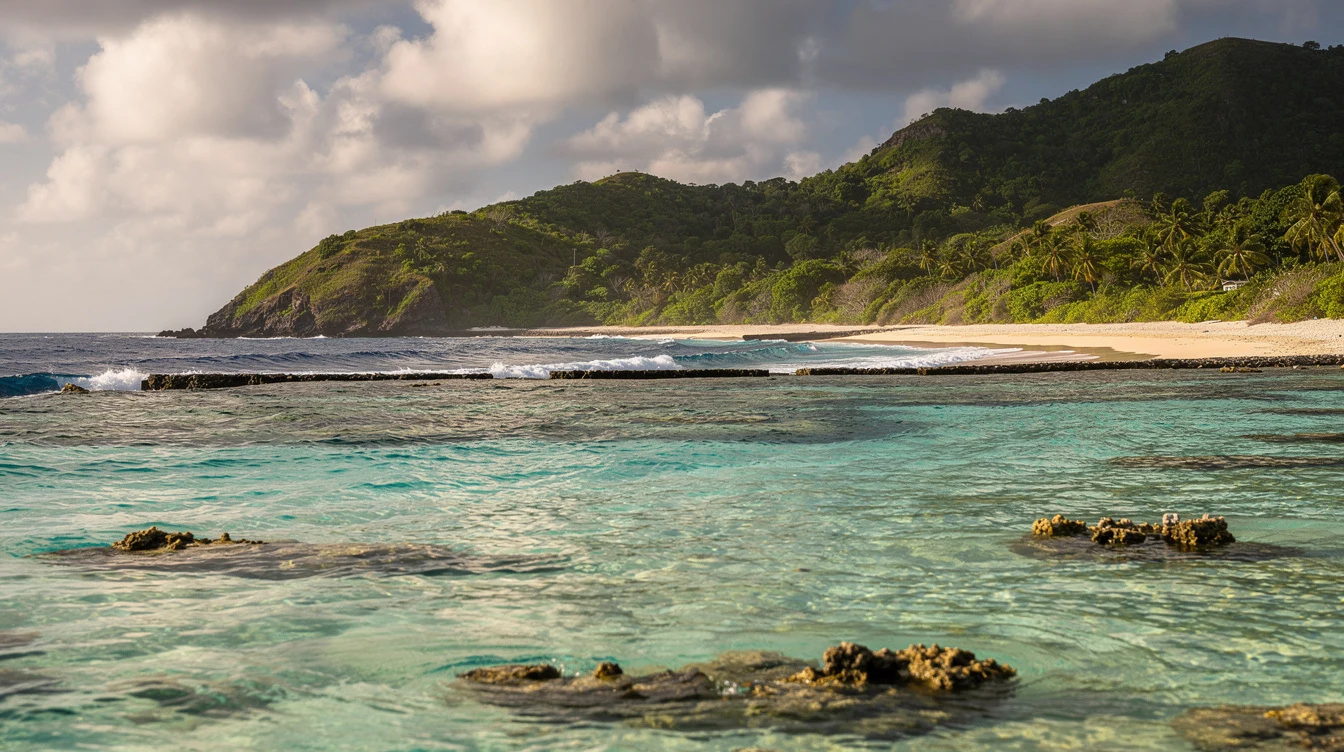
The flight from San Andrés takes 15-20 minutes, but the difference feels like years. Providencia is not a smaller version of its neighbor. It’s a separate country in spirit, and that starts with the language you hear when you land.
English first, Colombia second
The islanders speak San Andrés, Providencia Creole, an English-based creole that sounds closer to Jamaican Patwa than to Spanish. That’s because the culture here is Raizal, not Colombian mainland. You’ll hear it in the streets of Santa Isabel, the island’s main settlement, and you’ll see it in the Rastafari presence that shapes daily life.
- ✓Vol de 15-20 minutes depuis San Andrés
- ✓Créole anglais, pas espagnol
- ✓6,6 miles carrés, pas de resorts
- ✓98% détruit par l’ouragan Iota en 2020
- ✓Récif protégé par UNESCO, 10% de la mer Caraïbe
And the history explains why. The English Puritan colony founded in 1629 left traces you can still touch. Forts and cannons from the 1600s sit scattered across Santa Catalina Island, the smaller sister island connected by the Lovers’ Bridge. Walking it is the standard arrival ritual.
Some locals still point to hills named after Henry Morgan, the privateer who used Providencia as a base for raiding Panama. The treasure rumors persist. The history is real.
The reef is the whole point
Providencia sits at the center of the Seaflower Biosphere Reserve, a UNESCO protected zone that covers 10% of the entire Caribbean Sea. The Old Providence McBean Lagoon National Park protects the northeast side, between Maracaibo and Rocky Point.
The water stays warm, calm, and clear most of the year. That consistency is what makes the diving reliable. Most dive sites fall within the UNESCO reserve boundaries, so the coral has actual protection. You can snorkel straight from Crab Cay, a small island inside the park with a visitor center and views across the reef.
But here’s the trade-off. The island is only 6.6 square miles total. There are no sprawling resorts, no duty-free malls, no cruise ship docks. The infrastructure was already limited before Hurricane Iota destroyed 98% of it in November 2020.
What recovery looks like now
The hurricane was catastrophic. Rebuilding has been slow, and that shapes every practical decision you make. Some hotels and restaurants have returned. Others have not. Power and water can be intermittent. The airport, El Embrujo, handles the short flights from San Andrés, but international expansion remains a plan, not a reality.
4 927habitants au recensement de 2005, peu de croissance depuis. 800 jeunes hommes en prison à l’étranger ou disparus, recrutés par les trafiquants.
And that slowness has a strange effect. The island is quiet, but not empty. The beaches clear out by late afternoon because there’s no cruise ship schedule to fill them. The reef gets the attention it needs because there aren’t enough divers to damage it.
The population was 4,927 at the 2005 census, and it has not grown much since. Employment is scarce. That scarcity has had consequences. Young men with seafaring skills have been recruited by drug traffickers, and an estimated 800 are in prisons abroad or missing. The island is safe for visitors, but the economic pressure is visible.
How to get there, and when
You fly to San Andrés first. From there, a short 15-20 minute flight runs regularly. The catamaran takes about 3 hours, and it’s rougher than the flight. Most travelers choose the plane.
Can you visit without speaking Spanish?
Yes. English works in most tourist-facing situations because of the Raizal language and culture. But a few Spanish phrases help with mainland Colombian staff who rotate through for work.
What about the dry season?
The sources don’t specify a narrow window. The water stays warm and clear most of the year. That said, November is hurricane season in the Caribbean, and Iota proved what that can mean. Travel+Leisure’s hurricane season guide covers the broader regional pattern. Most travelers aim for December through April to avoid the risk.
What you actually do here
Diving and snorkeling dominate. The reef is close enough that some sites are accessible from shore. The national park has marked trails through tropical dry forest. The black land crabs stage their annual breeding migration down to the sea every April and May, a spectacle that sounds minor until you see the hills empty out.
And there’s walking. The road around the island is short, but steep. The climb to the island’s highest point is worth it only if you start early, because the shade disappears and the Caribbean sun is direct. From the top, you can see Santa Catalina, the reef line, and the deeper blue where the reserve extends toward the remote banks and shoals that few visitors ever reach.
The food is simple. Fresh fish, coconut rice, plantain. There are a few restaurants, and some close without notice. Don’t plan elaborate dinners. Plan for what you can see before the light changes.
The real reason to choose it
Providencia is not a hidden gem. It is a known place that most travelers skip because it takes effort. The flight connection is thin. The facilities are basic. The hurricane recovery is ongoing.
But the reef is intact because of that thinness. The culture is distinct because the mainland never absorbed it. The water is clear because the UNESCO reserve has actual enforcement. And the quiet is not an absence of activity. It is the presence of something else, something that disappears when infrastructure gets too good too fast.
By the time the last ferry leaves Santa Catalina, the bridge is empty, and the only sound is the water moving through the mangroves. That is when the island feels most like itself.