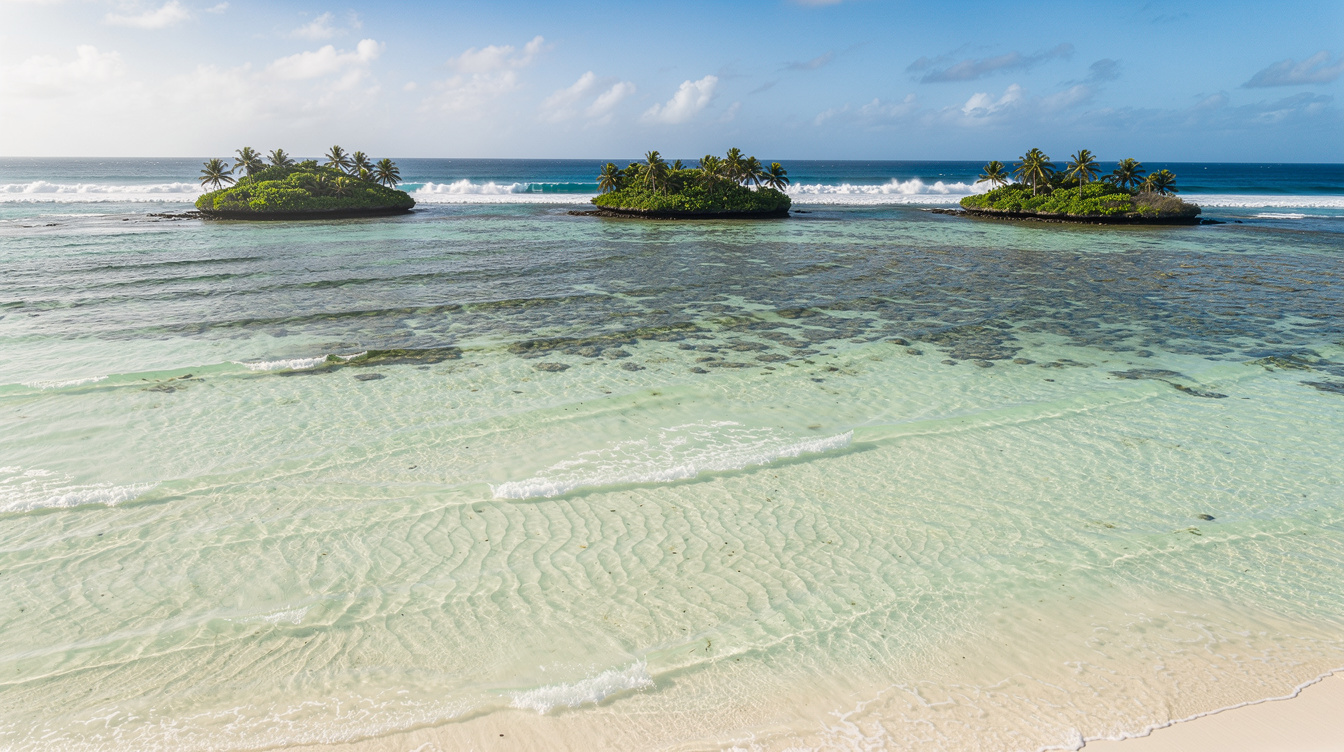
At 7am, Muri Beach on Rarotonga’s southeast coast looks like a sealed system. The lagoon is flat, pale green over white sand, and the four motu sit low on the horizon like punctuation marks. Every resort photo was taken at this hour. What those photos don’t explain is that the same reef creating this calm water also creates two tidal passes, and by 11am on an incoming tide, the southern one is moving fast enough to push a kayak sideways.
The reef isn’t scenery. It’s the mechanism that controls everything you’ll do here.
What the fringing reef actually does
Rarotonga is a volcanic island roughly 20 miles in circumference. A fringing reef runs parallel to its southeast coast at roughly 500 to 700 meters offshore, absorbing South Pacific swell that in open water can run 6 to 10 feet. Because that reef dissipates most of the energy, the lagoon inside stays under one foot of wave height at the beach.
That’s why families wade 50 meters out and the water stays at waist depth. But a reef isn’t a sealed wall. It has gaps, and those gaps are where the lagoon’s character gets complicated.
And the complication is tidal, not seasonal. This isn’t a beach that behaves differently in June versus November. It behaves differently between 8am and noon on any given day.
The two passes and what they do to your plans
Avana Passage, at the southern end of Muri lagoon near the Avana Marina, is where the ocean pushes water into the lagoon on an incoming tide. The current is directional and measurable. Kayakers who launch from the southern beach without checking the tide get moved laterally instead of forward.
The incoming tide also carries sediment through the pass, which drops visibility. Snorkeling is better on the outgoing tide, when clearer lagoon water flows seaward and the bottom settles. A boat captain who has run lagoon tours for years will tell you this without prompting. Most booking pages won’t.
But the northern end of the lagoon, near Koromiri motu, sits farther from the main tidal flow. The sandy bottom stays visible to about 8 feet through more of the tidal cycle, which makes it the better choice for snorkeling with children, roughly between 8am and 11am before the southeast trade wind picks up surface chop.
The four motu and the kayak logic
Muri lagoon has four islets: Taakoka, Koromiri, Oneroa, and Motutapu. None is accessible by motorized boat under normal lagoon conditions. Kayak and stand-up paddleboard rentals from beach operators run roughly $9 to $15 per hour. Paddling out is easy in the morning calm. The return into the prevailing southeast wind in the afternoon is not.
Local guides on the beach know this and will tell you if you ask. Most visitors don’t ask. And that’s the entire reason the far side of Taakoka feels like a different place: you earned it, so fewer people are there.
Motutapu has a small resort with its own boat access. The other three motu are uninhabited, with low vegetation and coarse sand. The logic resembles Bora Bora’s lagoon, where the best water is free and the kayak is the price of admission.
The cost equation for American travelers
Flights from LAX to Rarotonga (RAR) run roughly $900 to $1,400 round-trip depending on season, typically routed through Auckland on Air New Zealand. Total flight time ranges from 11 to 13 hours. Beachfront bungalows on the Muri side start around $200 per night. The west and south coasts run cheaper.
Dinner near the beach runs $20 to $45 per person. Groceries at the small Muri stores cost noticeably more than in Avarua, the main town roughly 5 miles northwest. Budget travelers who cook and stay on the south coast can manage the island on around $120 to $150 per day, excluding flights.
Like El Nido’s tour structure, the decisions you make before you arrive determine which version of the destination you experience.
Your questions about Muri Beach answered
How do you get to Muri Beach from the airport?
Rarotonga International Airport sits on the northwest side of the island, roughly 7 miles from Muri by the southern ring road. The Cook Islands Bus runs a clockwise and counterclockwise loop for about $2.50 per ride, taking 30 to 40 minutes to reach Muri depending on direction. Scooter rental runs roughly $20 to $30 per day and is how most independent travelers move around.
What months are best for Muri Beach?
The dry season runs May through October, with air temperatures around 72 to 77°F and the lowest rainfall averages. Ocean temperature stays between 75 and 79°F year-round. The wet season from November through April brings cyclone risk and humidity that makes the shore uncomfortable between rain bursts. Unlike Hanalei Bay, where the season completely changes the water’s character, Muri’s lagoon is swimmable year-round. The question is comfort on shore and reliability for the motu crossings.
Is Muri Beach expensive?
By US standards, yes. By South Pacific standards, it’s mid-range. The beach itself is free. Like Lanikai, the early morning window costs nothing and delivers the best version of the place. The kayak is around $12 for an hour. The reef doesn’t charge admission.
At 6:45am, before the kayak operators set up their boards and before the first tour boat loads at the marina jetty, the lagoon surface is pale jade over white sand. The motu are still in shadow. The reef line is audible somewhere out there: a low, continuous compression, roughly 600 meters from where you’re standing.