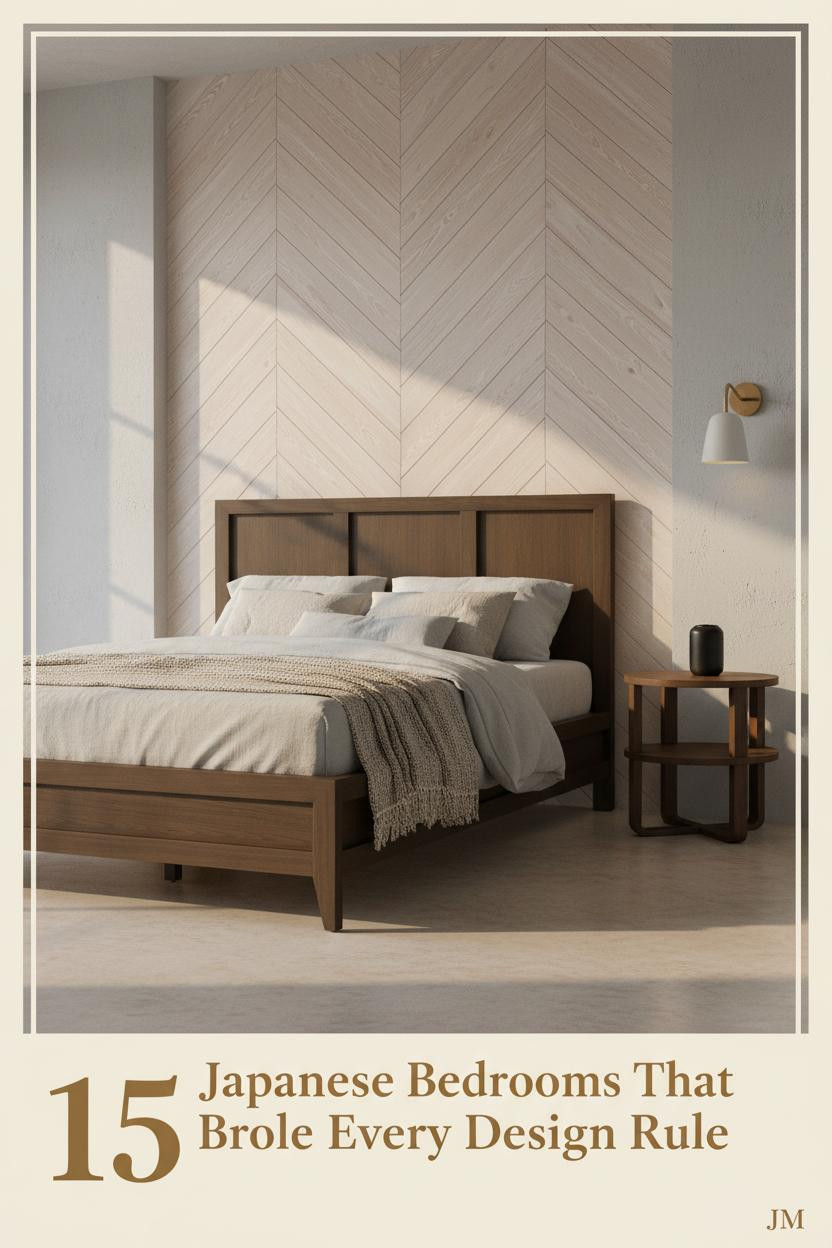
The best Japanese bedroom ideas don’t feel stripped. They feel settled. Like someone made deliberate choices and then stopped.
These 15 rooms prove that calm and empty aren’t the same thing. Every one of them has something worth stealing.
The Backlit Wall That Changes the Whole Room
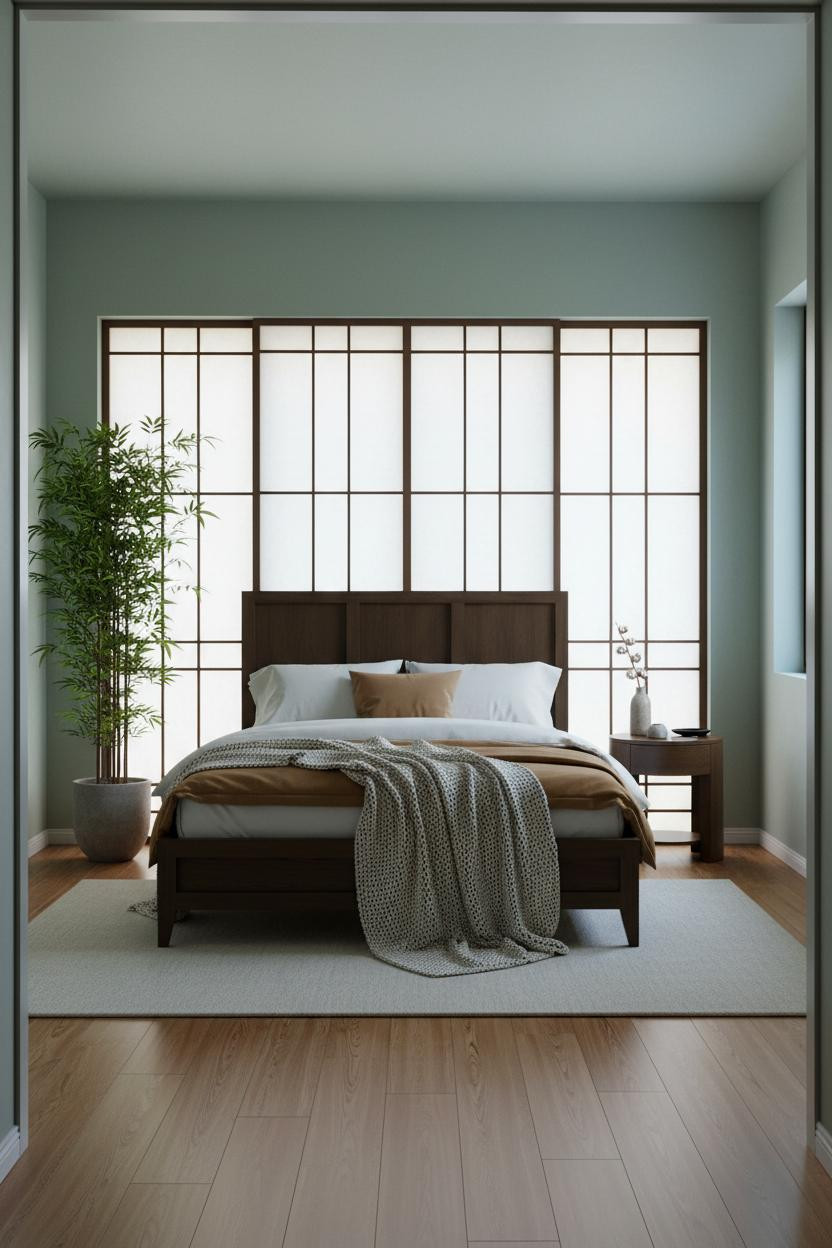
I keep coming back to this one. There’s something about a glowing wall that makes morning feel less abrupt.
Why it works: The washi paper panel stretched over a dark timber lattice turns the entire headboard wall into a light source, which softens the room in a way that a bedside lamp never quite does.
Steal this move: Hide an LED strip behind a timber-framed rice-paper panel and you’ve got the most considered lighting upgrade in the room.
How Herringbone Wood Earns Its Place on a Bedroom Wall
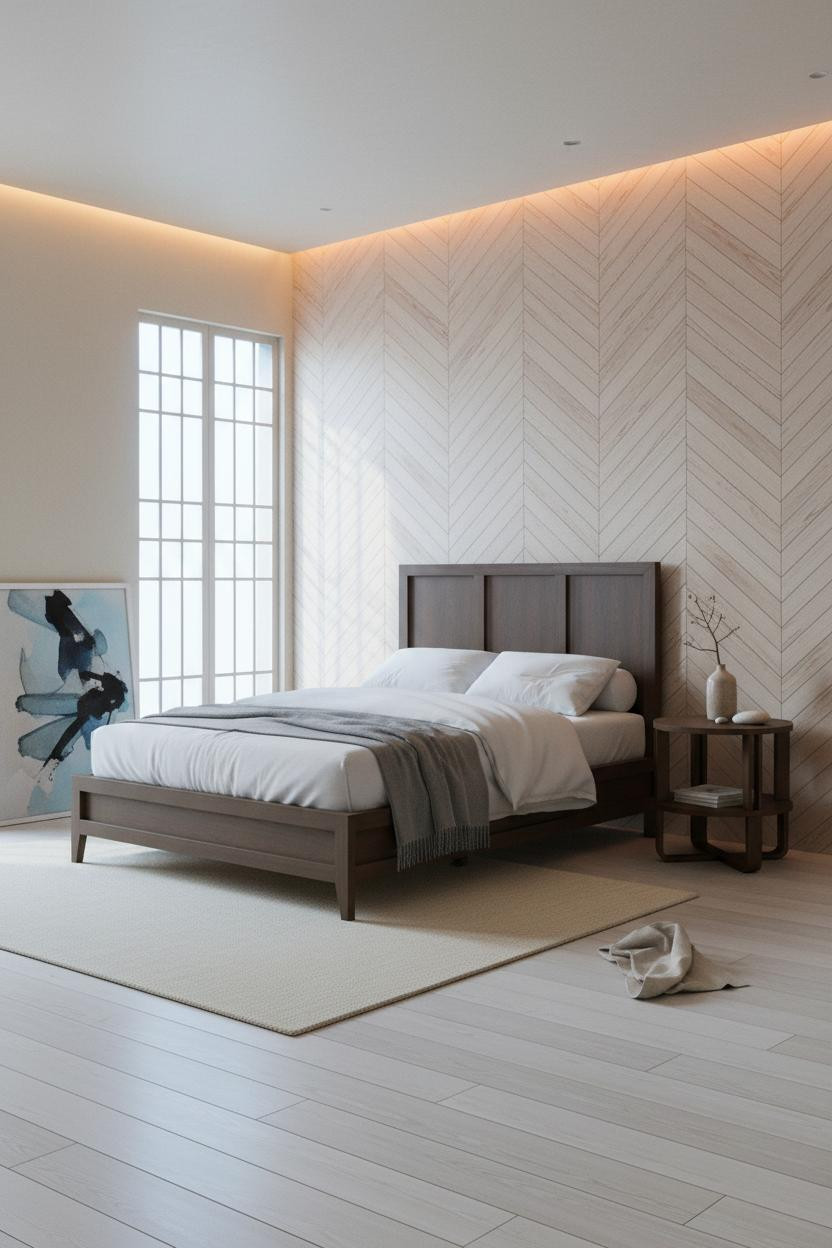
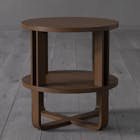
Divisive. But the people who commit to it don’t regret it.
A full-height pale ash herringbone wall behind the bed gives the room rhythmic texture that flat paint simply can’t replicate. Each chevron joint catches raking light differently, which means the wall looks alive at every hour.
The detail to keep: Lean an oversized ink-wash canvas against the opposite wall so the pattern has something quiet to answer to.
What a Full Shoji Screen Wall Actually Does to a Room
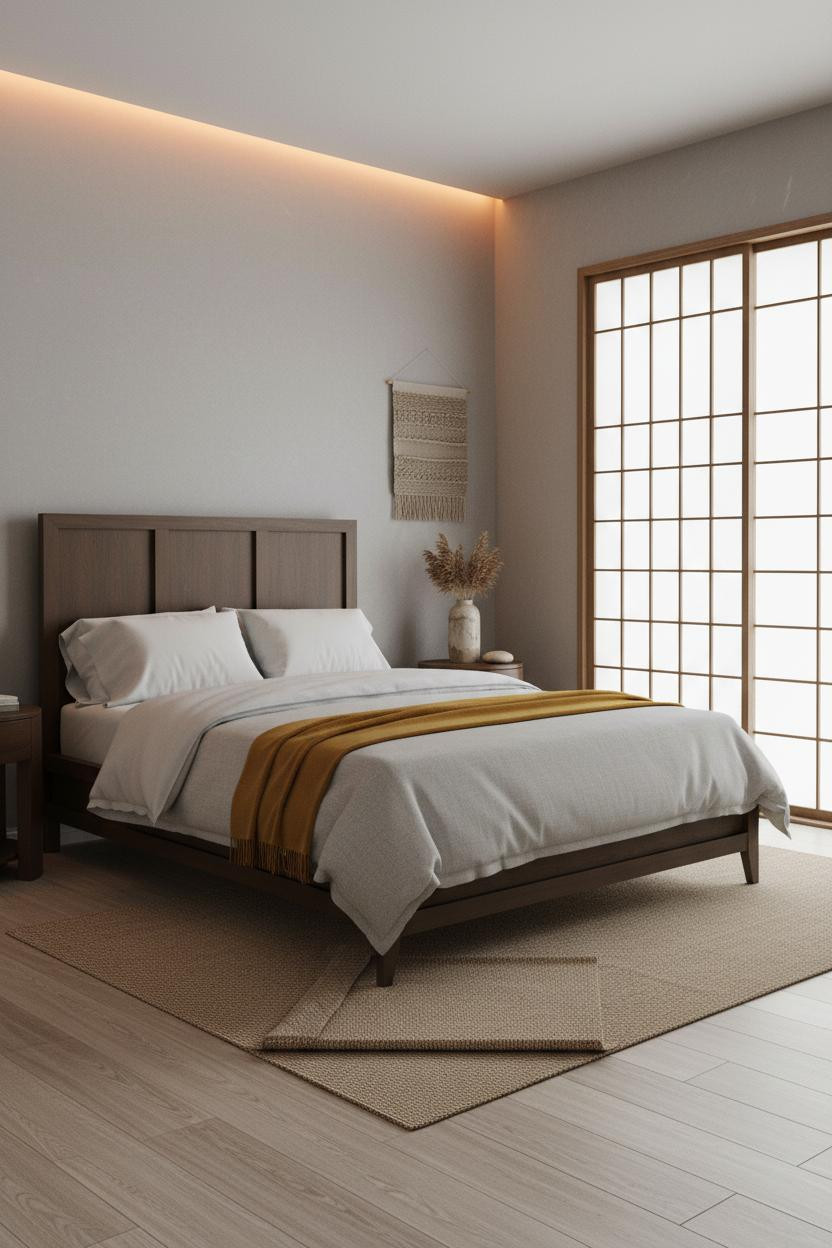
The room feels mineral-quiet. Not empty. Quiet.
Why it feels intentional: Slender dark timber mullions on the rice-paper shoji screen cast grid shadows across dove-grey lime plaster walls, creating geometry that shifts slowly with the light while still feeling completely still.
Pro move: Pair the screen with a woven wall hanging in undyed flax so the textile softens what the geometry sharpens.
The Timber Soffit Trick That Makes Low Ceilings Look Designed
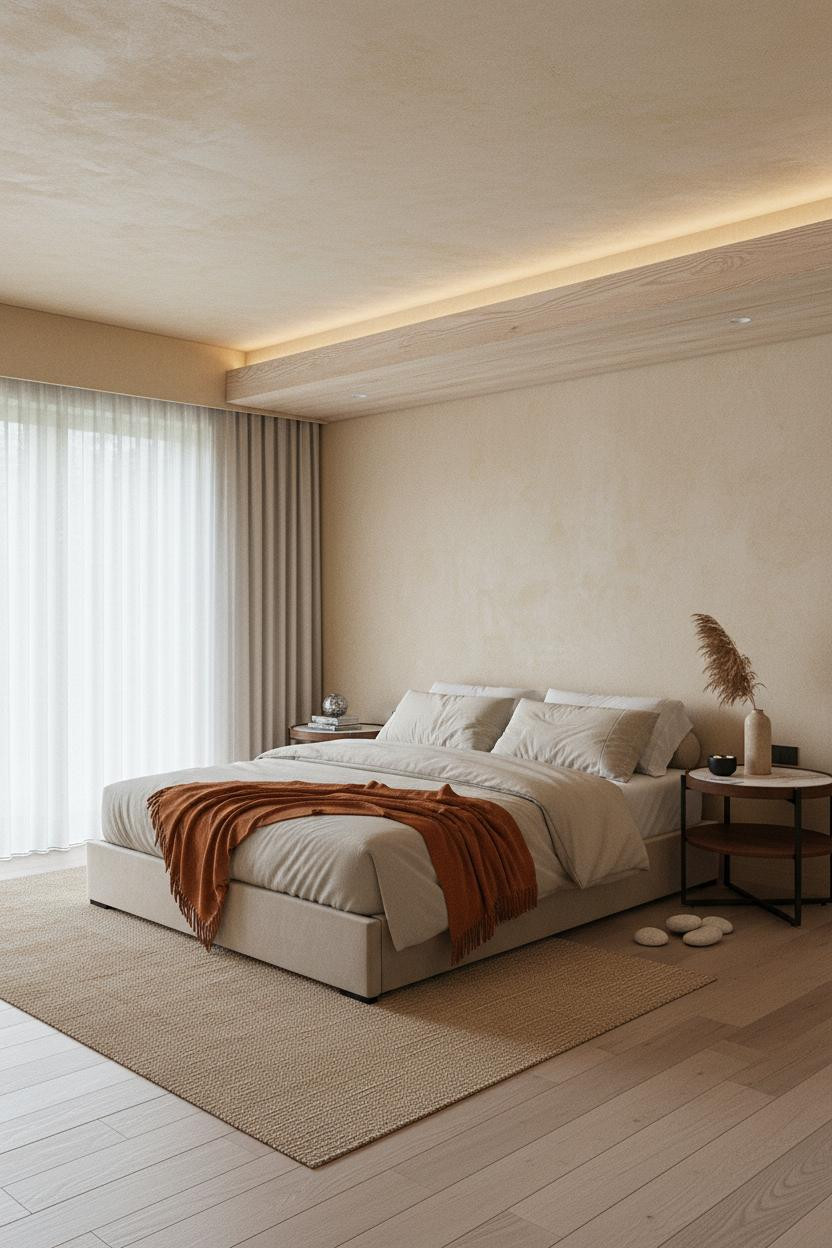

It shouldn’t work. But the exposed hinoki timber soffit spanning the bed zone anchors the whole ceiling in a way that’s hard to explain until you see it.
Design logic: A shallow horizontal band of hand-planed wood at ceiling height creates a strong architectural line that makes the space feel considered rather than unfinished. It also catches warm light beautifully along its lower edge.
Worth copying: Float floor-to-ceiling undyed flax curtains beside the shoji panels so the softness balances the structure above.
Why Vertical Cedar Slats Feel More Restful Than Plain Plaster
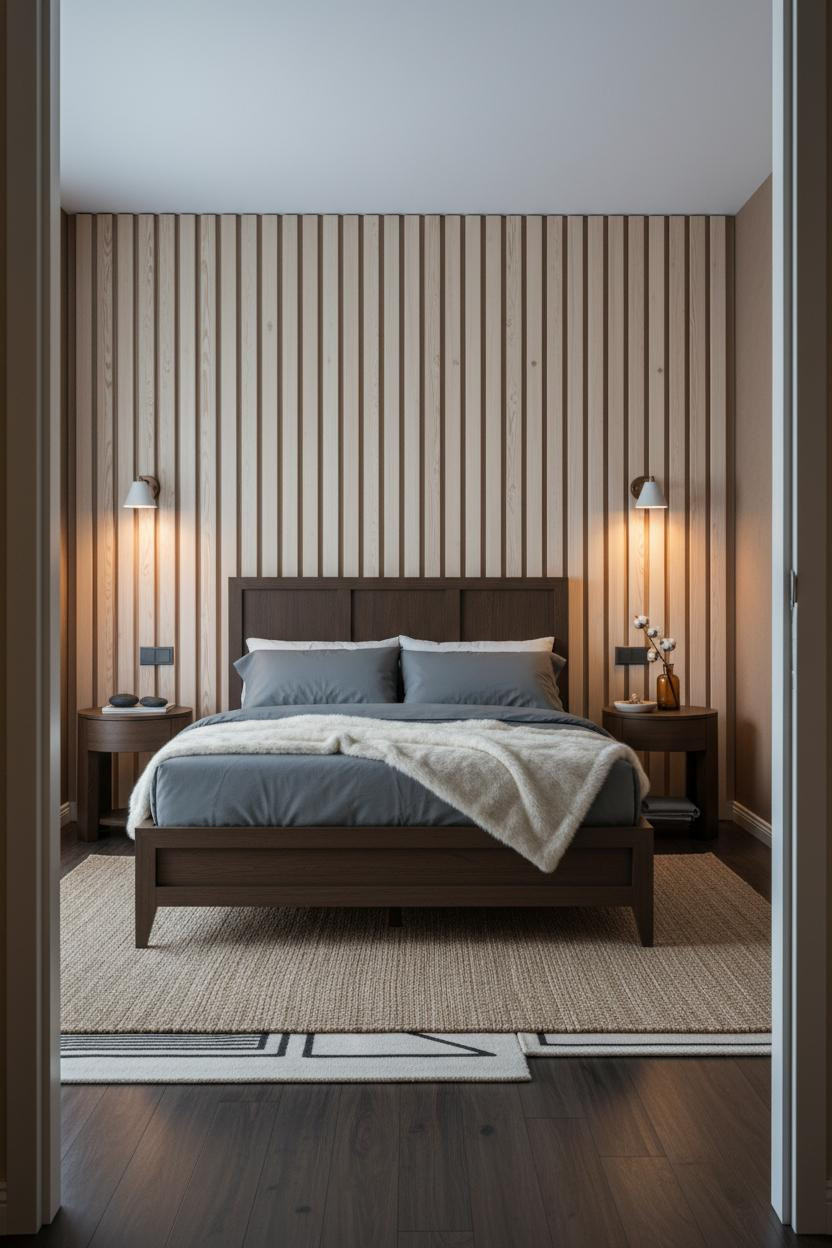
There’s something almost meditative about pale unfinished cedar slats running floor to ceiling. The tight vertical rhythm absorbs diffused light in a way that keeps the room from feeling flat.
The easy win: Pair warm clay walls alongside the slatted feature wall. The contrast between the two surfaces is enough. Nothing else needs to do much work. (Admittedly, restraint is harder than it sounds.)
I Didn’t Expect an Ash Ceiling Beam to Be the Main Event
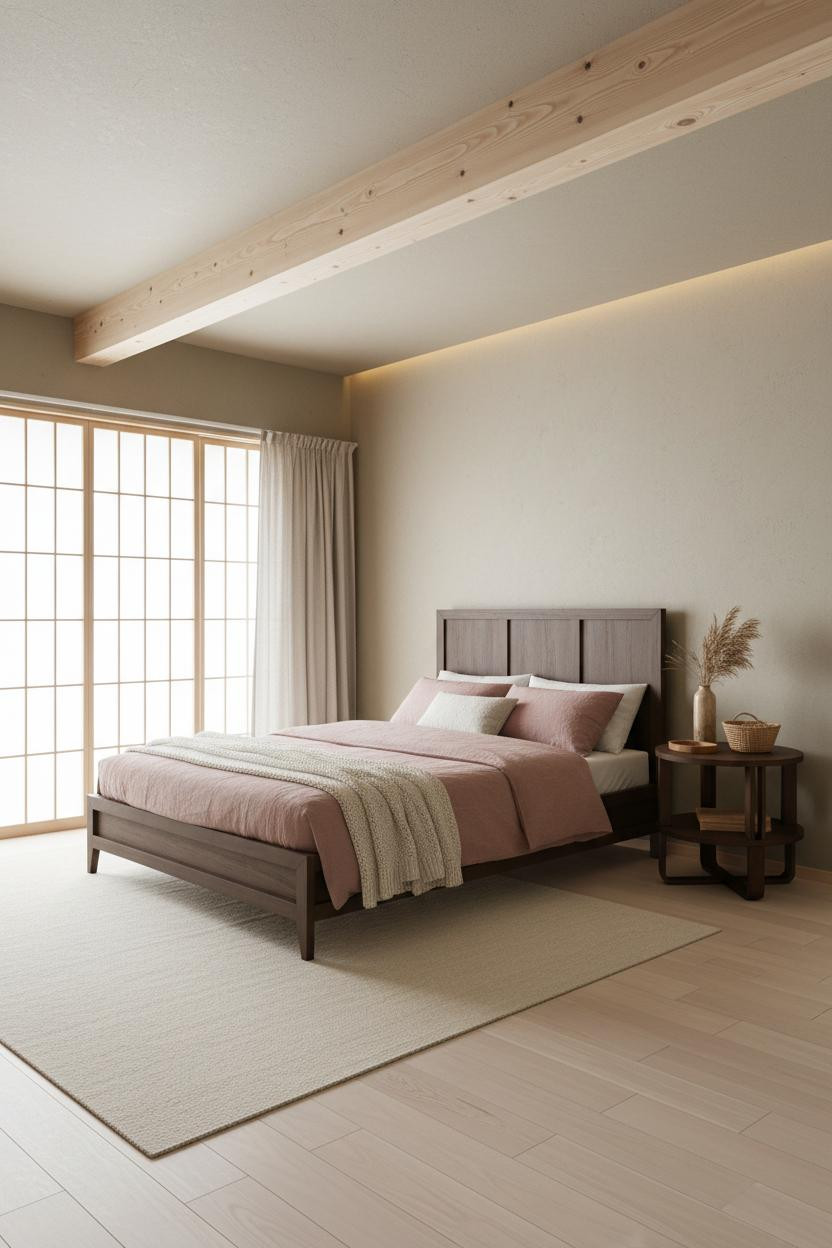
I almost scrolled past this one. The beam looked like a detail. It’s actually the whole composition.
What gives it presence: A single hand-planed light ash timber beam running the full ceiling length casts faint linear shadows across smooth lime plaster below, creating a horizontal anchor that makes the whole room feel resolved. One structural element. That’s all it takes.
What to borrow: Run undyed flax curtains full-height beside the shoji panels. The softness keeps the beam from reading as too structural.
This Coffered Hinoki Ceiling Earns Every Bit of the Effort
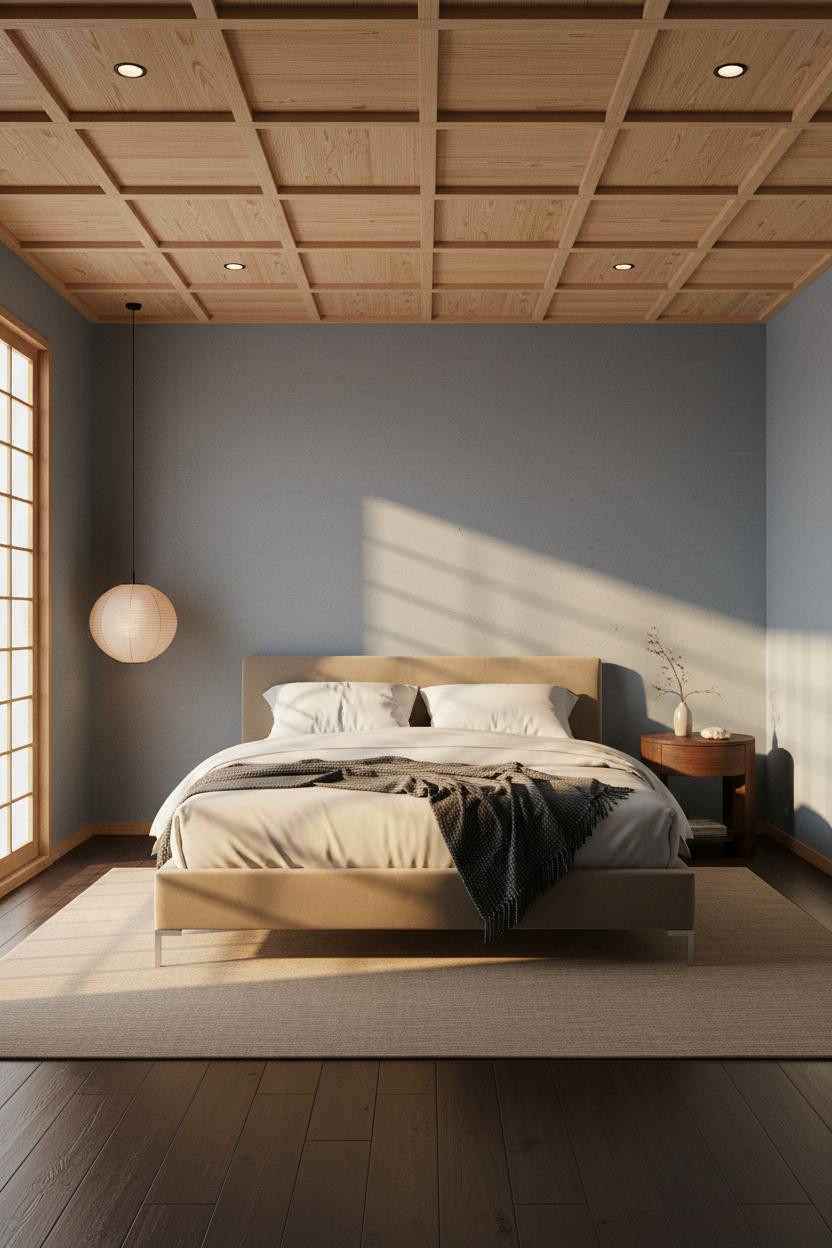

Fair warning. A coffered hinoki timber ceiling is a commitment. But I’ve never seen anyone regret it.
Each shallow square recess catches warm raking light along its lower edge, creating a rhythmic grid overhead that makes the room feel grounded and somehow expansive at the same time.
Avoid this mistake: Don’t pair a ceiling this detailed with busy walls. Muted faded-denim blue plaster is exactly the right call here. Let the ceiling do the talking.
The Ash Wainscoting Detail That Quietly Anchors the Room
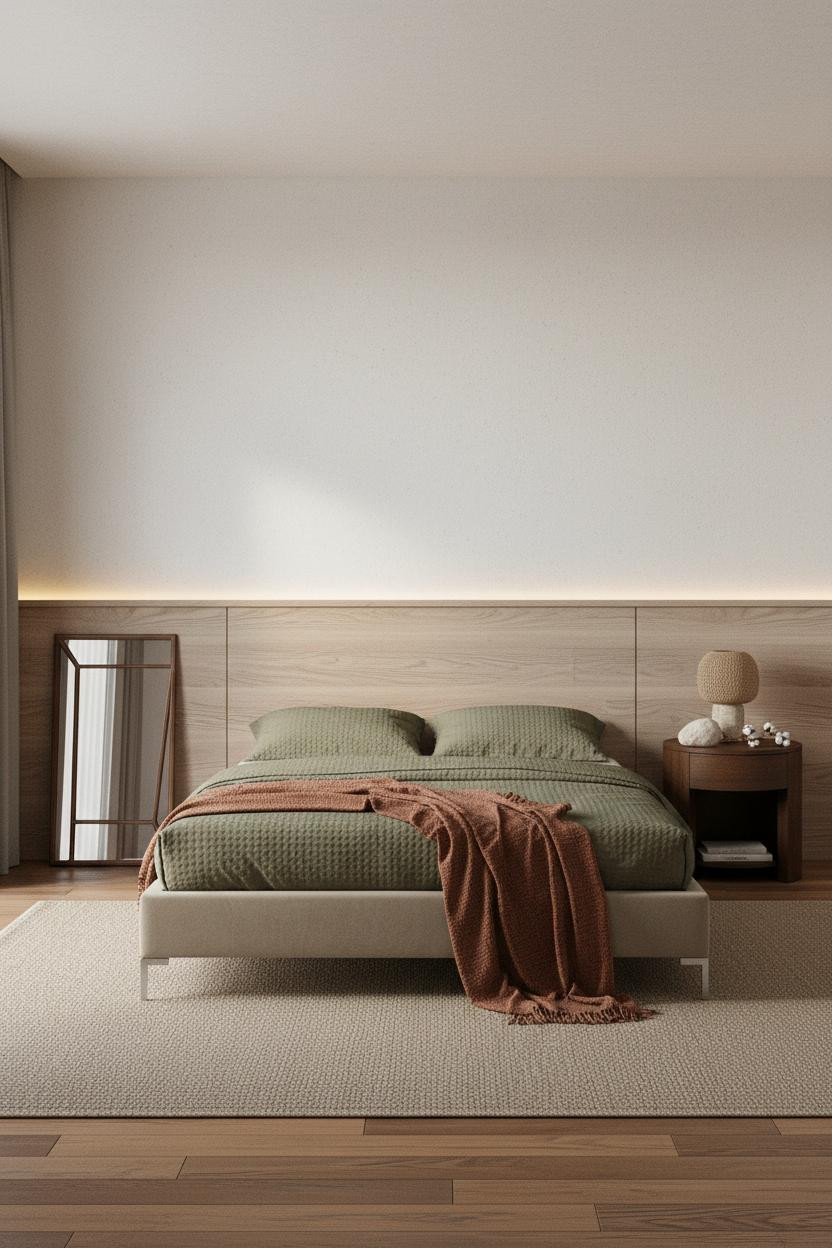
Nothing fancy. That’s the point.
What carries the look: Half-height pale ash wainscoting divides the wall into a dark lower plane and a pale mineral upper field, which creates graphic horizontal tension while still feeling completely calm. The ledge shadow alone does more work than most decorative choices.
In a Japandi bedroom, the smarter move is a bronze-framed mirror leaning against the wall rather than hung. Just enough asymmetry to keep things honest.
A Recessed Timber Alcove That Replaces Every Piece of Art You Own
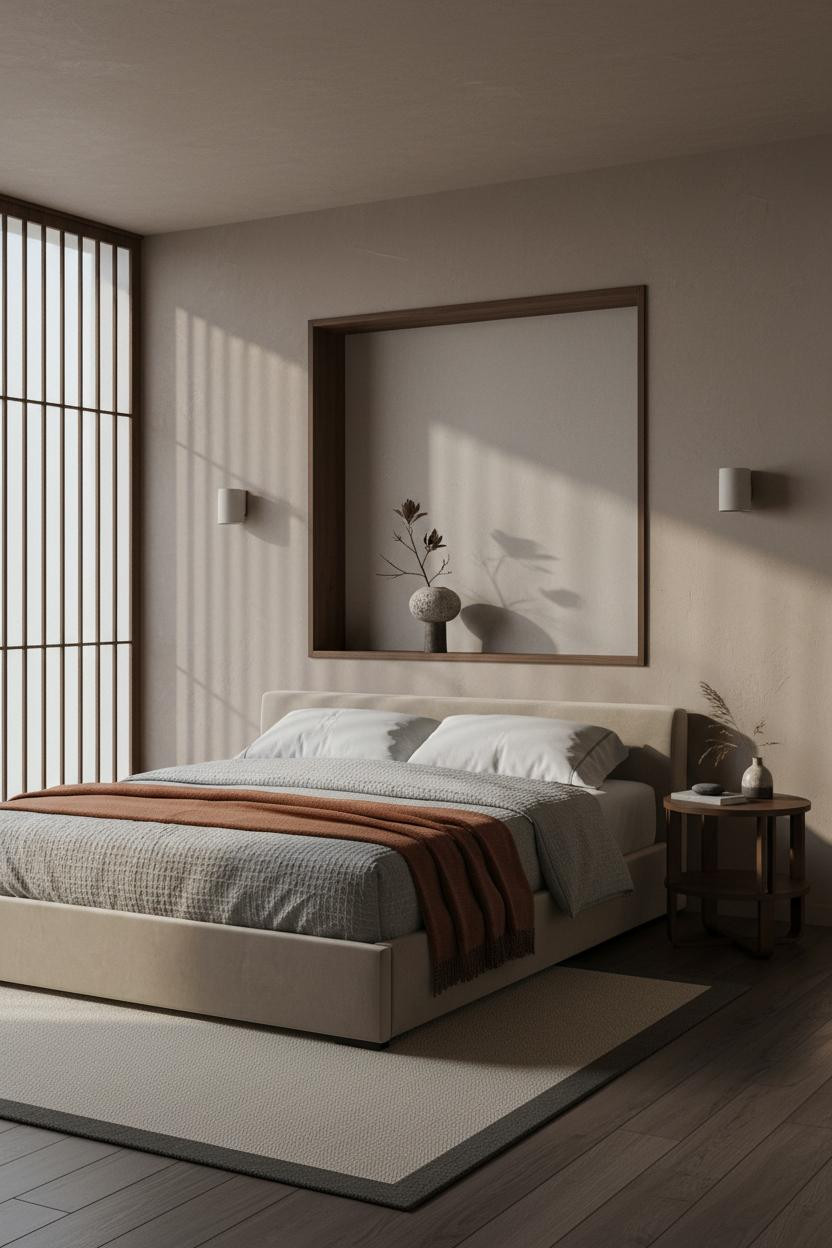
This is the kind of room that makes you want to sit quietly for a moment before you do anything else.
What creates the mood: A dark hinoki timber surround framing a recessed lime plaster niche above the bed draws the eye inward rather than outward. Shadow pools in the corners where wood meets plaster, making one dried magnolia stem feel like a considered installation.
One smart swap: Replace any bedside overhead with paired ceramic sconces flanking the niche. The layered light is what makes the minimalist bedroom aesthetic feel warm rather than cold.
Clay Plaster Behind a Platform Bed Is Honestly Underrated
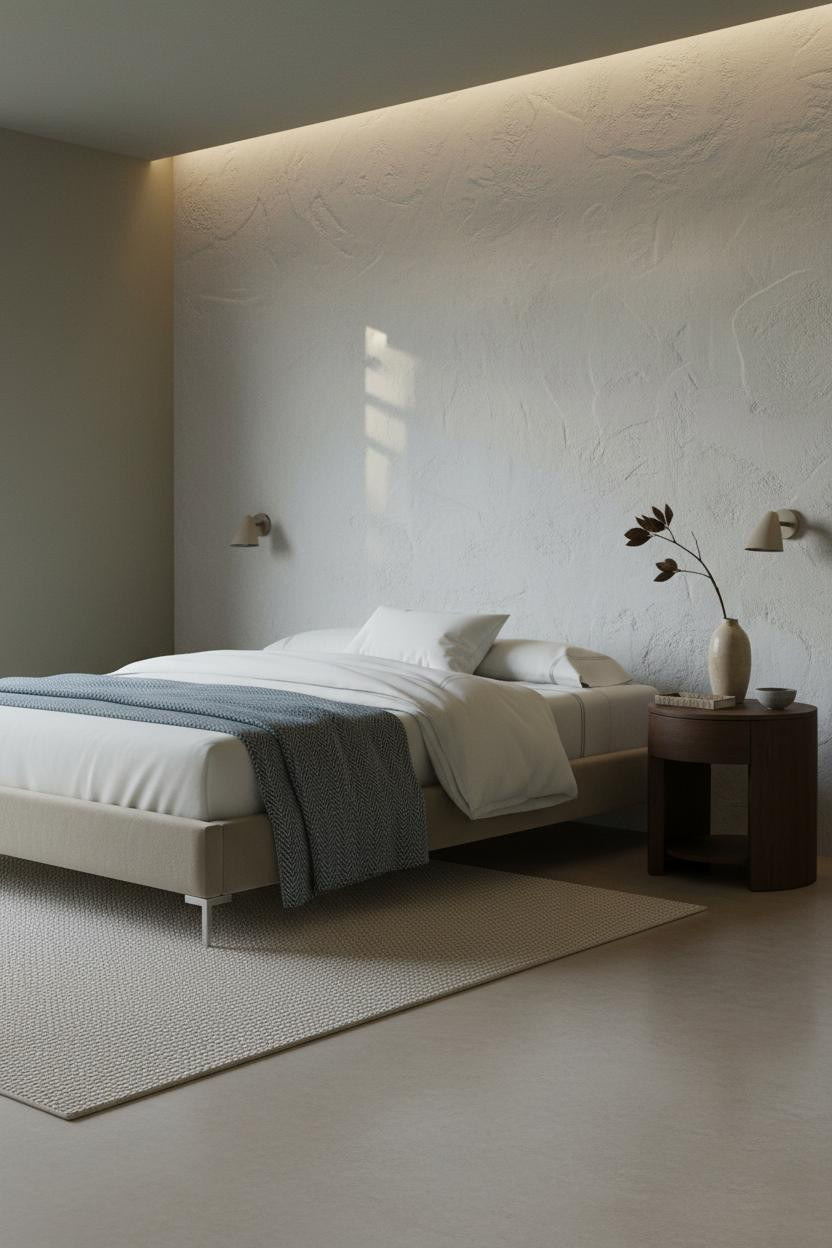
The room feels alive and still at the same time. Honestly not sure how that’s possible.
Hand-troweled soft clay plaster catches raking light in slow shadow gradations, which means no two moments in this room look exactly the same. It’s the only wall finish I know that actually rewards doing nothing in it.
The smarter choice: Polished concrete floor in pale warm grey lets the platform bed sit lower visually, keeping the whole composition grounded without furniture feeling heavy.
Built-In Shelving That Makes the Headboard Wall Feel Complete
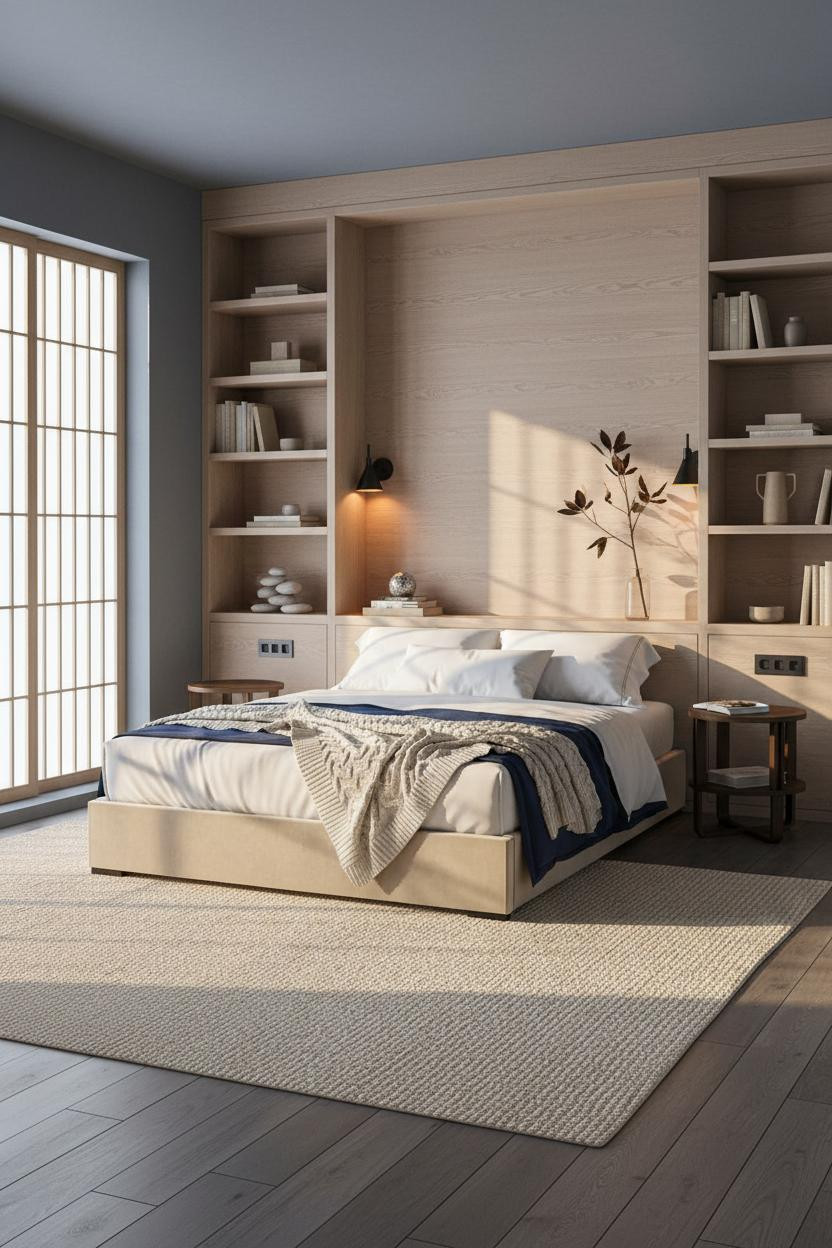
This is a room where the proportions are doing serious work. Every object on those shelves sits at a measured interval, which means the wall reads as calm rather than busy.
What makes this one different: Shallow open compartments in pale ash timber give you display without depth, so the wall stays flat and clean even with objects on it. The horizontal grain catches amber evening light in a way that solid shelving never does.
Where people go wrong: Overcrowding the shelves. Two objects per compartment, maximum. A river stone grouping as a low anchor and a dried magnolia branch. That’s enough.
The Tokonoma Niche Is the Most Quietly Confident Design Move Here
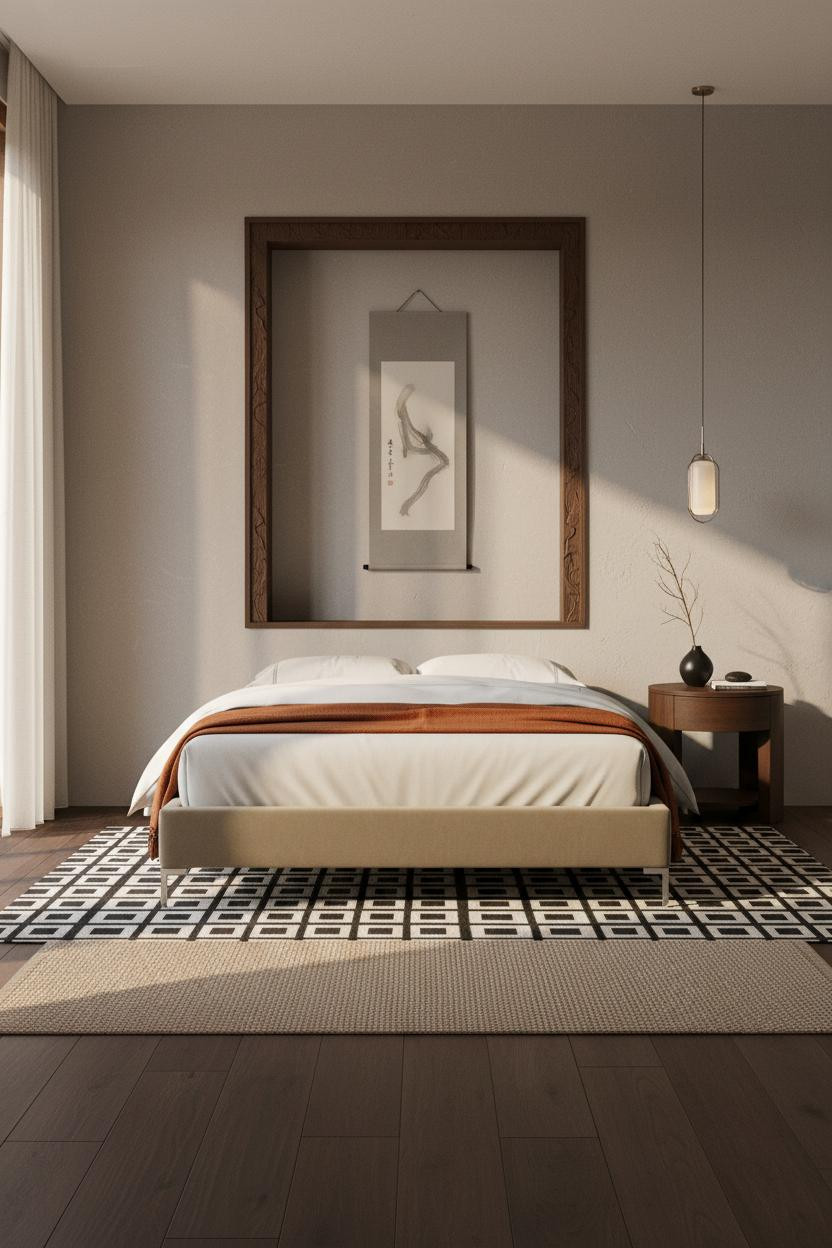
A hand-carved dark timber surround framing a lime plaster niche is the kind of detail that makes guests ask who your architect is. (It’s actually achievable without one.)
What changes the room: The ink-wash scroll hanging inside the recessed niche gives the wall a focal point that’s rooted in traditional Japanese design. Shadow pools at the corners of the recess make the whole composition feel considered rather than decorative. And an obsidian stone on the nightstand beside a matte black ceramic vessel keeps the palette consistent.
Sage Board-and-Batten That Proves Dark Walls Can Still Feel Calm
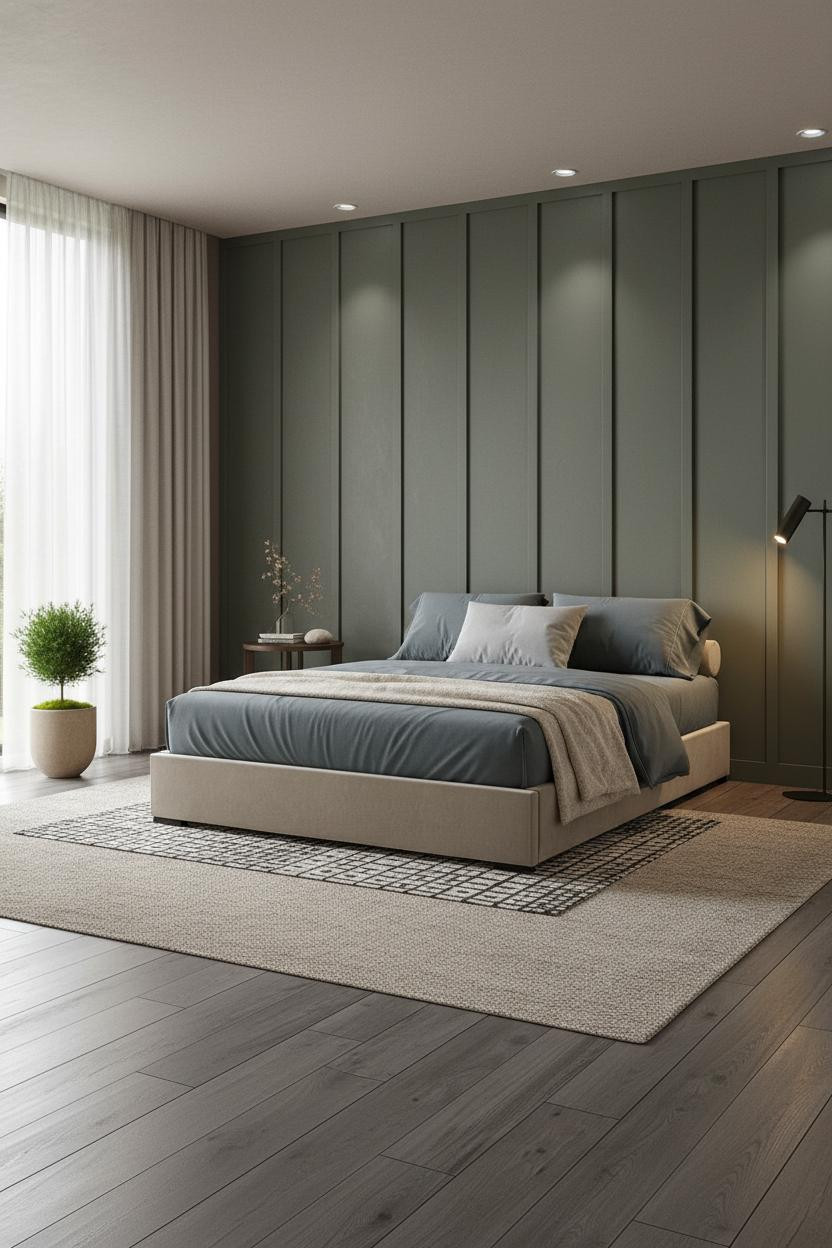
I thought this would feel heavy. It doesn’t. The deep sage olive board-and-batten reads as earthy rather than dark, especially with warm mushroom plaster on the flanking walls.
Why the palette works: Vertical timber battens cast thin parallel shadows down the plaster surface, giving the wall texture that earns its depth. The graphic contrast is there at a glance, while still feeling completely unhurried. Slate jersey bedding keeps the bedding from competing with it.
A bedroom accent wall in this tone only works if you keep everything else in the room intentionally quiet. Don’t add pattern anywhere else.
The Low-Profile Platform Bed That Resets the Room’s Scale
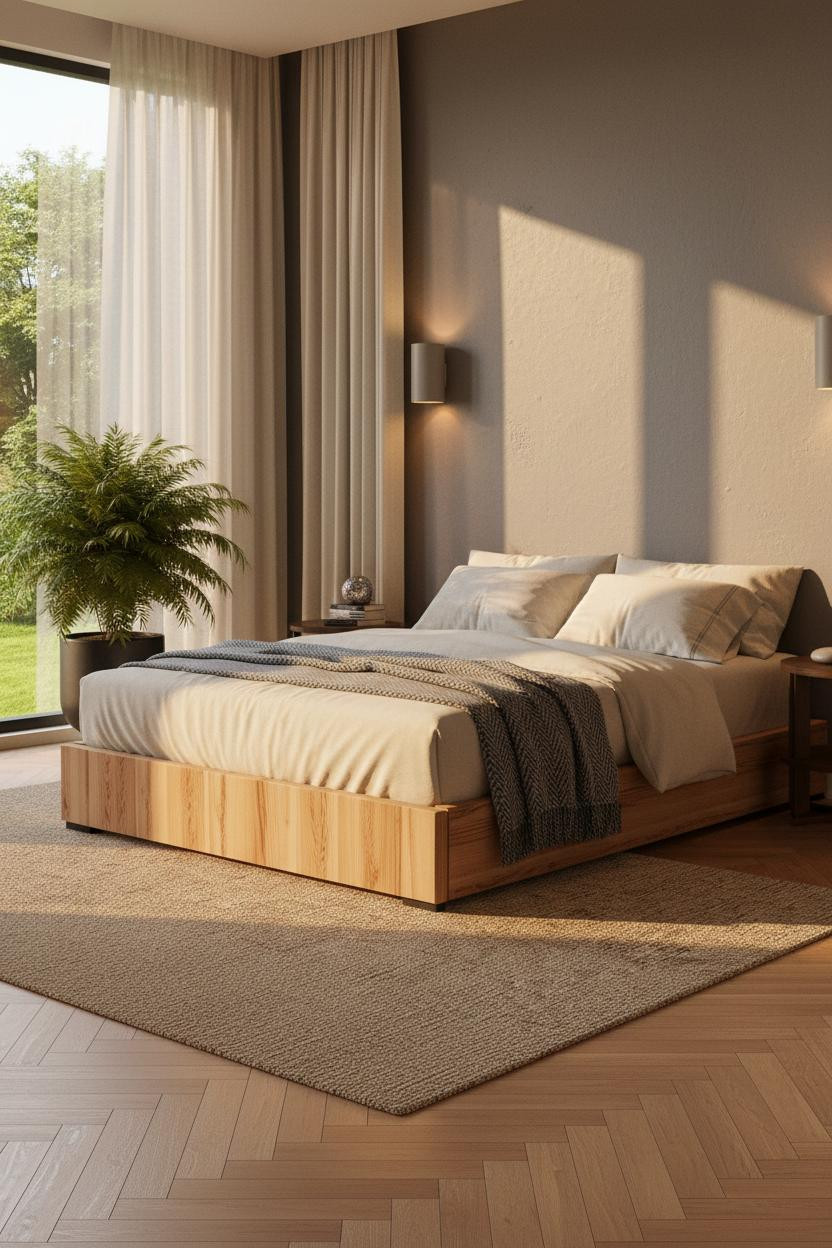
Going lower with furniture is the single most effective thing you can do in a bedroom that feels too busy. A natural hinoki platform base sitting eighteen inches from the floor opens up more wall than any paint color ever could.
The part to get right: Clean linear joinery with visible grain catches warm raking light along each timber edge, which is what makes it feel like a design decision rather than just a low bed. And a potted fern in a matte black ceramic vessel in the far corner grounds the scale in a way that nothing else does as quietly.
The Shoji Screen That Ties the Whole Japandi Look Together
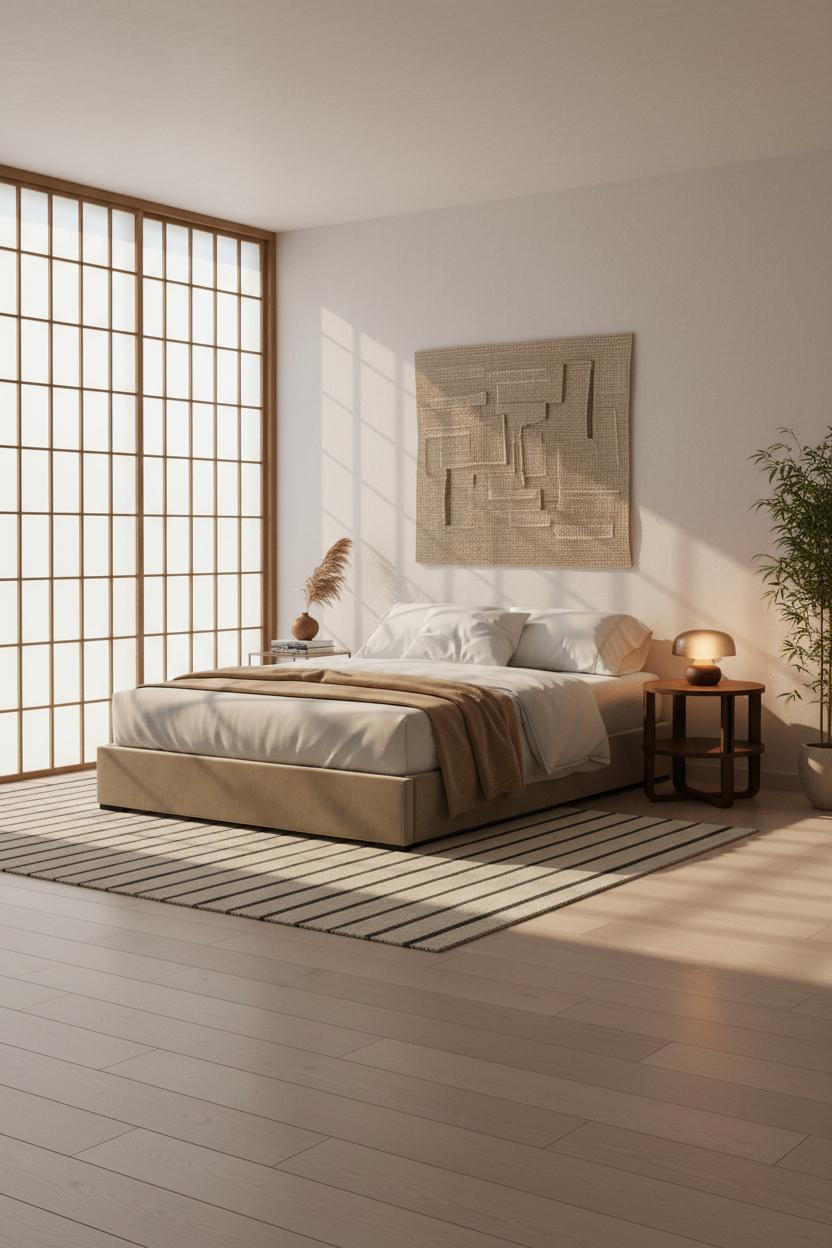
This one is the most approachable of the fifteen. And somehow still the most complete.
Why it holds together: A full-width hand-framed timber lattice shoji screen diffuses cool morning light into warm interior amber, which means the room changes quality as the day moves. The Japandi bedroom decor logic here is about one material doing multiple jobs: filtering light, adding geometry, and anchoring the headboard wall in one move.
What to copy first: The oversized woven wall hanging above the bed. Undyed linen at that scale keeps the room warm without competing with the screen.

Our #1 Pick
Saatva Classic Mattress
America’s best-selling online luxury innerspring. 365-night trial, lifetime warranty, free white glove delivery.
Shop Saatva Classic
The Foundation Of Every Beautiful Bedroom
Walls get repainted. Shoji screens get swapped out. The mattress stays. And in a room this considered, what you actually sleep on matters more than people admit.
The Saatva Classic is built around dual-coil support that holds its shape year after year, an organic cotton cover that breathes through the night, and a Euro pillow top that’s soft without losing structure. It’s the kind of mattress that fits a japanese-aesthetic-bedroom not because it looks right, but because the quality of sleep it delivers matches the quality of the space around it.
Start with the bed. The rest figures itself out.

The rooms people save are the ones where nothing looks like a coincidence. These fifteen are proof that calm is a decision, not a default. Make it deliberately, and the room will hold that quality long after the trend moves on.