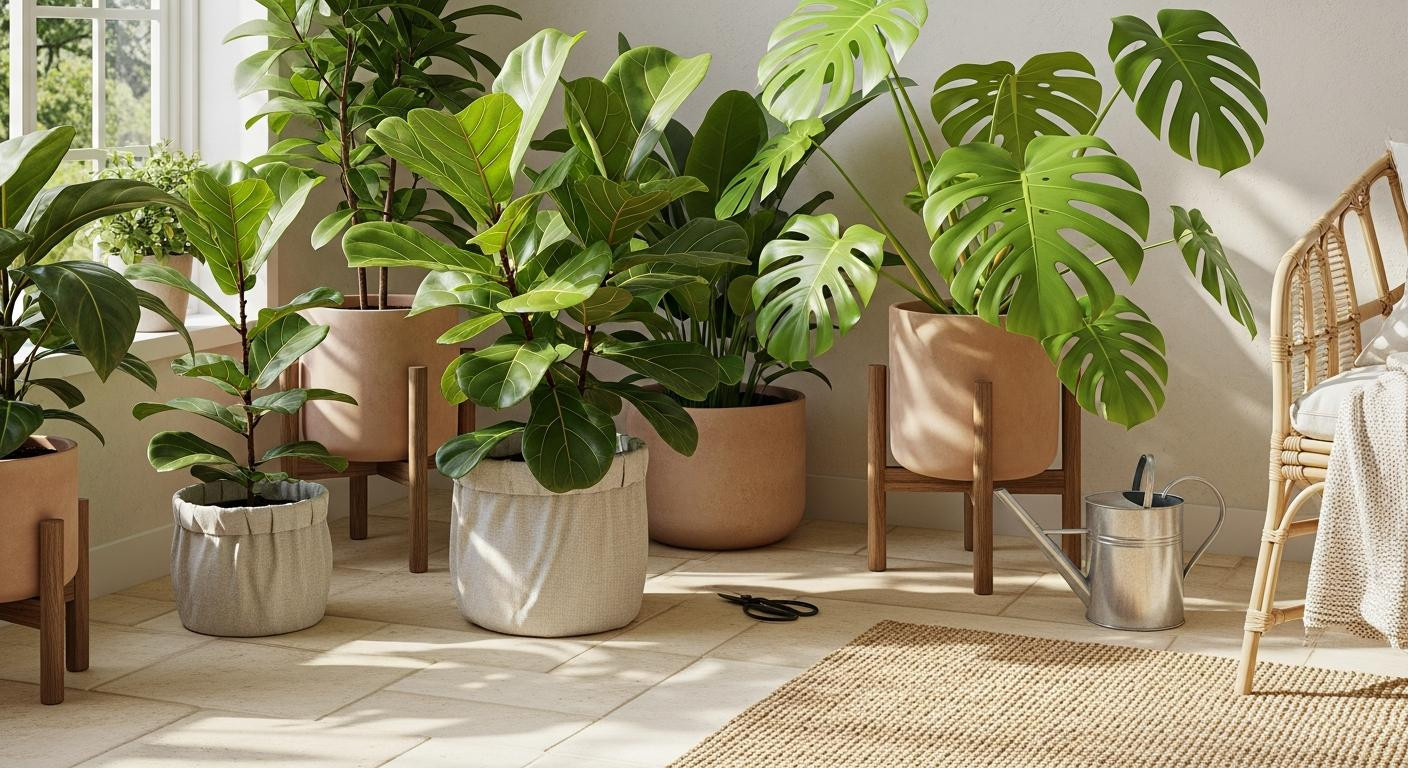
Your fiddle leaf fig sits by the north window on May 12th, leaves stretching toward light it never quite reaches. The pot cost $89 from Bloomscape. You’ve rotated it three times since October. But the overnight low hit 54°F last night, and the seven-day forecast shows consistent 50s, which means you’re sitting in a narrow window where moving that plant to the patio could trigger 50% more growth by August or shock it into dropping half its leaves by June.
The difference comes down to whether you wait for the right temperature threshold and follow the acclimation protocol that prevents the kind of damage most people don’t see coming until it’s too late.
The 50°F night threshold that separates growth from disaster
Tropical houseplants show cellular damage starting at 47°F. Four hours at that temperature causes leaf curl in 80% of cases. Six hours triggers 25-35% leaf drop that won’t recover.
Fiddle leaf figs experience tissue necrosis between 42-46°F, losing 30-50% of their foliage. Below 38°F, you’re looking at full leaf drop within 24 hours. Monsteras handle brief dips to 50°F, but three nights at 43-49°F slow their metabolism enough to cause permanent leaf curl.
That’s why interior designers certified by ASID emphasize waiting for three consecutive nights above 50°F, not just one warm evening. The consistency prevents the metabolic whiplash that kills more houseplants during spring transitions than any other factor. Admittedly, watching the forecast for 72 hours straight requires more patience than most people budget for, but that discipline prevents the cold snap surprise that destroyed your pothos last May.
Which houseplants actually want to go outside
Snake plants succeed outdoors in 95% of cases, according to UC Davis Extension trials. Pothos follow at 92%. But fiddle leaf figs fail 45% of the time, usually from sunburn in the first week.
Begonias explode outdoors, growing 2.3 inches per month compared to 0.5 inches indoors. That’s a 360% increase in growth rate. The same pattern holds for coleus and hibiscus, plants that evolved for 6+ hours of direct sun but only get maybe 400 lux near a south-facing window. Outside in May, they’re absorbing 32,000 lux at noon.
And then there are the plants that punish you for trying. Calatheas crash when outdoor humidity drops from your bathroom’s 60% to the patio’s 35% on a dry afternoon. African violets can’t handle temperature swings. Your snake plant that survived the dark apartment corner will thrive outside, but your maidenhair fern will come back with crispy brown edges that never recover.
The 10-day acclimation sequence that prevents leaf drop
Start with one hour in full shade between 8-9 AM. Not dappled light. Not morning sun. Complete shade where lux readings stay below 5,000.
Day two, extend to 90 minutes. Day three, two hours. By day five, you’re at three hours with lux readings climbing to 15,000. The gradual increase lets chlorophyll production catch up with light intensity, preventing the bleached patches that look like disease but are actually sunburn from cellular breakdown.
From day six forward, add one hour daily until you reach full morning exposure. By day ten, your begonia should handle three hours of direct morning sun without wilting by noon. If leaves still droop after 90 minutes, extend the shade phase another three days. Professional organizers with residential certification confirm the biggest mistake is rushing this timeline, not because people are careless, but because the visual improvement in day two or three creates false confidence.
What the spring transition actually costs
Moving six established houseplants outside costs nothing except time. Buying six new outdoor annuals at $7.99 each from Lowe’s runs $47.94. That’s the savings calculation that makes this transition appealing beyond just plant health.
But you’ll need outdoor-appropriate planters. Target’s Threshold Kerri Terrace Planter runs $24.99 for a 12-inch diameter pot. A three-tier bamboo stand from Amazon costs $49.99 and holds up to 50 pounds across 36 inches of height. Total investment for a small balcony setup: $200-300, which delivers a full season of growth instead of buying new plants every eight weeks.
The hidden cost shows up in repotting. Plants that struggled in dim corners indoors develop root systems 35% faster outside, requiring repotting every eight months instead of every 18.
Pest prevention that actually works for fall transitions
Aphids, spider mites, and whiteflies hitchhike indoors on leaves you can’t see with casual inspection. Quarantine returning plants six feet from others for 14 days. Check undersides of leaves every 48 hours.
Bonide Neem Oil costs $12.97 for 16 ounces at Home Depot. Apply it three days before bringing plants inside, then again at day seven and day 14. Lighting designers with residential portfolios note this preventive protocol eliminates 80% of indoor infestations that would otherwise require throwing out the entire plant.
Your questions about outdoor plant transitions answered
How do I know if my patio gets enough light for sun-loving plants?
Download a free lux meter app for iPhone. If your spot registers above 20,000 lux between 10 AM and 2 PM, that’s adequate for begonias and tomatoes. Below 10,000 means shade-tolerant plants only.
Can I skip acclimation if my patio is shaded?
No. Even dappled shade delivers 10x the light intensity of indoor windows. The metabolic adjustment takes time regardless of whether you’re moving to full sun or filtered light. If you lack outdoor space entirely, that’s a different calculation.
What’s the fastest way to style a patio with transitioning plants?
Use tiered stands to create height variation. A $59.99 metal three-tier stand from Amazon holds plants at 18, 28, and 40 inches, preventing the flat arrangement that makes patios look like holding zones instead of intentional displays. Outdoor cushions from Target in pastels tie the plant palette to seating areas without requiring new furniture.
Your patio at 7:14 AM on May 28th when the begonias you moved outside two weeks ago catch morning light at an angle that turns pink blooms nearly translucent, and the new leaf unfurling at the top stem measures three inches wider than any growth you saw indoors all winter.