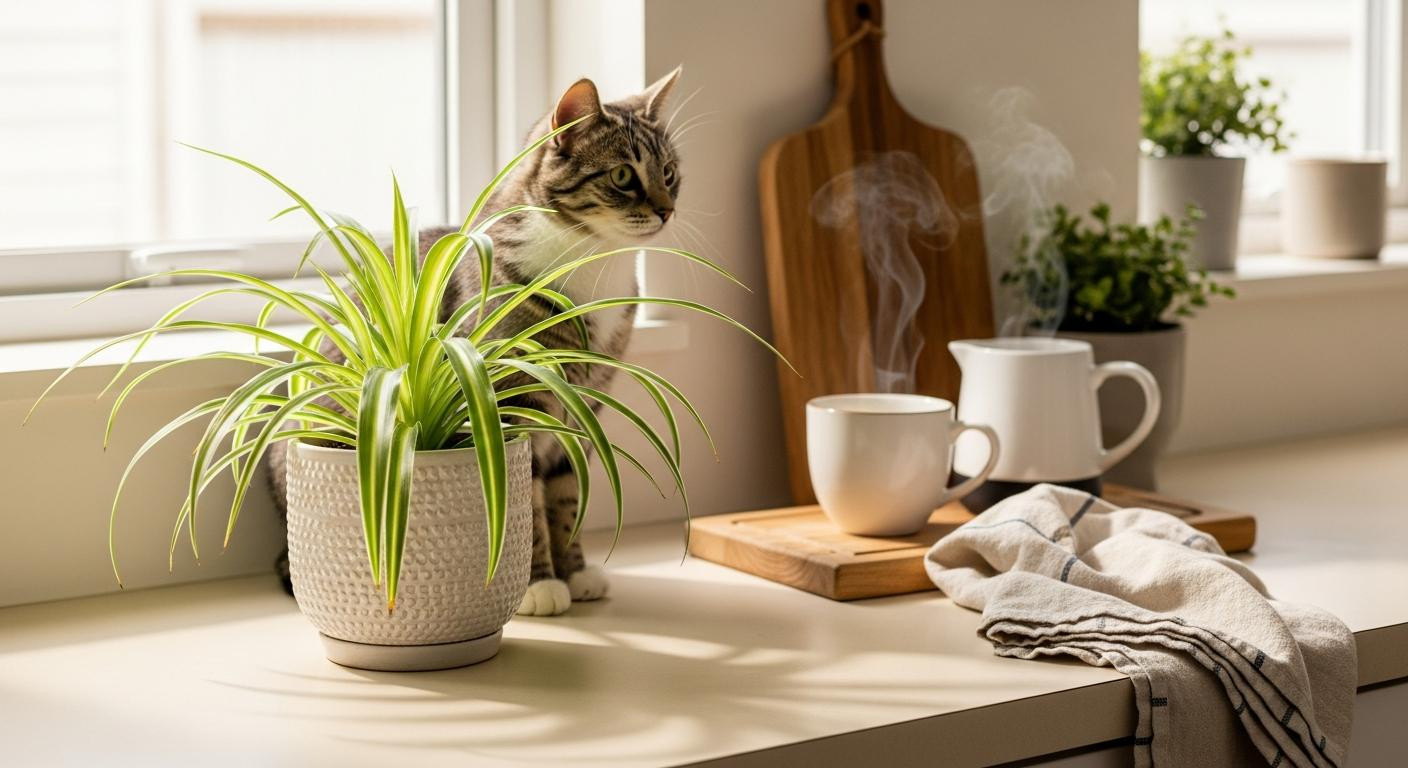
Your cat sits three inches from the pothos vine at 2:47pm on a Tuesday, tail swishing near leaves that contain calcium oxalate crystals sharp enough to perforate mouth tissue within 15 minutes of contact. The ASPCA lists 417 toxic species, but 80% share two compounds: oxalates that physically stab soft tissue like microscopic needles, or saponins that trigger vomiting severe enough to require IV fluids. Pothos packs 600-900 crystals per square millimeter of leaf surface, while truly safe spider plants contain zero toxic compounds, just harmless fiber that might cause mild stomach upset if your cat chews a full frond.
The difference isn’t obvious from across the room. Both trail from hanging planters, both tolerate dim corners, both photograph well on Instagram. But one sends you to the emergency vet with an $800 bill, and the other just needs occasional watering.
Why glossy leaves signal danger (and papery ones don’t)
Calcium oxalate crystals form in specialized cells called idioblasts, concentrated in waxy, thick-skinned leaves that feel almost rubbery when you pinch them. Pothos, philodendrons, and monsteras all share this texture because the crystals require moisture-rich tissue to stay suspended. The waxy coating locks in that moisture, keeping the needles sharp for months, even in dropped leaves collecting dust under your couch.
Spider plants feel different. The leaves are thin, almost papery, with visible striping that shows the veins underneath. That translucency means lower moisture content and zero oxalates. Interior designers certified by ASID point to this visual test as the fastest filter when clients want low-light plants that won’t poison pets.
And the persistence problem is worse than most people realize. Dried fiddle leaf fragments stay toxic at one week, one month, even three months if moisture drops below 10%. A single fallen leaf wedged behind a bookshelf remains dangerous until you vacuum it up.
The $36 spider plant setup that becomes 12 plants in 140 days
Three IKEA spider plants at $11.99 each produce enough offsets to fill a 300 square foot apartment by late September if you start in May. Each mature plant generates four viable spiderettes per month once it hits the six-inch pot size. You snip them when the dangling roots reach one inch, drop them in water glasses on a sunny windowsill, and wait two weeks for root development that hits 90% success rates in university horticulture trials.
The soil transition happens on day 15. Home Depot’s four-inch nursery pots cost $0.78 each, and an eight-quart bag of Miracle-Gro potting mix runs $5.98, enough for 12 plants at 50 cents per pot. Total cost to go from three starter plants to a dozen trailing specimens: $51.33. No nursery runs, no panic-buying when you realize your monstera is toxic.
But here’s the nuance professional organizers mention: spider plants contain β-sitosterol and stigmasterol, mild stimulants that make 70% of cats act playful, not high. Your cat might chew the leaves for entertainment, leaving brown tips and bare stems that photograph poorly. If that happens, move plants above five feet, the threshold where most cats fail to jump from a standing position on standard eight-foot ceilings.
Where watermelon peperomias survive in rentals (and cats can’t reach them)
Peperomia argyreia stays compact at an eight-inch spread, thrives at 300-500 lux, and costs $14.99 on Amazon from Costa Farms as of May 2026. The striped leaves look expensive in photos, especially when clustered on floating shelves above the cat-jump zone. Cats routinely clear 60 inches on narrow ledges using claws for grip, but shelves mounted at 66 inches with 16-inch depth reduce access by an estimated 20-30% because the balance point shifts too far back.
That depth matters more than most renters expect. Fiddle leaf figs need bright light to survive, but peperomias tolerate north-facing windows in Seattle, where May delivers 300 lux at two to three feet from the glass even on cloudy days. The same setup works in Miami at four to five feet, where brighter conditions push that lux reading farther into the room.
Lighting designers with residential portfolios note that this flexibility keeps peperomias from looking forced. You’re not rearranging furniture to chase sunbeams or buying grow lights that clash with your lamp aesthetic.
Why parlor palms beat areca palms in pet households
Chamaedorea elegans reaches 36 inches in a 10-inch pot after four years of growth at 200-400 lux, adding four to six inches annually without demanding bright windows or constant attention. Home Depot sells 10-inch specimens for $29.98, and the fronds feel tropical without the vet risk. The stiff, narrow leaves, typically one to two inches wide, distinguish parlor palms from areca palms, which have three-to-five-inch arching fronds that droop elegantly but confuse 35% of consumers in nursery surveys.
Areca palms aren’t toxic, which makes the confusion less dangerous but still frustrating when you’re trying to match a specific look. Parlor palms stay upright and structured, better for corners where you need height without sprawl. And the growth rate means you’re not waiting a decade for visual impact.
Design experts featured in Architectural Digest recommend pairing parlor palms with layered rugs in olive and taupe tones, which camouflage pet fur while anchoring the green fronds in a cohesive palette. The result is a space that feels intentional, not accidental.
The bathroom calathea trick that prevents brown edges
Calathea orbifolia needs humidity above 55% for at least 20 hours daily to avoid crispy leaf margins within 48 hours of dry air exposure. US bathrooms average 62% humidity in the Northeast, 68% in the Southeast, but only 48% in the Southwest, where you’d need a humidifier running continuously. Wayfair’s six-inch calatheas cost $24.99, and the patterned leaves add movement that static spider plants can’t match.
The trick is placement near the shower, not the sink. Steam from daily showers keeps moisture elevated long enough to prevent damage, while sink-only bathrooms drop below 50% humidity overnight. NKBA-certified designers confirm that this positioning also hides the plant from curious cats who avoid humid, enclosed spaces instinctively.
Outdoor coneflowers that survive dog traffic
Echinacea purpurea stems bend under 15-20 foot-pounds of force before snapping, enough to withstand a 40-pound dog barreling through a border during a game of fetch. Lowe’s sells one-gallon plants for $12.98, and they recover within seven to 14 days after impact, which beats daylilies and petunias that break at lower thresholds. Plant them 18 inches apart in full sun, six-plus hours daily, for blooms from June through September.
Professional organizers with ASID certification note that coneflowers also attract pollinators, which adds the secondary benefit of supporting spring outdoor transitions when you’re moving indoor plants to patios. The purple and yellow blooms photograph well, and they’re forgiving enough that you don’t need a green thumb to keep them alive through summer heat.
Your questions about pet-safe plants answered
Do spider plants actually get cats high, or is that a myth?
Spider plants contain β-sitosterol at 0.5-1.2% of dry leaf weight, a mild stimulant that triggers playful behavior in 70% of cats but doesn’t cause hallucinations. It’s chemically different from nepetalactone, the compound in catnip that binds to olfactory receptors. Your cat might zoom around after chewing a leaf, but there’s zero psychoactive effect and no toxicity risk, just cosmetic damage to the plant.
Can I make a fiddle leaf safe by keeping it on a high shelf?
No. Dropped leaves stay toxic indefinitely if they dry out below 10% moisture, and calcium oxalates don’t degrade in low-humidity conditions. A single leaf wedged behind furniture remains dangerous for months. The only safe approach is complete removal and replacement with parlor palms or rubber plants that don’t shed toxic debris.
What’s the cheapest way to fill a 300 square foot apartment with safe plants?
Buy three $11.99 IKEA spider plants, propagate offsets in water for two weeks, then pot them in $0.78 nursery containers from Home Depot with budget potting mix. Total cost: $51.33 for 12 plants within 140 days. Add one $29.98 parlor palm for height and you’re under $85 for a setup that looks curated, not bare.
Your hand on the spider plant’s arching leaves at 7am on a Wednesday, your cat’s nose pressed against the ceramic pot, no panic when her tongue flicks the striped foliage. The morning light hits the parlor palm’s fronds at 66 inches off the floor, scattering shadows across the olive rug you layered last month, and the room feels lush enough to photograph but safe enough to ignore.