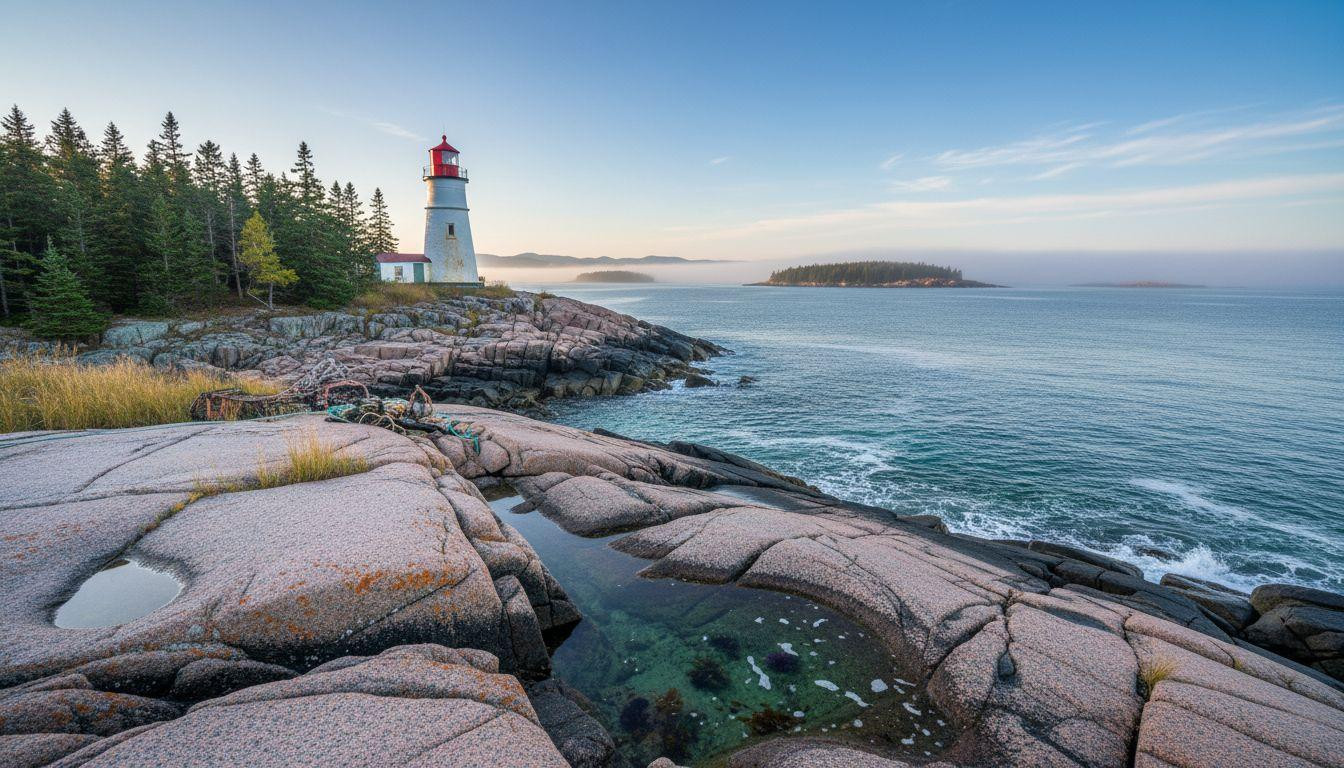
The fog rolls in around 6am. Winter Harbor Light emerges through the mist, its red cap bright against gray granite cliffs. Across Frenchman Bay, pine-covered islands appear and disappear in the shifting white. No crowds at the overlook. No shuttle reservations required. Just 40 miles from Bar Harbor, this corner of Maine’s Schoodic Peninsula draws 100,000 visitors annually compared to Acadia’s 4 million.
The lighthouse sits on Mark Island, built in 1856, deactivated in 1933. You can’t walk to it. The island stays private. But the view from Winter Harbor’s shore captures everything: rocky Atlantic drama, fog-island mystery, the quiet that Bar Harbor lost decades ago.
Where rocky Atlantic meets forgotten Maine
Winter Harbor sits at the tip of Schoodic Peninsula, population around 1,000. The town spreads along a working harbor where lobster boats leave before dawn and return by mid-afternoon. No boutique hotels yet. The general store sells bait and coffee from the same counter.
From Bangor airport, the drive takes 1 hour 15 minutes via US-1. From Portland, 3 hours through coastal pine forests. The seasonal ferry from Bar Harbor runs daily in summer, $15-30 round-trip, crossing time 45 minutes. Most visitors drive the 25 miles from Bar Harbor in under an hour, escaping the parking chaos and shuttle lottery.
Schoodic Point marks the peninsula’s southern tip, 5 miles from the lighthouse. Waves crash against pink granite ledges. The same geological drama as Maine’s mountain ponds, but here the Atlantic provides the force. Free access, no reservations, parking spaces almost always available.
What morning fog reveals
The fog season runs May through September. Some summers bring 31 consecutive fog days. The horn that once guided ships still sounds in memory, though the light went dark in 1933. Visibility drops below 1 mile most mornings, then lifts by 10am.
Dawn arrives around 5:20am in early May, 4:50am by June. The best window for photography spans those first 30 minutes after sunrise. Islands in Frenchman Bay emerge gradually through fog layers. Pines on Mark Island turn from silhouettes to green. The water shifts from gray to turquoise as light penetrates.
Dawn at Schoodic Point
The 3-mile drive from Winter Harbor village to Schoodic Point takes 8 minutes. Park at the overlook. Walk 200 feet to the granite ledges. Waves hit with enough force to send spray 20 feet high during storms, but summer mornings stay calm enough for safe viewing.
Temperatures hover between 50-65°F during fog season. Bring layers. The mist soaks through cotton in minutes. Locals wear wool or synthetic fleece even in July.
The bay that stays empty
Frenchman Bay stretches 20 miles east to west, scattered with 200 islands. Kayak rentals run $50-80 per day from Winter Harbor outfitters. Guided tours cost $100 and up. The inner bay stays calmer than protected river valleys, though tides and boat traffic require attention.
Seals haul out on rocky islands visible from shore. Mornings offer the best viewing. Bring binoculars. The animals stay 100 yards offshore, close enough to watch but distant enough to avoid disturbance.
Living the lobster dock rhythm
The working harbor wakes at 5am. Fishermen load bait, check traps, motor out into the fog. By 3pm they’re back, unloading catches at the cooperative dock. Tourists sleep through the real show, then complain about limited lunch hours at the seafood shack.
Lobster rolls cost $15-20 at dockside spots, compared to $25-35 in Bar Harbor’s waterfront restaurants. The difference isn’t quality. It’s audience. Winter Harbor feeds locals and the occasional visitor who found their way here. Bar Harbor feeds crowds.
Where $150 a night buys actual Maine
Two-bedroom cottages rent for $150-250 in May and September, the shoulder seasons when fog still rolls but temperatures stay mild. Bar Harbor charges $300-600 for equivalent spaces. The 30% savings add up over a week.
Schoodic Woods Campground offers sites at $30-50 per night after 2026 upgrades. The Grindstone Inn added eco-cottages in 2025 at $200-300, targeting sustainable travelers. Still cheaper than Bar Harbor’s resort rates. Still quieter than anywhere on Mount Desert Island.
The sardine cannery ghosts
Winter Harbor boomed in the 19th century as a sardine packing hub. The canneries closed decades ago. Their ruins stand along the waterfront, weathered wood and rusted equipment slowly returning to the elements. No official ghost tours, but locals share stories of fog-bound encounters near the old NSGA Winter Harbor naval station, now converted to National Park Service use.
The Winter Harbor Lobster Festival runs in late July each year. Boat parades, live music, lobster dinners served on picnic tables. Population 1,000 swells to maybe 3,000 for the weekend. Then everyone goes home and the fog returns.
Why locals choose fog over crowds
One resident described 31 straight fog days as surprisingly tolerable. The horn becomes background rhythm. The mist creates privacy. Tourists who expect endless sunshine leave disappointed. Those who came for the fog stay longer than planned.
The population holds steady around 1,000 because fishing still works as a livelihood. Bar Harbor’s 5,000 residents serve 4 million annual visitors. Winter Harbor’s economy runs on lobster first, tourism second. That order makes the difference visitors feel the moment they arrive.
Return to that 6am moment at the lighthouse viewpoint. Fog thick enough to taste. Islands appearing like ghosts. The choice between Instagram crowds at Cadillac Mountain or this quiet granite shore. Most people choose the crowds. The ones who don’t, they’re the ones you’ll meet at the dockside cafe, watching seals in the bay.
Your questions about Winter Harbor answered
When does Winter Harbor get the most fog?
Peak fog season runs May through September, with up to 50% of days experiencing dense morning fog. Best viewing hours span 6-9am before the mist lifts. July and August bring the most consistent fog patterns, though May and June offer cooler temperatures and fewer visitors. Sunrise times shift from 5:20am in early May to 4:50am by June, creating optimal photography windows.
How do you reach Winter Harbor from Bar Harbor?
The drive covers 25 miles via ME-3 and ME-186, taking 45-60 minutes. Seasonal ferry service runs daily in summer for $15-30 adult round-trip, crossing time 45 minutes. From Bangor airport, drive 55 miles in 1 hour 15 minutes via US-1. Parking at Schoodic Point and Winter Harbor viewpoints stays free and rarely fills, unlike remote coastal destinations requiring boat access.
Is Winter Harbor really quieter than Bar Harbor?
Winter Harbor draws 100,000-200,000 annual visitors compared to Bar Harbor’s 4 million. Schoodic Peninsula roads carry 5-10% of Acadia’s main loop traffic. Bar Harbor parking waits reach 30-60 minutes at peak times, while Winter Harbor lots rarely fill. Lodging costs run 30% lower: $150-250 per night for cottages versus $300-600 in Bar Harbor. Restaurant waits average under 15 minutes compared to 45-90 minutes in Bar Harbor village during summer peaks.
The lighthouse stands against the fog. The islands fade and reappear. The lobster boats return with their catches. This is the Maine that exists when you stop chasing the postcard and start watching the water.