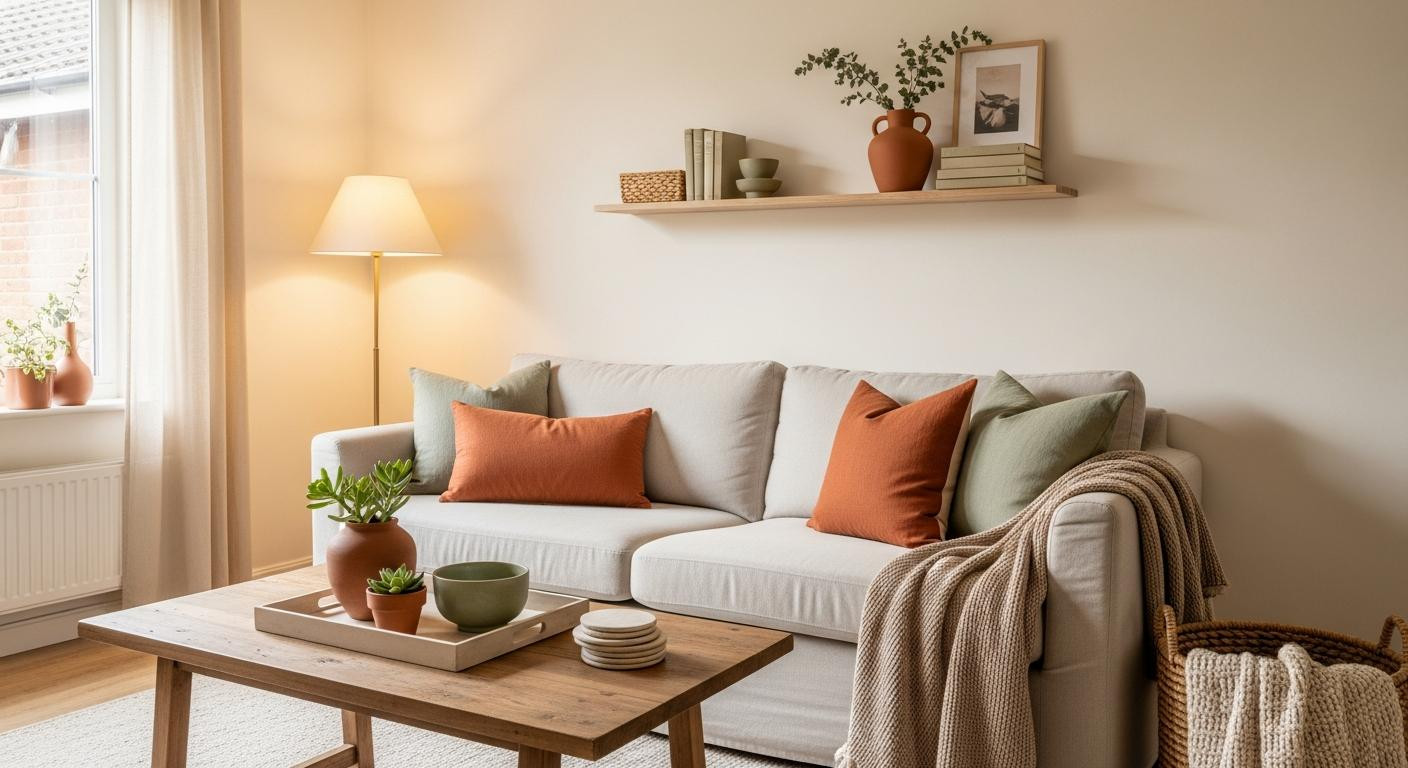
Your living room at 7:42 on a Wednesday evening when you realize the sofa has faced the same wall for nine months and the ceramic lamp from your bedroom would solve the corner darkness you’ve been scrolling Target to fix. The room holds furniture you bought over eight months, but it reads flat because nothing has moved since delivery day. The most powerful changes cost nothing. They just require 40 minutes and the willingness to see what you already own differently.
Angle your sofa 12 inches off the wall
Most people push sofas flush against walls to maximize floor space, but this creates visual rigidity that reads more storage than design. Pulling an 84-inch sofa away from the wall by 12 inches and angling one end 8 to 10 inches further creates conversational geometry that makes rooms feel intentionally arranged rather than furniture-stored. Interior designers featured in Architectural Digest use this in every staging scenario because it photographs better and creates implied pathways through the space.
The key concession is that this only works if your room is at least 175 square feet. Smaller spaces need the wall-hugging layout for functional walking room. And you need to preserve at least 36 inches of clearance behind the angled sofa if that space functions as a main traffic path.
The shifted angle catches afternoon light differently and makes the room feel like someone actually arranged it rather than unpacked it. The corner shadow disappears. The rug suddenly looks centered even though it hasn’t moved.
Move your bedroom lamp to your living room dark corner
Most bedrooms have two nightstand lamps when one suffices for reading. The second lamp becomes your living room corner solution at zero cost. Scan your space for the darkest corner, usually opposite the main window, and relocate task lighting from rooms where it’s redundant.
The specific light temperature matters here. Warm white at 2700K to 3000K works in living spaces. Cool white reads clinical and breaks the cozy illusion even when functionally identical. According to lighting designers with residential portfolios, warm temperature increases perceived comfort and intimacy without adding physical warmth.
That relocated lamp casts a pool of light in a corner that used to feel neglected. The room suddenly has three light sources instead of one overhead glare. The space feels layered instead of flat.
Bring your kitchen tray to your coffee table
Decorative trays from kitchens, the ones used for corralling oils and spices, become instant coffee table organizers for remotes, coasters, and candles. The tray creates visual containment that makes clutter look curated instead of scattered. But material preference matters more than you’d think.
Wood or ceramic reads expensive. Plastic or melamine breaks the illusion even when functionally identical. Professional organizers with NAPO certification confirm that the tray itself acts as a visual boundary that signals intentional placement rather than random accumulation.
And the result is a coffee table that feels styled instead of messy. The same six objects suddenly look like a vignette.
Declutter one surface completely, then add back only three objects
The difference between shuffling objects around a shelf and clearing it entirely then placing items back with intention is psychological. The human eye reads negative space as luxury. Design experts featured in Apartment Therapy recommend about 60 percent styled items and 40 percent empty space for shelves, mantels, and console tables.
The three-object formula that always looks expensive follows a classic styling triad. One tall object like a vase, candlestick, or stack of books. One medium organic element like a plant, bowl, or found object. One small textural piece like a ceramic dish or decorative box. Odd numbers prevent visual symmetry that reads staged instead of collected.
But this only works if the three objects share a tonal relationship. Mixing chrome, brass, and copper reads chaotic rather than collected. Stick to one dominant metal finish, one supporting finish, and one neutral texture.
The decluttered shelf suddenly feels expensive because it has room to breathe. The objects that remain become focal points instead of noise.
Swap your heaviest throw from the sofa to a basket
The chunky cable-knit throw draped over your sofa arm makes the room feel warmer than the thermostat reads because visual weight translates to thermal perception. Moving it to a woven basket in the corner maintains accessibility while removing the trapped-heat feeling. This shift works particularly well from May through September when rooms need visual cooling.
The material hierarchy runs from chunky wool and velvet at the warmest end down to linen and cotton at neutral, with bare upholstery feeling coolest. The free upgrade is editing placement, not buying lighter textiles.
Restyle what you already own into height groupings
Take everything off your console table or entryway surface. Clean the surface completely. Then rebuild using a tall-medium-small height pattern instead of random scattering. One object at 12 to 18 inches, one at 8 to 12 inches, one at 4 to 8 inches.
The stepped silhouette creates visual interest that flat arrangements lack. And the grouping feels intentional instead of accidental. Swapping decor from room to room costs nothing but produces a completely different visual rhythm.
Your questions about free home upgrades answered
Do these changes work in rentals where I can’t paint or drill?
Yes, completely. Every upgrade listed involves repositioning or editing existing items, not installing permanent changes. The sofa angle shift, lamp relocation, surface decluttering, and throw removal all reverse in 15 minutes when your lease ends. The only consideration is furniture weight. Moving a 200-pound sectional requires help, but the transformation justifies the effort.
How long do these free changes stay effective?
Furniture angles hold until you deliberately change them. Surface styling lasts three to six months before dust accumulation or seasonal shifts require restyling. The lamp relocation becomes permanent unless your bedroom setup changes. These aren’t temporary fixes. They’re spatial resets that solve underlying design problems.
What if I don’t have extra lamps or decor in other rooms to borrow?
Start with the decluttering and furniture angle changes, which cost zero and require zero additional objects. The shop-your-home moves work best when you’ve accumulated decor over time. If your home is truly minimal, focus on editing what’s visible and repositioning furniture to create better sight lines and conversational spaces. Decluttering can make a room feel completely different at no cost.
Your living room at 4:47 in the afternoon when light hits the angled sofa and the relocated lamp casts warm light in the corner that used to read dark. Nothing cost anything. You just moved what you already owned 12 inches left and six feet over. The room feels expensive because it finally feels intentional.