
The hotel feeling in a bedroom often begins behind the pillows, with a wall-to-wall upholstered headboard that turns the bed into a built-in backdrop.
A full-width upholstered backdrop roughly 2,400 to 3,000 mm wide makes the bed read as one architectural element, especially when the lamps and bedside tables disappear into the panel.
The appeal is practical as well as visual: the room gains a clean backdrop, softer acoustics, and a place to hide the concealed wiring that usually clutters the nightstand.
Claim the Full Wall Behind the Bed
Start by measuring the wall, not the mattress. A typical 150 cm bed may take a headboard around 155 to 170 cm wide, but the hotel effect begins when the full-wall upholstered panel continues past both sides and claims the entire wall.
On a full-width installation, the bed looks anchored even when the room is narrow, and the eye sees one broad plane instead of a freestanding furniture piece.
Custom work in Florida can begin at about $1,265 for a king-width custom headboard, with the final bill rising as width, height, and fabric quality increase.
That is a meaningful spend, so I would protect the wall coverage before paying for decorative trim; the broad span does more visual work than a fancier button or edge detail.
Build the Panel Like Millwork
Build the panel like millwork. A stable plywood base from Home Depot can carry foam, batting, and upholstery, while a slim wood frame keeps the edges crisp when the bed is pulled away for cleaning.
DIY is the lowest-cost route, but the finish depends on square cuts, even padding, and a mounting plan that can hold the panel safely; a wavy seam will look larger on a full wall.
For a warmer version, use vertical slatted wood across the lower portion or behind open bedside niches, then upholster the zone behind the pillows so the room keeps the quiet hotel envelope.
Wayfair’s broad range of wall-mounted bedside pieces is useful for checking scale, yet I prefer a continuous panel with fewer interruptions because visual calm is the point.
Specify Fabric for Daily Contact
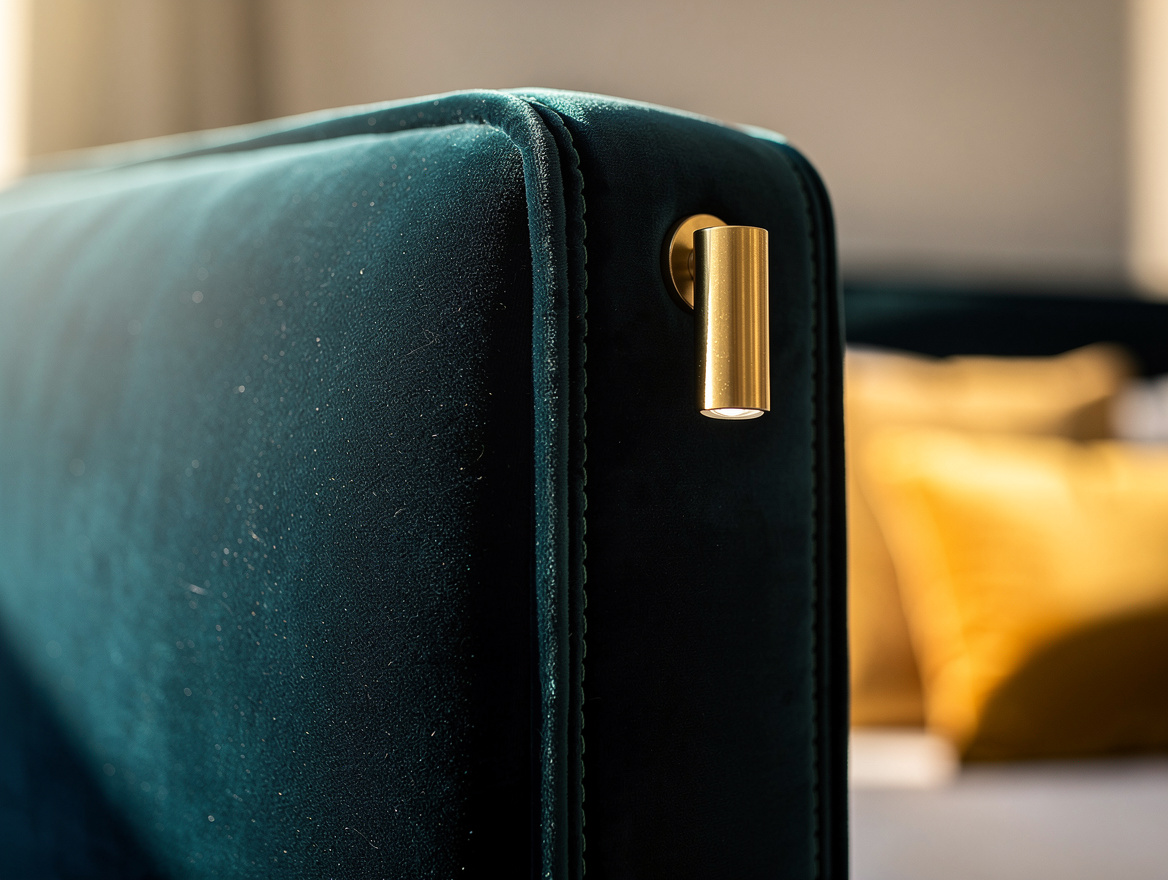
Choose fabric for touch, maintenance, and the room’s light. Performance velvet gives the richest hotel mood, while textured loop fabric softens the look and linen-look upholstery keeps the surface lighter.
Commercial upholstery often starts around 50,000-cycle upholstery for velvet and linen, while synthetic leather may be rated around 50,000 to 80,000 cycles; those figures matter in a guest room, a rental, or any bedroom where the headboard gets daily contact.
A typical custom headboard starts at about $550, while a full bed can start around $2,600, so fabric selection quickly becomes the part you touch and see most.
Use a tighter weave on the lower edge, skip delicate loose threads, and ask for a cleanable finish when morning coffee, pets, or children are part of the real household.
Wire the Headboard Before Upholstering
Plan the lighting before the upholstery is cut. Paired integrated sconces, concealed bedside outlets, and a soft indirect glow make the headboard function like a hotel installation rather than a decorative slab.
Keep the reading lights at a height that works from the pillows, then place the bedside switches where a hand can reach them without crossing the bed; this small decision changes the nightly experience.
An IKEA wall light can help you test the scale and beam spread before committing to built-in fixtures, while warm-white LED lighting tucked behind the top edge gives the wall a quiet halo.
Do the electrical layout with a qualified professional, especially when outlets and wiring sit inside the panel, and leave access points for future repairs; a beautiful headboard that cannot be serviced is poor planning.
Tighten the Palette Around Texture
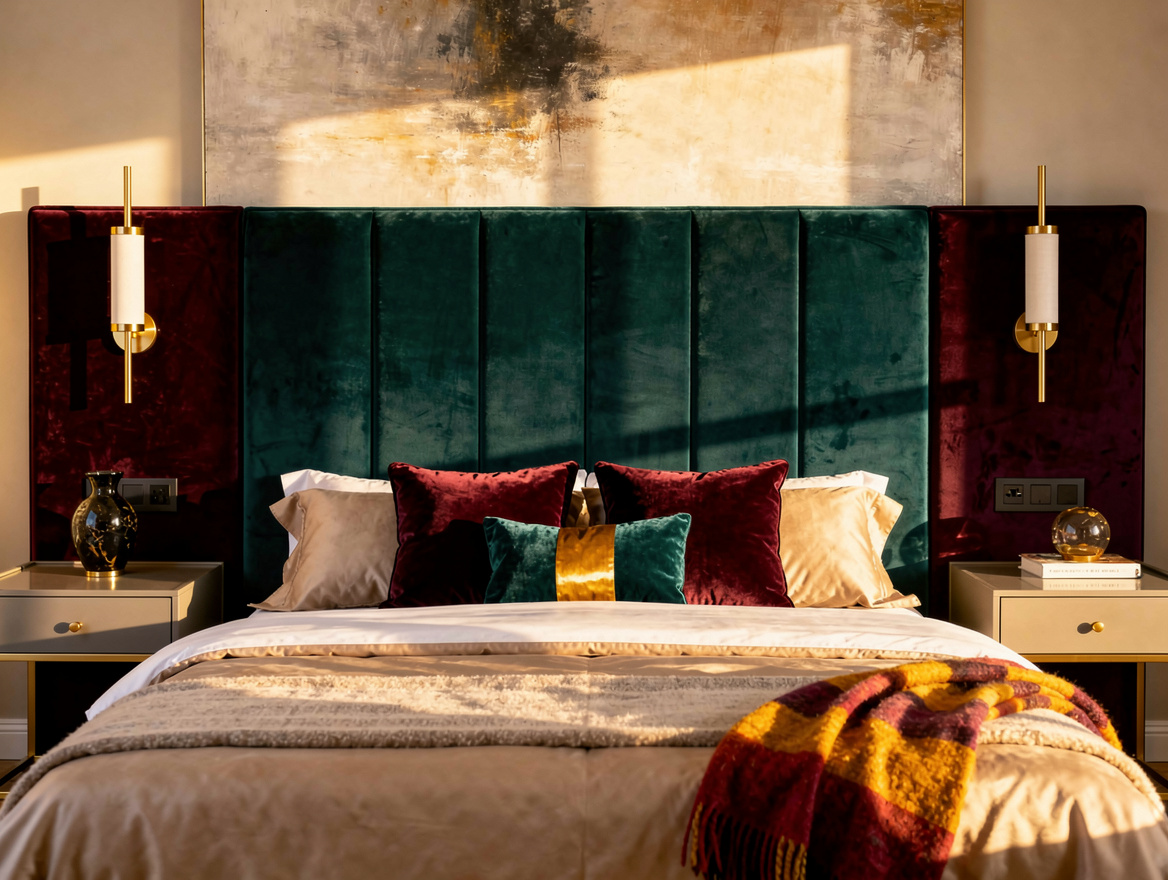
Keep the surrounding palette tight. A warm beige panel, a darker wood nightstand, and crisp white bedding create enough contrast for the room to feel layered without turning the headboard into an accent wall competing with everything else.
Texture should carry the design: performance velvet absorbs light, a woven fabric adds grain, and a matte painted surface nearby gives the upholstery somewhere to breathe.
Target bedding or a simple IKEA duvet can provide a low-cost color test, but buy the headboard fabric only after viewing it beside the floor, curtains, and lamp finish.
I would skip loud pattern on a narrow wall unless the rest of the room is exceptionally quiet; a broad graphic can make the bed feel wider and the ceiling lower.
Set the Height Against the Ceiling
Set the height with the ceiling in mind. An architectural-height headboard often lands around 1,200 to 1,500 mm high, while a smaller hotel-style treatment may stop near 1,000 mm; both can work when the top edge aligns with the room’s strongest horizontal line.
One proportion guideline keeps the panel at roughly 40% of the wall height, while another approach uses about one-third to prevent a low ceiling from feeling compressed; the right choice depends on the bed, window trim, and sightline from the doorway.
Allow roughly 10 to 25 cm of depth for a built-up hotel panel when it contains lights, outlets, or tables, then make sure the bed can sit close without crushing the upholstery.
Use a shallow wood ledge or stone shelf only where it earns its space, and keep the baseboard transition clean; the best wall-to-wall headboards feel architectural because every edge has been resolved.
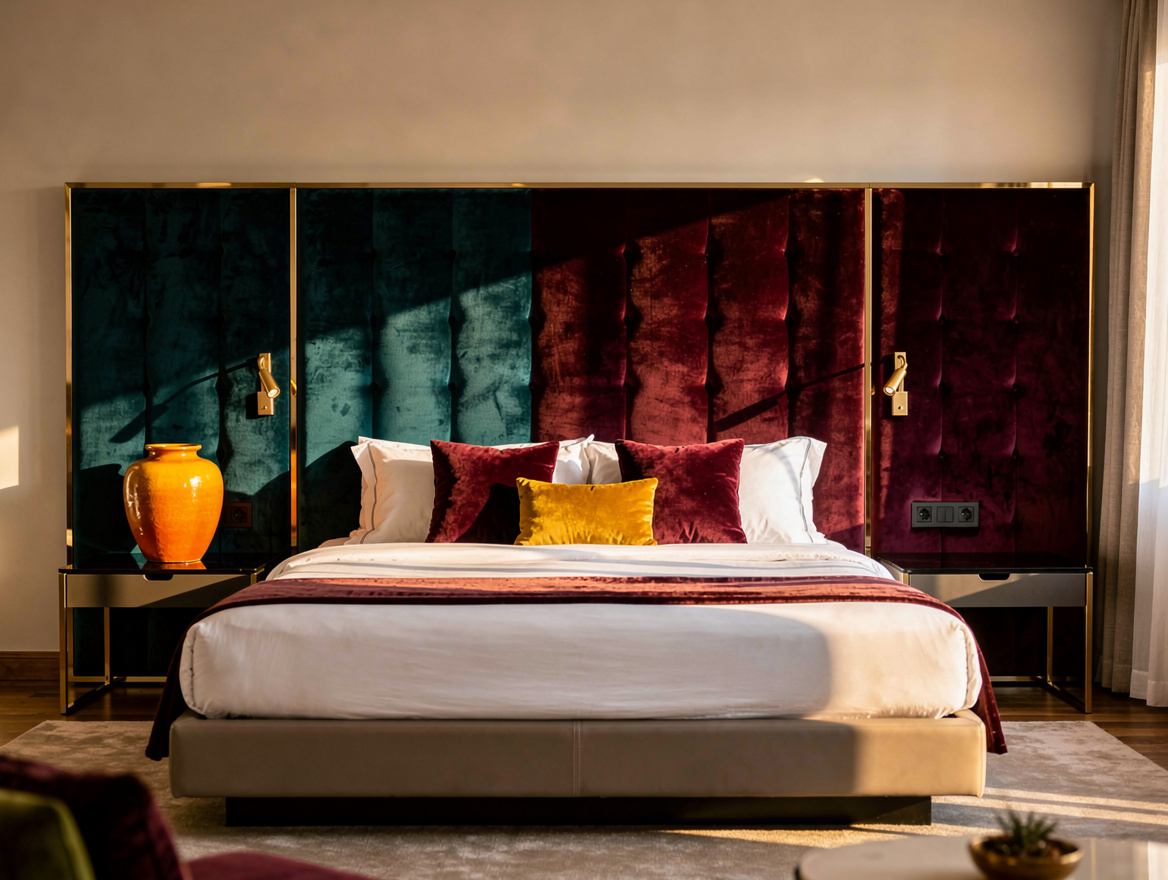
Start with painter’s tape on the wall: mark the full span, the top edge, the lamps, and the bedside surfaces before requesting quotes.
Then price the upholstery, wiring, and tables as one project, because the hotel effect comes from their alignment, not from the headboard alone.
Mia Carter writes about small-space living and budget home makeovers. She has restyled three rentals and tests most ideas in her own 45 sqm flat.