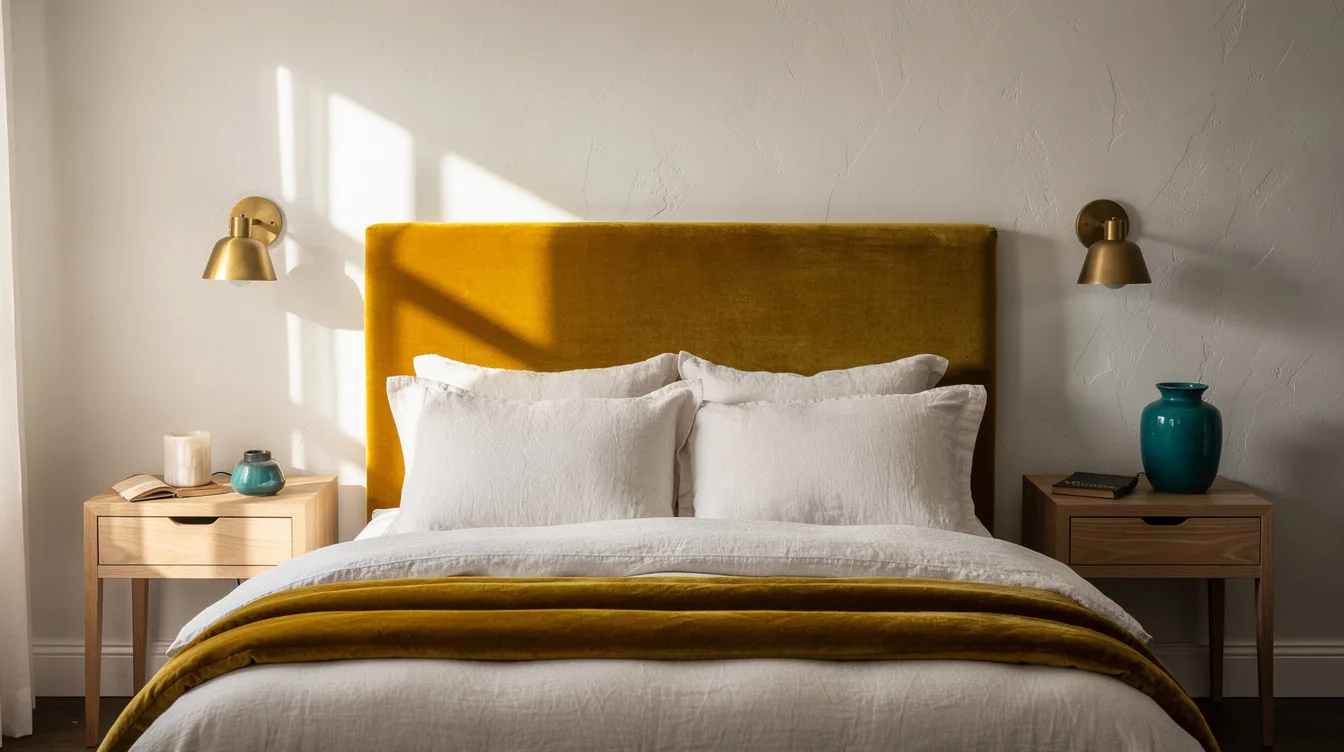
My neutral bedroom felt finished everywhere except behind the bed, where a plain wall made the whole setup look oddly thin. I wanted softness without adding another color, so I chose a velvet headboard in a warm mushroom tone instead of the cool gray option I first considered.
The price gap surprised me: a typical upholstered velvet headboard can run from about $60 to $800 or more. The difference is rarely about the word velvet alone, it is about shape, padding, frame strength, and whether the undertone actually belongs with the rest of the room.
Choose a Warm Undertone First
I started with a mushroom performance-velvet headboard because my room already had cream walls, an oak floor, and brass hardware. That choice kept the bed soft and grounded instead of turning it into a gray focal point.
Cool silver gray is the color I’d skip in this setting. Warm stone, oatmeal, ivory, camel beige, and greige connect far more naturally with natural oak nightstands and off-white bedding.
Keep the Shape Calm and Intentional
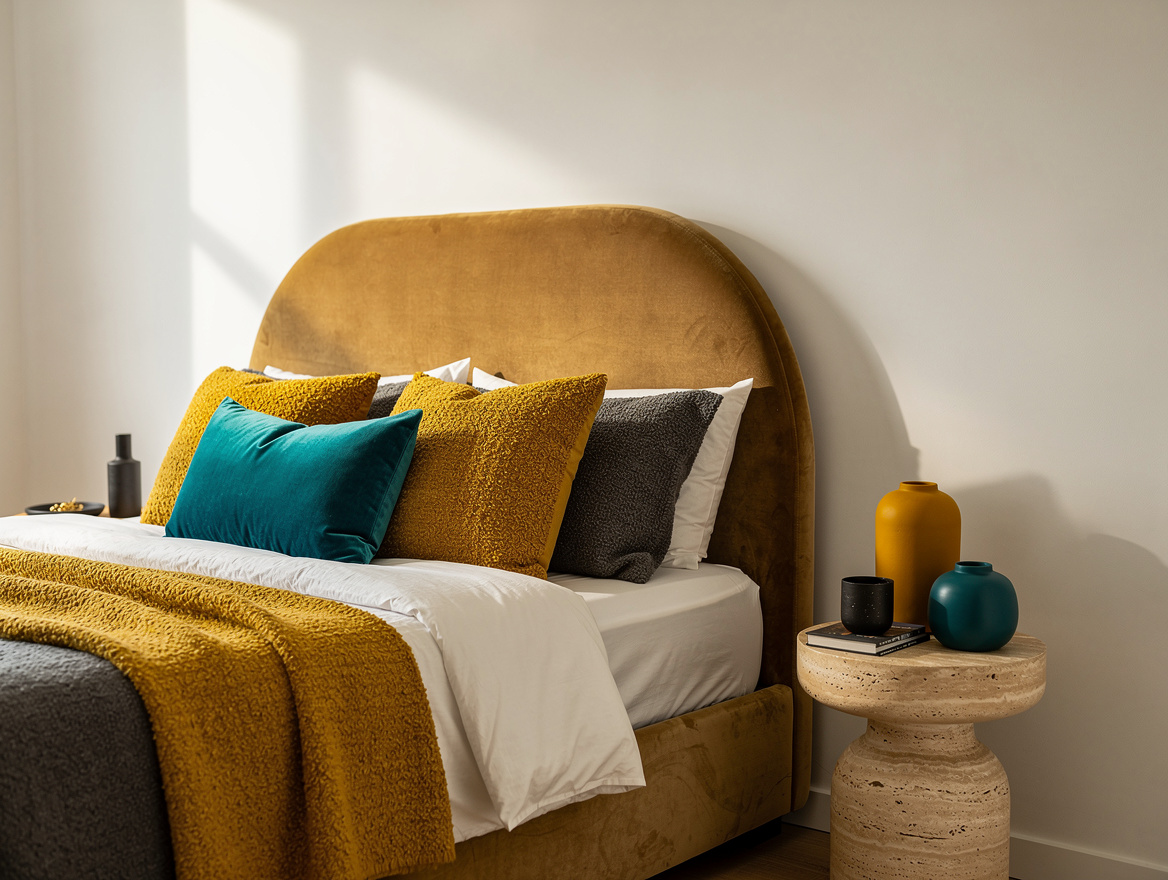
A low, gently curved silhouette is my favorite answer for a relaxed minimal bedroom. The rounded edge of an oatmeal velvet headboard takes the hard line out of a standard rectangular bed without making the room feel overly dressed.
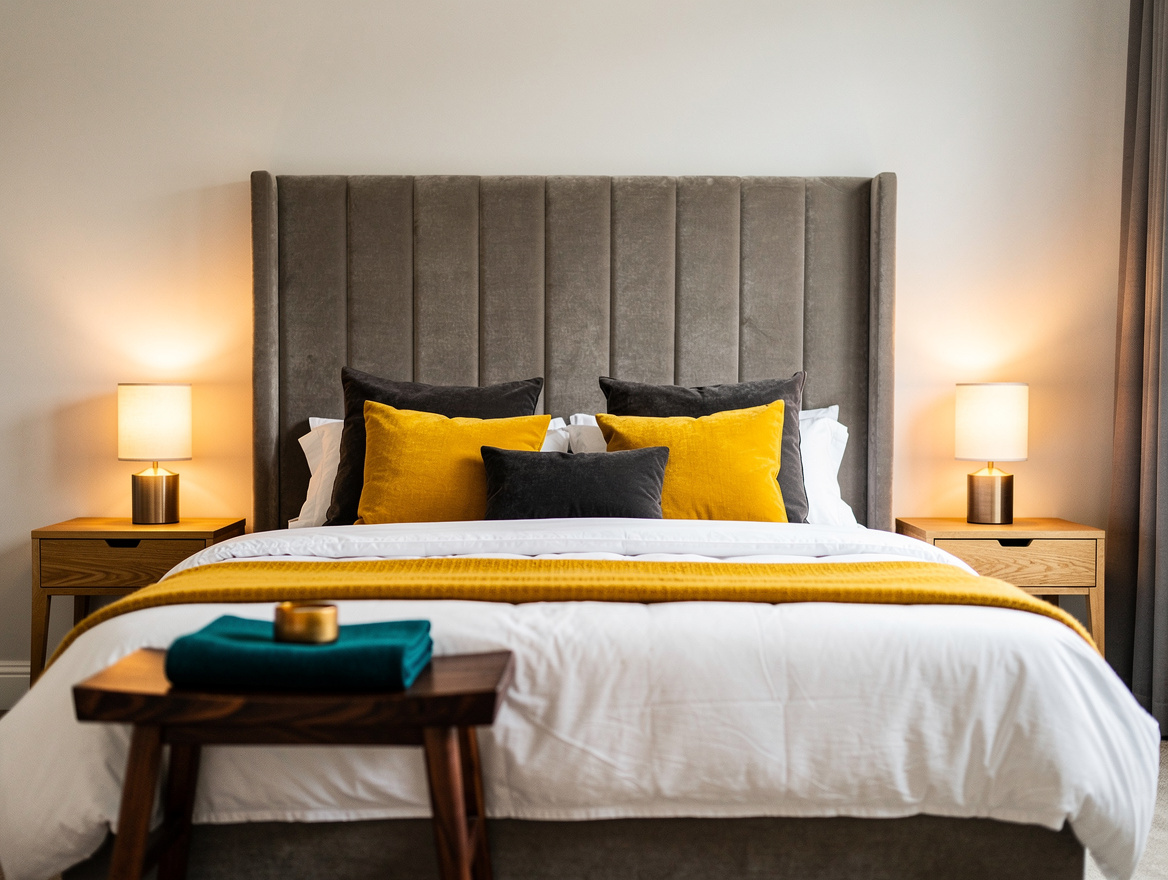
For a more polished hotel mood, go taller with vertical channels. A greige channel-tufted headboard behind crisp ivory sheets feels tailored, especially when one walnut accent gives the pale palette some depth.
Match the Width to the Mattress
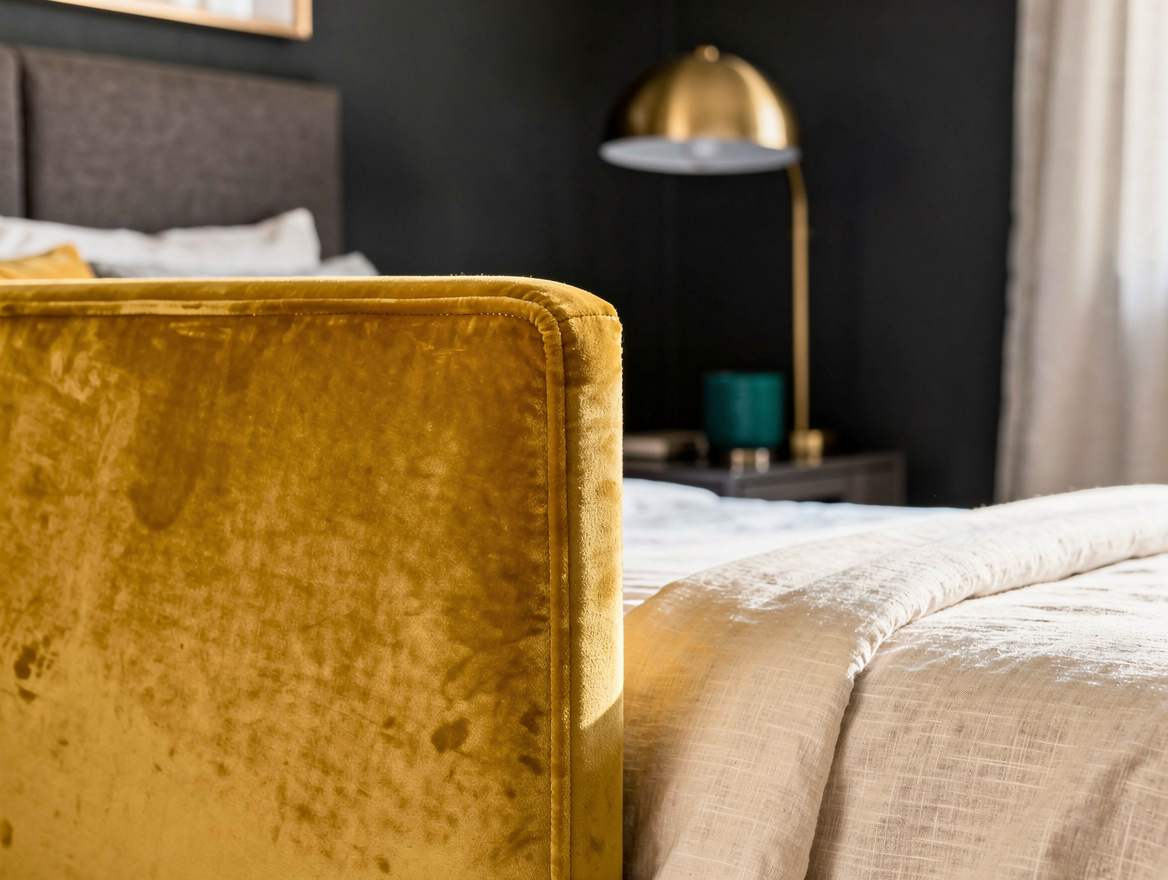
My strongest visual rule is simple: let the headboard extend beyond the mattress. On a queen or king bed, roughly 6 to 12 inches on each side gives the wall a finished, built-in look without swallowing nearby furniture.
A slim square-panel design in taupe performance velvet works particularly well here. It creates a clear frame for the bed, then leaves enough breathing room for compact sconces or narrow bedside tables.
Buy Fabric That Can Handle Real Life
Velvet needs a little skepticism at the store. I look for polyester performance velvet with a dense, matte pile because it is generally easier to live with than a shiny fabric that shows every brush mark.
A typical budget headboard costs about $60 to $200, but thinner padding can make a bed look temporary. Around $200 to $550 is often the useful middle ground for stronger frames, adjustable mounting, and more convincing channel or arch details.
Build Softness With Bedding, Not More Color
Once the headboard is in place, I resist the urge to pile on colored pillows. An off-white linen duvet, a flax blanket, and one textured lumbar pillow give velvet room to do its job.
Texture is the point. A boucle cushion, a lightly rumpled coverlet, and a single dark wood note keep the bed layered while the neutral palette stays quiet.
Use Retail Finds as a Starting Point
For a clean contemporary direction, I’d browse Article Noel Tall Velvet styles in taupe, where typical prices run about $349 to $799 depending on size and model. The taller proportions suit rooms that need the bed to carry more visual weight.
Target velvet headboards can range roughly from $73 to $666, so I’d inspect photos for padding depth and mounting hardware before choosing. Walmart, Wayfair, Home Depot, and Amazon can also be useful for basic upholstered panels, but fabric samples and customer photos matter more than a dramatic product shot.
Start by bringing home one warm fabric swatch and hold it against your sheets and wood furniture in daylight. If it reads creamy beside ivory bedding rather than blue-gray, you have the right foundation for a neutral bedroom that feels genuinely restful.
Mia Carter writes about small-space living and budget home makeovers. She has restyled three rentals and tests most ideas in her own 45 sqm flat.