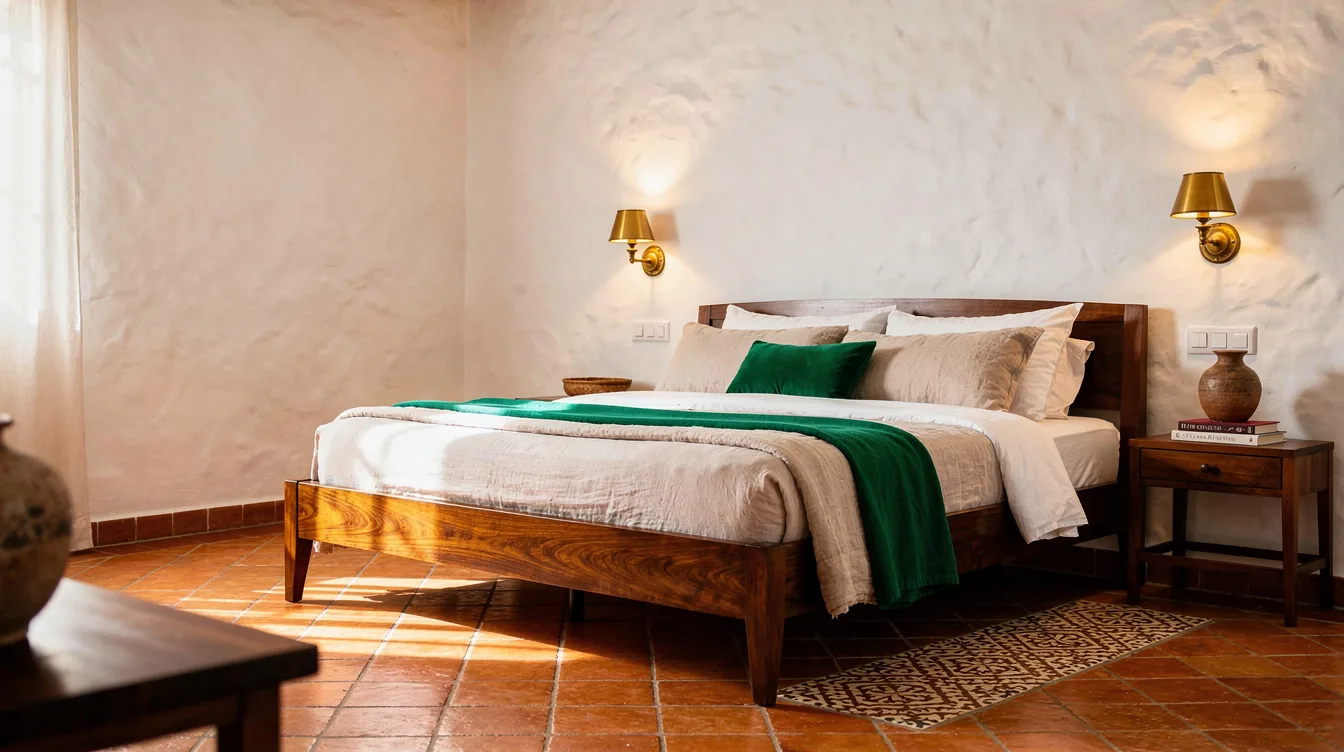
A bedroom with a 54-inch bed can lose its calm fast when every surface gets a competing pattern. Spanish Revival tile works best when it gives the room one memorable architectural moment, then lets bedding, plaster, and wood do the softer work.
For 2026, I’d skip full-room pattern coverage and spend the visual energy on an accent zone that actually earns attention.
Frame the Bed With a Relief-Tile Headboard
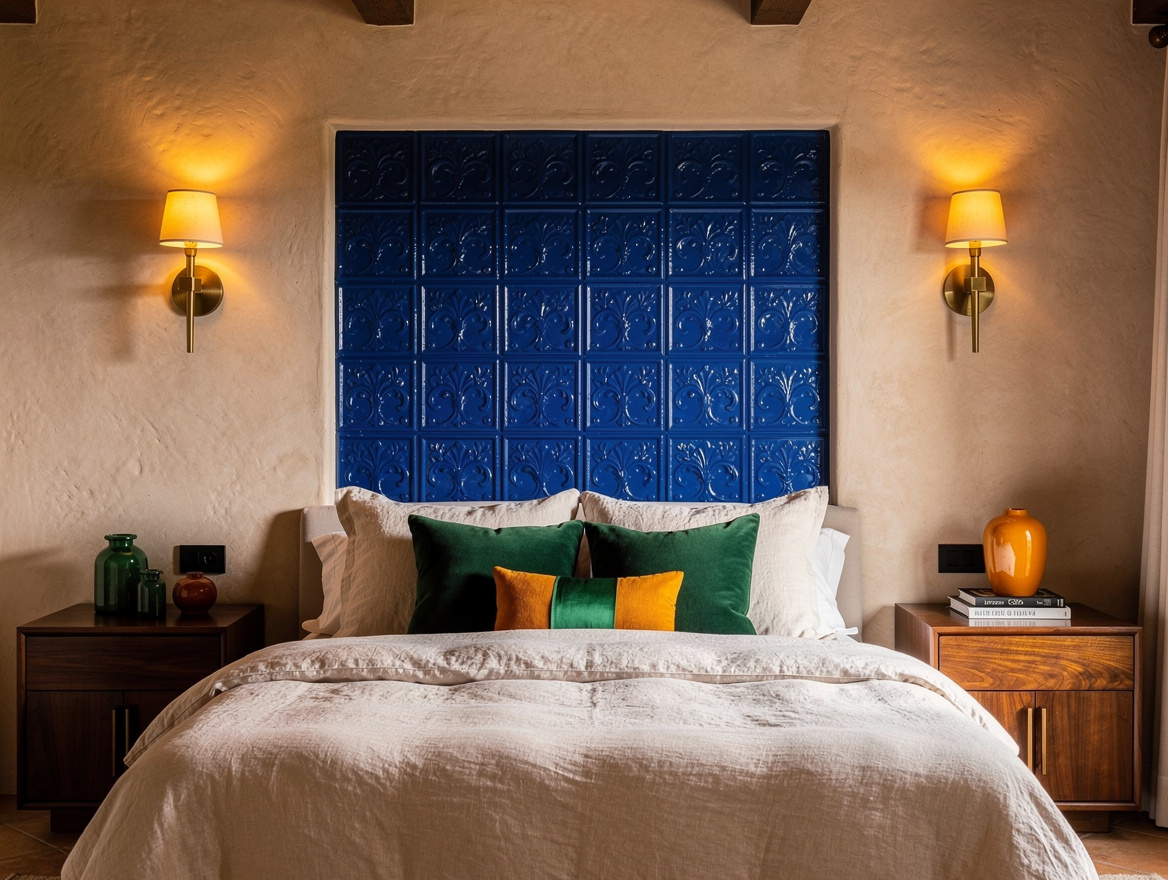
Run terracotta relief tile behind the bed like a permanent headboard, stopping around 12 to 18 inches beyond each side of the mattress. It gives a plain upholstered bed real presence without adding another bulky furniture piece.
Choose hand-finished 4.25-by-4.25-inch tiles in a sun-faded clay tone, then keep the surrounding wall in warm white plaster. A full wall can feel theatrical in a sleep space, while a framed tile panel feels intentional.
Typical handmade relief tiles cost about $6.50 per piece at this size, so measure by tile count before falling for an elaborate layout. I’d use a simple repeating motif, not five competing shapes.
Finish the bed with linen bedding in oatmeal, ivory, or muted tobacco. Crisp white sheets alone can make the tile look like a restaurant renovation.
Lay a Quiet Terracotta Floor Underfoot
A floor of 6-by-6-inch hand-pressed clay tile brings the Spanish Revival mood down to its most convincing level: under your feet. Its slight variation is the whole point, especially beside old-looking wood furniture.
Use a soft, matte sealer and a grout close to the clay color. Bright white grout turns warm tile into a grid, and that hard graphic line fights the aged character.
Keep the larger pieces calm: a walnut nightstand, an iron bed, and a low woven bench are enough. Terracotta already carries plenty of texture and color.
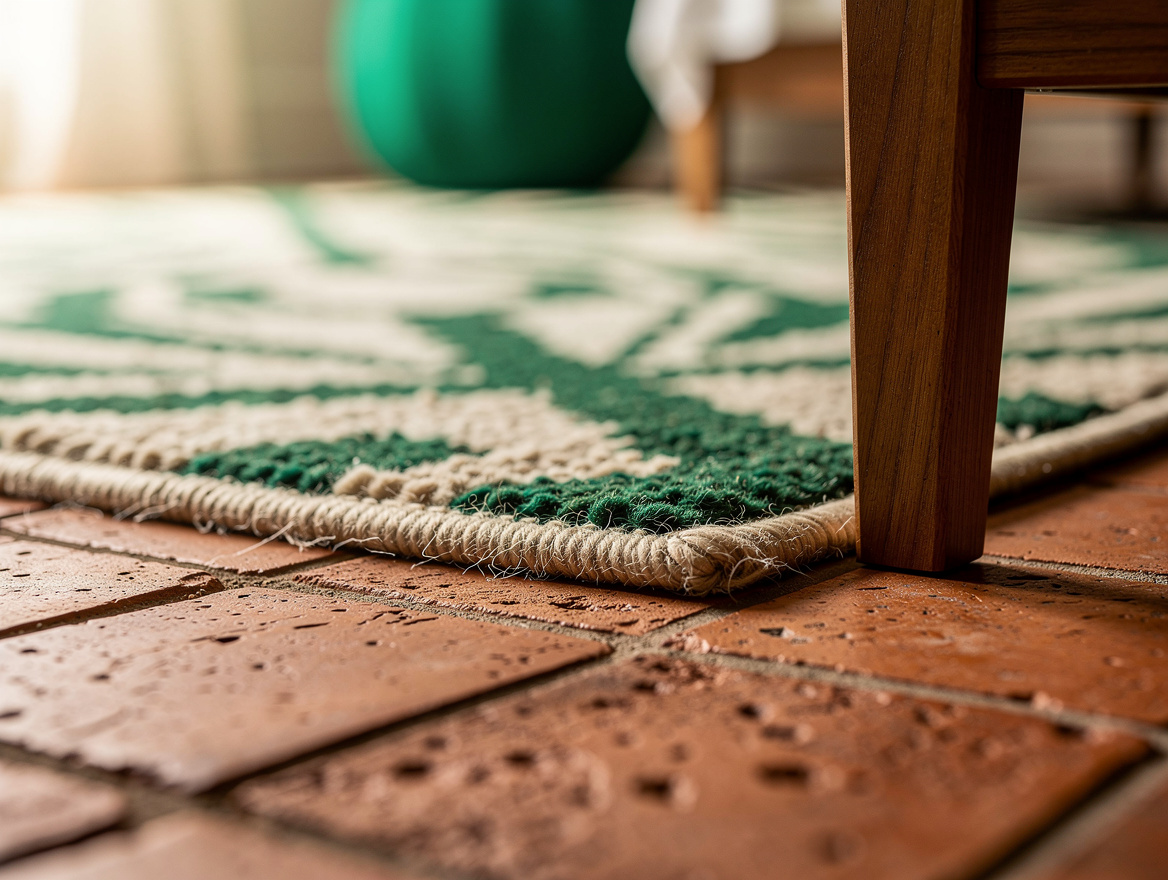
Bedrooms can feel chilly with hard flooring, so place a substantial wool rug where you step out of bed. Leave a border of tile visible, around 10 inches is typically enough to make the material read.
Build a Cobalt Window-Seat Border
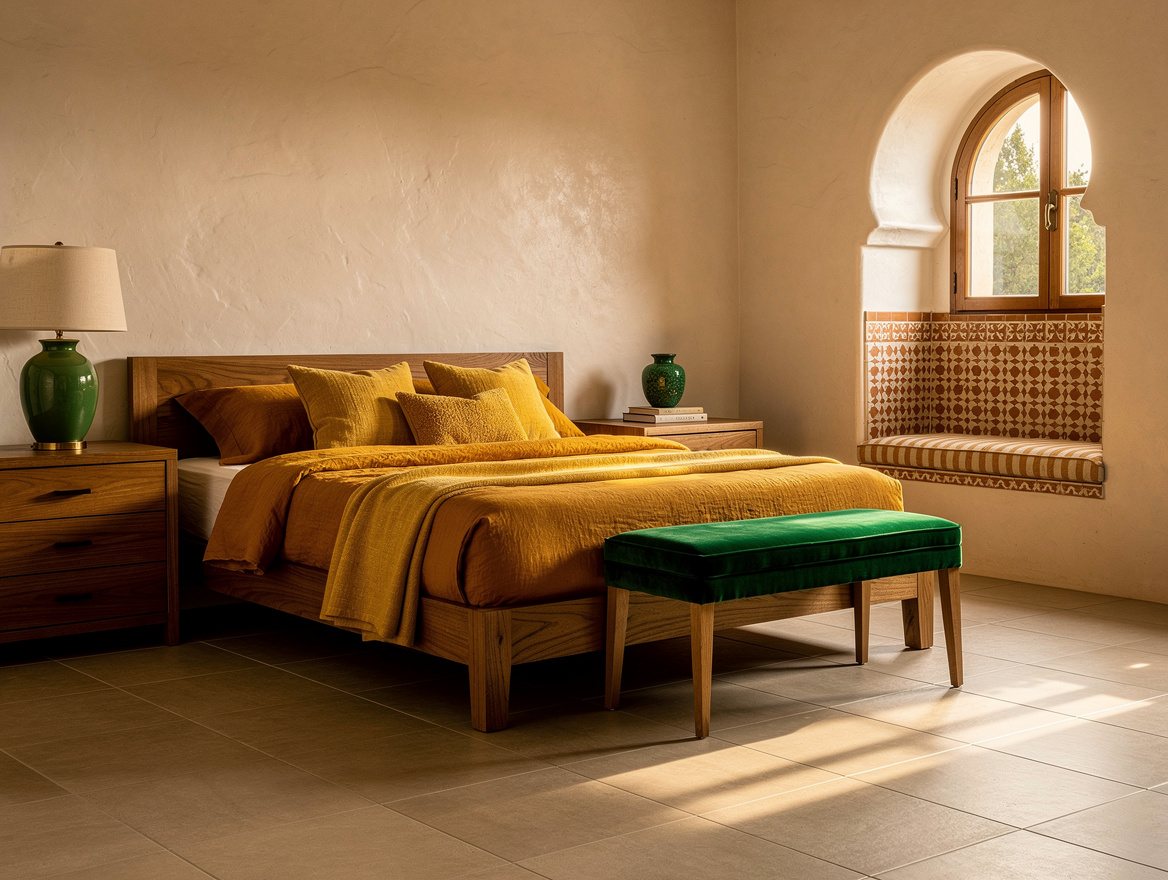
A narrow run of cobalt ceramic tile around a window seat creates the kind of detail people notice on the second look. It’s ideal for a bedroom that has decent light but no obvious focal point.
Use the tile on the seat face or the recessed sill, rather than covering every return. The blue needs a quiet partner, so paint the trim warm cream and use a plain cushion in rust or flax.
A solid oak window seat with a tiled surround feels richer than a fully tiled bench, which can read cold and overly literal. Let wood handle the parts that invite touch.
For a small opening, patterned squares are more forgiving than a large-format slab because cuts disappear into the rhythm. Keep the repeat consistent from one end to the other.
Reserve Cement Tile for a Floor Inset
Patterned encaustic cement tile belongs in a contained floor inset beside a reading chair or at the foot of the bed. It gives the room a ceremonial little landing spot without making sleep feel visually busy.
An 8-by-8-inch cement square is a practical scale for this move, and boxes of 12 typically cover about 5.28 square feet. Draw the inset first, including its border, before ordering a single tile.
Go for navy, green, white, and muted gold rather than a high-contrast rainbow. A natural jute rug nearby will soften the geometry and keep the area from feeling museum-like.
Custom colorways often require around 21 square feet and roughly an 8-to-10-week lead time. That makes a planned inset smarter than a last-minute patch of pattern.
Pair Neutral Porcelain With One Handmade Accent
Use large neutral porcelain floor tile across most of the bedroom when you want less grout and easier upkeep. The current Spanish Revival look has room for this practical choice, provided the finish stays matte and earthy.
At Wayfair, Spanish-inspired porcelain options typically range from about $9.59 to $22.29 per tile or unit, depending on format and finish. A small handmade border delivers more character than spending the entire budget on decorative coverage.
Try a creamy stone-look field with one strip of hand-glazed ceramic tile at a closet threshold or fireplace hearth. That contrast feels collected over time instead of purchased as a matching set.
Skip glossy marble-effect porcelain in this room. Spanish Revival needs mineral warmth, not a reflective hotel-lobby floor.
Repeat the Tile Color in Textiles and Metal
Once the tile is in, repeat one of its quieter shades in the room, not every shade in the pattern. A ochre wool throw or faded blue lumbar pillow can connect the architecture to the bed without turning it into a theme room.
Bring in aged brass sconces with soft bulbs around 2,700K for a warmer read at night. Cool, bright lighting flattens clay, cement, and hand-glazed surfaces.
Keep decorative objects edited. A chunky knit throw. One brass candleholder.
A framed charcoal sketch with a dark wood frame.
The strongest Spanish Revival bedrooms have a little restraint in them. Tile should look like it has always belonged to the house, not like it arrived with the accessories.
Start with the wall behind the bed or a window seat, then choose the tile before buying new bedding. One grounded surface will set the tone for the whole room.
Mia Carter writes about small-space living and budget home makeovers. She has restyled three rentals and tests most ideas in her own 45 sqm flat.