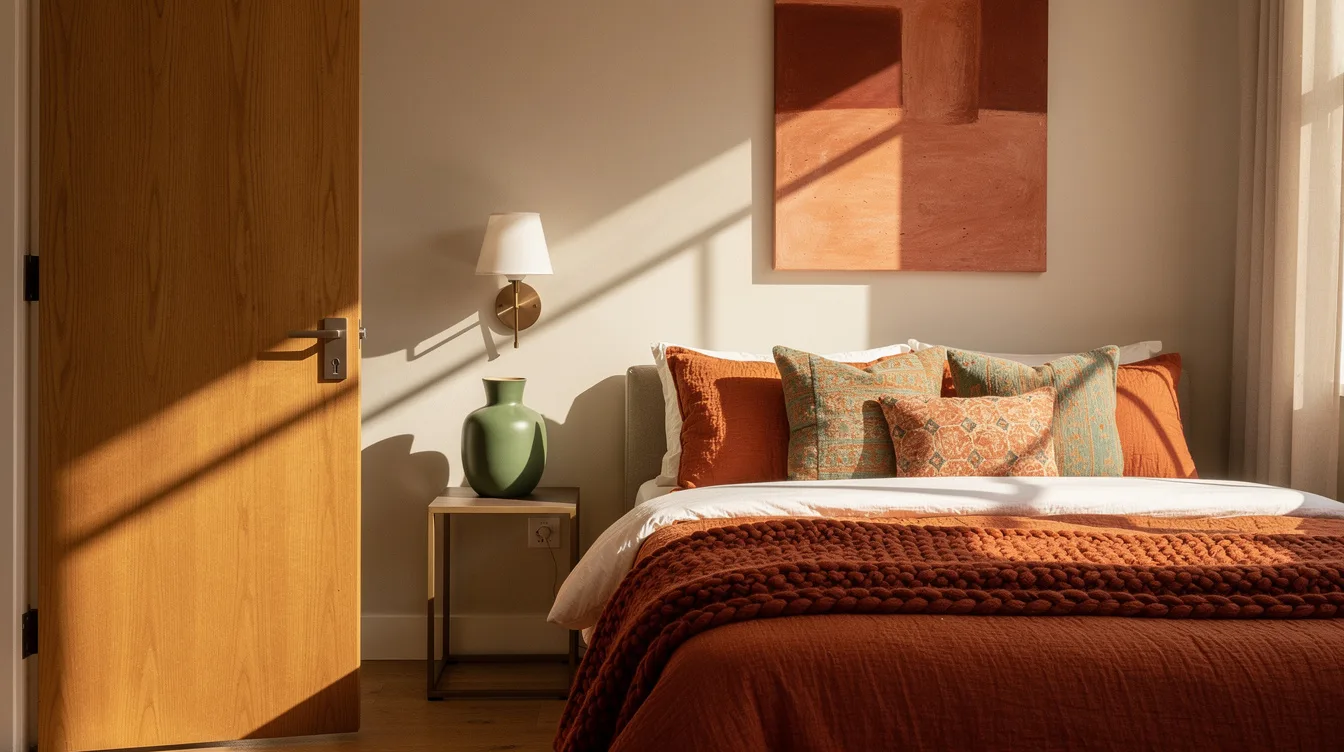
When a small bedroom leaves only about 18 inches between the bed and a swinging door, every morning becomes a sideways shuffle. A pocket door can reclaim roughly 7 square feet beside the bed, but only when the wall, track, and bedside storage are planned together.
The best versions disappear into the architecture and leave the room easier to use. These designer-minded fixes focus on clearance, privacy, sound, and the details that keep the door quiet.
Measure Around the Bed First
Start with the bed, not the doorway. Mark the footprint of your full-size bed and a walking lane of about 30 inches with painter’s tape; in a room near 100 square feet, that mock-up quickly shows whether a pocket door will help.
The swinging door can consume roughly 7 square feet beside the bed, yet the pocket version still needs a clear wall cavity. Leave room for the door to disappear fully, including the handle, trim, and your hand reaching for it.
For an early budget check, a basic pocket-door kit from Home Depot typically costs about $150 to $300 before the door slab, trim, and installation. If the opening crowds your nightstand, shift the doorway before choosing finishes.
This is where many small bedrooms go wrong: the new door saves floor space but leaves the bed pressed against a wall. Tape the entire layout for a day and walk through it at night.
Build the Wall for the Hardware
Inspect the wall before cutting anything. A pocket door needs a clean cavity, so check for plumbing, wiring, outlets, and structural supports with a stud finder and an inspection opening.
A steel pocket frame is worth considering because it resists twisting better than a flimsy track assembly. A typical frame costs around $180 to $350, depending on door width and hardware, so price the wall system before buying a decorative slab.
Keep switches and receptacles out of the sliding path, and use moisture-resistant drywall only where the room’s conditions call for it. The wall must close flat, or every small bump will make the door drag.
For a shared wall, add sound control while it is open. Mineral wool, solid framing, and a solid door create a calmer bedroom than a hollow panel rattling inside a thin partition.
Match the Slab to the Headboard
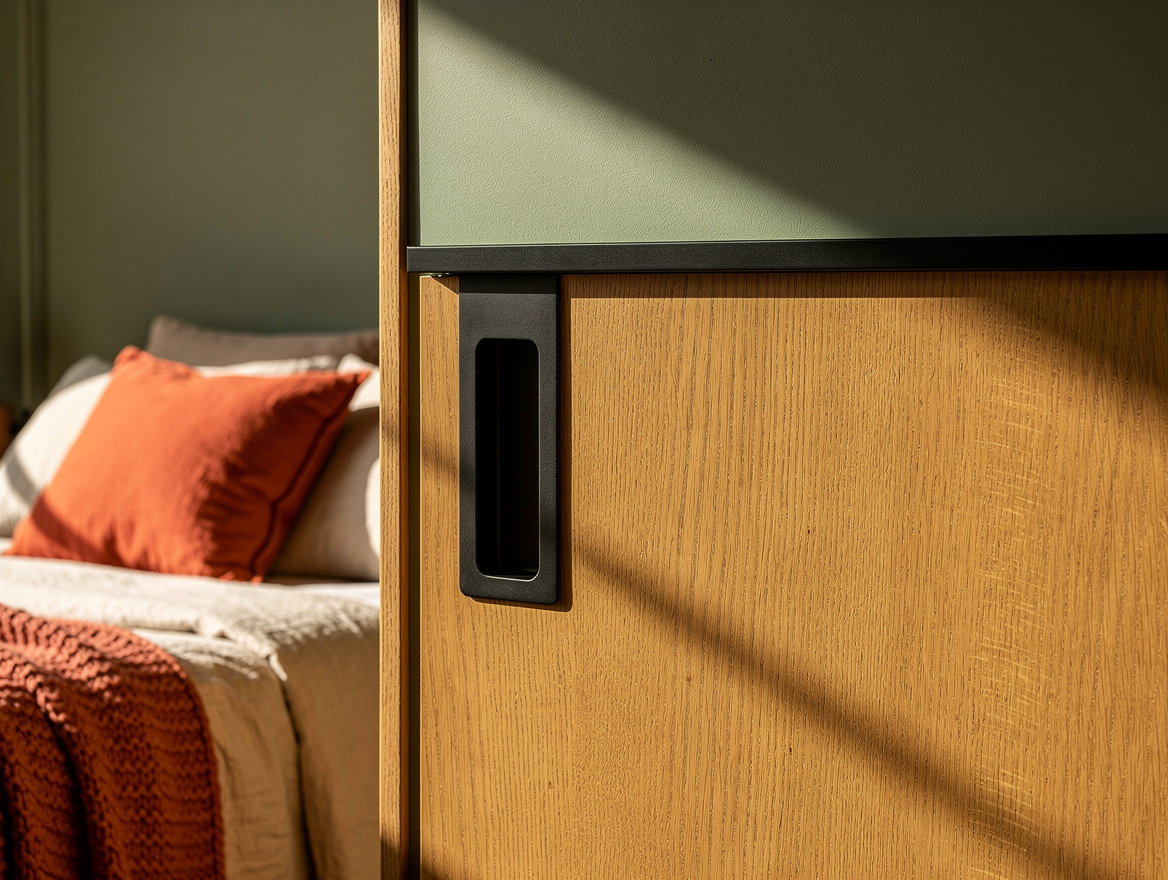
The door should relate to the largest piece in the room, usually the headboard. A warm oak veneer slab softens white walls and ties neatly to a wood bed, while a painted slab keeps a narrow room visually quiet.
Use one repeated finish instead of collecting several competing wood tones. An IKEA bed in pale oak, for example, looks more intentional beside a door with a similar light grain than beside orange-stained trim.
For a rental-friendly update, paint the slab and trim the same color, then add a slim matte-black pull that sits nearly flush. The dark detail gives the door definition without projecting into the bedside walkway.
A solid-core slab usually feels more substantial and blocks more sound than a hollow-core option. It also weighs more, so the track and rollers must be rated for it before installation.
Filter Light With Reeded Glass
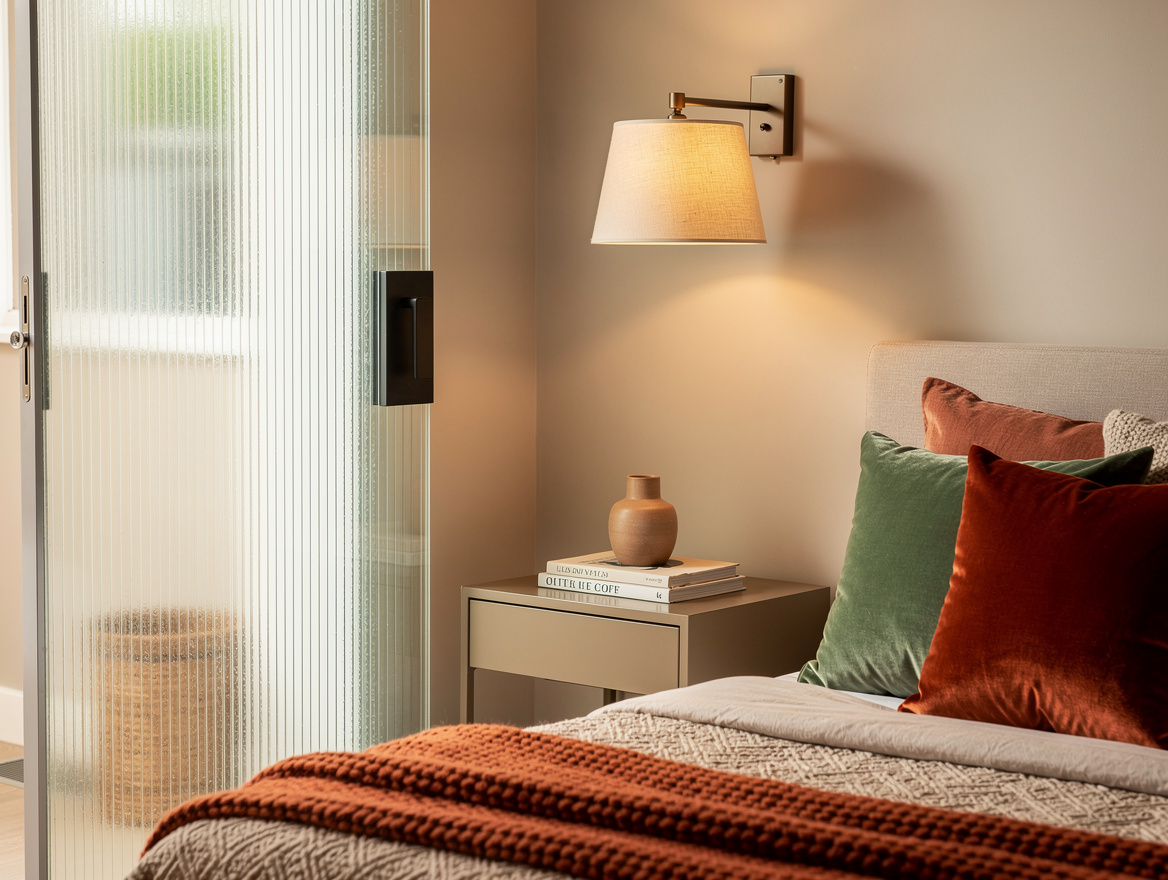
If the bedroom feels boxed in, use reeded glass in the door rather than a clear panel. It borrows light from a hall while blurring the bed, clothing, and bedside clutter.
Privacy glass works best when the bedroom does not face a busy living area. A typical glass pocket door can cost around $400 to $900 before installation, so compare the slab, frame, and specialty glass as one package.
For a softer rental solution, hang a slim linen curtain on the bedroom side of the opening. It adds privacy at night, absorbs a little sound, and can be pulled aside when daylight matters more.
Wayfair carries many glass-panel door styles, but inspect the listed dimensions and hardware rating carefully. A pretty panel that stops short of the wall or rolls roughly will make the room feel less finished.
Quiet the Track Before Finishing
Noise matters more beside a bed than in a hallway. Choose soft-close hardware if the budget allows, because the final few inches are where a fast-moving door can slam into the frame.
Look for adjustable hangers and ball-bearing rollers that can be serviced without opening the wall. Around $75 to $200 is a typical range for upgraded pocket-door hardware, though the correct weight rating matters more than the finish.
A pocket door from Lowe’s may look inexpensive at first, but include track upgrades, pulls, shims, trim, and labor in the comparison. Saving on the slab rarely compensates for a door that binds every morning.
Before closing the wall, test the door repeatedly from both sides. Leave a removable access point where the rollers can be adjusted, then vacuum the track and check the screws once a year.
Finish the Bedside Landing Zone
Once the door slides away, protect the reclaimed space from becoming dead space. A wall-mounted sconce keeps the floor clear and gives the bed useful light without a bulky lamp on a tiny nightstand.
Choose a fixture with a movable arm and a switch you can reach from the pillow. A typical plug-in sconce costs about $35 to $90, while a hardwired fixture requires an electrician and a clear electrical plan.
A shallow narrow oak shelf can hold a book, glasses, and a phone without blocking the door. Keep it shorter than the opening and mount it well outside the sliding path.
For inexpensive finishing pieces, Target and Walmart both offer small baskets and cord organizers that can keep the new floor area clean. The goal is a clear landing zone, not another place to stack laundry.
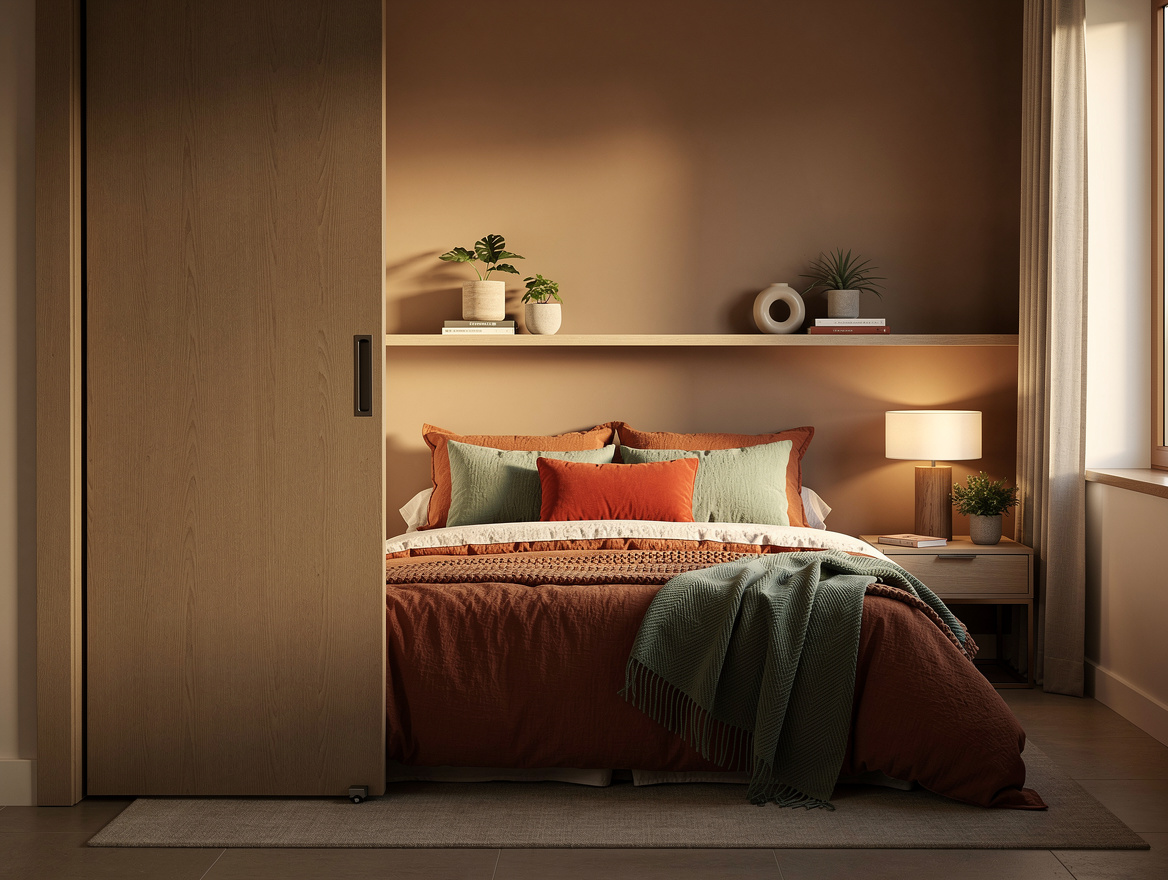
Begin with painter’s tape, mark the bed and door path, then inspect the wall before ordering a slab. That simple layout test will tell you where the reclaimed space should go: a sconce, a shelf, or simply enough room to walk without turning sideways.
Mia Carter writes about small-space living and budget home makeovers. She has restyled three rentals and tests most ideas in her own 45 sqm flat.