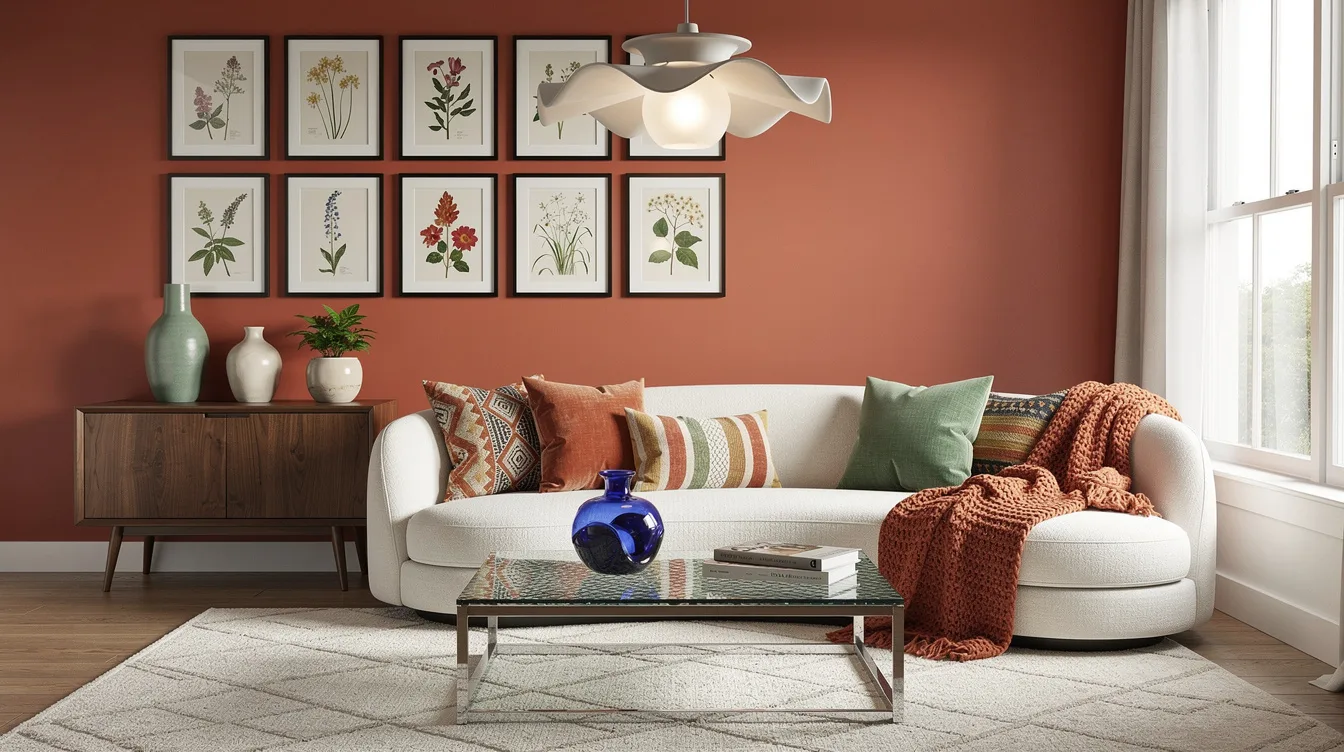
A living room can have a 54-inch sofa, a decent rug, and still feel oddly weightless. The 2026 shift favors rooms with touchable surfaces, deeper color, and furniture that asks you to sit down for a while.
I understand the temptation to keep every wall pale and every tabletop clear. But designers are moving toward a more personal, sensory mix, especially when a typical room refresh can start around $500 with paint, textiles, and a few substantial secondhand finds.
Trade Empty Beige for Grounded Color
Stop treating beige as the automatic answer for every wall, pillow, and curtain. A terracotta accent wall or a deep chocolate paint tone gives a room an actual point of view, particularly beside cream upholstery.
Try a saturated color where it will be felt up close: behind a sofa, inside a reading nook, or around a dining area. Home Depot paint samples make this a low-risk test, and a typical sample jar costs only a few dollars.
Keep the rest of the room calm enough for the color to register. Walnut, ivory linen, and a rust-colored throw are plenty, while five competing paint shades usually read as hesitation.
Choose Furniture With Actual Presence
Ultra-thin furniture and tiny occasional chairs are losing ground to generous silhouettes. A curved cream sofa with rolled arms feels warmer than a rigid modular setup that leaves everyone perched at the edges.
Look for one piece with visual weight, such as a low sculptural lounge chair or a solid-wood sideboard. At Wayfair, a typical curved three-seat sofa can range from roughly $900 to $2,000 depending on fabric and construction.
Don’t fill every open inch after choosing it. The furniture needs breathing room, but it should still look capable of holding a real weekend gathering.
Bring Back Dark Wood With Restraint
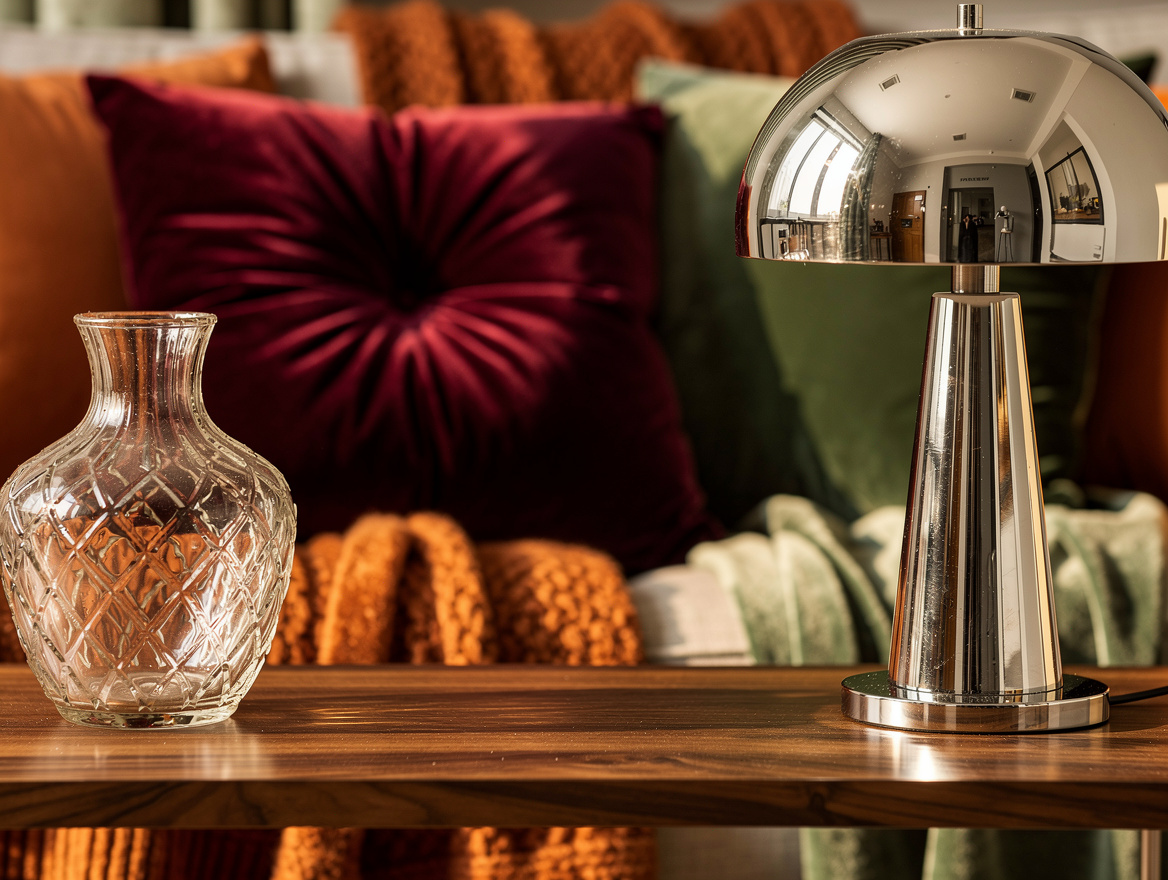
Gray-washed wood had a long run, and it now makes many rooms feel borrowed from the same listing photo. Walnut wood and dark oak bring the warm, slightly retro foundation that 2026 rooms need.
A substantial buffet, bookcase, or coffee table does more than a collection of flimsy open shelves. Costco and Amazon can be useful starting points, but inspect veneer descriptions and dimensions before calling a piece a bargain.
Pair dark wood with softness so it doesn’t turn formal. A nubby wool rug, an off-white lamp shade, and one textured ceramic object will carry the room further than matching every finish.
Replace Gold-Only Accents With Chrome
Gold hardware is not forbidden, but using it on every lamp, frame, faucet, and tray now feels overly rehearsed. Chrome, silver, and textured glass add a cooler spark against brown, oxblood, or mossy green rooms.
Start with a chrome-and-glass coffee table or a sculptural pendant instead of replacing all your fixtures. A typical statement light from Lowe’s may cost around $200 to $600, while designer versions can climb much higher.
Use brass as a small supporting note if you already own it. Mixed metals work when one finish leads and the others stay quiet.
Layer Texture Before Buying More Decor
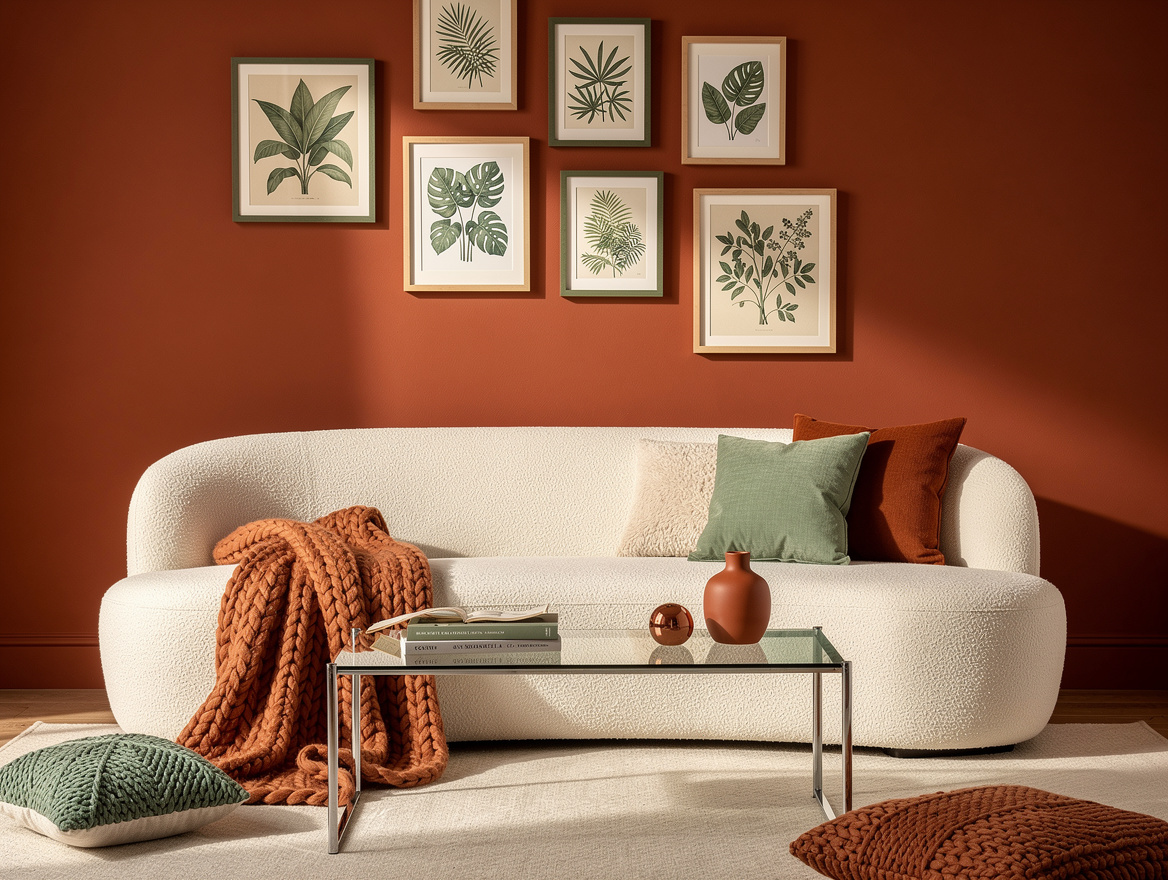
A room packed with small objects can still feel flat when every surface is smooth. Build the sensory part first with velvet curtains, bouclé, chunky wool, textured stone, or a heavy cotton coverlet.
For a living room reset, spend on the materials your hands meet most often: cushions, throws, rug pile, and window treatments. Target and IKEA are strong for basic layers, then add one richer textile rather than buying a cart full of novelty accessories.
A chunky knit throw. One mohair pillow. A matte stone bowl.
Those contrasts make a room feel lived-in without making it crowded.
Hang Art in Intentional Groups
One undersized print floating above a sofa is a decorating habit designers want retired. A grouped run of botanical prints, bird illustrations, or nature studies gives the wall rhythm and makes a room feel collected over time.
Use matching slim frames when the artwork is varied, or mix frames when the imagery is restrained. A typical set of framed botanical prints can run roughly $80 to $250, depending on print quality and frame material.
Try this in an entry, powder room, or above a desk where a gallery can be viewed close-up. Ace Hardware has the picture-hanging hardware you need, and measuring the full arrangement on the floor first prevents a crooked, timid result.
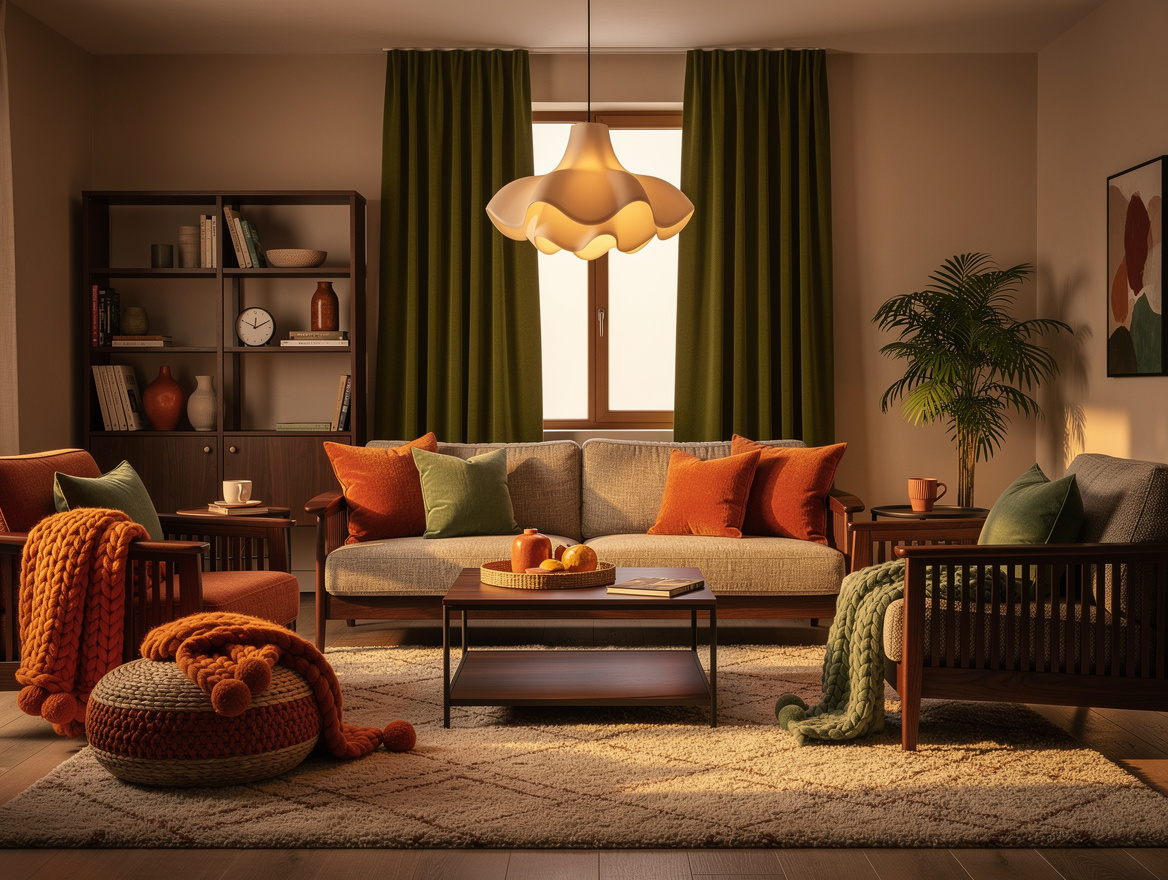
Begin with the surface that bothers you most every day, whether that is a blank wall, a skimpy curtain panel, or a coffee table with no character. Give that one area color or texture first, then let the rest of the room answer it.
Mia Carter writes about small-space living and budget home makeovers. She has restyled three rentals and tests most ideas in her own 45 sqm flat.