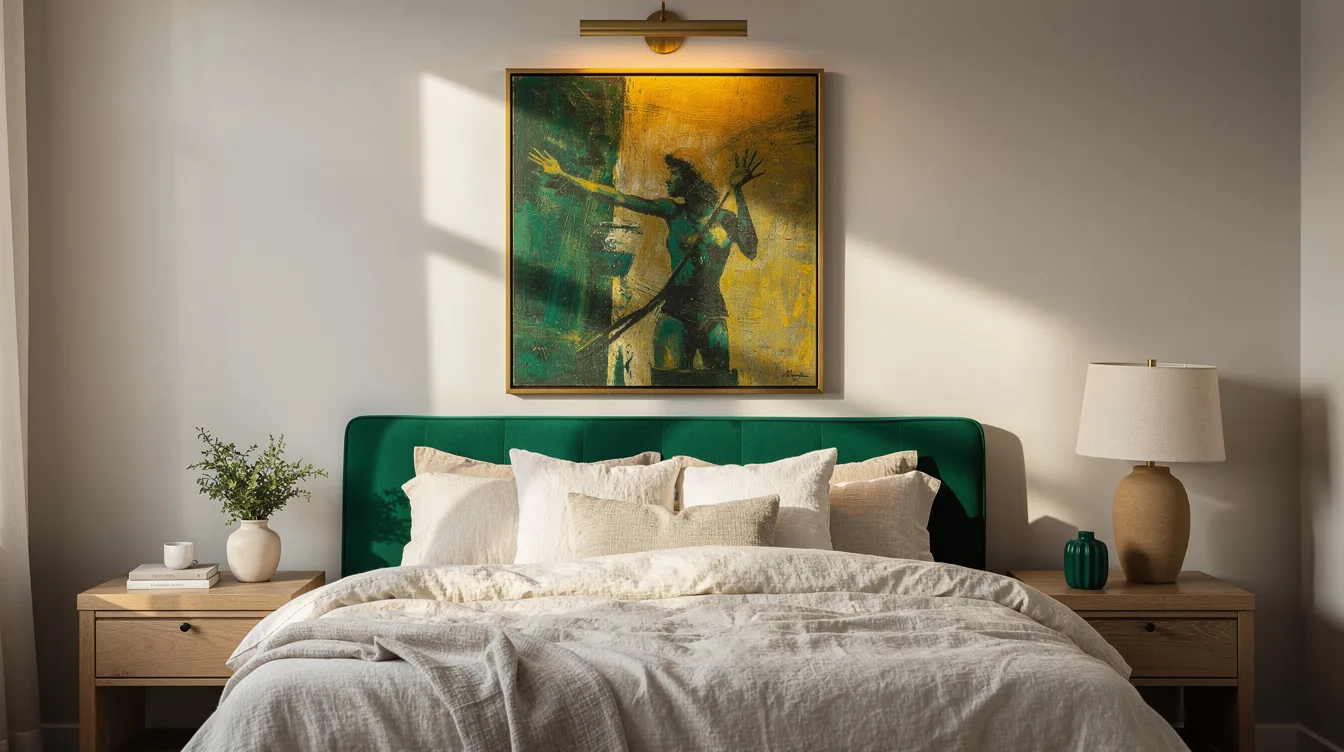
I’ve seen a brass picture light turn a plain bed wall into a finished composition, then ruin the effect the second someone lies down and gets a beam straight in the eyes. The issue is rarely brass itself, it’s placement.
Above a roughly 63-inch-wide bed, a centered 24-to-30-inch light over artwork around 40 to 48 inches wide usually feels deliberate instead of tiny. The fixture should flatter what hangs behind the bed, not become the room’s brightest bedtime distraction.
Aim Light at the Artwork
A brass picture light above a bed earns its place by washing art, a textile panel, or a shallow ledge with light. Pointing the beam at pillows creates glare at the exact moment the room should feel quiet.
Choose a 2700K LED bulb with dimming, then angle the shade toward the wall. Picture lights are decorative art lighting, so keep real bedside reading lamps within reach.
Scale the Fixture to the Frame
An undersized bar hovering over a wide print looks apologetic, while an oversized fixture crowds the composition. Designers generally use a light about one-half to two-thirds the width of the artwork.
For art roughly 36 to 54 inches wide, a 16-to-24-inch picture light usually has enough presence. A centered 24-to-30-inch bar can also look intentional above artwork roughly 40 to 48 inches wide on a 63-inch bed.
Center the Light on a Visual Zone
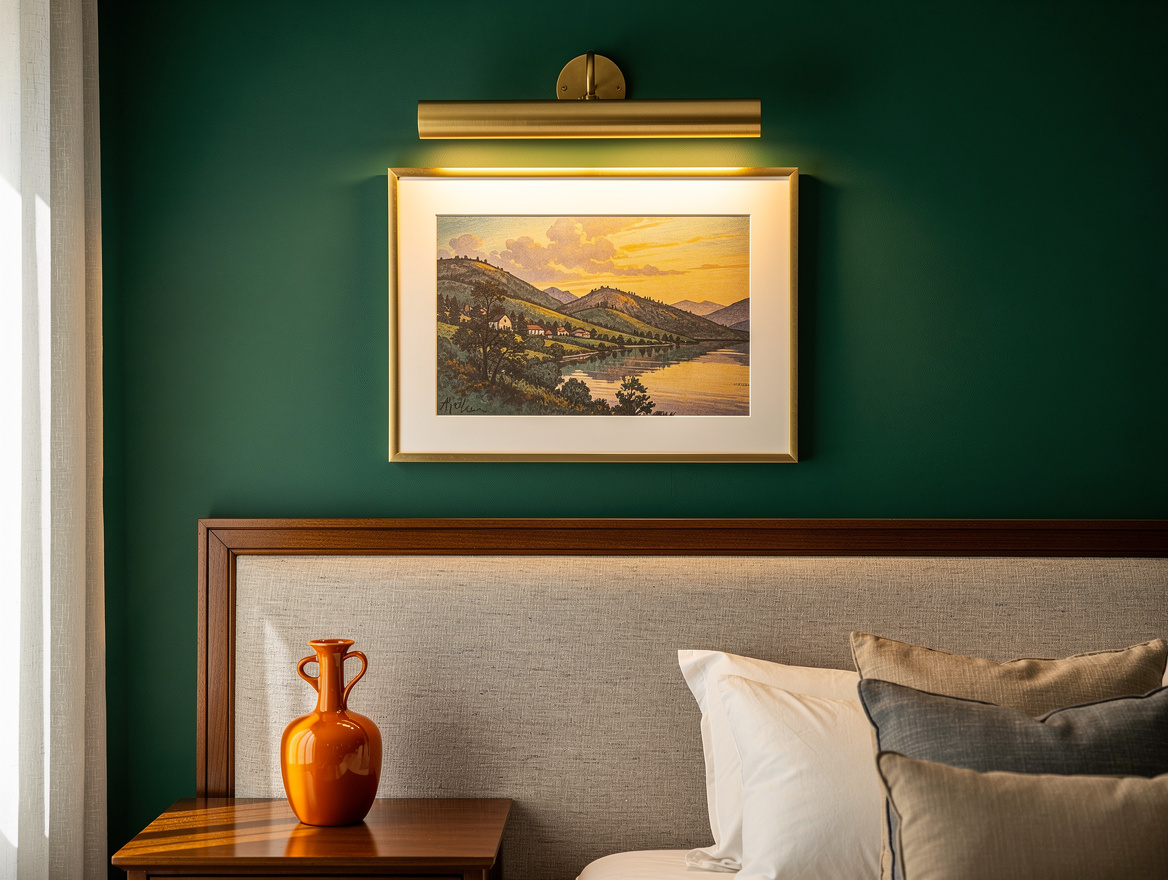
Centering a fixture on the mattress instead of the art is the fastest way to make the wall feel off. Let the framed piece, triptych, or headboard panel determine the centerline.
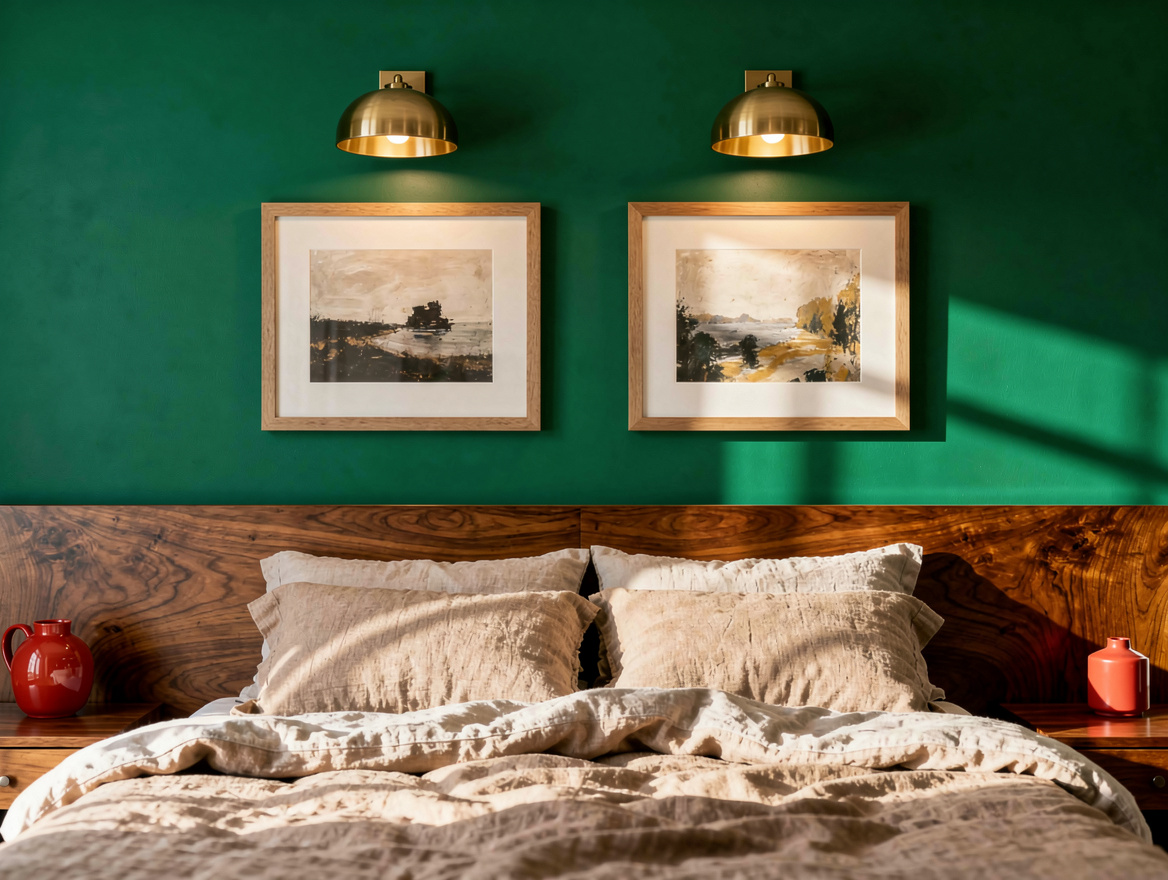
Over a wide upholstered headboard, two matching brass fixtures can each illuminate a separate print and create calm symmetry. The look is more collected than a pair of hotel-style bedside sconces.
Mount It High Enough to Clear Pillows
A low-mounted light throws its brightest hotspot onto rumpled bedding and makes every late-night shift feel theatrical. Set the fixture roughly 3 to 6 inches above the frame when the art and headboard allow it.
An adjustable rotating shade is especially useful over a padded headboard, where art often sits close to the top edge. Test the beam from the bed before committing to screws or a hardwired box.
Match the Brass to the Room’s Mood
Brass has range, but random gold finishes make a bedroom look pieced together from different shopping carts. Brushed brass works beautifully with pale oak, linen bedding, cream plaster, and restrained contemporary rooms.
Choose aged brass when the room has walnut, vintage frames, or moody paint, and use polished brass only when the other metal accents are equally crisp. Solid brass has the most staying power, though a brass-finish steel fixture is a sensible lower-cost choice.
Use Easy Power Where Walls Are Finished
Opening a freshly painted wall for one small fixture can turn a simple styling decision into an expensive project. A rechargeable picture light or plug-in model above a ledge keeps the arrangement flexible and avoids a major installation.
At Home Depot, budget options typically fall around $35 to $75, while more adjustable, better-finished models often run roughly $80 to $180. Spend extra on a dimmer and a shielded head before paying for ornamental detail.
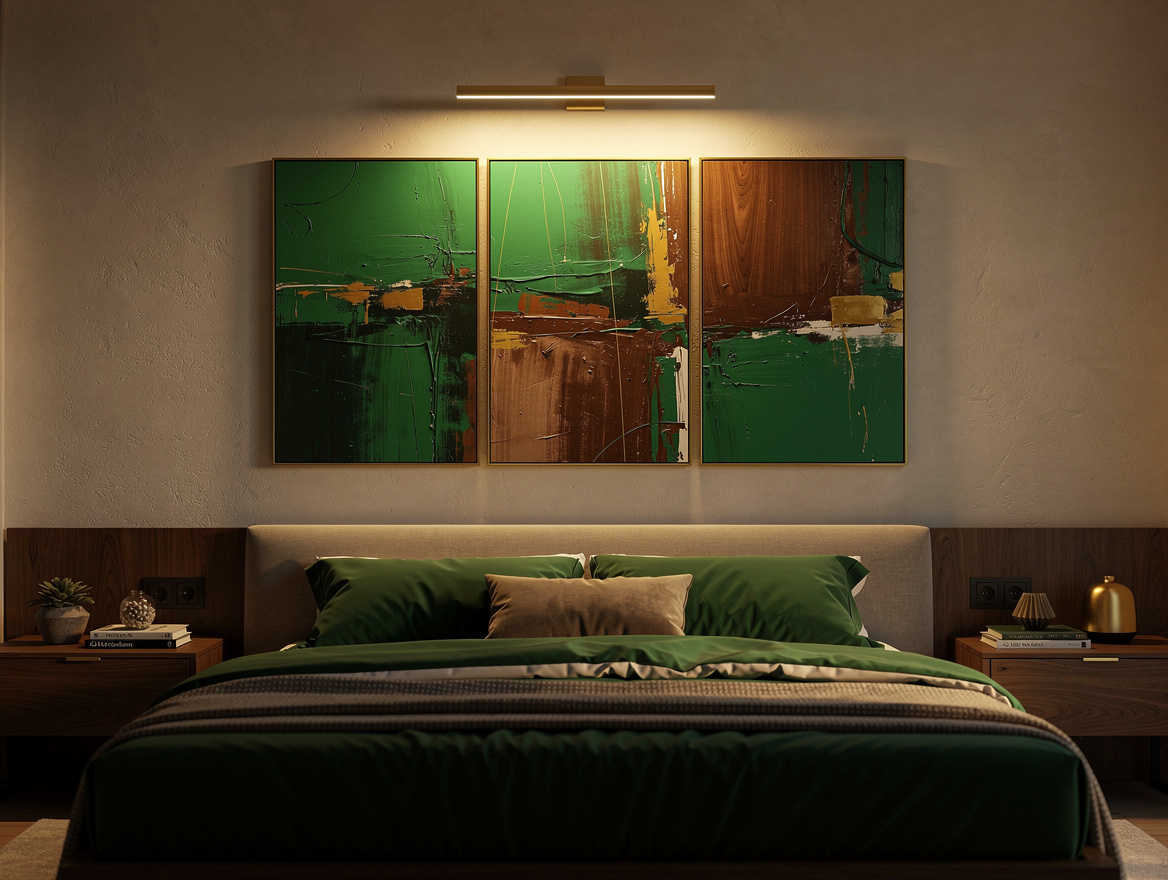
Start with the artwork, then tape its centerline and the proposed fixture width on the wall before buying anything. A dimmable satin brass light bar aimed at art will make the whole bed wall feel considered after dark.
Mia Carter writes about small-space living and budget home makeovers. She has restyled three rentals and tests most ideas in her own 45 sqm flat.