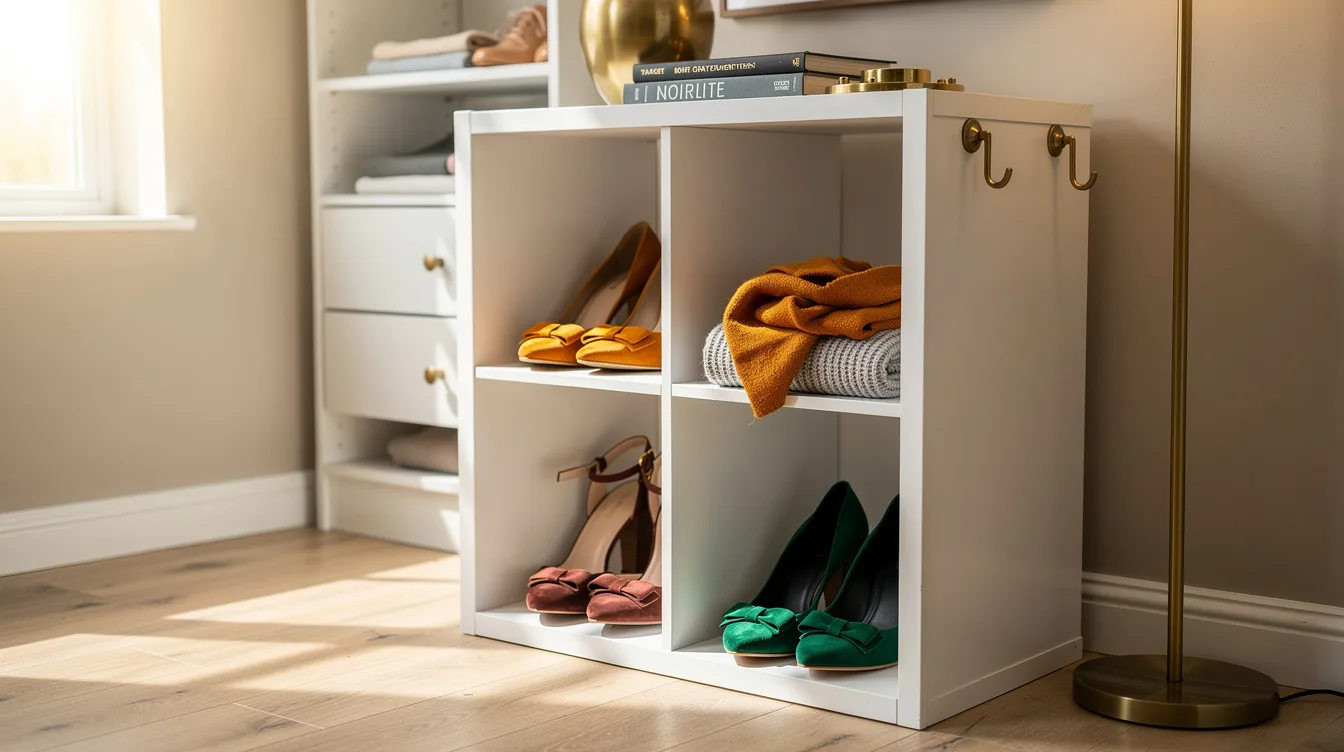
That dead closet corner beside the hanging clothes can swallow a surprising amount of floor space while holding almost no usable storage. Target cube organizers give it a job, with options from about $26 for a narrow three-cube tower to about $45 for a four-cube station.
The catch is sizing: the Brightroom name refers to the storage system, while the assembled furniture can be wider or deeper than expected. Measure the corner, the baseboard, and the closet door before choosing a shoe setup.
Measure the Corner Before Choosing a Cube
Start with the usable floor area, then check the door swing and the path your shoes take when you get dressed. The Brightroom labels can mislead shoppers because “11-inch” and “13-inch” describe the storage system, not the organizer’s outside width.
The three-cube model measures 12.24 × 11.73 × 35.94 inches, while the two-cube unit measures 15.9 × 14.6 × 30 inches upright. Those measurements matter more than the product name when a closet sidewall leaves only a narrow gap.
Leave a little breathing room around the frame for baseboards, uneven walls, and your hand. A quick cardboard template is worth making before you spend about $26 to $65 on a rigid organizer.
Build a Narrow Three-Level Shoe Tower
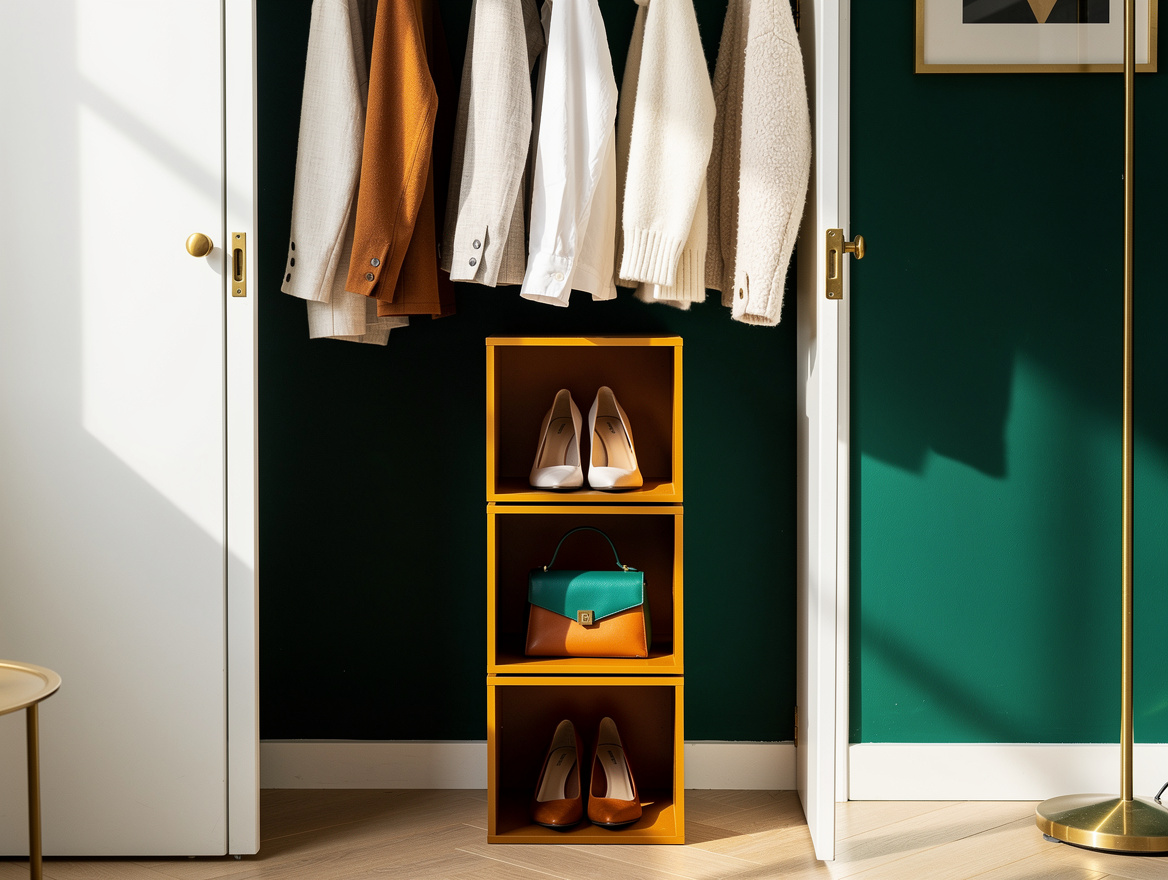
The about $26 Brightroom three-cube organizer is the strongest choice for a slim side gap. Its 12.24-inch width keeps the floor usable, and the three openings create an easy vertical landing spot for everyday shoes.
Use one compartment for sneakers, one for flats, and one for shoes you reach for less often. That is a planning estimate, not a manufacturer-rated capacity, so bulky boots may need their own location.
The particleboard frame has a paper-laminate surface and works best for light daily use. I would anchor the tower if children or pets can reach it, and I would skip stacking because Target lists this model as non-stackable.
Lay the Two-Cube Unit Under Hanging Clothes
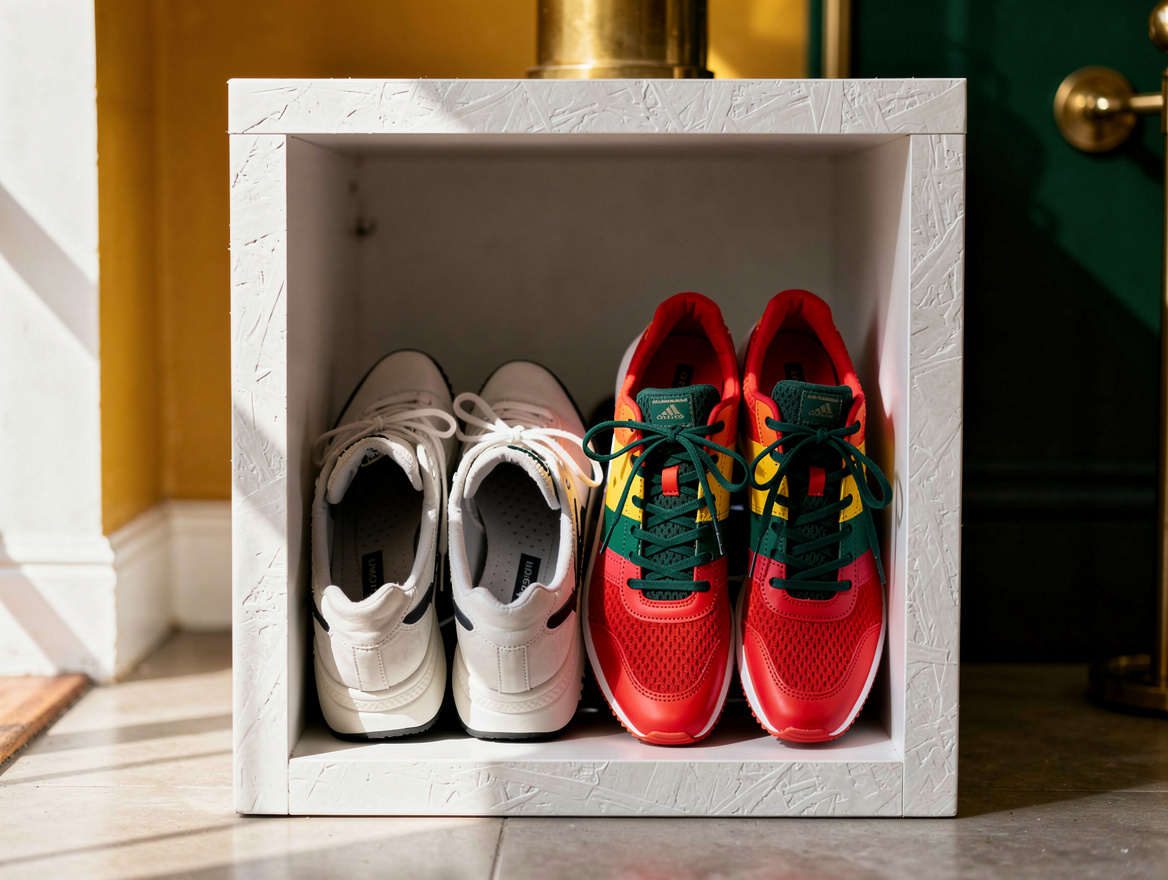
The about $35 Brightroom two-cube organizer earns its space by working in either direction. Upright, it measures 15.9 × 14.6 × 30 inches; horizontal, it becomes approximately 30 inches wide, 14.6 inches deep, and 15.9 inches high.
That lower profile makes it useful beneath short hanging clothes, especially along the back wall where a tall tower would interfere with hems. The MDF and particleboard construction gives it a more substantial footprint than the narrow tower, but the deeper body still needs a clear walkway.
Place the shoes you wear most near the open side and reserve the second cube for less frequent pairs. A slim tray or paper-laminate shelf liner inside each opening makes dust and grit easier to remove.
Create a 2 × 2 Shoe Station in the Deep Corner
Choose the about $45 Brightroom four-cube organizer when the corner has enough width for a compact station. Its listed footprint is 29.84 × 14.6 × 30 inches, giving you four compartments without the visual weight of a full closet system.
Set it against one wall near the corner and keep the openings facing the closet entrance. The square layout is especially practical for separating sneakers, work shoes, sandals, and occasional footwear without forcing every pair into a single pile.
Because the frame uses particleboard and paper laminate, keep wet or muddy shoes on a washable mat instead of placing them directly inside. The opinionated choice here is simple: use this model for organized daily rotation, not heavy storage for boots and gear.
Contain Seasonal Pairs in a Lidded Cube
For shoes that disappear between seasons, add the about $12 Brightroom fabric cube with a clear flap lid. It measures 17 × 17 × 12.8 inches, and Target advertises room for about eight pairs, depending on shoe size and shape.
This container belongs on the closet floor or a sturdy shelf, not inside the 11- or 13-inch cube shelving. Its canvas body bends around soft footwear, while the clear lid lets you identify the contents without opening another box.
Use the $65 six-cube organizer only when the corner has effectively become a wider closet wall, since it measures 43.8 × 14.6 × 30 inches. For a genuinely awkward corner, one rigid unit plus one lidded fabric cube is usually more useful than filling the whole wall.
Begin with the narrowest rigid unit that fits, then add a lidded fabric cube only for seasonal pairs. That order keeps everyday shoes visible and prevents an unused corner from becoming another hidden pile.
Mia Carter writes about small-space living and budget home makeovers. She has restyled three rentals and tests most ideas in her own 45 sqm flat.