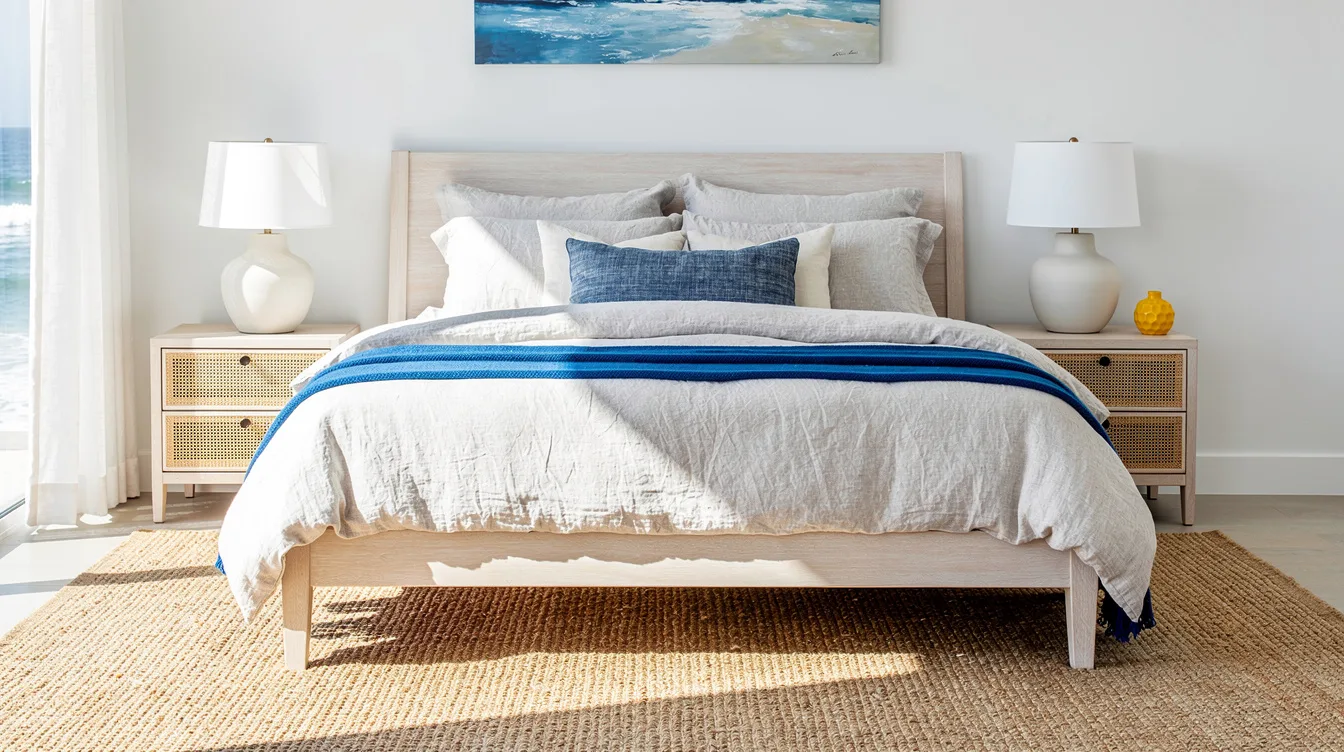
Coastal bedrooms often go wrong at the bed: a 54-inch-wide full mattress gets crowded by bulky rope decor, dark-blue pillows, and furniture trying too hard to look beachy. The 2026 version is quieter, built from pale wood, breathable linen, and woven fibers that suggest the shore without turning the room into a souvenir shop.
I’d rather see one imperfect linen coverlet than a complete matching “beach” set. Texture carries this look better than themed accessories ever will.
Build the Room Around Quiet Materials
A themed bedroom announces itself before you reach the bed. White oak, washed linen, and a softly textured floor create a coastal mood that feels current without one anchor, shell bowl, or striped flag in sight.
Keep the walls warm, using chalk white, soft sand, pale mushroom, or a light limewash effect. Bright white and dark navy make the room feel more like a rental beach house than a place you’ll want to sleep in every night.
Designers favor low contrast here because daylight can do the decorative work. A matte ceramic lamp and one aged-bronze detail are plenty.
Choose One Sea-Toned Accent
Blue in every corner is the fastest route to a dated nautical bedroom. Pick one restrained note, such as sea-glass green, misty blue, faded indigo, or muted sage, then let it appear once or twice.
A faded-indigo lumbar pillow against an oatmeal duvet has more impact than matching blue drapes, bedding, and artwork. The room needs visual breathing room, especially around a large bed.
For a safe apartment-friendly version, use an off-white landscape print and a single blue-gray cotton pillow. It reads calm contemporary even when the coastal references disappear.
Give the Bed Enough Texture
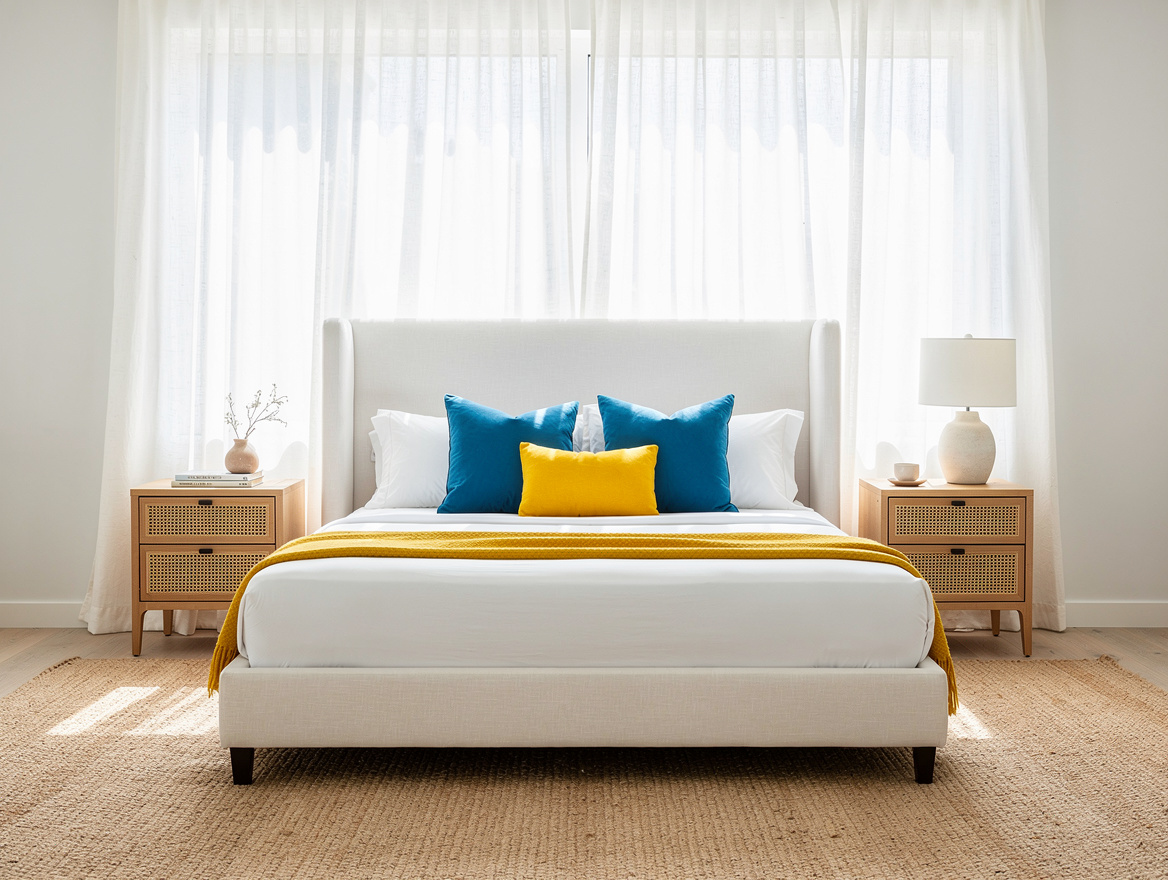
Flat, hotel-like bedding can make pale wood look cold. Start with a white or oatmeal European flax linen duvet, then add a quilted cotton coverlet and one substantial throw.
A duvet should typically fall about 12 to 18 inches past each side of the mattress. That extra length makes a low-profile oak bed feel grounded, while a too-small comforter makes the whole setup look skimpy.
Skip a pile of decorative pillows. A linen lumbar pillow, a soft cotton blanket, and rumpled sheets give the bed the relaxed finish designers actually want.
Scale Woven Pieces to the Bed
One tiny rattan nightstand beside a queen bed looks accidental. Choose a pair of woven-rattan nightstands with closed storage, typically around 20 to 26 inches wide, so they hold a lamp, water glass, and the clutter you don’t want to see.
The nightstand top should land roughly 2 to 3 inches from mattress height. That small alignment detail makes a bedroom feel considered, and it is more useful than buying a matching furniture set.
A slim seagrass bench at the foot of the bed works when there is room to walk around it. Leave roughly 30 to 36 inches of clearance beside the bed and in front of dresser drawers whenever the layout allows.
Cover More Floor With Natural Fiber
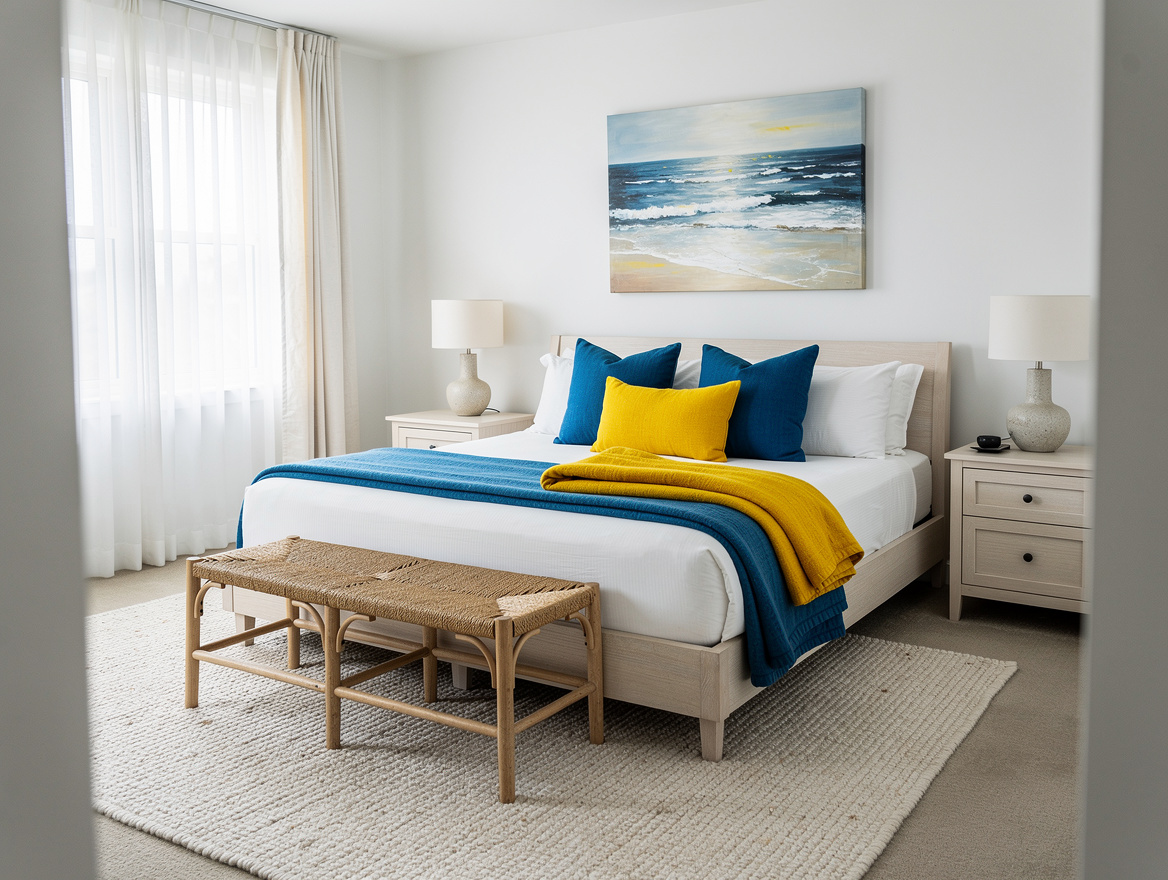
A small rug floating under the lower third of the bed breaks the room into awkward pieces. For a queen bed, a rug typically around 8 by 10 feet gives your feet a soft landing and lets the nightstands remain visually connected to the bed.
Pure jute brings good texture but can feel rough first thing in the morning. A wool-jute blend or flatweave wool rug keeps the same natural look with a kinder surface.
Use a large seagrass rug only if you like its firmer feel and crisp weave. This is one place where comfort should beat the urge to copy a coastal photo.
Start with the largest surface you can change, usually the bedding or rug, and make it natural, pale, and touchable. Once that foundation is in place, one muted sea-toned accent is enough to carry the whole coastal idea.
Mia Carter writes about small-space living and budget home makeovers. She has restyled three rentals and tests most ideas in her own 45 sqm flat.