Your living room on a Tuesday afternoon when you step around the storage ottoman, sidestep the magazine rack, and realize the 186-square-foot space holds $1,400 worth of furniture but still feels like a blocked hallway. Everything sits on the floor because that’s where furniture goes. But the walls above 34 inches stay empty while you navigate around baskets and the corner plant stand that blocks the window.
Vertical living moves storage and style upward instead of outward. A Chicago condo that added floor-to-ceiling shelving reported a 30% perceived height increase without losing a single square foot. The walls did the work the floor couldn’t.
Floor storage makes small rooms feel shorter by blocking sight lines at eye level
Low storage creates visual clutter at the exact height where your eyes naturally scan a room. The 28-inch credenza stops your gaze before it reaches the wall, making the room feel six inches shorter than it measures. That’s not a decorating problem, it’s a spatial mechanics problem.
ASID-certified interior designers note that vertical elements pull the eye upward, creating the illusion of taller ceilings. The 18-inch ottoman and the 24-inch side table fragment the space into obstacle zones rather than continuous flow. And the walls above 36 inches hold potential but stay unused, which is the real waste.
What makes this frustrating is that renters complain about the same thing constantly. Everything is on the floor. The room feels cramped. But the solution sits empty on the wall plane, untouched.
Tall shelving reclaims 14 cubic feet without adding floor furniture
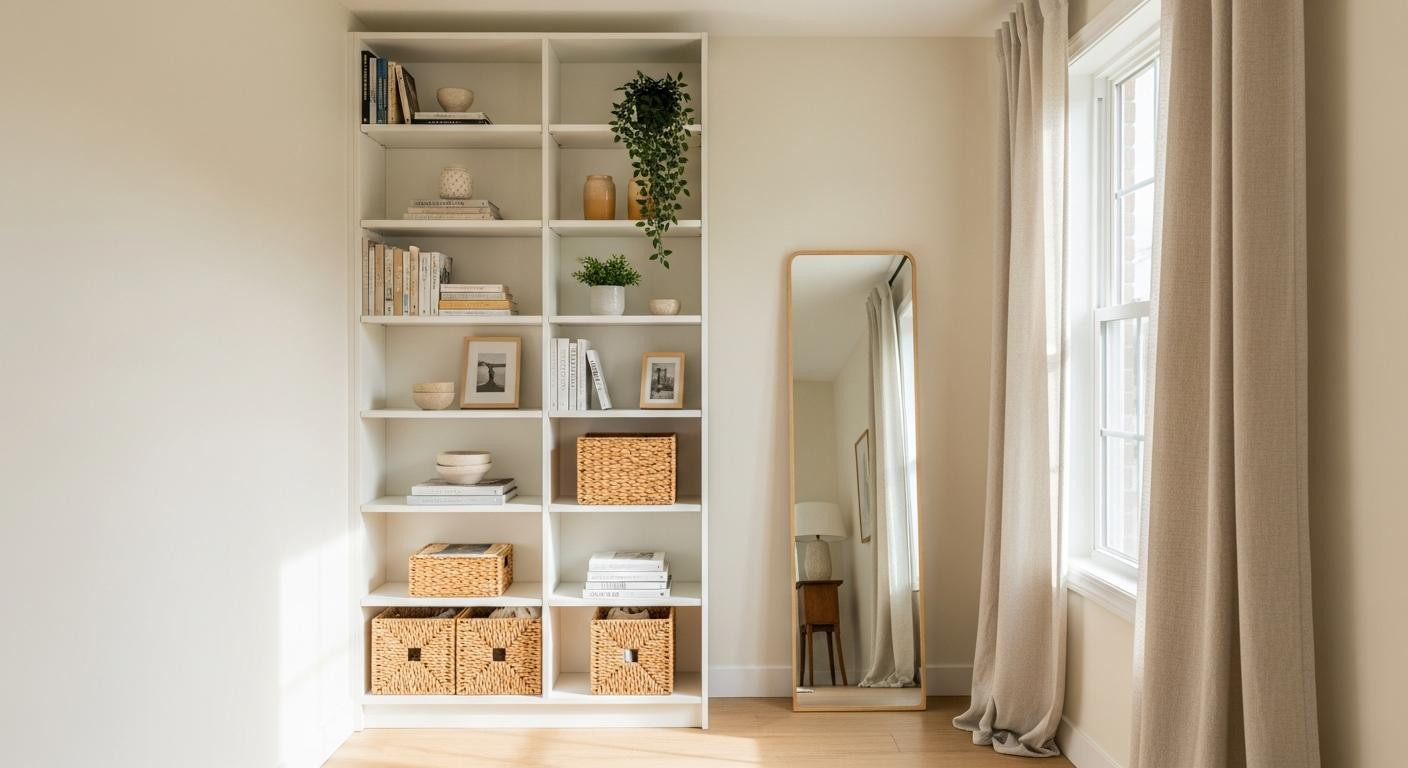
A 6-foot-tall bookcase occupies the same 24-inch footprint as a 3-foot version but doubles storage capacity. The vertical version keeps books, baskets, and decor off surfaces, clearing visual breathing room. IKEA Billy bookcases run $79 for 79.5-inch versions with adjustable shelves rated to 66 pounds each.
West Elm Mid-Century options cost $599 for 84-inch heights with integrated cabinets. The price difference buys you finish quality and concealed storage, but both versions solve the same core problem. They take storage vertical instead of horizontal, which is what makes cramped living rooms feel breathable again.
Wall-mounted shelves free 100% of floor area
Brackets mounted at 48 inches and 72 inches create two storage zones without consuming walking space. The floating effect makes ceilings feel higher because the eye travels upward along the shelves. Target sells 36-inch wall shelves for $34, while CB2 offers powder-coated metal versions for $89.
Renters can use heavy-duty wall anchors rated to 50 pounds that leave patchable holes smaller than a pencil eraser. The trick is choosing toggles for drywall and expansion anchors for plaster, both of which landlords consider normal wear in major rental markets. And the result is storage that doesn’t steal floor space or make the room feel cluttered.
Vertical mirrors double perceived ceiling height by reflecting upper walls
A 72-inch mirror propped against a wall catches light from windows and bounces it upward, illuminating the ceiling plane. This reverses the cave effect created by low furniture. The reflection makes the room read as two vertical layers instead of one compressed horizontal slab.
West Elm’s Floating Wood mirrors run $399 for 76-inch heights with warm oak frames. Target’s threshold versions cost $89 for 65 inches, which still delivers the height effect in rooms with standard 96-inch ceilings. The frame finish matters less than the vertical dimension, which is what creates the spatial payoff.
Tall mirrors work best opposite windows, not adjacent
Positioning the mirror across from the light source doubles the brightness without creating glare. In north-facing rooms under 250 square feet, this setup adds perceived warmth and height simultaneously. The mirror should reach within 12 inches of the ceiling to maximize the elongation effect.
Designers with residential portfolios recommend placing the mirror at least six feet from the window to avoid harsh reflections. That distance lets the light bounce softly across the room instead of creating a glare zone. The warmth of reflected morning light against white walls is what makes this trick feel expensive, not staged.
High-hung curtains add 8 inches of visual height for $47
Mount curtain rods 4 inches below the ceiling, not at window-frame height. The fabric draws the eye to the ceiling line, making the wall read as taller. IKEA Ritva linen panels cost $39.99 for 98-inch lengths, while Pottery Barn’s Belgian Flax versions run $129 for 108 inches.
The rod itself should sit at 88 to 92 inches in standard apartments with 96-inch ceilings. This only works if curtains puddle slightly or just graze the floor. Floating curtains expose the trick and break the illusion, which makes the room feel shorter instead of taller.
What makes this upgrade effective is that it costs less than $50 but creates the same visual impact as custom millwork. The linen texture softens the wall plane while the vertical lines pull the eye upward. And that’s the kind of detail that quietly transforms a rental into something that feels considered, not temporary.
Your questions about vertical living answered
Can renters drill into walls for vertical shelving?
Yes, if you use wall anchors rated for your wall type and patch holes with spackle on move-out. Most landlords in NYC, LA, and Chicago accept nail holes under 1/4 inch as normal wear. Heavy-duty toggles hold 50-plus pounds and leave repairable damage that costs less than $5 to fix.
Does vertical storage work in rentals with low ceilings?
Especially. Rooms with 8-foot ceilings benefit most from vertical tricks because every inch of perceived height matters. Floor-to-ceiling drapery and tall mirrors compensate for the compression, which is what makes budget rooms look more expensive without adding square footage.
What’s the cheapest vertical upgrade?
Rearranging what you own. Move the floor lamp to a wall-mounted sconce position. Stack books vertically on floating shelves instead of horizontally on the coffee table. Costs zero, adds 4 to 6 inches of perceived height, and clears floor space immediately.
Professional organizers with certification confirm that vertical stacking reduces visual clutter by 40% compared to horizontal spreading. The room doesn’t hold more, it just reads as calmer. And that shift in perception is what makes small changes feel transformative without requiring renovation.
Your living room at 6pm when you walk past the new floor-to-ceiling shelf without stepping around anything. The baskets sit at 60 inches now, not 18. Light travels from the window to the opposite mirror and back, doubling the brightness.