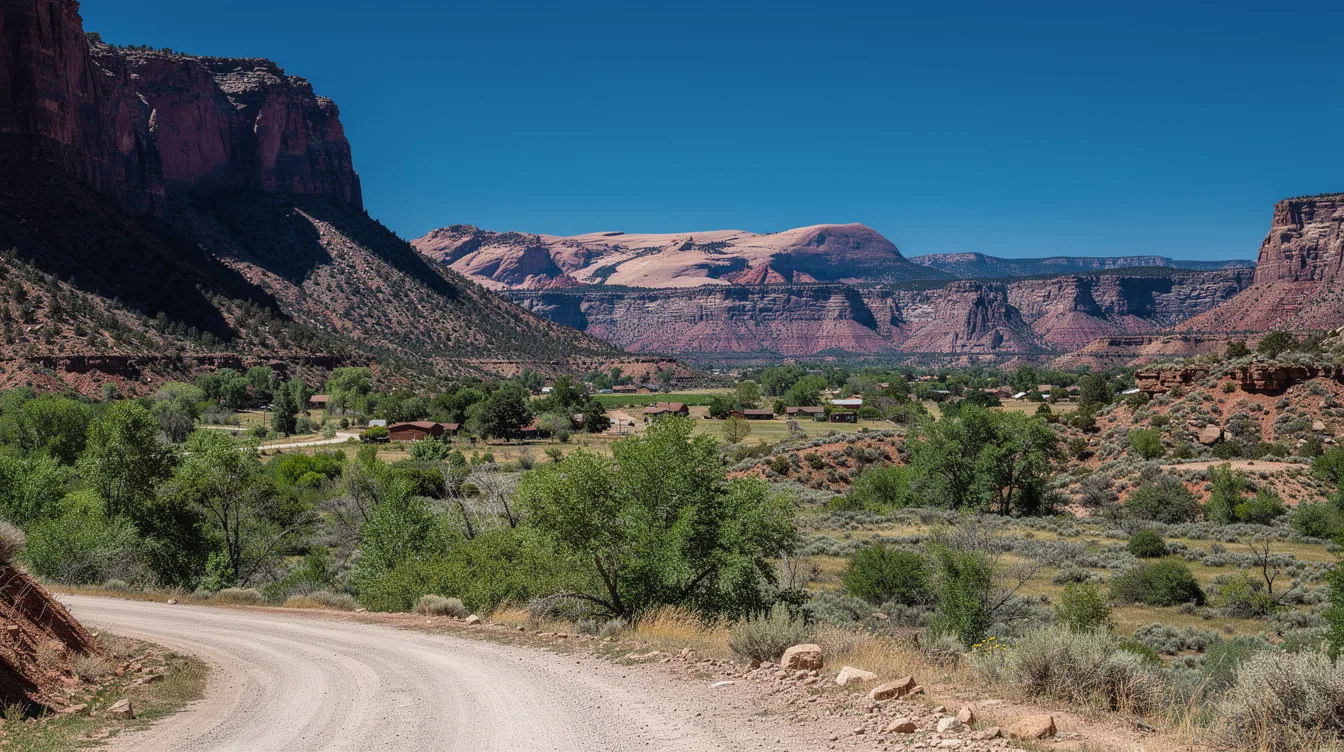
Boulder, Utah stayed isolated until 1939 because it had no road that could be used year-round. Yet mail still arrived by mule train, a detail that explains why this small Garfield County town feels set apart even now.
The town says it was among the last communities in the continental United States to receive mail this way. That claim gives Boulder more than an old-West hook. It tells you how hard reaching this high-desert outpost once was.
A 1939 road changed Boulder, but not its pace
Before the year-round road opened, Boulder’s connection to the outside world depended on mule-delivered mail. 1939 changed access, but it didn’t turn the town into a busy gateway packed with chain hotels and nightlife.
And that’s the appeal. You arrive on Scenic Byway 12 and immediately feel the scale shift: a quiet settlement and the dry, dusty smell that follows a warm day on desert roads.
Today, Boulder had just 227 residents in the 2020 Census. That small number matters because services are limited, so this is a place for travelers who want space rather than a full menu of conveniences.
But remote doesn’t mean unreachable. Boulder sits about 27 miles northeast of Escalante, and the drive places it squarely within southern Utah’s canyon country without making the town feel overrun.
Scenic Byway 12 is the route, not just the approach
Scenic Byway 12 runs through Boulder, and it’s part of the experience rather than a stretch to rush through. South of town, the Hogsback section adds drama.
And if you’re the passenger, keep looking up from the map. The light can flatten the high desert into pale bands, then sharpen the edges again as the sun drops and the air cools.
Boulder sits at roughly 6,700 feet, which is why summer nights can feel cool after a hot afternoon. Pack for that change. It can catch unprepared visitors off guard.
The Burr Trail meets the byway here, offering a route toward Capitol Reef and remote backcountry. Burr Trail is a compelling reason to stop, though parts of it are unpaved and rain can make dirt roads impassable.
Grand Staircase and Capitol Reef pull in opposite directions
Boulder works best as a base because it sits near Grand Staircase-Escalante National Monument and the broader Capitol Reef area. You can spend a day around canyons and slickrock, then return somewhere quieter than larger park towns.
But don’t mistake quiet for empty entertainment. Hiking, camping, stargazing, and scenic driving are the point here, and they ask you to bring your own curiosity instead of expecting a schedule to do the work.
Capitol Reef National Park lies within the wider Highway 12 and Burr Trail area. Capitol Reef adds another reason Boulder suits travelers who prefer moving slowly through one region instead of checking off distant stops.
At the same time, Boulder is not the place to improvise on wet roads. Check conditions locally before heading onto unpaved routes, especially after rain, because the same isolation that feels thrilling can become a practical problem.
What Boulder gives you, and what it doesn’t
Anasazi State Park Museum gives the town a stop beyond the road and the views, with a focus on the area’s ancestral Puebloan history. It’s worth considering when you want context, not another long stretch behind the wheel.
And Boulder is candid about its limits through sheer scale. There are limited services, no major-chain rhythm, and no promise that every road will cooperate. You come here to slow down, not to have every decision made for you.
The town’s ZIP code is 84716, a tiny practical detail that somehow fits the place. Even the address feels spare, as if Boulder has always required visitors to know exactly where they’re headed.
By evening, the road noise fades quickly. The sky darkens over the high desert, the air turns cool, and Boulder feels close to the version of itself that still waited for the mule train.