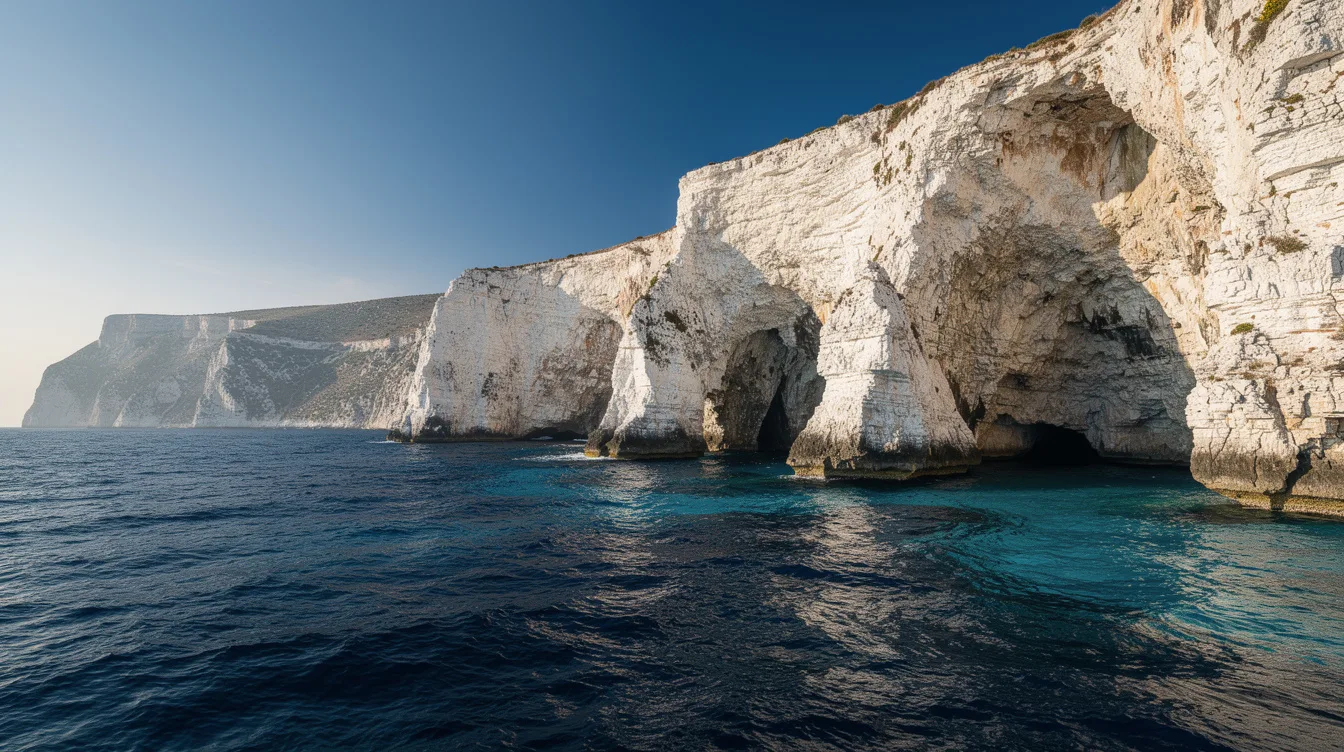
Paxos sits just south of Corfu, but its western edge feels far more remote. Eroded white limestone cliffs drop into bright blue sea caves, and the only convincing way to see them is from the water. You’ll trade easy beach access for a coastline that rewards a boat.
And that trade is the island’s whole appeal. The coast is exposed, the caves are difficult or impossible to reach by road, and the water seems almost too clear beneath the chalky rock. Paxos is calm and polished, but never entirely effortless.
Why the western coast belongs on your boat route
At sea level, erosion has hollowed the western cliffs into caverns that glow blue from within. The cliffs look stark in full sun, then turn gray and cool when your boat slips close to the rock. This is the side of Paxos that photographs honestly.
But you won’t find a string of large, organized beaches here. The coast is more dramatic than convenient, so book a boat excursion or arrange a water taxi from the eastern ports. I’d choose the western outing over another afternoon on a crowded beach.
From the water, the contrast is immediate. The east coast is gentler and more settled, while the west gives you steep chalk, open sea, and caves that seem to continue beneath the island. You can swim when conditions allow, but the boat remains the essential viewpoint.
And the timing matters. May to June and September through early October bring a quieter rhythm than July and August, with more room around the ports and excursions. The sea is still the focus, but you won’t spend every hour negotiating peak-season crowds.
Gaios makes the first stay easiest
Gaios is Paxos’s main port and the simplest base for a first visit. Small ferries arrive here, restaurants line the waterfront, and the harbor is sheltered by the islets of Agios Nikolaos and Panagia. The scene is lively, but never loud.
But Gaios is also where the island feels busiest. If you want a quieter evening, look toward Loggos, a smaller port with a more residential mood. You’ll give up some logistical ease, yet dinner beside the water feels less like an itinerary item.
Beyond the harbor, Lakka curves around a protected bay filled with sailboats. It suits travelers who care more about swimming and slow mornings than a packed sightseeing schedule. You’ll still need to accept narrow roads and limited public transport.
On a practical note, the island covers about 9.8 square miles, and its highest point reaches roughly 755 feet. Distances are short, but that doesn’t make every journey quick. Roads can be narrow, and a car or scooter gives you freedom that buses can’t always provide.
How do you reach the caves from the United States?
You’ll fly to Corfu, then continue by sea because Paxos has no airport. The island lies about 9.3 miles south of Corfu’s southern tip, and the crossing to Gaios usually takes 1 to 2 hours, depending on the service and conditions.
And the sea crossing shapes the trip from the beginning. Fast boats, ferries, and sea taxis connect Corfu with Paxos during the tourist season, while ferries also run from Igoumenitsa on mainland Greece. Weather can affect services, especially outside summer.
Once you arrive, don’t build your plans around frequent buses. Boat taxis and excursions are more useful for reaching the western caves and nearby Antipaxos. You can walk between parts of town, but the best water is usually beyond the road network.
Can you add Antipaxos?
Yes, and Antipaxos works well as a half-day or full-day boat trip. Its turquoise water and beaches, including Voutoumi and Vrika, make an easy companion to the cave excursion. Go early or outside the busiest summer weeks if you want space to swim.
A quiet island with one historical surprise
For a small island, Paxos carries an unexpectedly sharp historical edge. The 229 BC Battle of Paxos appears in Polybius’s account, linking this quiet harbor country to the First Illyrian War. You can spend the morning in clear water, then remember that fleets once fought nearby.
But history isn’t the main reason to come. Paxos is better suited to four to six nights of swimming, boat rides, and unhurried meals than to an ambitious cultural checklist. I’d choose it when you want the sea to set the schedule.
The island’s old olive groves, Venetian houses, and small pebble coves soften the drama of the western coast. Still, there are limits: nightlife is modest, long sandy beaches aren’t the draw, and summer rooms and boats fill early.
By late afternoon, the cliffs lose their glare and the caves darken to cobalt. Your boat turns back toward Gaios, leaving only the sound of the motor and white rock above the water.