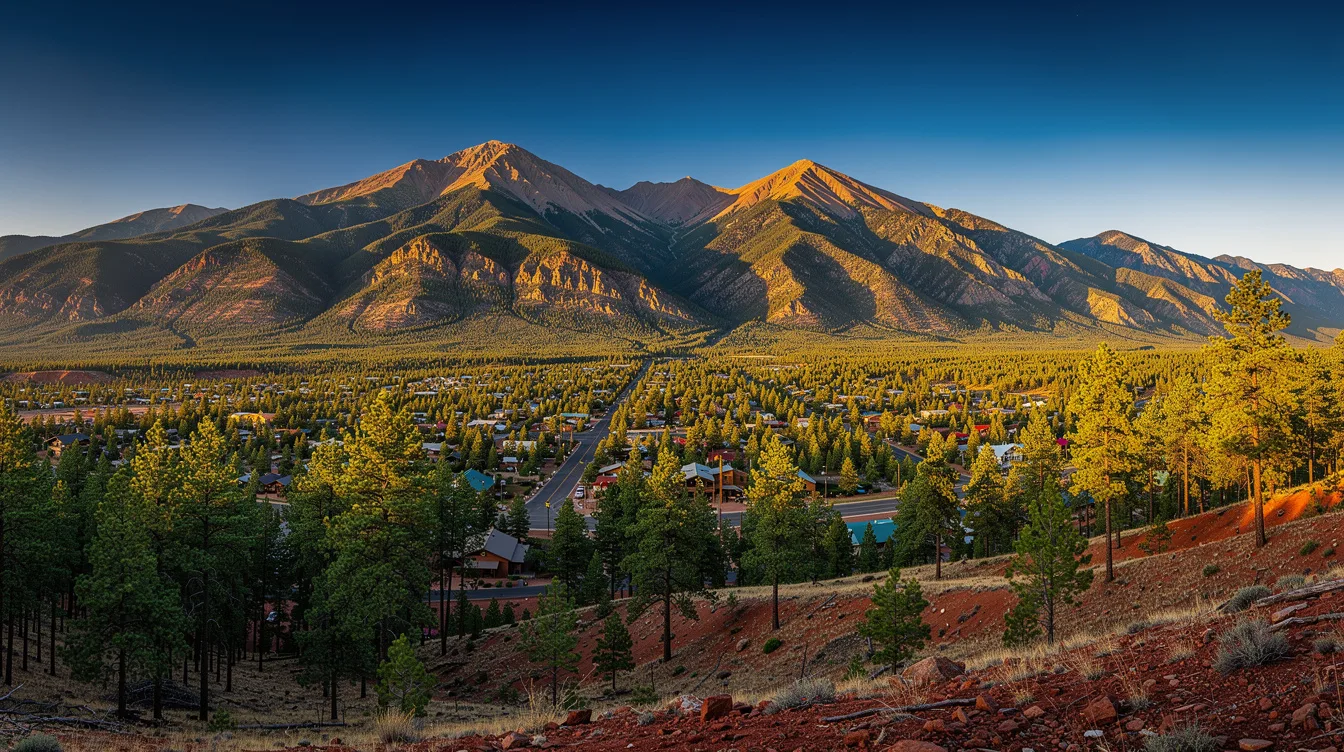
Flagstaff is a mountain town in northern Arizona where night gets the final word. It became the first officially recognized International Dark Sky Community, and that distinction makes more sense once you see how much of the town’s identity points upward.
You can come for the Grand Canyon or a break from Phoenix heat. But after dusk, the reason to stay is simpler: Flagstaff treats the sky as part of the trip, not background scenery.
The recognition starts with a sky-first identity
Flagstaff earned International Dark Sky Community recognition because astronomy is woven into the place. It isn’t an abstract badge for visitors to photograph. The designation tells you that darkness itself matters here, especially after a day spent under Arizona’s hard sun.
And this is not a town claiming a cosmic connection after the fact. Lowell Observatory is one of Flagstaff’s defining stops, and Pluto was discovered there in 1930.
You’ll feel the contrast at night. Downtown has restaurants, craft breweries, a university-town pulse, and passing trains. But the wider appeal is quieter, with the night sky giving Flagstaff an atmosphere that most road-trip towns can’t manufacture.
That recognition also fits the town’s mountain setting at the foot of the San Francisco Peaks. The view isn’t promised on a schedule, and clouds can have their say. Still, a town built around observatory visits gives you a better reason to look up than a quick glance between dinner and bed.
Lowell Observatory makes the case in person
At Lowell Observatory, the dark-sky story becomes tangible. You’re not simply reading a plaque about a distant discovery. You’re visiting the place tied to Pluto, then stepping back outside with the same broad Arizona sky overhead.
And that’s why the observatory is worth prioritizing over a rushed list of nearby sights. Flagstaff has plenty around it, but this is the stop that directly explains the town’s International Dark Sky Community status.
The experience has an honest limit. A clear night matters, and you can’t order stars the way you order a local beer. But even a cloudy evening puts you in a town where astronomy has shaped the visitor experience for generations.
Flagstaff was founded in 1876, long before dark-sky recognition became travel shorthand. Its astronomy connection gives the town a focused identity, rather than another vague claim to be a four-season escape.
A cooler Arizona base, with real trade-offs
Flagstaff sits about 149.1 miles north of Phoenix, at the junction of I-17 and I-40. That makes it a practical change of scene when desert heat feels relentless, because summers here are milder than in much of Arizona.
But pack layers anyway. Even in summer, evenings can turn cool, and winter brings snow. That seasonal shift is part of the appeal, though it also means you should watch road conditions when heading toward Snowbowl or the Grand Canyon.
You can use Flagstaff as a base for the Grand Canyon South Rim, about 80.8 miles north. It’s manageable as a day trip, though spending a night at the canyon gives sunrise and sunset more room to breathe.
Beyond the canyon, Walnut Canyon, Sunset Crater Volcano, and Wupatki are reachable by car. That’s a lot of territory, but Flagstaff works best when you don’t turn it into a mileage contest. Save some energy for after dark.
What to do before the stars come out
Start downtown, where Route 66, restaurants, breweries, and the railroad give the town its daily rhythm. It’s lively, but it doesn’t need to be loud. Northern Arizona University keeps the streets active without making the place feel like a campus visit.
And if you want mountain time, Arizona Snowbowl and the San Francisco Peaks bring skiing and high-elevation activities into the picture. Humphreys Peak is Arizona’s highest point, so this part of the state doesn’t resemble the usual postcard version of Arizona.
Can you visit year-round? Yes. Snowy winters and gentler summers give Flagstaff a broader season than many desert stops, though winter driving requires more attention than a carefree summer road trip.
For flights, Flagstaff Pulliam Airport is local, while Phoenix is the more practical major-air access point for many travelers. Arizona stays on UTC-7 all year, without daylight saving time, so the clock stays steady even when the evening air changes.
By the time downtown settles and the last train sound fades, the reason for Flagstaff’s recognition is overhead: a dark sky that still gets treated like something worth protecting.