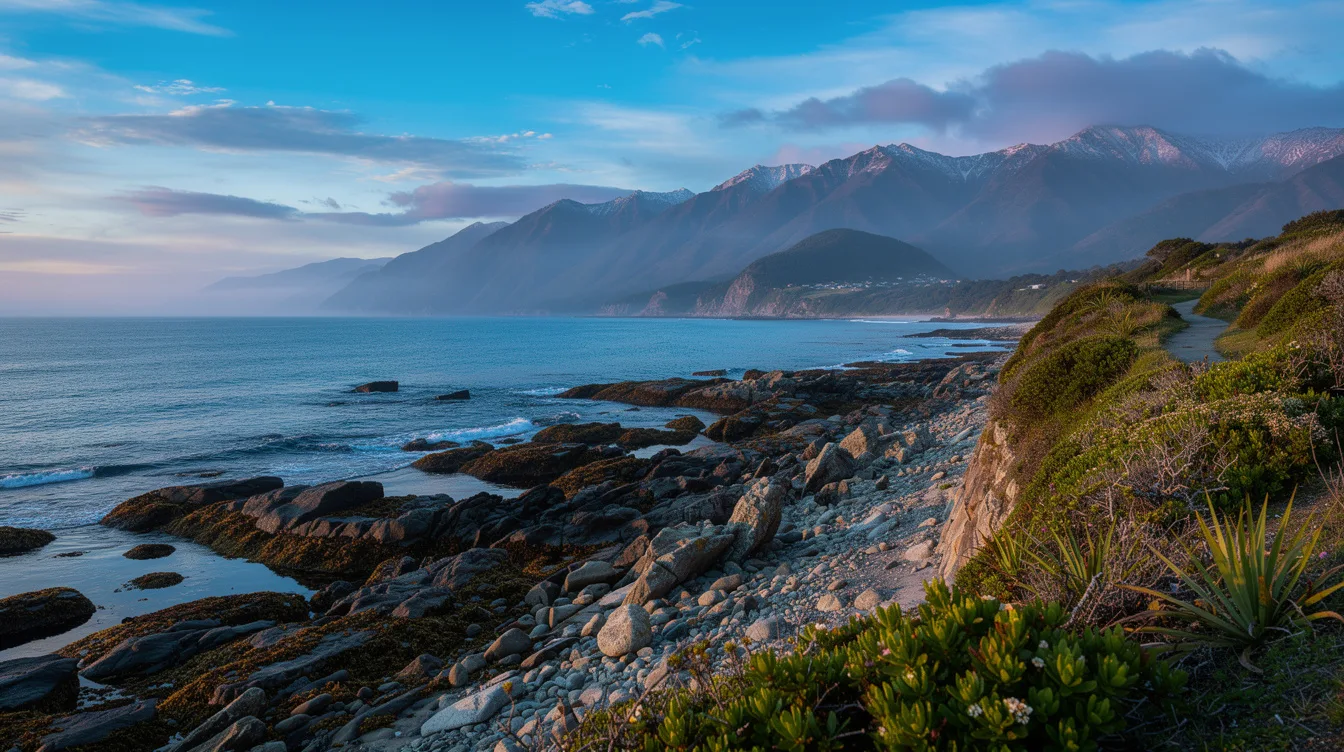
But Kaikōura puts sperm whales close to shore for a very specific reason. A submarine canyon drops into deep water only 0.62 miles from the coast, creating a rich feeding ground beside the South Island.
And that geography changes the entire outing. You don’t need a long voyage into open ocean before the first serious wildlife encounter. The coast feels compact, but the water below it is anything but shallow.
The canyon drops fast beside the peninsula
But the Kaikōura Canyon begins with relatively shallow water before falling rapidly into deeper water.
And that sudden depth is the central answer to the question. Deep water usually sits far offshore, while here it reaches almost the shoreline south of the Kaikōura Peninsula. The canyon’s ecosystem supports marine life.
That concentration of food draws marine mammals into a narrow coastal zone. You can feel the scale of it from land, where the Seaward Kaikōura Range rises behind the Pacific and the water begins almost at your feet.
For more context on New Zealand’s coastal geography, this South Island travel guide helps place Kaikōura within the wider route.
Why sperm whales stay near Kaikōura
And sperm whales come close because the canyon gives them access to deep, productive water without a long journey offshore. That isn’t a lucky sighting trick. It’s the physical reason whale watching became Kaikōura’s signature experience.
But the sea still makes the schedule. Wind and rough water can cancel a trip, so you should leave room in your itinerary instead of treating one departure as guaranteed.
My opinion is simple: plan for two nights if whales are the point of your visit. One night can work, but an extra morning gives you a better chance when weather interrupts the first attempt.
Can you see whales from land?
Yes, but boat trips are the central way to search the canyon waters. From the peninsula, you’ll find a stronger experience watching New Zealand fur seals, seabirds, the rocky coast, and mountains that may carry snow in clear weather.
The seals are close enough to tempt careless photographs. Keep your distance, and never stand between one and the sea.
Getting there takes less than a morning
But Kaikōura remains easy to add to a South Island journey. The town sits 111.8 miles north of Christchurch, with a drive of about 2 hours 20 minutes to 2 hours 30 minutes via State Highway 1.
And from Picton, the drive takes about two hours. That makes Kaikōura a practical pause between Christchurch and Marlborough before continuing toward the ferry to Wellington.
You can also arrive on the Coastal Pacific train between Christchurch and Picton. I like the train option for travelers who’d rather watch the coast slide past than concentrate on a long road.
Check the route before leaving, because Kaikōura’s roads and railway were heavily damaged by the 2016 earthquake and later reopened after major repairs. The town is remote in feel, but it isn’t difficult to reach.
Walk the peninsula when the sea turns rough
And the Kaikōura Peninsula Walkway gives you a worthwhile land-based plan when boats can’t leave. The route brings together seals, seabirds, rocky shore, and mountain views in a compact outing.
But don’t expect a substitute for the whale trip. The walkway’s appeal is its changing edge, where salt air, bird calls, and the Pacific keep your attention moving.
You should go when the weather is clear if mountain views matter. The coast remains interesting in cloud, though the scene loses some of its sharp contrast when the ranges disappear.
Beyond the peninsula, Kaikōura is better suited to nature and seafood than urban wandering. That limitation is part of its appeal, especially if you want a quiet stop after a busier city.
March to May gives you the right balance
But March to May, during New Zealand’s autumn, is the strongest compromise between weather, light, and visitor numbers. The days feel gentler, and the season often brings a calmer rhythm to the town.
And you can still choose summer for milder weather and longer days, though December through February is busier. Winter brings a quieter mood and sometimes snow on the mountains, but maritime conditions are less predictable.
The town’s Māori name refers to a meal of crayfish, and local crayfish remains the signature food. Order it when available, then eat simply near the coast while the light fades over the water.
By late afternoon, the mountains darken and the Pacific turns steel-colored. Somewhere below the surface, the canyon keeps feeding whales close to shore.