I got tired of knocking my water glass into a bedside lamp every time I reached for a novel. In my bedroom, the useful mounting target became the center of each fitting about 100 to 120 cm above the finished floor, high enough to clear the mattress without making the wall feel crowded.
The change worked because I stopped shopping for wall lights as decoration. A bedroom needs reading light at the pillow and a soft, low setting that lets your eyes settle before sleep.
Mount Each Light Around the Bed, Not Above the Headboard
I placed each painted-steel IKEA NYMÅNE wall lamp beside the bed instead of centering one fixture above it. A pair gives each sleeper control, and IKEA has listed this compact wired reading style at about €19.99 in Germany, a useful reference point when comparing basic directional sconces.
Set the center roughly 30 to 45 cm above the mattress top, then check it while sitting upright in bed. The furthest rigid edge should sit flush with, or within, the bedside-table depth, so nobody clips it with a shoulder in the dark.
Choose Warm Dimming Before You Choose a Finish
A pretty fixture with a harsh low setting is a bedtime mistake. I look for 2700K warm LED bulbs, or warmer 2200K options when available, because that softer tone feels calmer against bedding and does less to turn a restful room into a work zone.
Pay attention to low-end dimming, not the bright showroom setting. A quality dimmable bulb or driver should fade gently; a cheap one can stay oddly intense until the last inch of its dimmer range, which defeats the point after lights-out.
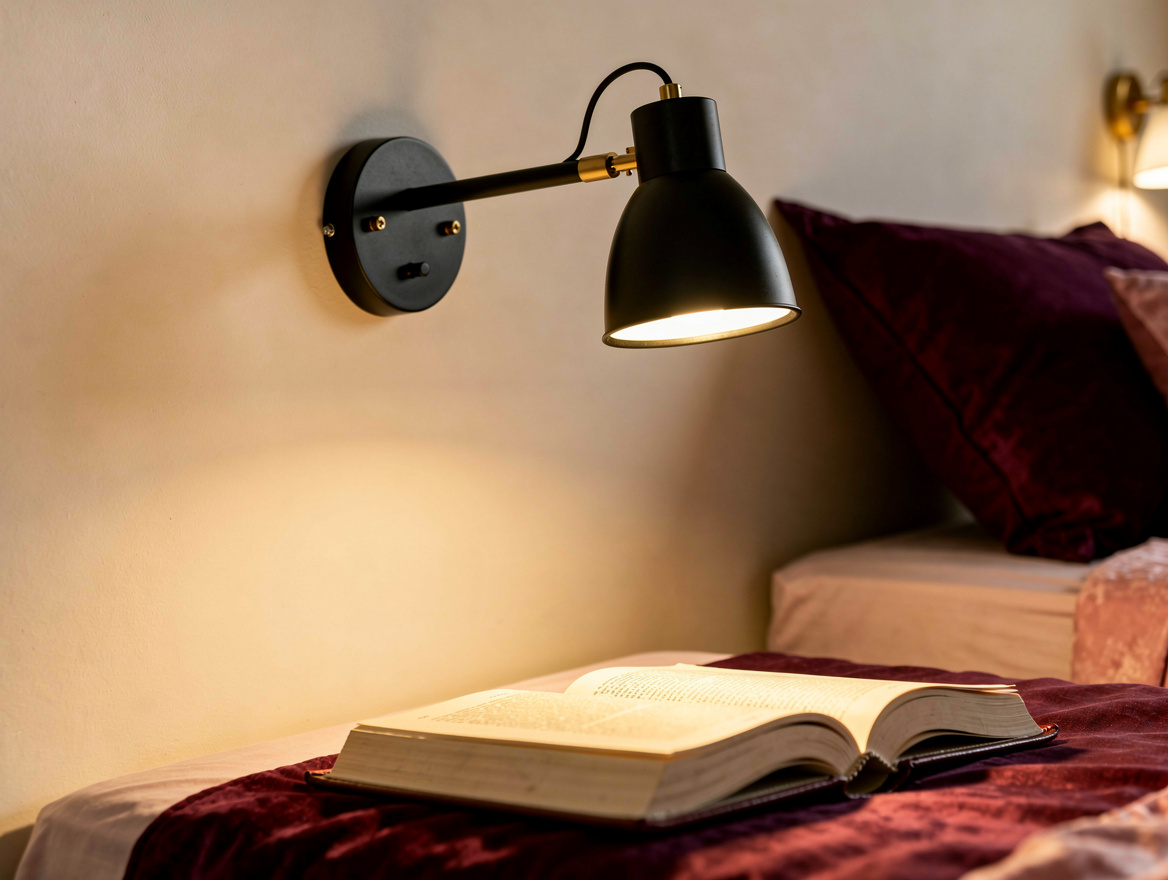
Aim Adjustable Heads at the Page
For anyone who reads in bed, an adjustable reading sconce earns its wall space faster than a decorative globe. A black powder-coated steel spotlight with a directional head keeps the beam on a book rather than sending it across your partner’s pillow.
Compact heads are the least fussy choice: typical fittings run roughly 10 to 18 cm wide with about 15 to 30 cm of projection. I favor a separate local on-off control, because reaching across a nightstand for a cord is exactly the annoyance wall lighting should remove.
Use Fabric Shades to Soften a Traditional Bedroom
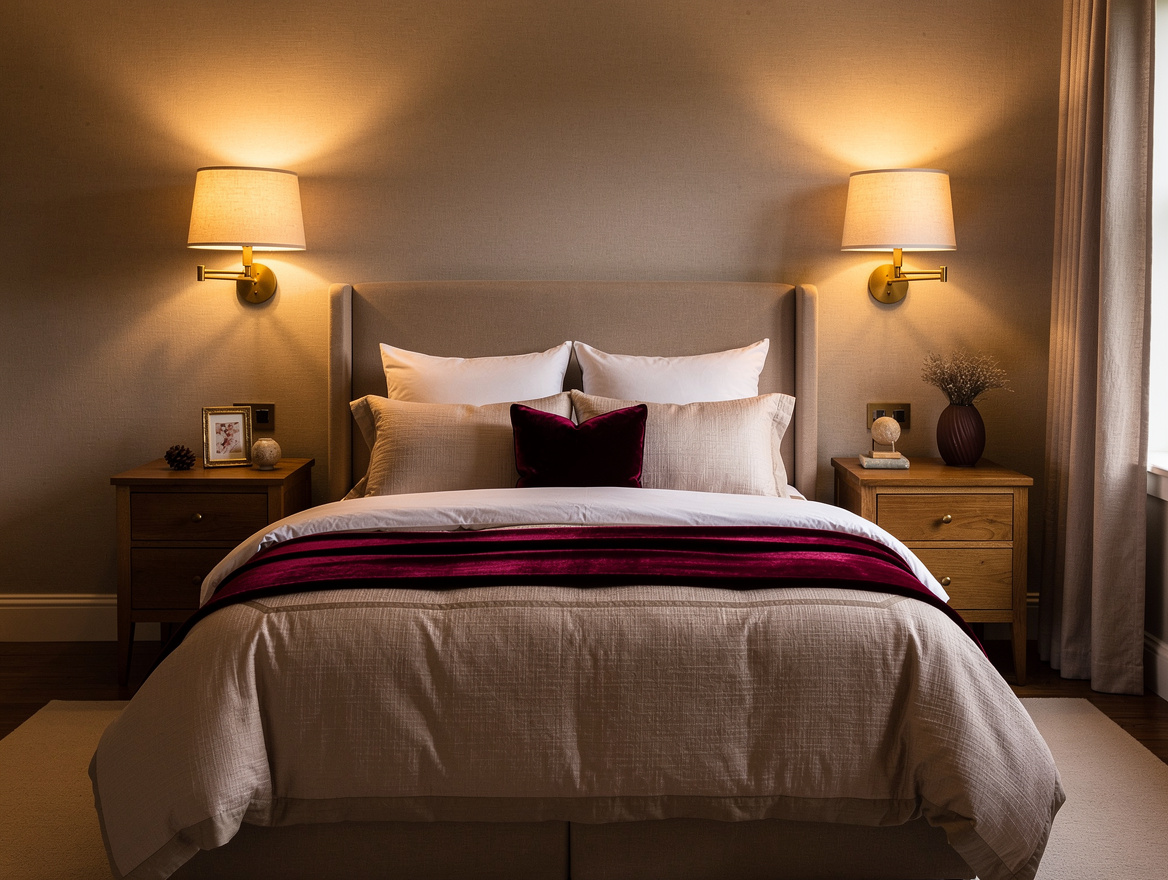
When a bedroom has wood furniture, patterned bedding, or a more classic mood, I prefer a linen-shade bedside sconce over an exposed-bulb fixture. The shade spreads light across the wall and gives the room that quiet boutique-hotel feeling without asking for elaborate styling.
Typical fabric-shade sconces are roughly 18 to 30 cm wide and project about 18 to 28 cm, so measure before ordering. Use a dimmable E14 or E27 bulb where the fitting allows it, and skip clear glass if late-night glare already bothers you.
Reserve Swing Arms for Serious Reading
A swing-arm wall lamp is practical when the bedside tables are tiny or fully occupied by charging cables, glasses, and books. I would choose a hardwired brushed-brass swing-arm lamp with a wall switch whenever possible, since a stable electrical connection feels better for a fixture used every night.
Arms with roughly 30 to 50 cm of reach can bring light forward without pulling a table closer to the mattress. Fold the arm back after reading, though: an extended metal arm at eye level makes a compact bedroom feel more obstacle-filled than polished.
Build Ambient Light With Indirect Shapes
Directional reading lights need a quieter partner. A frosted-glass IKEA HAVSDUN wall lamp is the kind of diffuse fixture I would use for gentle ambient light, and IKEA has listed it at about €39.99, though local availability and pricing can vary.
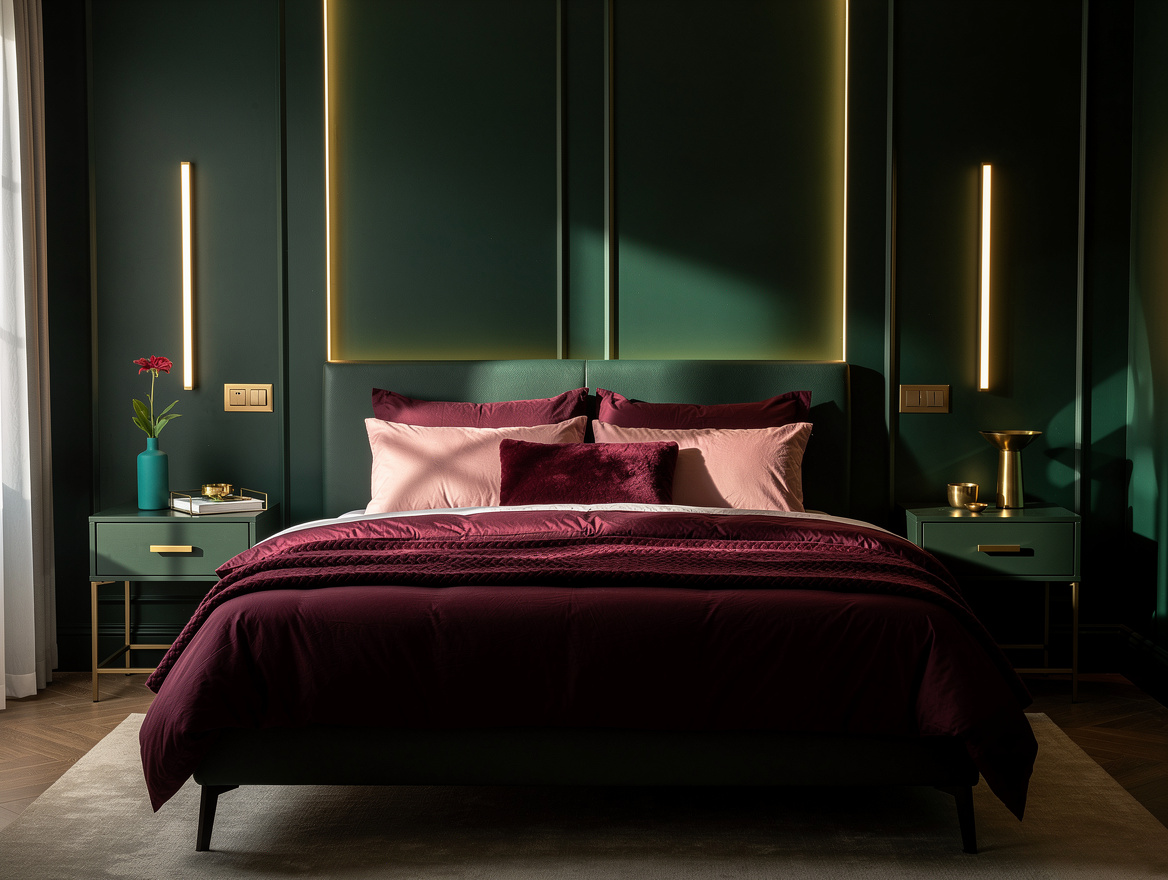
For a stronger architectural effect, mount a slim vertical LED bar beside the headboard or paneling. Typical bars run roughly 40 to 90 cm high and only about 3 to 8 cm deep, giving the wall a soft glow without putting a visible point of light directly in your line of sight.
Start by marking the bedside-table depth with painter’s tape, then test the 100 to 120 cm mounting zone from the mattress. That five-minute check will tell you whether your new dimmable wall lights will feel tailored to the bed or merely attached to the wall.
Mia Carter writes about small-space living and budget home makeovers. She has restyled three rentals and tests most ideas in her own 45 sqm flat.