
Western speakeasy decor ideas turned my flat living room into a saloon-style hideaway for about $1,146, and yes, they worked in a small footprint. I did this after getting tired of a room that felt neat, beige, and weirdly loud at night. So I stopped chasing polished and started building warmth on purpose. Two weekends later, you could feel the difference the second you sat down. Worth it, full stop. If you’re mapping the bigger picture first, our speakeasy living room ideas guide walks through how the seating zone sets everything that follows.
Here’s what it looked like before
Before I touched anything, the room had that slippery kind of nice that never lets you exhale. The sofa was a clean saddle tone, the walls sat somewhere near builder beige, and the lighting came from one overhead fixture that flattened every surface by 7 pm.
You know the look. Safe, expensive enough, and still cold.
Builder beige, that’s the giveaway every time.
I had an Article Sven-style leather profile at roughly 36 inches deep, a plain rectangular table, and windows that stopped the eye instead of framing it. Nothing was wrong on paper. But the room had no grit, no darkness, no reason to stay up for one more drink.
If you lean toward luxury speakeasy decor ideas for a sophisticated hideaway, you know how often the mood dies when everything matches too neatly. The cost of doing nothing was higher than any single upgrade I made.
Is a western speakeasy look worth the cost?
Short answer: yes, because the cheapest moves do most of the work. Most of my budget went to the touches your hand reaches for first: a cowhide rug layer, unlacquered brass sconces, a couple of mohair velvet drapes, and one worn trunk. The free part was editing out pieces I already owned that fought the mood.
Real talk: a tight palette and warm pools of light will save you more than any new sofa. If you want a less rustic take on layered mood, vintage speakeasy decor ideas for old world charm shows you can spend less than $1,200 and still feel a decade richer.
What does a western speakeasy makeover cost?
Here’s my honest breakdown, because budgeting this style is the part everyone skips. The room looks richer than the number because most of the spend lives in tactile, low-volume items, not in big furniture.
My exact total came in around $1,146: $74 for the chair repair, $118 for the cowhide layer, $62 for paint and supplies, $168 for the brass frames, $215 for the vintage trunk, $129 for the cart, $156 for the sconces, and $224 for the drapes.
The free upgrade was editing. I cut one side table, removed shiny decor I already owned, and angled the seating diagonally instead of squared to the wall. That’s the kind of value people skip because it doesn’t come in a box.
- Start with a too-clean leather sofa
- Bring in a carved ranch chair
- Layer cowhide off-center, not symmetrical
- Paint one wall saloon tobacco brown
- Hang sepia rodeo photos in unlacquered brass
- Swap the coffee table for a vintage trunk
- Tuck a whiskey cart beside the sofa
- Add amber sconces instead of overhead light
- Frame the windows with dusty mohair velvet
- Style horseshoes beside leather-bound cocktail books
- Soften the room with Navajo-pattern pillows
- Finish with matchbooks and a hidden decanter
1Start with a too-clean leather sofa
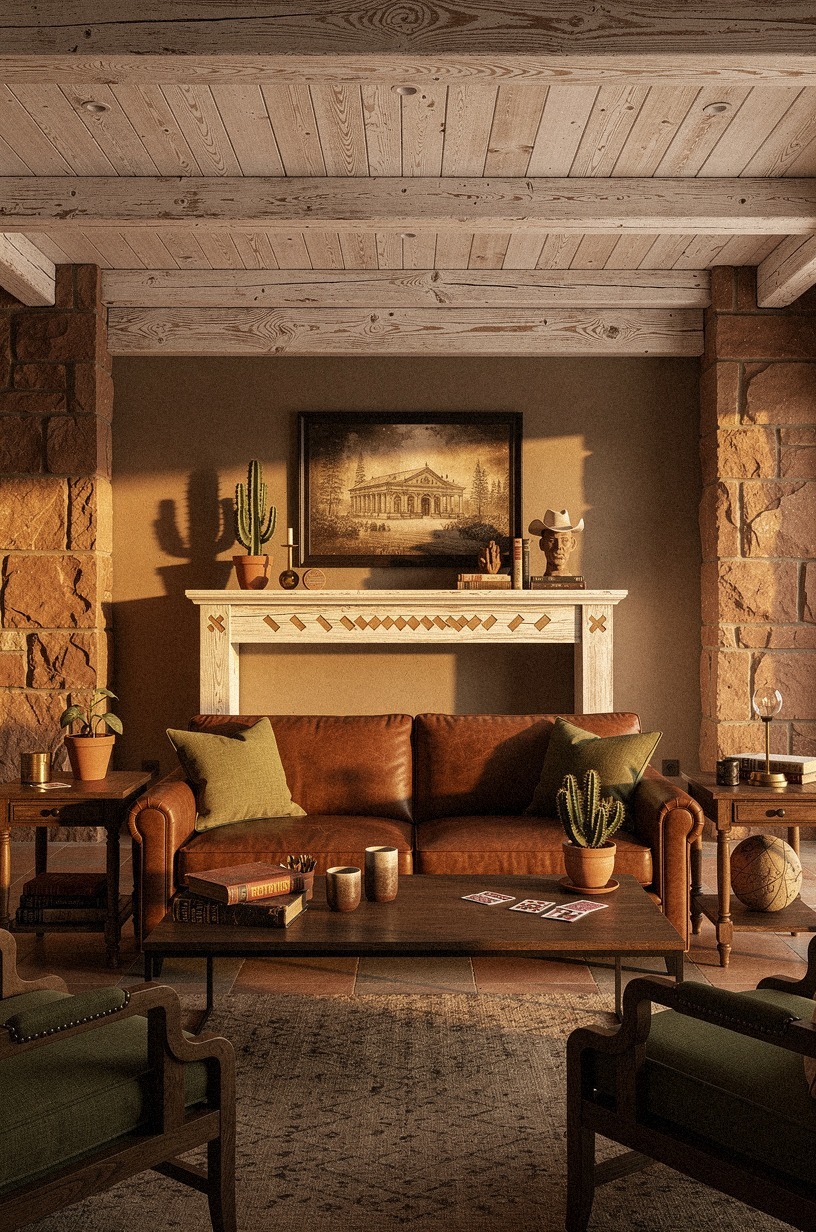
First, I stopped blaming the sofa and started blaming the styling around it. A leather seat can anchor a western speakeasy room fast, but only if you let it read worn-in instead of showroom new. Mine had the right color and the wrong attitude.
Too polished. Too untouched.
I kept the sofa because the scale was right for the room, about 36 inches deep with enough seat width to hold two people without swallowing the walkway. Then I changed what sat against it: a rougher saddle leather throw pillow cover, a broken-in Belgian flax linen lumbar, and a darker throw that took the edge off the clean lines.
If you’re chasing a cowboy speakeasy feel, don’t replace the biggest piece first. Make it less behaved.
I used the same logic that makes vintage speakeasy decor ideas for old world charm feel richer than new copies. Article Sven in cognac leather is the clean mid-budget reference, while a vintage cigar leather club chair is the splurge if you want a denser hand.
And here’s the part that worked: I quit centering every cushion. One slightly collapsed corner did more than any new purchase. You want the sofa to look like somebody sat there after midnight, not like a store manager just fluffed it.
Worth it, full stop!
2Bring in a carved ranch chair
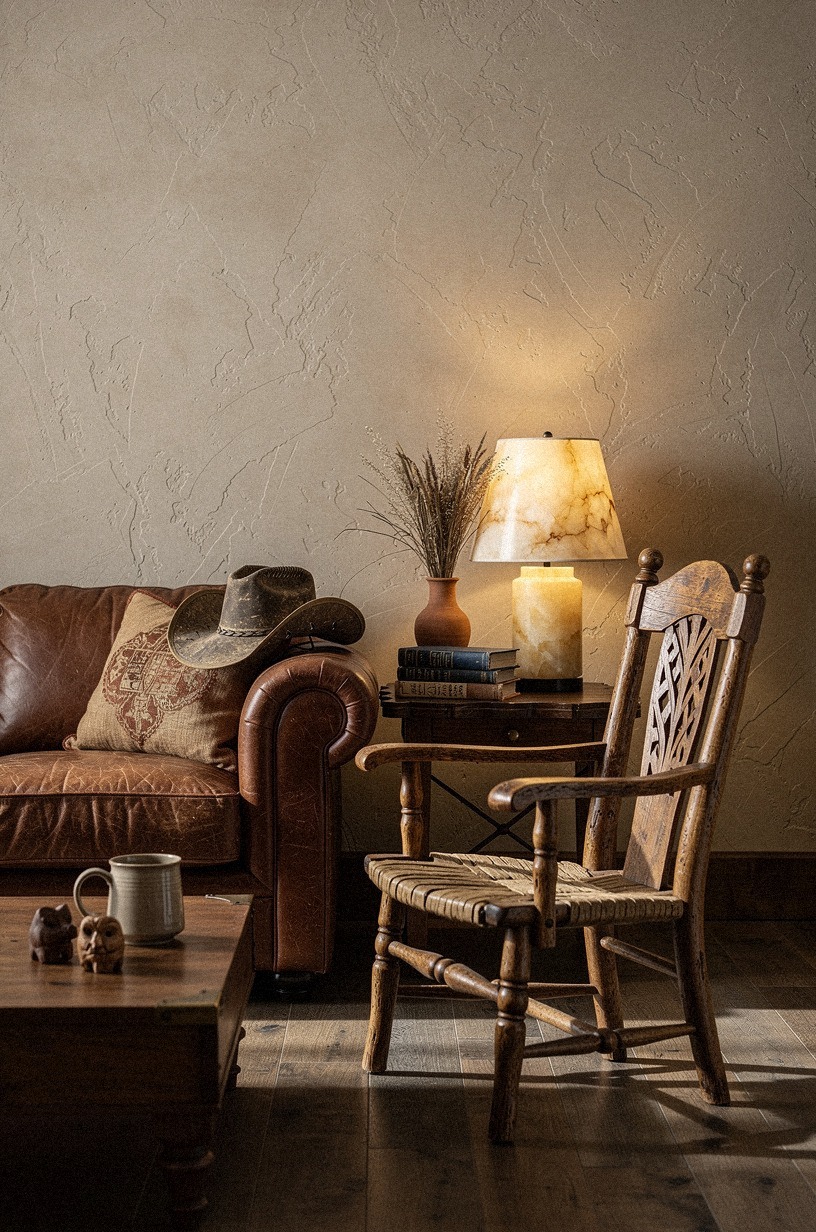
The room changed when I brought in one odd chair that looked older than the sofa.
3Layer cowhide off-center, not symmetrical
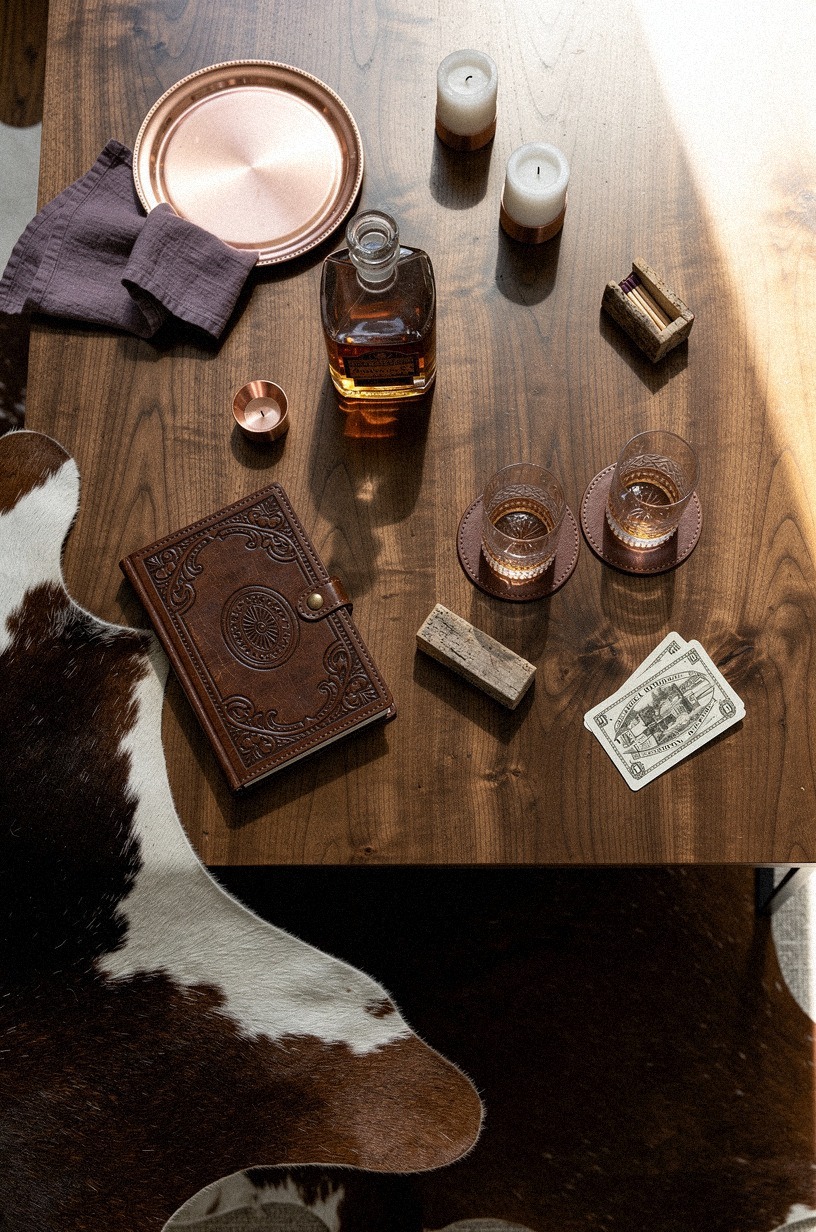
Layering rugs was the first move that made the room feel collected instead of decorated. I had a base rug already, and it was fine, but it read flat under the table. So I slid a cowhide off-center over it, toward one seating edge, the way you would shift a jacket over a chair instead of hanging it perfectly.
The base was an 8×10 wool rug, big enough that the front legs of the seating still sat on it, which is the standard you want in a living room that needs to feel grounded. On top, the cowhide added movement and broke up the rectangular discipline of the room. But I kept the hide to one side.
Full symmetry would’ve looked fake.
A standard 5×7 cowhide runs $80 to $220 second-hand, while a salt-and-pepper Brazilian cowhide climbs toward $300 to $600 if you want the softest hand. If you like darker versions of this layered feel, dark moody speakeasy decor ideas for ultimate cozy drama leans into the same layered move with deeper palettes.
But don’t stack three rugs just because you can. One wool base, one hide, done.
The second I stopped trying to make the layers even, the whole room loosened up. One base, one hide, no exceptions.
4Paint one wall saloon tobacco brown
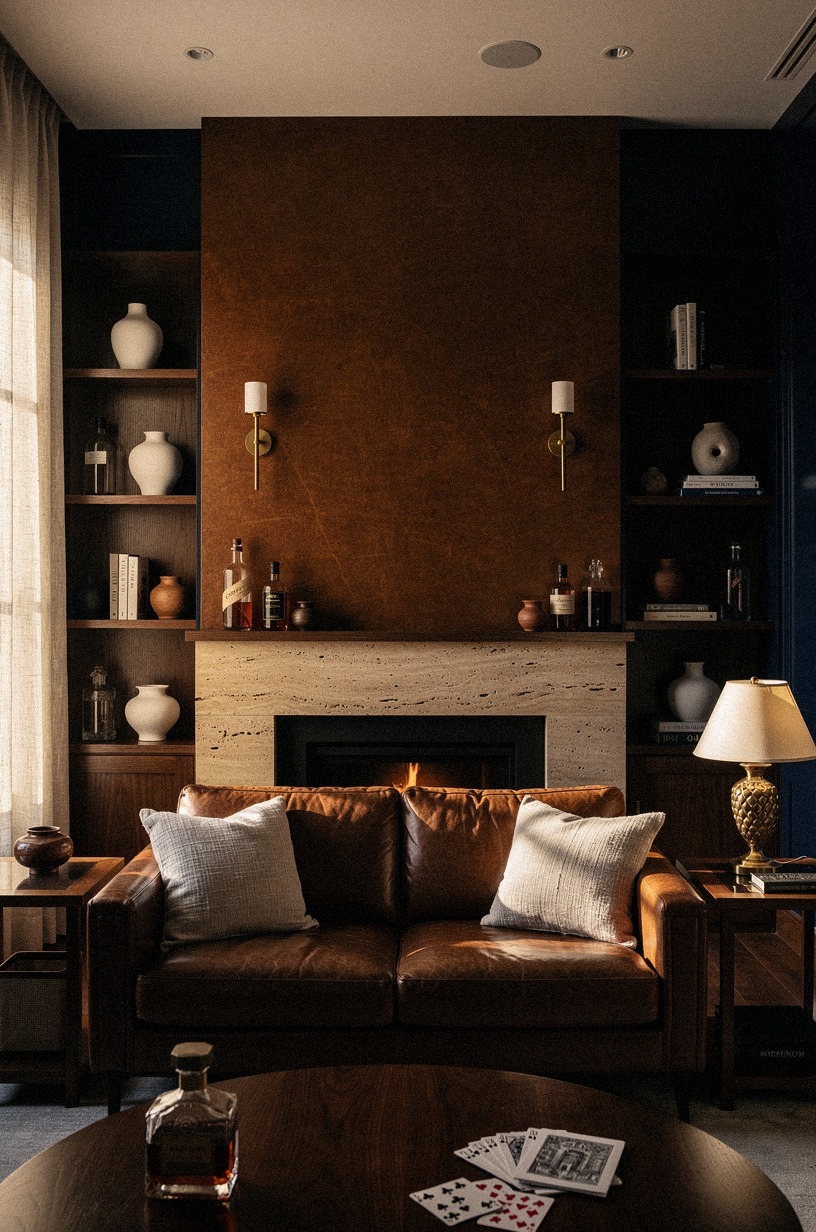
Paint was the commitment move, and it paid off faster than anything else.
5Hang sepia rodeo photos in unlacquered brass
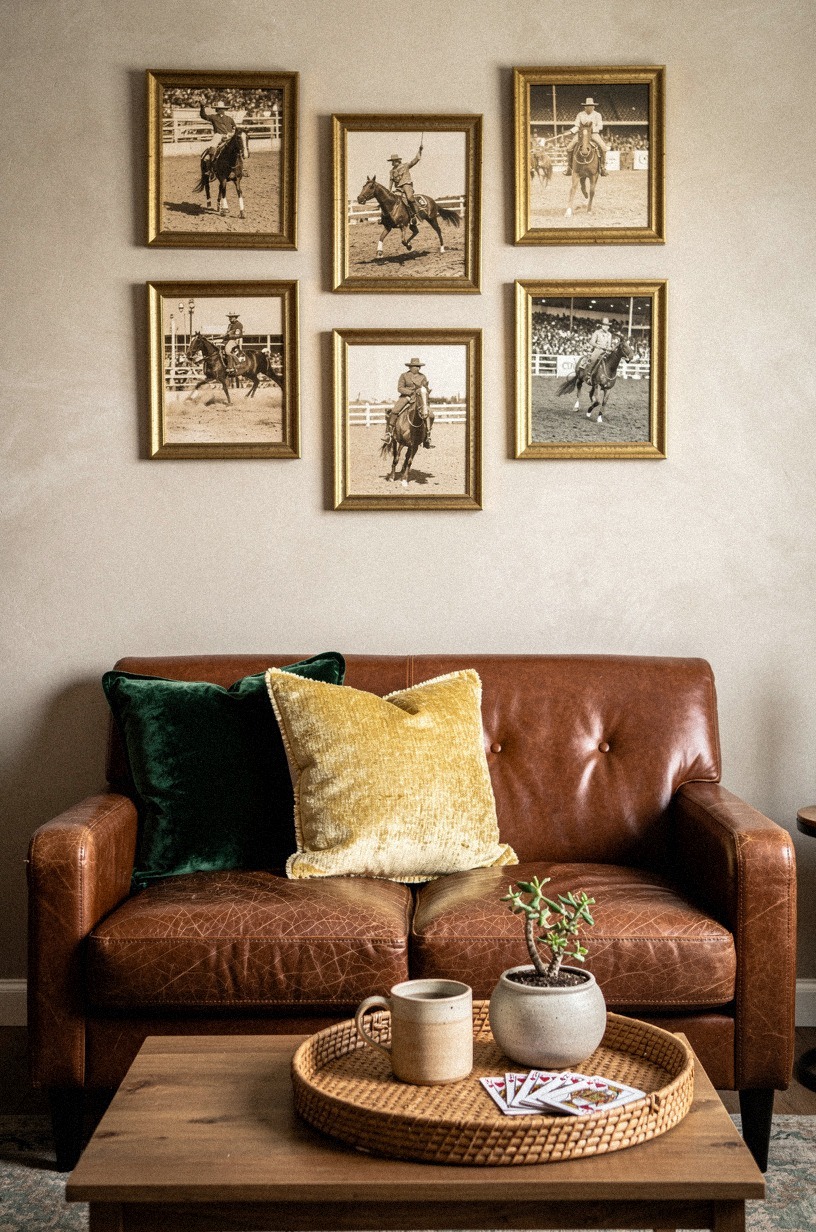
Art fixed the wall faster than shelves would have. I hung a grid of sepia rodeo photos in slim unlacquered brass frames above a small settee, and the room finally stopped feeling like it was waiting for a television. Why does that matter?
Because a speakeasy room should reward your eye before it explains itself.
I used unlacquered brass frames on purpose. Clean black would have been easier, but brass develops a soft haze that makes old imagery look earned instead of printed last week.
And the subject mattered too. Rodeo shots, horses, dusty grandstands, all that movement gave the room a pulse.
Threshold picture frames from Target give you the brass look for under $15 each, while a West Elm gallery set climbs to $40 to $60 per frame. If you need more wall-first ideas, speakeasy wall decor signage ideas passwords maps more is helpful, but I skipped novelty signs. I wanted memory, not gimmick.
Spacing mattered most. I left enough breathing room between frames so the brass could catch the amber light later.
Too tight and it turns into a gallery wall. Too loose and it looks accidental. I aimed for the middle, then nudged each frame by eye.
Honest take: nine times out of ten the spacing is the thing that makes the wall, not the prints!
6Swap the coffee table for a vintage trunk
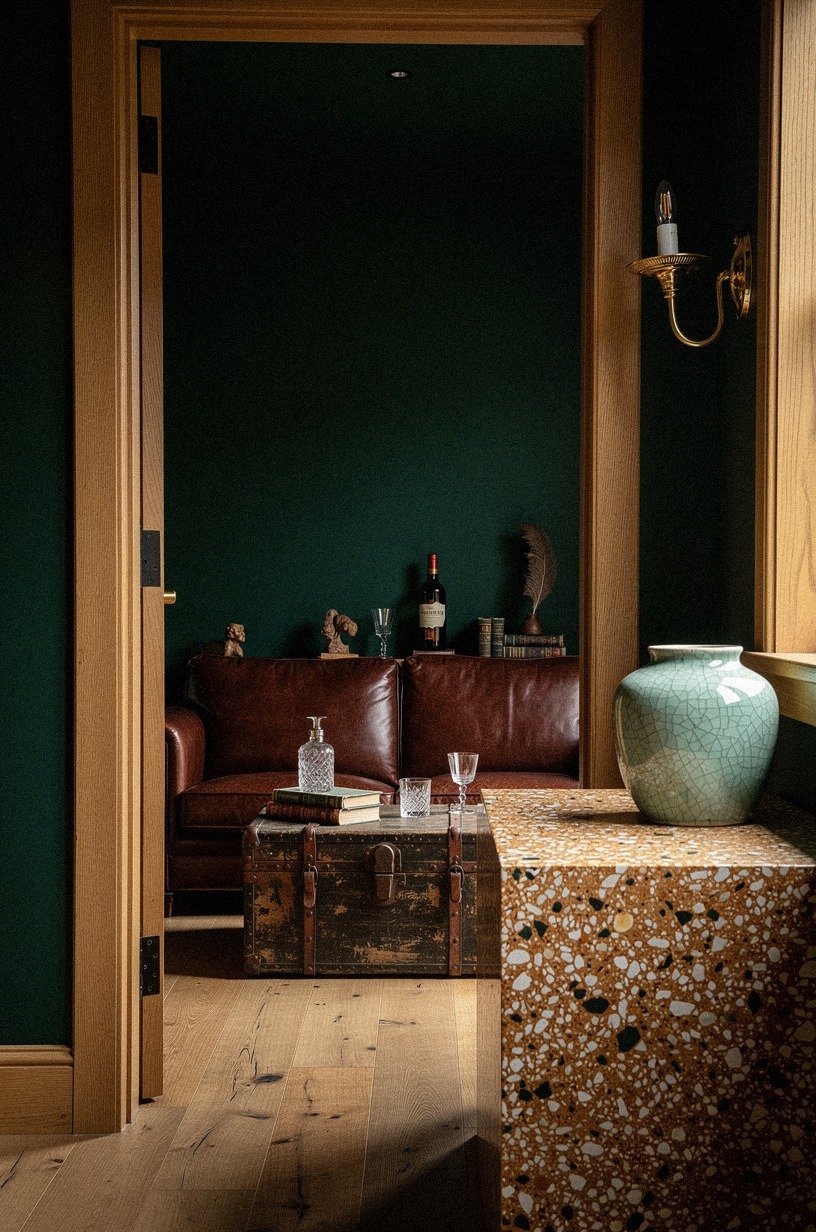
Replacing the coffee table with a trunk gave the room its first real story point. A normal table did the job.
The trunk started a conversation before anyone sat down. That is what you want in a vintage bar aesthetic room: one piece that hints at travel, wear, and a life outside the house.
I chose a trunk that landed in the standard coffee table height range, right around 17 inches tall, so it still worked with the sofa instead of feeling like a footlocker dropped in by mistake. It also ran about two thirds the sofa length, which kept the proportions right. I wouldn’t go taller than 18 inches here, because once you’re reaching down awkwardly for a glass, the romance wears off.
An authentic camphorwood trunk runs $180 to $400 second-hand, while a campaign-style trunk with brass corners climbs past $600. For more mixed-era inspiration, 1920s speakeasy decor ideas shows how travel pieces keep glam rooms from getting too slick.
And yes, I used the inside for hidden storage. Blankets. A card deck.
Coasters you don’t want out all day. That single swap made the room feel older and more useful at the same time.
The cost-to-value ratio here is unbeatable if you’re willing to hunt!
7Tuck a whiskey cart beside the sofa
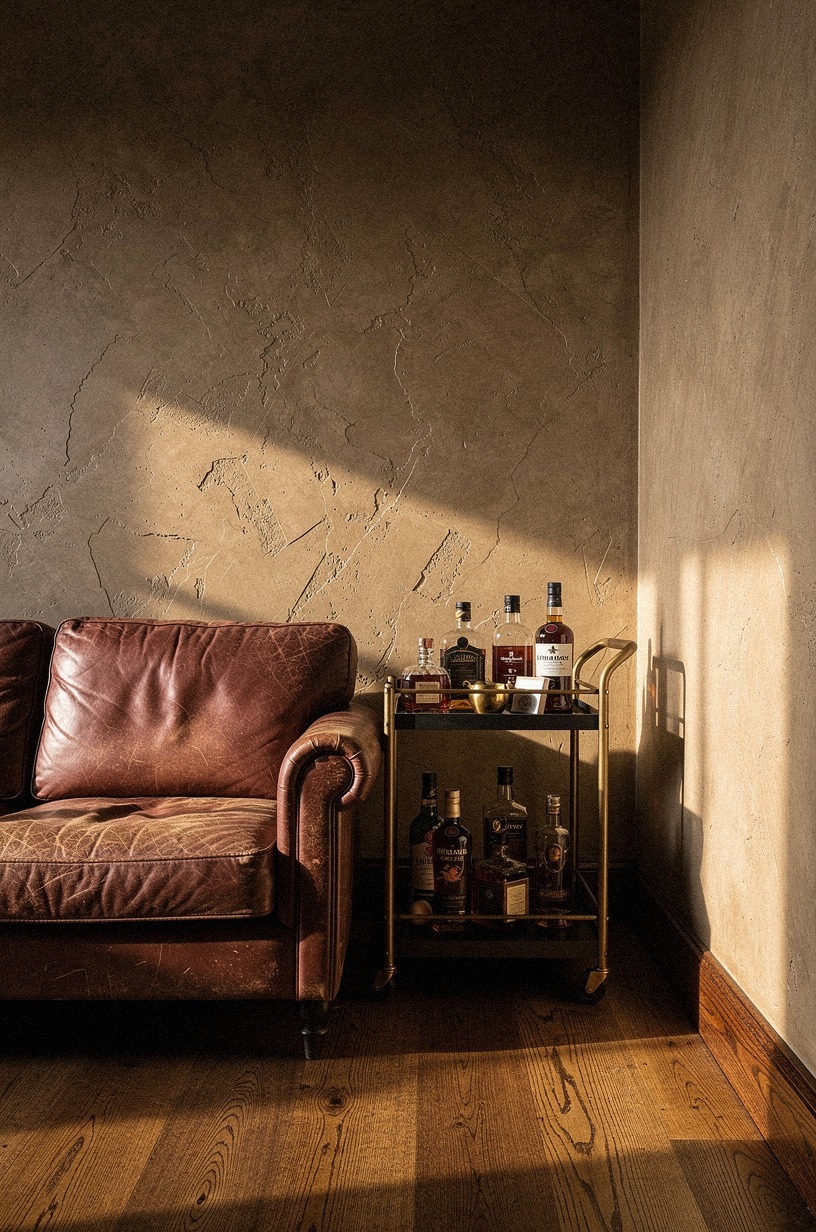
This is where the saloon mood started reading clearly. I tucked a compact cart beside the sofa, not across the room, because the point wasn’t to stage a bar.
It was to make the seating feel like the bar came to you. A small move, but it changed how the corner lived at night.
The cart had an aged brass frame, smoked glass shelves, and just enough width for a decanter, two lowball glasses, and a small bowl. I kept it tight on purpose. Once you start adding shakers, bottles, and tools you never use, the room slips into theme territory.
I’d rather see one good decanter and one dusty-rose accent than a full lineup. A solid CB2 brass bar cart runs $300 to $500, while a vintage brass-and-glass cart from a local estate sale can land at $120 to $250. If you’re torn between western and dressier references, art deco speakeasy decor ideas for roaring 20s glamour helps you borrow the polish without losing the grit.
But place it on the sofa side you reach for naturally. That sounds obvious, yet it’s the difference between a room you use and one you pose in. Mine went on the lamp side, where your hand already travels at the end of the day.
8Add amber sconces instead of overhead light
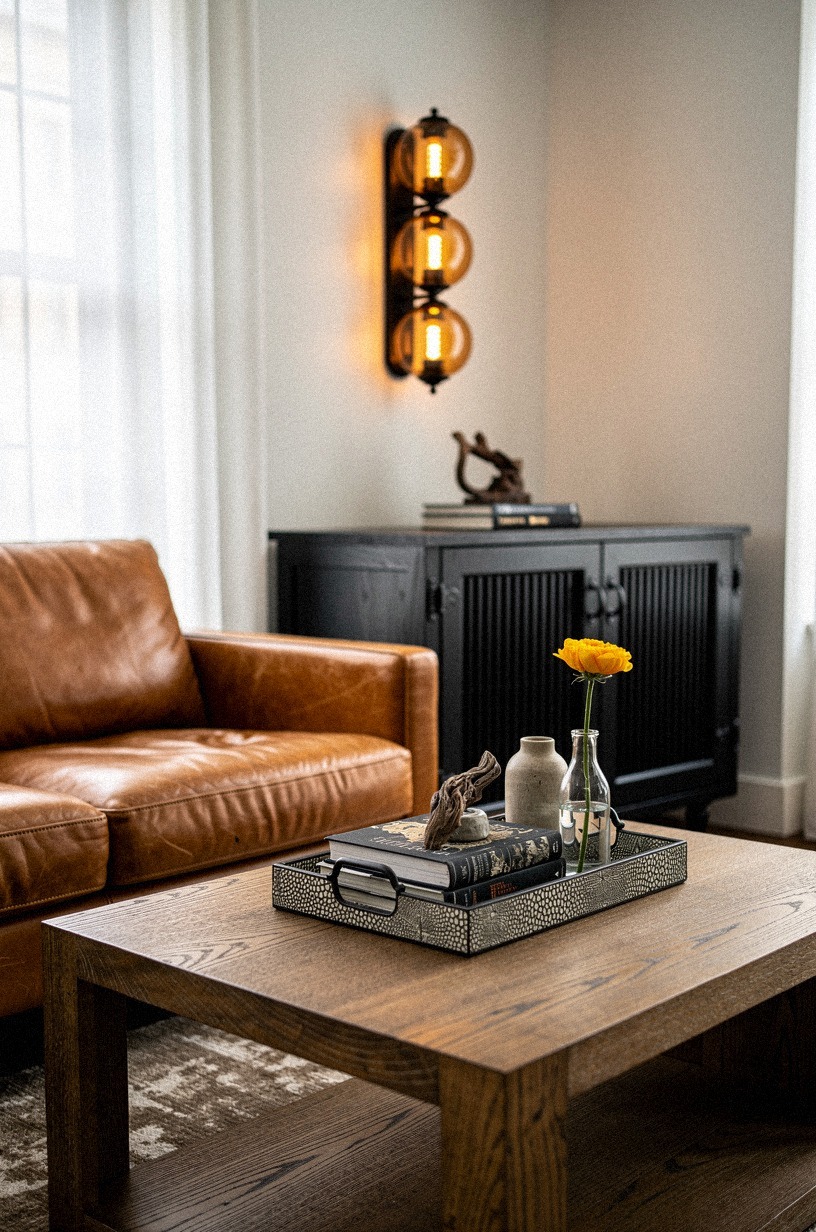
Lighting did what paint couldn’t finish. Once the amber sconces went up, the room quit looking like a western room in daylight and started acting like a speakeasy after dark. That shift matters.
A style like this lives or dies at 8 pm.
I followed what I call the Three-Height Glow Rule: one overhead light kept dim and barely relevant, one sconce line at eye level, and one lower lamp pool near the sofa arm. You need all three heights or the room feels either flat or haunted.
The sconces themselves had a mellow amber shade and a blackened backplate, closer to old bar lights than farmhouse lanterns. A pair of plug-in amber sconces from Pottery Barn runs $180 to $280, while hardwired versions climb past $400. If you want a less rustic version of layered mood, luxury speakeasy decor ideas for a sophisticated hideaway shows how polished rooms still rely on stacked light.
And please skip bright white bulbs. I learned that one the dumb way.
The first night I tested a cooler bulb, the brass went gray, the leather went orange, and the room lost all its nerve. Warm only.
2700K warm-white LED, no exceptions.
9Frame the windows with dusty mohair velvet
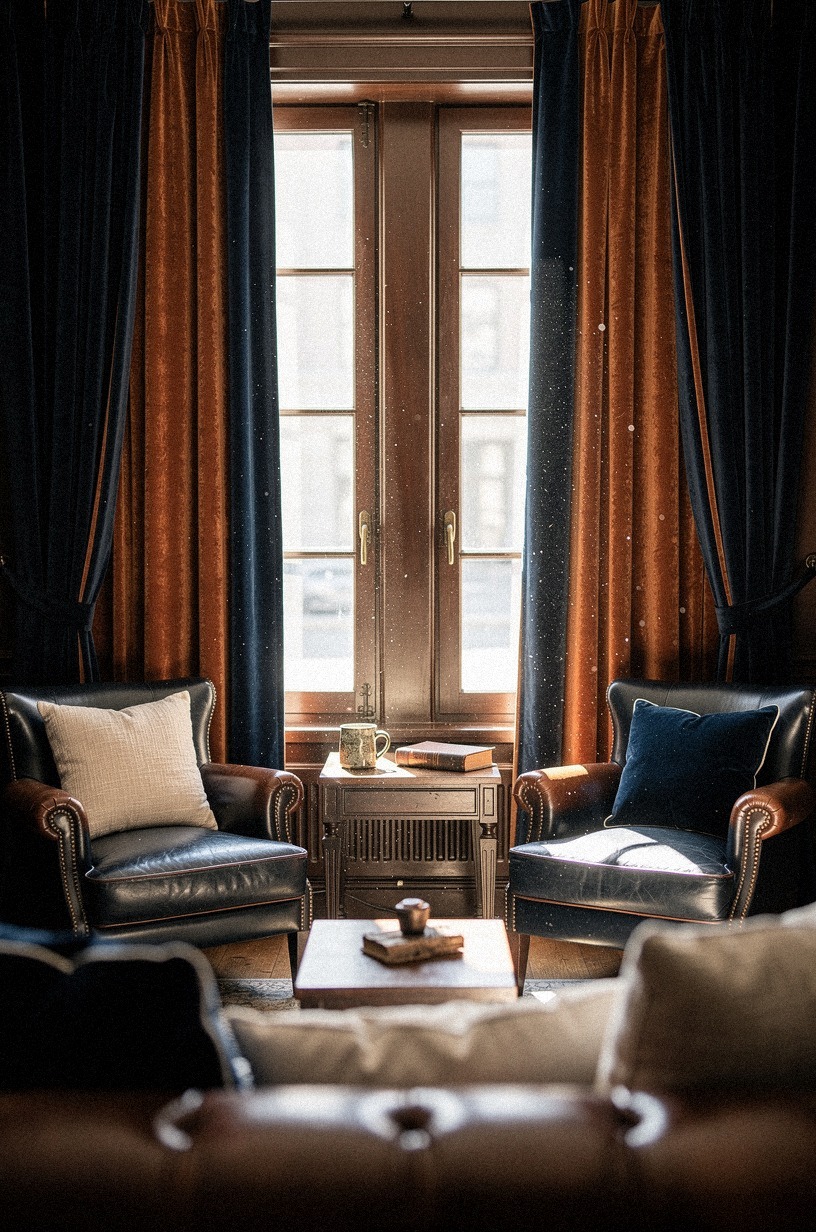
The windows were too honest before I dressed them. Plain panels showed every bit of daylight and every cheap line in the wall. Once I framed them with dusty velvet drapes, the room held the light instead of giving it away.
I used a pair in mohair velvet tones that sat somewhere between dusted rose and tobacco, then hung them wider than the trim so the glass stayed visible during the day. That width cheat always works. You get drama without losing the window.
And because the room already had leather and hide, the velvet needed to look dry, not sugary. IKEA AINA linen-look curtains give you the drape silhouette for under $30 a panel, while 18 oz cotton velvet drapes from West Elm climb to $220 to $380 per panel. If your taste runs moodier, dark moody speakeasy decor ideas for ultimate cozy drama proves how much fabric can do before you buy any more furniture.
I wouldn’t use stiff faux silk here. Too shiny.
Too formal. Velvet with a little dust in the color is what keeps the room in saloon territory instead of hotel lounge territory.
Honest take: panels hung four inches wider than the trim is the cheapest move in this entire room!
10Style horseshoes beside leather-bound cocktail books
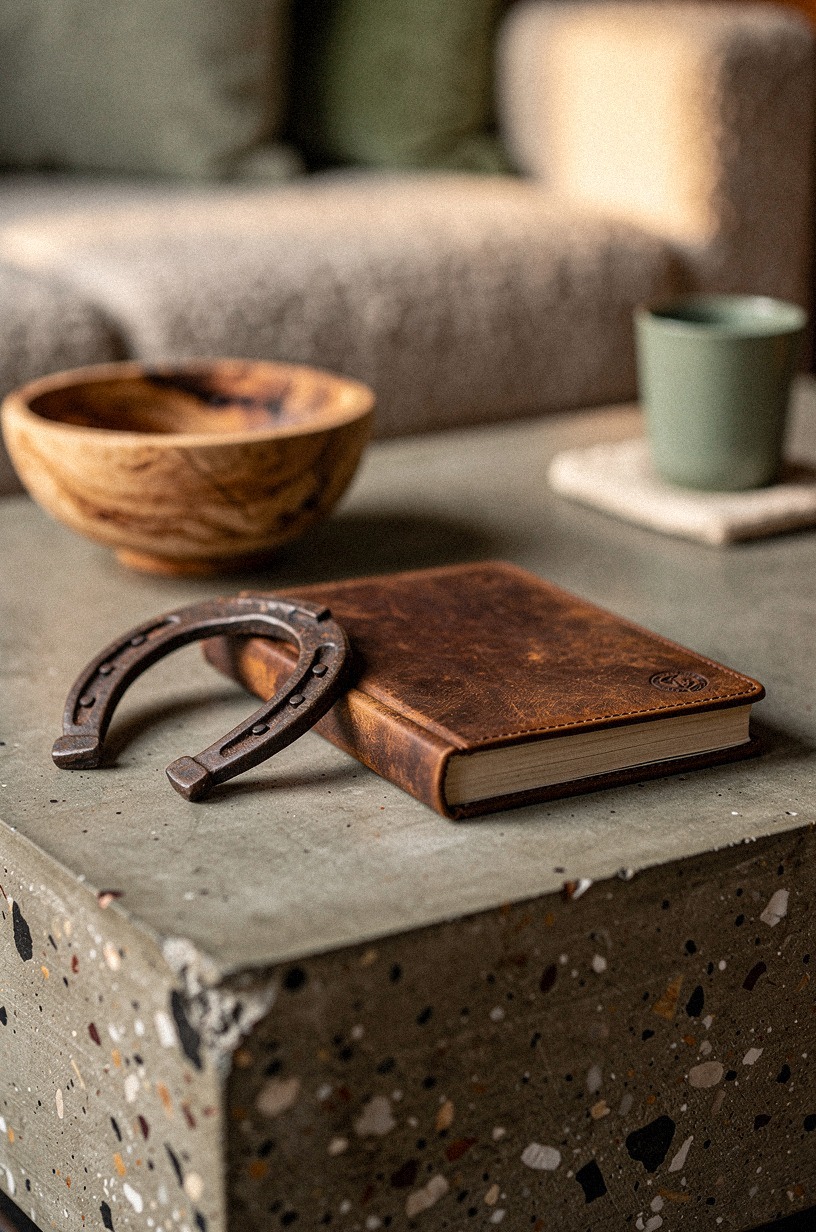
Tiny objects can wreck a room when they look too eager.
11Soften the room with Navajo-pattern pillows
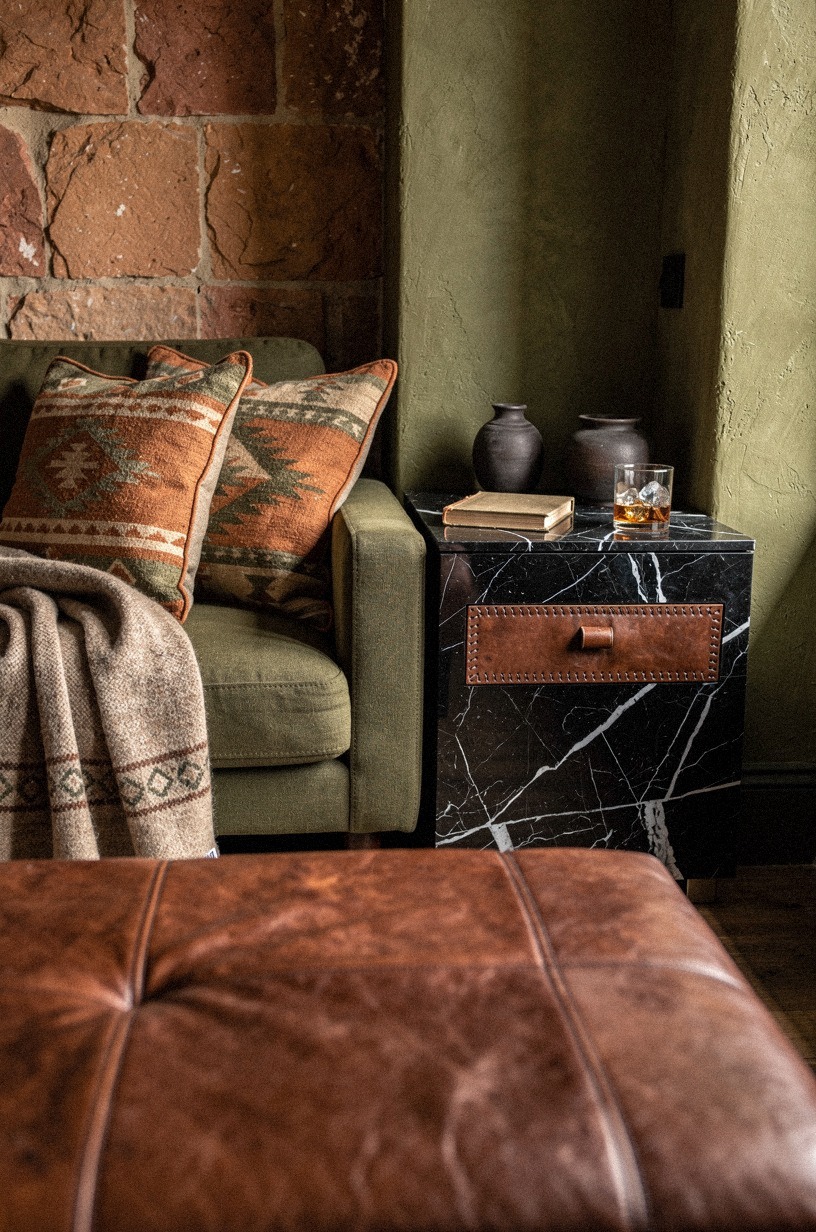
At this point the room had mood, but it still needed mercy. Leather, iron, wood, concrete, hide, all good, all hard. The Navajo-style pillows were what made the room feel like you could stay there for two hours instead of twenty minutes.
I mixed three sizes across the sofa and ottoman, then kept the palette rusty, black, cream, and a little faded teal so the pattern read old instead of tourist-shop bright.
One pillow in Turkish cotton with a flat woven face, one softer backing, one heavier insert. That part matters more than people think.
Limp inserts kill expensive fabric. A Threshold woven pillow runs $25 to $45, while a hand-loomed Pendleton wool pillow climbs past $120.
If you want to study another route to pattern control, modern speakeasy decor ideas vintage vibes updated shows how quieter shapes can still keep a room alive.
But I wouldn’t cover every seat with motif. One patterned lane is enough.
Let the leather breathe, let the rug do its share, and let one pillow carry the sharpest contrast. The cheap move is editing the count, not the cost per pillow.
12Finish with matchbooks and a hidden decanter
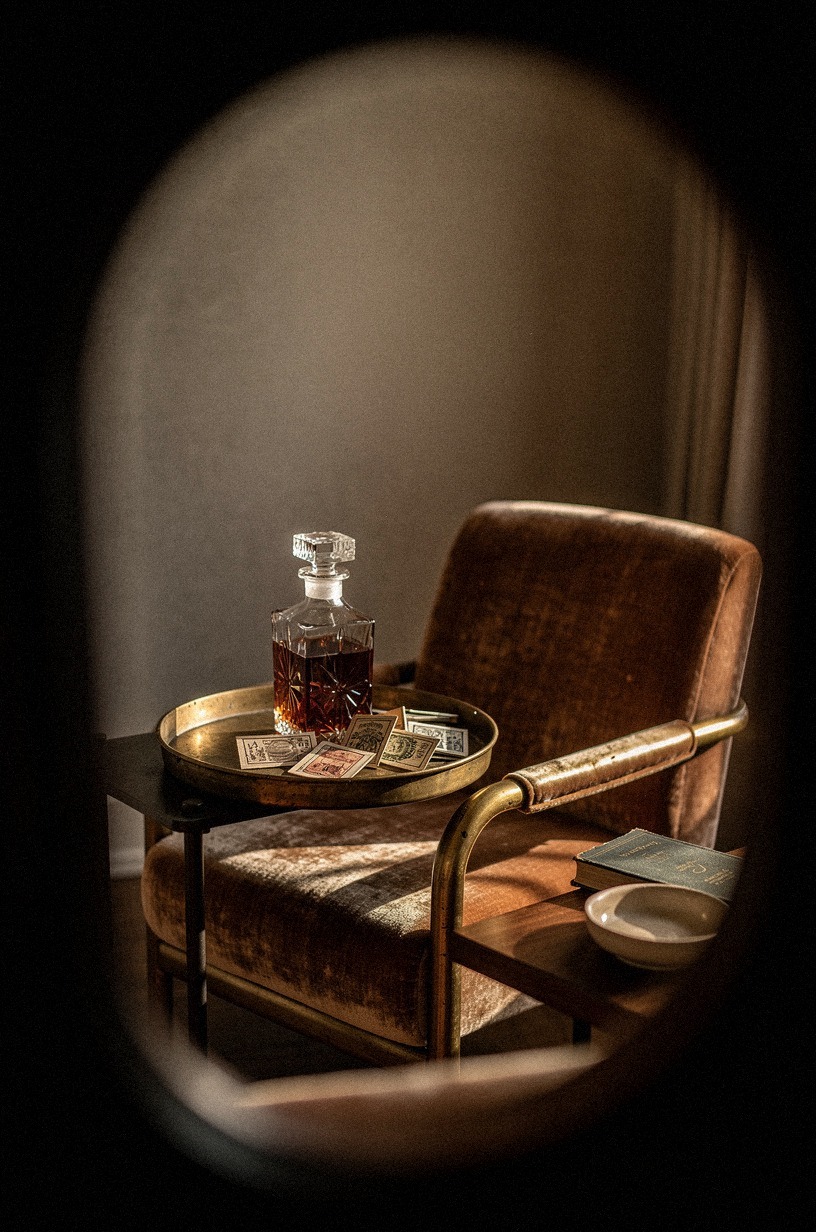
The last layer was the one nobody notices immediately, which is why it mattered so much. I added a little stack of matchbooks and tucked a glass decanter partly out of sight on an aged brass bar shelf.
Suddenly the room had a private side. Not staged. Private.
This is where I used my Hide-One-Thing Rule. In a room built around mood, you need one object that isn’t presented all the way. A decanter behind the arch of a tray.
Matchbooks half-shadowed beside a book stack. A brass box that doesn’t open itself up from across the room.
That’s what gives old speakeasy spaces their pull. A Waterford-style crystal decanter runs $60 to $140, while vintage hotel matchbooks cost pennies each if you haunt eBay. If you like the more theatrical end of that instinct, gothic speakeasy decor ideas for a dark mysterious bar pushes the same idea further.
I almost added a visible bottle lineup here, and I’m glad I didn’t. Too literal.
The hidden glass and the tiny paper ephemera did more because you had to lean in. The value of a half-hidden object is higher than any visible lineup.
The Saloon-without-Costume Test
This was the checkpoint I kept coming back to while I worked: does the room feel lived in, or does it feel like it wants credit for having a theme? If a piece pushed too hard, I cut it.
That meant no wagon-wheel nonsense, no novelty signage, and no fake distressed labels trying to do the emotional work for me. Zero costume, all soul.
What stayed was texture, shadow, and one clear point of view. Leather beside velvet.
Brass beside concrete. Old shapes against cleaner lines.
If you’re trying this in your own place, that’s the test I’d borrow. Keep the room suggestive. Never explanatory.
The cost of restraint is zero, and the payoff is enormous.
The Two-Wood Rule That Kept It From Looking Like a Theme Bar
Here’s the design principle I wish more people used in western rooms: stop at two visible wood stories. I had the carved ranch chair wood and the trunk wood, and that was enough. Once you add a third loud grain, the room starts sounding busy before you even sit down.
I learned this after dragging in a lighter side table and hating it on sight. The chair had one weathered tone, the trunk had another, and the newcomer made the whole setup look like a showroom trying too hard to say rustic.
So I pulled it back out. If your room already has strong leather and brass, two wood notes are plenty.
This single rule probably saved me $200 in returns.
The Night-First Mix Rule
I went back and forth on this because western plus speakeasy sounds like a lot. It is a lot, if you treat both words literally. But if you borrow the best part of each, the room lands in a sweet spot most living rooms never reach: low light, honest materials, and just enough swagger.
The western side brings saddle leather, worn woods, hide, iron, and pattern that doesn’t feel polite. The speakeasy side brings shadow, amber light, and the sense that the room wakes up at night. Put them together carefully and you get intimacy without fuss.
That’s why I’d take this over a generic neutral lounge any day. You remember a room like this.
What I learned while building the room
The biggest mistake people make with a western speakeasy room is buying references before they’ve set the mood. I get it. The obvious things are fun to shop for: horseshoes, trunks, brass carts, velvet drapes, old photos, maybe even a good club chair.
But the room doesn’t become convincing because you bought western objects. It becomes convincing because the light is low enough, the palette is tight enough, and the materials have enough friction between them that they stop looking new.
I learned this the annoying way. Early on, I tried to solve the room with stuff.
A bigger table. More art.
Another throw. Nothing stuck because the walls were still too pale and the lighting was still too flat. Once I darkened the anchor wall, lowered the glow, and cut anything shiny that didn’t earn its place, the rest got easier fast.
That’s the part I wish somebody had told me sooner.
If you’re doing your own version, spend your attention before you spend your money. Watch the room at 9 pm, not noon.
Sit where you normally sit and ask yourself what your eye hits first. If the answer is the television, the ceiling light, or an empty wall, start there. If the answer is a layered corner with shadow, fabric, and one rough piece of wood, you’re close.
And if you’re worried the room will feel too dark, remember this: darkness isn’t the same as heaviness. Bad contrast feels heavy. Good contrast feels intimate, and that’s what keeps you there past midnight.
I also think this style works best when one thing stays a little plain. In my room, that was the sofa shape.
The leather had warmth, but the lines stayed simple, which gave the carved chair, the trunk, and the brass room to talk. That’s a useful rule in any makeover.
Let one piece carry restraint so the others don’t start shouting over each other. The cost of patience here is zero, but it pays back every single evening.
What People Always Want to Know
What is the best Western Speakeasy Decor Ideas for a Saloon-Style Hideaway for a small living room?
A leather sofa plus layered lighting is the best starting point because it changes the whole mood without crowding the floor. Think one clean Article Sven-style seat, one amber lamp source, one narrow accent chair.
Small room, strong payoff. If you need scale-tested references, our small dining nook ideas covers tucked-away seating for tighter footprints.
Where can I buy Western Speakeasy Decor Ideas for a Saloon-Style Hideaway pieces on a budget?
Start with Target Threshold and IKEA for the easy basics, then hunt Facebook Marketplace or a thrift shop for the soul pieces. I also like the mood cues in vintage speakeasy decor ideas for old world charm when you need a shopping filter. Good places to save: – plain frames – wool-look rugs – small carts – one old chair with real wear
How much does a Western Speakeasy Decor Ideas for a Saloon-Style Hideaway makeover cost?
Most living rooms can get the feel for about $300 to $1,200, especially if you keep your sofa and change paint, pillows, lighting, and art first. Mid-range versions climb fast when you add a new rug or sofa. The free move is editing what you already own.
Can I create a Western Speakeasy Decor Ideas for a Saloon-Style Hideaway on a budget?
Yes, and the cheap moves do a lot of the work. Start with: – darker lamp bulbs – secondhand brass frames – one off-center rug layer – a better furniture angle
Is a Western Speakeasy Decor Ideas for a Saloon-Style Hideaway worth it in a small space?
Yes, because small rooms get moody faster and cheaper. You need less fabric, fewer light sources, and one strong wall color instead of a full-house plan. Keep the layout open, and place the cart or trunk where your hand already travels.
Is Western Speakeasy Decor Ideas for a Saloon-Style Hideaway a good idea for a rental?
Yes, if you use low-damage swaps that change the mood instead of the architecture. For renter-safe wall ideas, speakeasy wall decor signage ideas passwords maps more helps. Good renter moves: – plug-in sconces – removable wall color solutions where allowed – tension-rod drapery – thrifted art in lightweight frames
Where I’d Start First
If I had to pick one, I’d start with the sconces. Low amber light fixes more than decor ever will, and a bright room will fight every leather, velvet, and brass choice you make. Pin this look for later and steal the lighting move first.