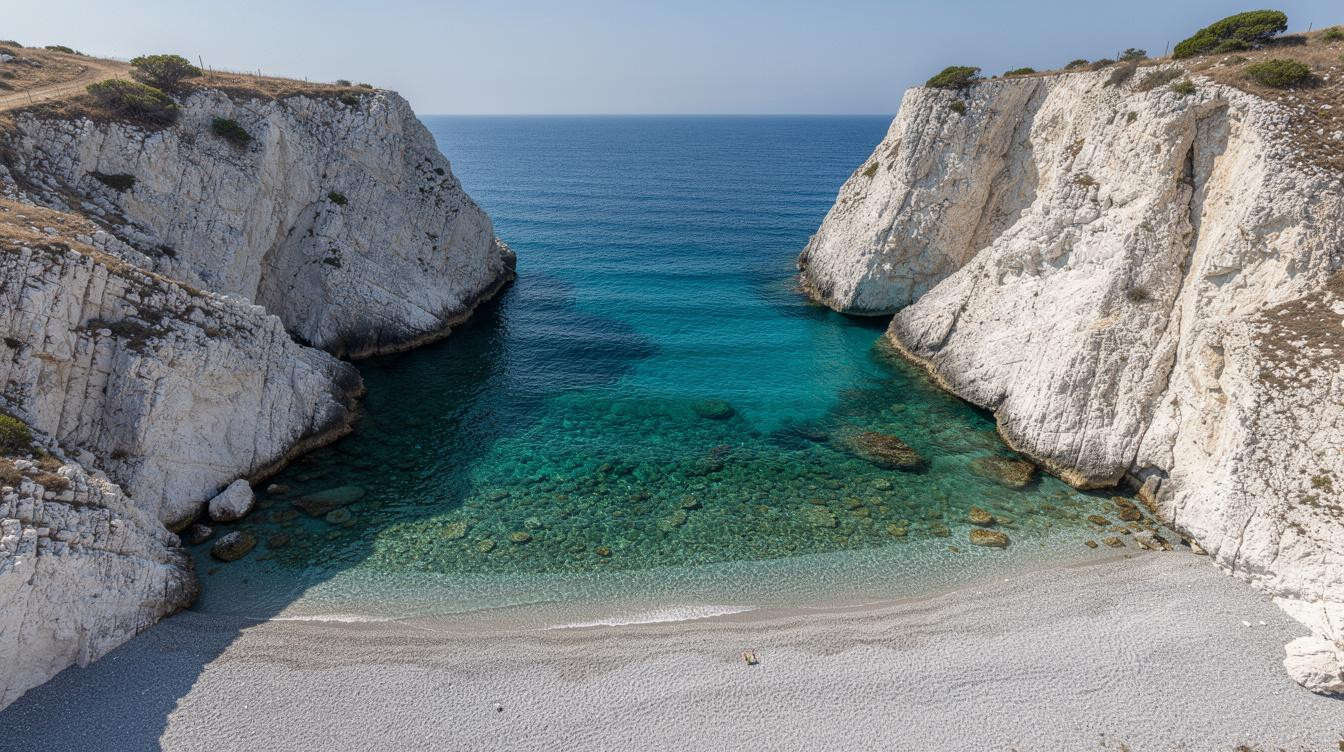
Time Out just named Fteri Beach the best beach in Europe for 2026. There’s no road to it. No bar, no sunbeds, no toilets, and nowhere to buy water once you arrive. That gap between the ranking and the reality is exactly what makes this cove on Kefalonia’s Paliki Peninsula worth understanding before you book.
The white limestone cliffs rise straight from the Ionian Sea near the village of Zola. Because the cliffs wrap the cove from the north and west, the surface stays calm well into the afternoon, turning the water into something that looks like filtered green glass ten feet from shore.
What the ranking actually means
The Time Out designation matters because it comes from an editorial team, not an algorithm. But it also means more US travelers are searching for Fteri right now than at any point in the last decade. And the geography is its own answer to that pressure.
Because there’s no road, no hotel shuttle can deliver a busload at 9am. Because there are no facilities, visitors who forget water leave early. The ranking amplified the interest, but the cliffs filtered it. A boat captain who has run the crossing for years describes it simply: the beach stays quiet because the beach makes it hard not to be.
The two ways in
The water taxi leaves from the small launch near Agia Kyriaki. The crossing takes roughly 5 to 8 minutes and costs $16 to $22 USD per person return, depending on the operator. And for travelers who want to arrive without soaked boots and burning quads, this is the clear choice.
The hike down from the land side takes 40 to 60 minutes on a marked path using painted stones as waypoints. It’s not technical, but it is steep and uneven. The trail is roughly 1 mile each way, and the return is the harder direction because the slope faces into the afternoon sun. Bring more water than you think you need, and factor the climb back into your departure time.
Local guides who lead the route consistently recommend starting before 10am. The first stretch has no shade, and because the path drops quickly, the heat hits before you expect it. The same access-difficulty dynamic that defines another recently ranked beach applies here: the effort is the filter.
What you actually get when you arrive
The beach is pebble, not sand. Pale gray stones shift underfoot as you walk toward the water, and the sound of them clicking when a small wave pulls back carries further than you expect in the cove’s quiet. The cliffs hold that quiet in.
There’s a smaller secondary cove to the right, reachable on foot when conditions allow. But most visitors stay put once they’re in the water. The clarity is the reason: you can see the bottom in water deep enough to dive into. A similar cliff-backed cove in Sardinia draws the same kind of traveler for the same reason.
There is nothing to buy at Fteri. Pack water, food, sunscreen, and anything providing shade before you board the taxi or start the descent. A dry bag protects gear if the crossing hits any chop. Budget at least three to four hours for a satisfying stay; four to six if you want to linger past midday.
Why late May beats August here
In July and August, the water taxi operators run at capacity and the cove receives as many visitors as the boats allow. In late May, the Ionian is already warm enough to swim comfortably, the morning runs have space without advance booking stress, and the light on the cliffs hits at a lower angle that sharpens the color contrast. The same shoulder-season logic that opens up Naxos works here too.
September is also good, but some operators wind down by late October. And the peak weeks in between are genuinely crowded by Fteri’s standards, even if “crowded” here still means a fraction of what you’d find at Myrtos Beach thirty minutes north. If a broader Greece itinerary is the goal, Fteri handles the wild beach end of the trip well.
Your questions about Fteri Beach answered
How do you get to Fteri from Argostoli or Lixouri?
Rent a car or arrange a transfer to the Paliki Peninsula, then drive to Agia Kyriaki or Zola on the west side. The drive from Argostoli takes approximately 30 to 40 minutes. From Lixouri, the main Paliki town, it’s closer to 20 minutes. Confirm water taxi hours locally on arrival, because no centralized booking platform handles this with real-time availability.
Which months give the best conditions?
Late May through mid-June, and September. The Ionian reaches swimnable warmth by mid-May. July and August bring peak pressure and heat. The water taxi season typically runs May through October, though late October crossings depend on weather and sea state.
What does a day at Fteri cost?
Water taxi return runs roughly $16 to $22 USD per person. The beach has no entry fee. Budget separately for everything you eat and drink, plus fuel or transfer costs to reach the launch point. The total out-of-pocket for a full day is low; the cost is mostly time and effort.
The cliff shadow reaches the waterline around 4pm, cooling the stones by several degrees. The water taxi returns when you signal for it. The cove doesn’t care when that is.