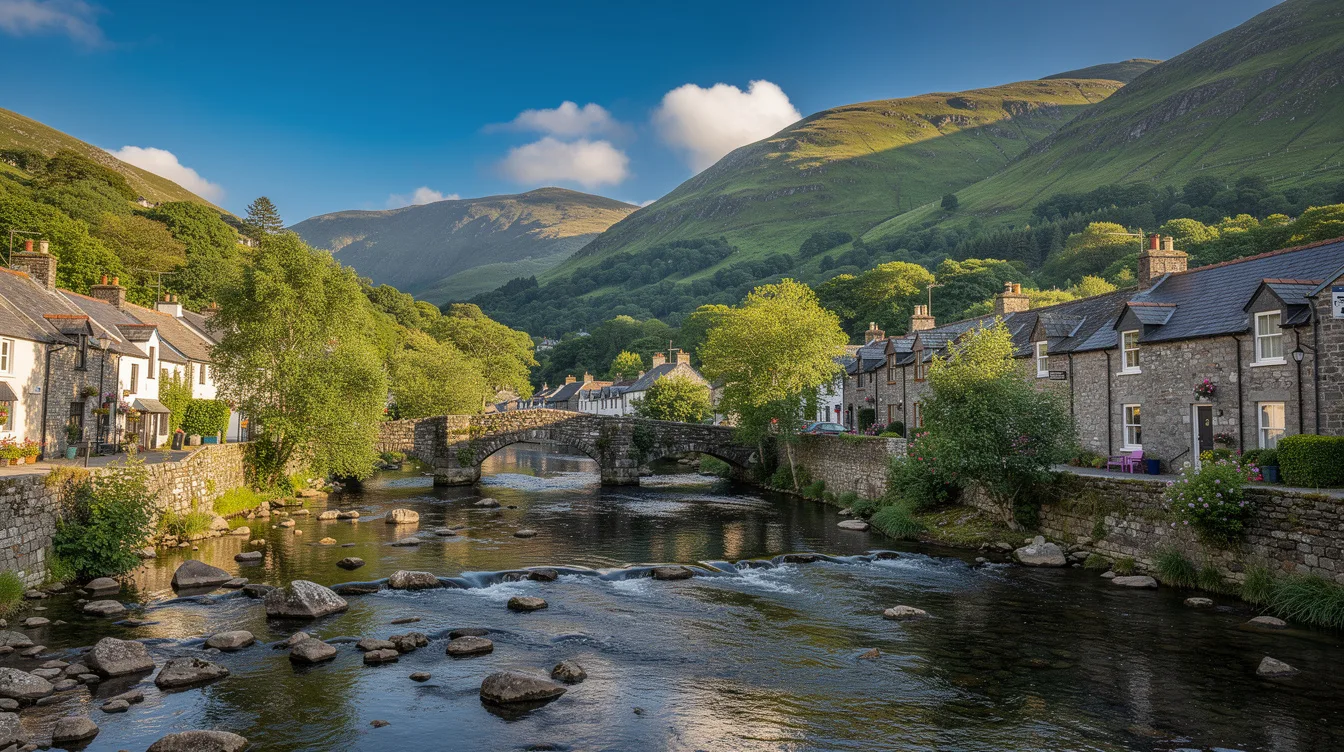
Beddgelert looks built for old Welsh legends, but its strangest story fell from the sky. On September 21, 1949, an object weighing about 5 pounds punched through the roof of the Prince Llewelyn Hotel and landed in a bedroom below.
The crash came around 3 a. M., and the noise traveled through the village. It wasn’t a roof tile or a storm-thrown object.
It was a meteorite, making Beddgelert one of only two verified meteorite falls in Wales.
A hotel room, a hole in the roof, and one hard fact
The meteorite struck the Prince Llewelyn Hotel in the early morning, damaging both its roof and a bedroom. That’s the kind of local history that changes the way you look at an ordinary upstairs window. You can picture the shock without needing it embellished.
But Beddgelert’s meteorite story has a useful restraint. The stone was later divided, with one half sold to the British Museum and the other to Durham University. The village has the tale, while the physical evidence lives elsewhere.
And that makes the claim more compelling, not less. You’re not being asked to accept a pub story. The fall was reported the following week, after something heavy and metallic had torn into a hotel room while the village slept.
The other verified Welsh fall happened in Pontllyfni in 1931, 14 miles away at the far end of the Nantlle Ridge. Two falls in one part of north Wales feels unlikely, though the notes don’t pretend to explain why.
The village beneath the meteorite story
Eryri National Park, also called Snowdonia, gives Beddgelert its dramatic setting. The Glaslyn and Colwyn rivers meet here, and a two-arched stone bridge sits near their confluence. Dark local stone gives the houses and hotels a grounded, slightly stern look.
And this is the kind of village that rewards a slow arrival. Water moves beneath the bridge, wooded slopes close in around the valley, and the streets feel compact enough that you can let the meteorite story remain in your head while you walk.
You’ll hear the name pronounced roughly “Beth-gelert.” It is often tied to Gelert’s Grave and the story of a faithful dog, though the village is actually named for Saint Gelert, an early Celtic Christian leader.
That contrast matters. The dog legend is the story visitors come expecting, while the meteorite is the one that feels almost too odd to advertise. And yet the rock through the hotel roof is the better reason to look twice at Beddgelert.
Can you visit Beddgelert in a few hours?
Yes. Allow 2-4 hours for the village, Gelert’s Grave, lunch, and part of the Aberglaslyn walk. That’s enough time to see the bridge and rivers without turning the stop into a rushed checklist.
But a longer stay makes sense if you want the Welsh Highland Railway or a more substantial walk. Beddgelert is a base for Nant Gwynant, routes around Yr Wyddfa, forest paths, and river trails, so you can choose your effort after seeing the weather.
Aberglaslyn is where the day gets louder
Immediately south of the village, Aberglaslyn Pass narrows into a gorge with a classic riverside walk. The Glaslyn runs between steep wooded hills, so the sound of water takes over quickly. It’s a sharper counterpoint to Beddgelert’s quiet bridge and cottages.
And there’s a caveat worth respecting. The area has problems with Rhododendron ponticum, which flowers pink in May and June but crowds out native plants. The setting is striking, but it isn’t untouched or frozen in a storybook version of Wales.
If you’re driving, the village’s two pay-and-display car parks can fill early in summer. Arrive before mid-morning, because a scenic place with limited parking stops feeling peaceful once you’re circling for a space.
Getting there gives Beddgelert an easy place on a north Wales route
Beddgelert lies in Gwynedd, 13 miles south of Caernarfon and 8.1 miles north of Porthmadog. The A4085 runs through the village, which makes it a practical pause between two larger north Wales stops.
And you can arrive by heritage railway instead. Beddgelert station sits on the Welsh Highland Railway, with connections toward Caernarfon and Porthmadog. The train suits the place better than a hurried drive, though it asks you to give the day more time.
There are hotels, guesthouses, cafes, restaurants, and public bars, so you won’t be stranded after a walk. But don’t expect a large resort village. Its appeal is intimate, and the mountain routes around it are the bigger draw.
By the river bridge, the water keeps moving under dark stone. Somewhere above that ordinary village roofline, the sky once sent down a five-pound interruption.