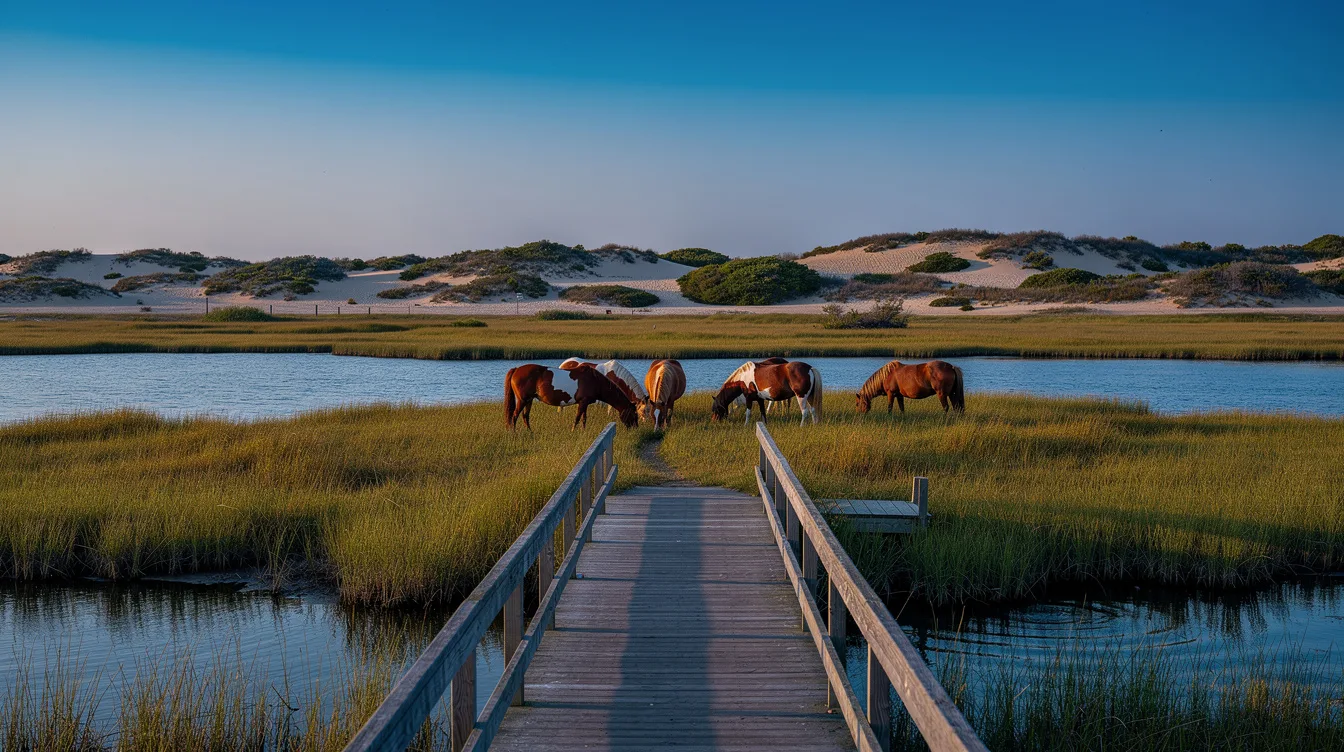
Chincoteague, on Virginia’s Eastern Shore, is the town you pass through before the road turns toward something wilder. Beyond its marinas and casual seafood stops, the causeway leads to Chincoteague National Wildlife Refuge on Assateague Island, where wild ponies and more than 320 bird species share the same windswept ground.
The town was founded in 1908, but its appeal isn’t historic-pageantry stuff. It’s the useful kind of coastal base where you can sleep near restaurants, then spend the day with salt on your skin and nowhere urgent to be.
Assateague is where Chincoteague gets wild
Here’s the distinction worth knowing: Chincoteague is the town and island with hotels, shops, marinas, and places to eat. Assateague Island, immediately east, holds the ocean beach and most pony viewing within the refuge.
And that division makes the trip easy to shape. You can have coffee in town, follow Maddox Boulevard toward the refuge, then trade parked cars and screened porches for dunes, marshes, maritime forest, and Atlantic sand.
The refuge is at 8231 Beach Road, and it’s the right destination if you came for the title’s promise. The famous Chincoteague ponies live primarily on adjacent Assateague Island, not wandering downtown for photo opportunities.
Over 320 bird species, and room to slow down
More than 320 bird species use Chincoteague National Wildlife Refuge regularly. That makes this less of a quick pony stop than a place to keep binoculars close, especially when the marsh seems louder than the road behind you.
But you don’t need to be a committed birder to enjoy it. The refuge has roughly 15 miles of hiking trails, and the mix of beach, dunes, marsh, and maritime forest gives a walk enough change to hold your attention.
If you prefer two wheels, the island and refuge suit relaxed cycling because the terrain is relatively flat and bikes have access. You’ll still want to watch the weather and bring water, since open coastal stretches can feel exposed.
And this is not a wilderness where you should assume every area is open. Seasonal closures protect nesting shorebirds, so check the refuge’s status immediately before you go. A South OSV zone closed June 8, 2026, while the recreational beach remained available.
The ponies are the draw, but don’t make them the whole day
Wild ponies are the headline here, and rightly so. Seeing them against the pale grass and low scrub has an odd, quiet force, because the scene feels untended even when other visitors are nearby.
But the island works better when you leave time for the rest of it. Watch the water, walk a trail, and let the birdlife set the pace. The ponies are memorable, but the marshy silence around them is what lingers.
Summer brings the Annual Pony Swim and Pony Penning, when the herd moves across the channel. It draws major crowds, so book lodging far ahead if that event is your reason for coming.
That said, summer’s energy changes the experience. It’s lively, but it won’t feel secluded. If you want the town as a calm launch point for the refuge, plan your days around the conditions and any seasonal access limits.
Getting there is simple once you’re on the Eastern Shore
From U.S. Route 13, take Route 175, also called Chincoteague Road, and cross the causeway onto Chincoteague Island. Then follow Maddox Boulevard toward Assateague Island and the refuge.
You’ll notice the transition as the built-up part of town gives way to open sky and water. It’s not remote in the logistical sense, but the causeway creates a useful psychological break from the rest of Virginia.
Can you visit the beach if part of the refuge is closed?
Yes, sometimes. The 2026 South OSV closure did not close the recreational beach, but conditions can change to protect nesting birds. Check current refuge notices before you leave town, because access is part of the deal here.
Chincoteague gives you the practical side of a coastal trip, while Assateague supplies the rawer edge. By late afternoon, the beach light flattens over the dunes, and a pony can be little more than a dark shape beyond the grass.