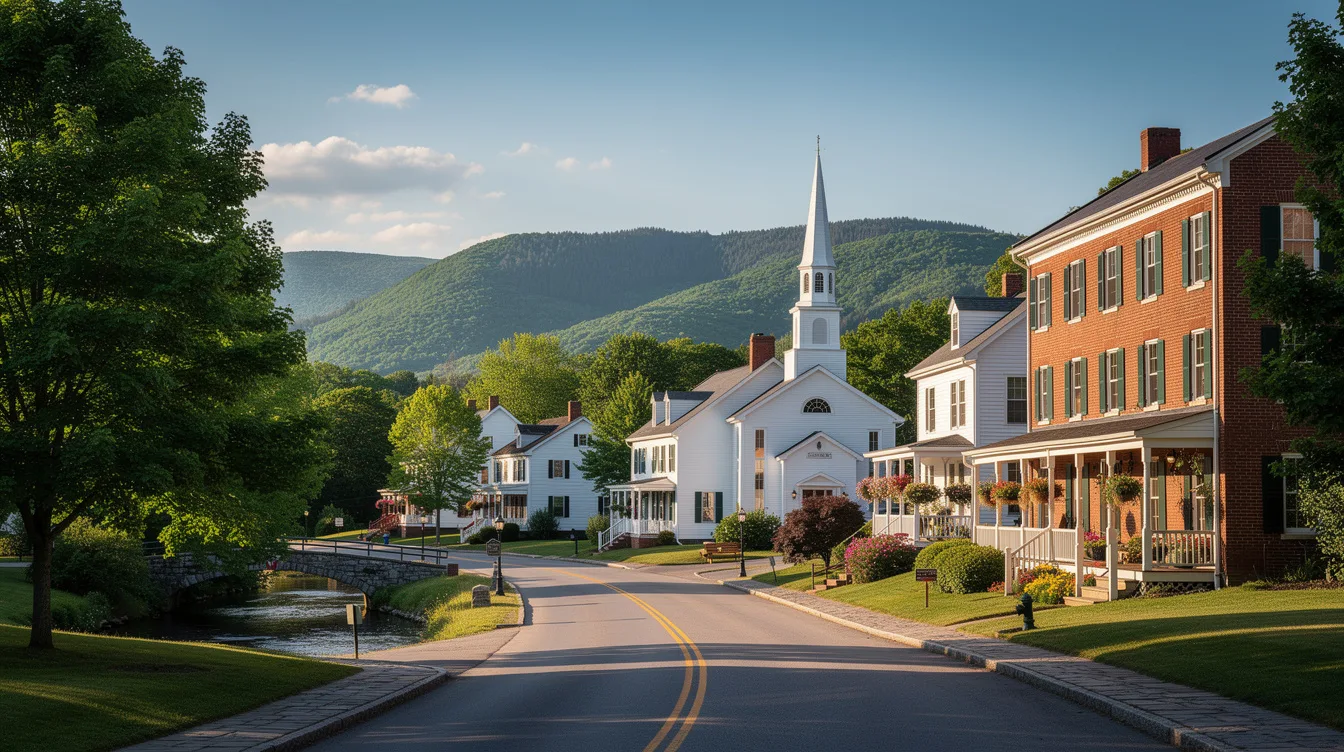
Woodstock is a four-season Vermont destination with an unusually direct selling point: Vermont Tourism includes the state’s deepest gorge in its description of the town. That claim gives this small Windsor County place more pull than a tidy village stop. You can come for the gorge, then let the rest of the day stay loose.
And that’s the right approach here. Woodstock has a population of 3,005 residents, according to the 2020 census, so it isn’t built for hurried sightseeing. The appeal is slower, but it doesn’t have to feel sleepy.
The deepest gorge changes the scale of a Woodstock visit
Vermont Tourism identifies Woodstock with a covered bridge crossing downtown and Vermont’s deepest gorge. The pairing matters because it shifts the destination from postcard-sized to something with real physical drama. You get a compact center, then a landform that asks you to look down.
But don’t arrive expecting the tourism claim to explain every detail for you. The available notes don’t provide a trail distance, a depth, or a named route to the gorge. That limitation is useful: plan around the destination, not an invented itinerary.
If you’re deciding whether Woodstock warrants more than a quick stop, the gorge is the answer in the first half of the day. It gives the place an edge. A covered bridge is familiar New England; a state superlative makes you pause.
And you don’t need a checklist to understand the contrast. The gorge brings a sharper change in perspective. It can reset the rhythm of a trip.
A four-season claim, with room for your own pace
Woodstock is promoted as a four-season destination, which is a better reason to consider it than any single seasonal promise. You can choose a visit around the kind of day you want, rather than chasing one narrowly timed event.
That said, “four-season” doesn’t mean every visit feels the same. The light changes. The air changes.
The sound around water changes. You’ll get more from Woodstock if you leave room to linger instead of treating the gorge as a photo stop between errands.
And this is where older travelers often have the advantage. A place with a walkable village map and a major natural feature rewards an unhurried schedule. You can take breaks, return to the center, and decide what still feels worth doing.
Woodstock’s village has published a guide that describes it as walkable. That’s practical, not decorative. When your car can stay parked for part of the visit, the day feels less like route management and more like a town revealing itself block by block.
Downtown is the counterweight to the gorge
The covered bridge crossing downtown is part of Woodstock’s official tourism description, and it gives the center a clear visual anchor. Wood, water, and passing footsteps have more staying power than a rushed drive-through. You’ll want to look up occasionally.
But Woodstock shouldn’t be reduced to one bridge and one gorge. The notes also identify Billings Farm & Museum, Sugarbush Farm, and Marsh-Billings-Rockefeller National Historical Park among its known attractions. Pick two, not all of them, and give the day some breathing room.
The town is also the county seat of Windsor County. That civic role helps explain why it can feel useful as well as visitor-friendly. There are ordinary routines beneath the travel pitch, which keeps the place from becoming a stage set.
And because no source here provides a distance from a major city, don’t trust an overly neat drive-time promise. Build your route from your actual starting point. Woodstock works best when arrival is part of the plan, not a number copied into a headline.
What to know before you make it a base
Woodstock is in Windsor County, Vermont, and the supplied sources confirm the town’s existence and its role as county seat. Beyond that, the responsible advice is simple: check current local details before departure rather than relying on stale assumptions.
The Village of Woodstock lists public office hours from 8:00 a. M. To 4:30 p.
M. Monday through Friday, with shorter listed hours on one day. Those aren’t visitor hours, but they’re a reminder that this is a working community with its own timetable.
And the honest trade-off is that the notes leave out the logistical specifics many guides invent: no verified travel time, no confirmed trail length, no water temperature, and no seasonal crowd estimate. That makes a flexible visit smarter than a tightly timed one.
Come for the verified promise of Vermont’s deepest gorge, then stay receptive to the smaller scale around it. By the time you return to the covered bridge, the water below and the quiet streets above will feel like two different versions of the same town.