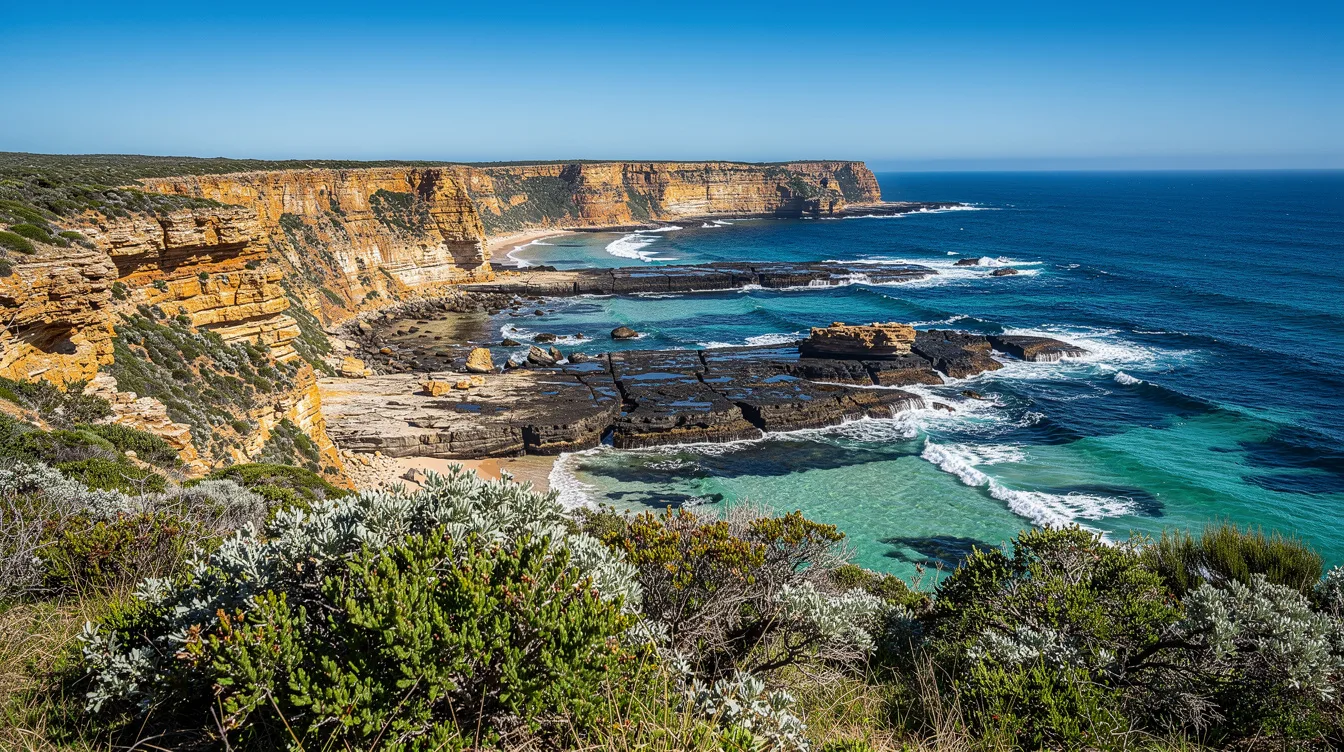
Kangaroo Island sits only 8.4 miles from South Australia’s mainland at its closest point, across Backstairs Passage. Yet the crossing changes the scale of your day fast. The mainland feels close on a map, but the island’s long roads, sea air, and quiet coast make it feel properly separate.
It is Australia’s third-largest island, stretching 90.1 miles east to west. That size matters. You can’t treat it as a quick coastal detour, and you shouldn’t try to see every corner in one rushed afternoon.
Start with the crossing, then slow down
From Adelaide, Kangaroo Island lies 69.6 miles southwest. You can fly to Kingscote Airport in roughly 30 minutes, or take the vehicle and passenger ferry from Cape Jervis to Penneshaw in 45 to 50 minutes.
But the ferry is the better opening if you have time. The land drops away, wind presses against the deck, and the island arrives as a low, long line beyond the water. You’ll understand immediately why 8.4 miles can feel like a different country.
Kingscote is the island’s main town and a sensible base for your first or final night. It gives you a place to reset, but the real appeal is what happens once you leave town and the distances start dictating the pace.
Seal Bay is worth planning around
Seal Bay is where the island’s wildlife reputation feels most direct. Australian sea lions gather here, and late May through August is highlighted for sea-lion pups. You’ll want to give the visit time rather than squeeze it between stops.
And this is the island at its most affecting, not because it performs on cue, but because the animals are simply there. The shore can feel exposed and hushed. You watch closely, then remember you’re a guest on their beach.
Kangaroos, koalas, wallabies, echidnas, seals, and birdlife are also part of the island experience. But wildlife can enter roads without warning, especially at dawn, dusk, and after dark, so driving carefully isn’t optional.
Flinders Chase earns a full day
On the west end, Flinders Chase National Park has the island’s strongest argument for going slow. Remarkable Rocks and Admiral’s Arch sit among rugged cliffs and coastal walking, with a coast that looks worked over by salt and weather.
But don’t expect an easy scenic loop from the ferry terminal. Kangaroo Island is far bigger than it appears on a map, and some rural and park roads are unsealed. A rental car or organized tour is strongly advisable because regular island-wide public transport and taxis aren’t available.
If you rent a mainland vehicle, check that ferry travel is allowed before you book. That small bit of planning saves a large headache. And booking ahead is smart, especially when the island’s roads are part of the trip rather than just the route between sights.
Beaches, oysters, and a fossil surprise
Vivonne Bay, Stokes Bay, and Emu Bay give the island a softer side after the cliffs. Beach stops are a good counterweight to the western coast, and local honey, wine, and oysters make an easy excuse to linger over lunch.
Beyond the beach, the north coast holds the Emu Bay Shale, with fossil-bearing deposits dating back 517 million years. That’s an unexpectedly deep layer beneath a trip otherwise defined by surf, coastal roads, and wildlife.
One Balcoracania specimen from these deposits had 103 thoracic segments, a record cited for the animal. You don’t need to be a fossil specialist to enjoy that fact. It gives the island a strange, ancient weight beneath its everyday salt and sand.
Give Kangaroo Island three or four days
Three to four days is the right first-trip frame. Use Penneshaw and the east coast first, then Seal Bay, Little Sahara, and Vivonne Bay. Give Flinders Chase its own day, then leave room for Kingscote, Emu Bay, or Stokes Bay.
March through May brings warmer days for exploring. Winter is quieter and begins whale-watching season, while late May through August brings the sea-lion pups at Seal Bay. You’ll get more from the island by choosing one season’s rhythm rather than chasing every highlight.
And when the ferry pulls away from Penneshaw, the island doesn’t disappear all at once. It just becomes a long, dark line over the water, close enough to see and far enough to miss.