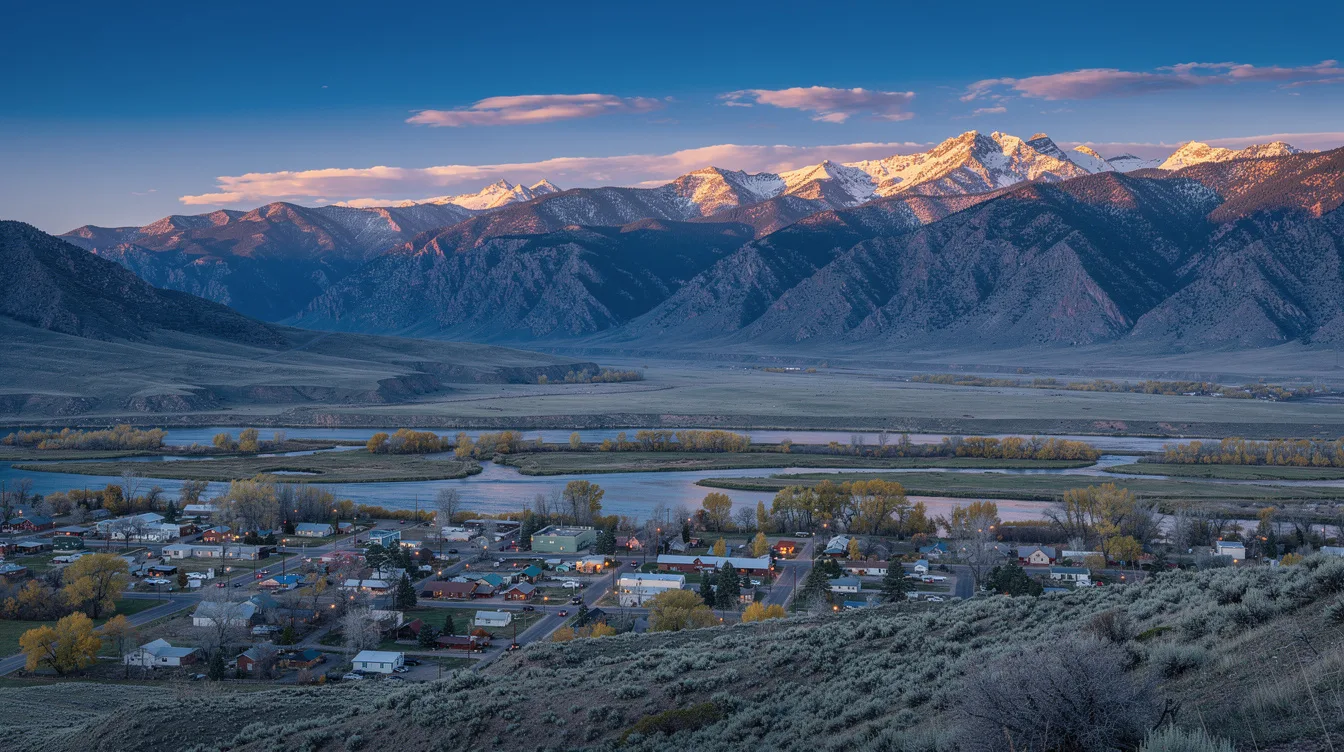
Dubois sits about an hour east of Jackson on US 26/287, and that distance changes the mood completely. Jackson can feel polished and busy. Dubois, pronounced “DOO-boyz,” is smaller, quieter, and built for travelers who’d rather wake up near the upper Wind River.
The town had 911 residents in the 2020 census, so you’ll notice its scale right away. Summer brings more people, especially around rodeo nights, but this isn’t a resort town trying to imitate Jackson.
One hour east of Jackson, the pace drops
Dubois is in Fremont County, along the US 26/287 corridor that crosses Togwotee Pass toward Jackson and Grand Teton National Park. Because the route links mountain country with a genuinely small town, it works best as a stop you give more than an hour.
And the drive is part of the point. The road rises toward Togwotee Pass, with broad mountain views and the kind of open Wyoming light that makes even a gas stop feel cinematic.
You can use Dubois as a quieter base for the Wind River and Absaroka ranges, as well as nearby Shoshone National Forest. But services are more limited than in Jackson or Cody, so reserve lodging, rental cars, and specialized tours before peak summer arrives.
The Old West feel is real, but it isn’t a theme park
Rams Horn Street, also US 26, is the town’s main stretch. The setting feels ranch-forward rather than curated, with historic dude and guest ranches offering riding, fishing, and backcountry trips.
That distinction matters if you’re choosing between Dubois and a larger gateway town. You come here for horseback riding, fly-fishing, hiking, mountain biking, hunting, or wildlife viewing, not for a long menu of shops after dark.
And there’s a useful dose of history at the Dubois Museum / Wind River Historical Center, which covers the Upper Wind River Valley, ranching, Native history, and the wider region. It gives context to the terrain outside town, where the mountains never feel like mere scenery.
Can you see bighorn sheep in Dubois?
Yes, wildlife viewing is one of the town’s main draws, and the National Bighorn Sheep Center is the right first stop. It focuses on the region’s bighorn sheep and helps visitors understand what they’re seeing beyond a quick roadside glimpse.
But wildlife is never an appointment. Give yourself time, keep expectations loose, and let the day unfold around the weather and the road. That’s a better fit for Dubois than trying to pack every hour.
Friday nights give summer a pulse
The weekly Friday Night Rodeo runs in July and August, bringing a more social energy to town. The arena noise and dust make a sharp contrast with the quiet river setting that defines the rest of the day.
If you’re visiting in summer, plan around it. You’ll get the town at its liveliest, though it still avoids the constant motion of Jackson. And if rodeo crowds aren’t your thing, use Friday evening for an earlier dinner and a slower walk through town.
Dubois sits at roughly 6,940 feet along the upper Wind River. You can feel the mountain setting in the cool edge of morning air and the way the surrounding ranges hold the horizon close.
Togwotee Pass changes the winter equation
Togwotee Pass gives Dubois a second personality when snow arrives. The nearby high-mountain route is known for snowmobiling, Nordic skiing, snowshoeing, dog sledding, and ice climbing.
You should treat winter travel here as a real mountain trip, not a casual detour from Jackson. Conditions and available services deserve advance planning, but the payoff is a town with far less of a resort-hub feel.
The Wyoming Centennial Scenic Byway begins in Dubois and follows the US 26/287 corridor across the pass. By the time the light fades on Rams Horn Street, the mountains are still there, blue at the edges and close enough to set tomorrow’s plans.