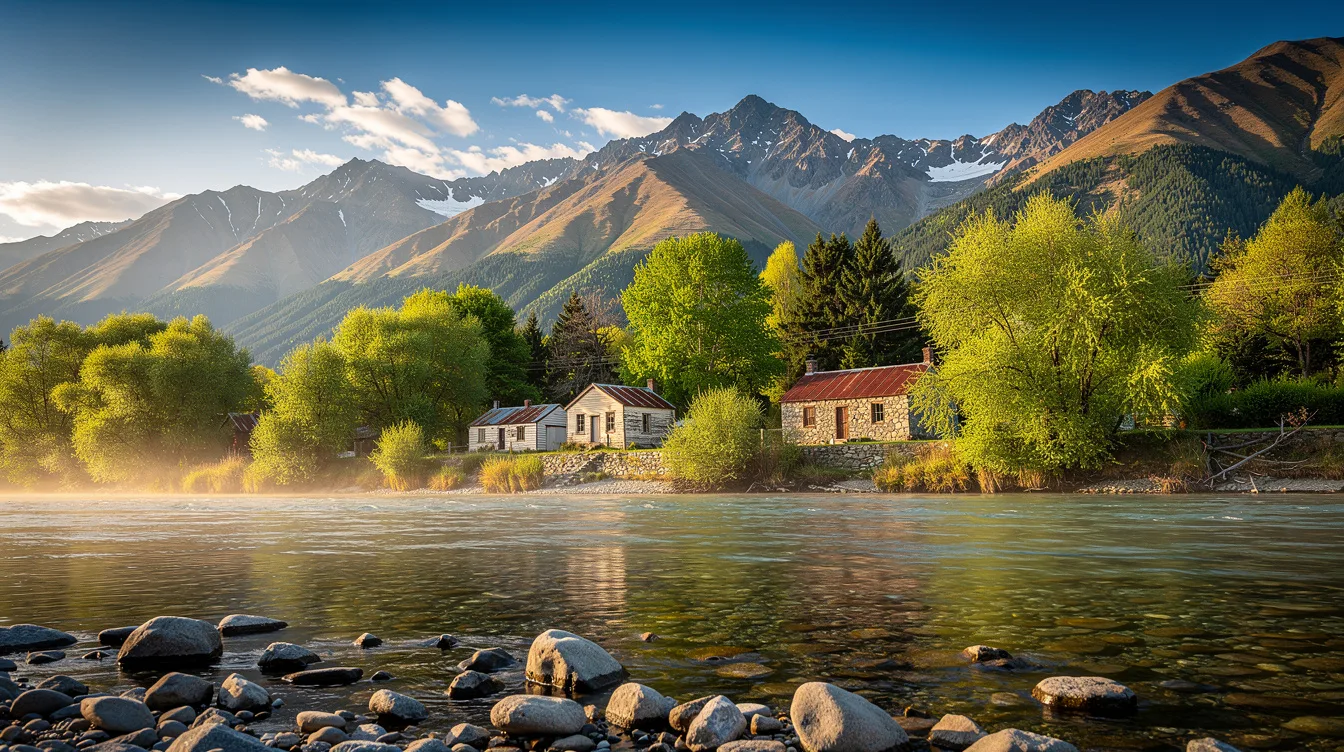
At the height of the 1860s gold rush, Arrowtown drew more than 7,000 miners and residents. Today, the Otago town feels quieter than Queenstown, but its preserved cottages and riverbanks still reveal how quickly a settlement grew around a lucky find.
And that contrast is the reason to come. Arrowtown sits about 12.1 miles east of Queenstown, roughly a 20-minute drive, yet the mood changes as soon as the road reaches the wooded valley. You trade resort traffic for café tables, old stone buildings, and the sound of the Arrow River moving past town.
Gold made Arrowtown crowded almost overnight
In 1862, gold was found in the Arrow River, and a settlement of miners soon appeared along its banks. At its peak, Arrowtown became the center of a wider district that included Macetown, Skippers Canyon, and Bullendale, places now remembered as ghost towns.
But the town’s early story wasn’t polished. Temporary buildings came first, and lawlessness troubled the district while only a small police presence tried to manage thousands of miners. The more permanent cottages and public buildings arrived as the gold and population stayed put.
And you can still read that change along Buckingham Street. The historic main street now has cafés, independent shops, restaurants, and galleries, but its surviving cottages keep the scale of a mining settlement. It’s charming, though hardly untouched by visitors in the busiest months.
Buckingham Street tells the quieter story
Walk slowly here, because the best details sit below eye level. Schist walls, small windows, and preserved façades make the street feel practical rather than grand. The town’s appearance is protected by strict local covenants, which helps explain why new buildings don’t overwhelm the older ones.
And you should start at the Lakes District Museum before exploring farther. Its displays cover gold mining, early settlers, Chinese miners, and the area’s rural history, giving context to the buildings you see outside. I think it earns its place on a short visit, especially when the weather turns cold.
But Arrowtown’s history isn’t only European. The Arrowtown Chinese Settlement sits beside Bush Creek, where restored miner’s huts show how Chinese communities contributed to the goldfields. Information appears in English and Chinese, and the creekside setting makes the visit feel more reflective than theatrical.
Autumn is the town’s strongest season
Come in April or May, when the valley takes on red and gold leaves and the annual Arrowtown Autumn Festival brings activity to the center. The festival is lively, but the town doesn’t lose its village scale, which is a rare balance in a region built around tourism.
And if you visit outside the festival, you’ll find a calmer version of the same place. Summer brings more walkers, cyclists, and river activity, while September through November offers quieter days for strolling. Winter shifts the focus toward nearby ski areas, with several reached within about 20 to 60 minutes by car.
But autumn has a practical weakness: popular streets and cafés feel busy, and photographs take patience. Go early if you want the riverbank quiet, then return later for coffee when the light reaches the old façades.
What can you do beyond the old street?
Arrowtown works best when you give it more than a quick photograph. The Queenstown Trail connects the town with Lake Hayes, Gibbston, and Queenstown, passing rivers and vineyards along the way. You can walk or cycle, though the longer routes require more time than a half-day stop.
And golfers have several nearby choices, including Arrowtown Golf Course, The Hills, and Millbrook Resort. The area also gives hikers and mountain bikers immediate access to routes around the valley. My advice is simple: choose one outdoor activity, then leave room for the town itself.
But you don’t need a car for every visit. The blue Orbus number 2 bus connects Queenstown with Arrowtown, and the listed fare is 2 NZD with a Bee Card. Check current schedules before leaving, because transport details can change and the town is easier to enjoy when you aren’t watching the clock.
Is Arrowtown worth leaving Queenstown for?
Yes, particularly if you want history with your mountain scenery. Plan at least half a day, or stay one night if you want a trail, a round of golf, or a slower autumn morning. Arrowtown is remote in feeling, but not difficult to reach.
And the town’s most convincing moment comes late in the day. The shops quiet down, the Arrow River keeps moving past the old settlement, and the valley begins to feel less like a day trip from Queenstown than a place with its own memory.