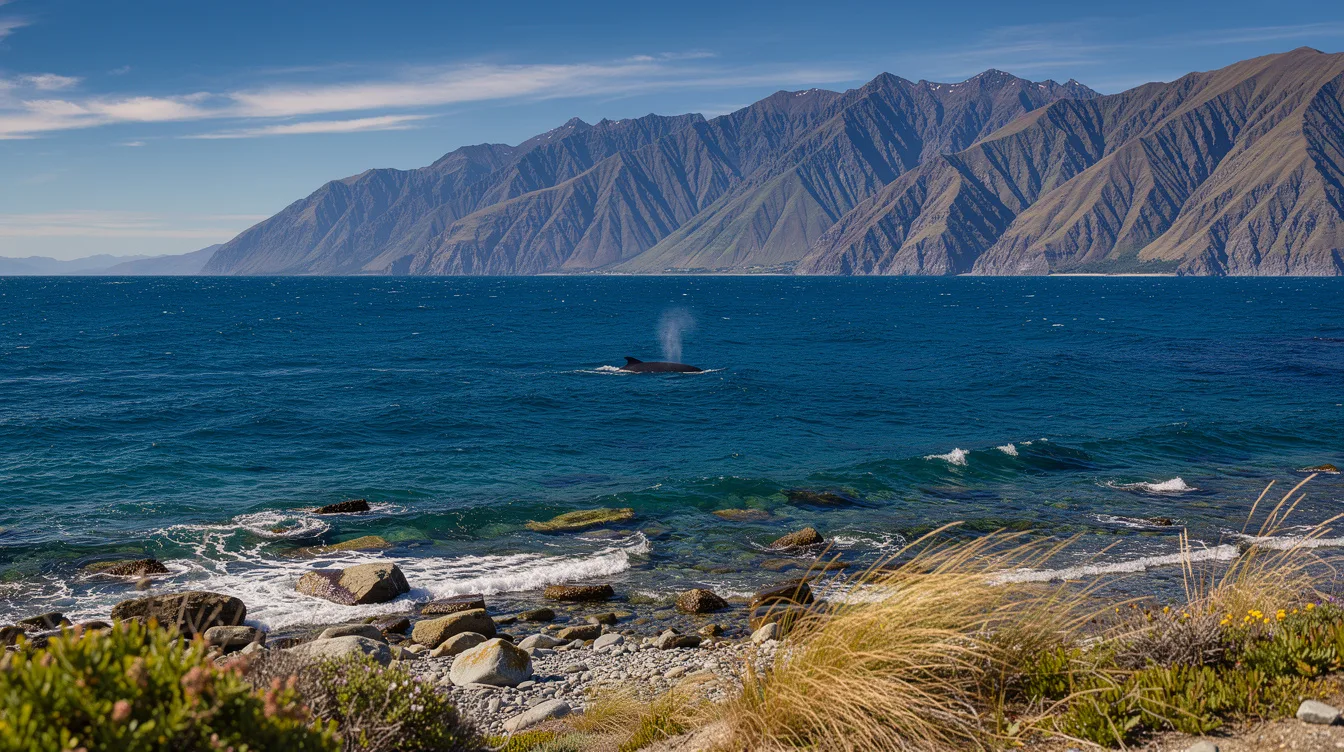
Kaikōura has one unusual advantage over most whale-watching towns: the deep water is practically at its doorstep. The Kaikōura Canyon reaches about 6,600 feet deep, and its edge lies only 0.6 miles offshore. That proximity draws sperm whales close to the coast.
It’s a startling setup. You can stand beside the Pacific with the Kaikōura ranges behind you, then watch a boat head toward water that drops away fast. And that’s why this small Canterbury town feels less like a detour and more like the point of the drive.
0.6 miles offshore, the ocean changes fast
The canyon sits south of the Kaikōura Peninsula, where shallow coastal water gives way to a much deeper system. Its productive waters support marine life year-round, so whale watching isn’t tied to one short migration window. Sperm whales are the main draw, although conditions always decide what you actually see.
But don’t arrive expecting a nature documentary on demand. Tours are weather-dependent, and the sea gets the final say. Give yourself at least one night, ideally two, because a spare morning can be the difference between a canceled trip and the moment a whale’s tail disappears into dark water.
You’ll find boat trips and scenic flights focused on the whales. I’d choose the boat if you want the scale of the place to sink in, with salt on your jacket and the mountains still visible behind town. And a flight makes more sense if your time is tight or you prefer the wider coastal view.
The peninsula is where Kaikōura slows down
Kaikōura Peninsula Walkway gives you the land-based version of the town’s appeal: clifftop views, seals near the shore, and open Pacific water. The route lets you look outward without committing your whole day to a boat. But it’s exposure, not convenience, that makes it memorable.
New Zealand fur seals are part of the peninsula experience, along with seabirds and occasional wider marine drama offshore. Keep your distance and let the coast do its work. You don’t need a complicated itinerary here, because the sound of surf below the cliffs already fills the gaps.
And this is the section of town I’d save for late afternoon. The light softens on the water, the mountains turn more imposing, and Kaikōura feels compact rather than busy. But there’s no reason to rush it, especially if your whale tour has left you ready for solid ground.
Crayfish is the local argument for stopping
The town’s name translates from te reo Māori as “meal of crayfish,” and local crayfish remains a signature order. Roadside seafood stalls and restaurants make the case plainly. You’re here for the ocean, so dinner should taste like it came from nearby water.
But don’t expect a city-sized dining scene. Kaikōura is relaxed and nature-led, which is precisely why a simple seafood stop feels right after a day outside. The smell of the sea hangs around the coast, and a warm crayfish meal has more pull than another long drive.
You can also look beyond whales. The area is known for dusky dolphins, albatross, penguins, seals, and other coastal birds. And that variety matters when weather changes your plans, because the town still gives you plenty to watch from shore.
Getting here takes a little commitment
Kaikōura sits on the east coast of New Zealand’s South Island, about 111.8 miles north of Christchurch via State Highway 1. Driving from Christchurch takes about 2.5 hours. But check road conditions before setting out, because this is a coastal route where conditions matter more than optimism.
The Coastal Pacific rail service also stops in town between Christchurch and Picton. You can drive from Picton in about two hours, which makes Kaikōura an easy fit between Marlborough and Christchurch. And if you have a car, you’ll have more freedom for the peninsula and lodging beyond town.
Kaikōura is touristy for a reason, but it never feels built around urban entertainment. It’s about deep water close to shore, weather moving across the Pacific, and a town that knows what brought you here. By the time the boat returns, the mountains are still waiting above the harbor.