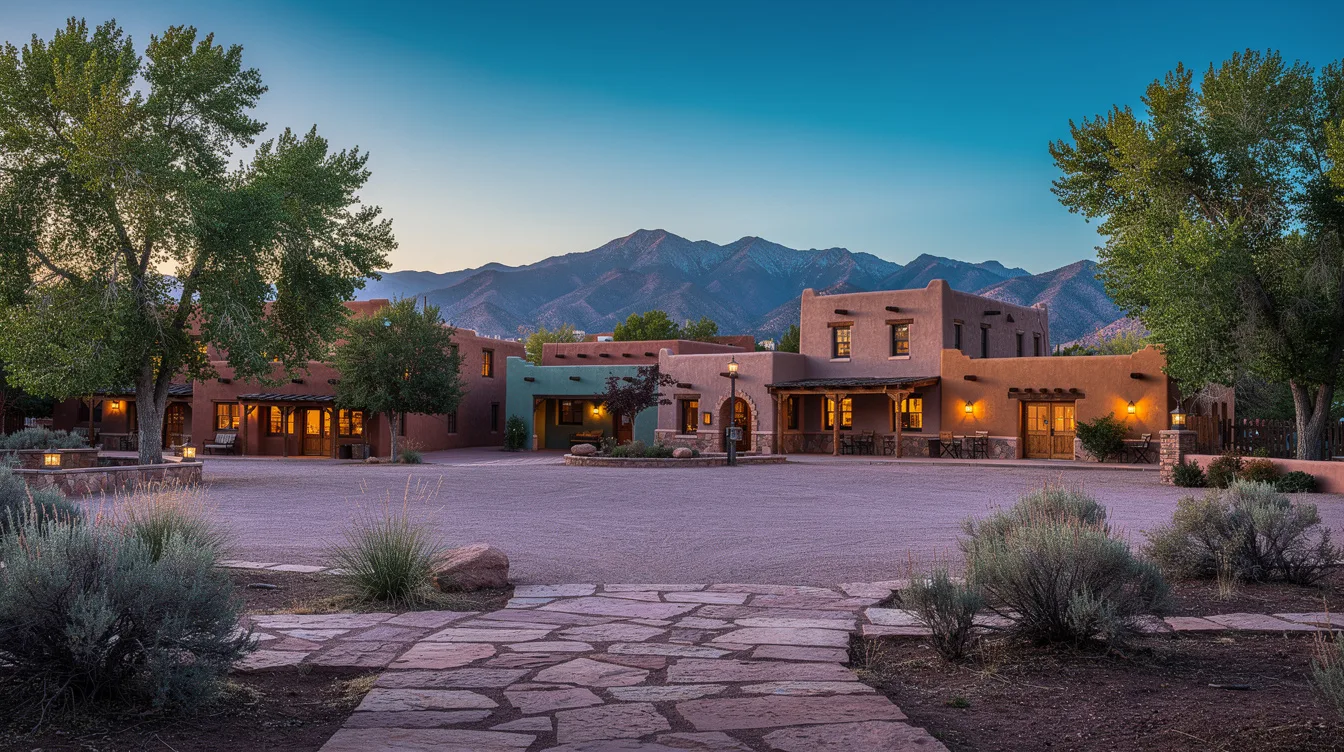
Santa Fe is generally presented as the oldest state capital in the United States. Founded in the early 17th century, it still feels shaped by adobe walls, old streets, and a central plaza. You can also reach it from Albuquerque in about 90 minutes on the Rail Runner Express, which makes this historic capital unusually easy to add to a Southwest trip.
The plaza explains why Santa Fe still feels different
And the city makes its age visible without turning history into a museum display. Around Santa Fe Plaza, low earth-colored buildings sit beside the Palace of the Governors and historic churches. I think this is the best place to begin because the city’s character becomes clear within a few blocks.
But Santa Fe isn’t preserved in amber. Markets, restaurants, and shops keep the center active, while the adobe surfaces soften the hard New Mexico light. Walk slowly, and you’ll notice rounded walls, exposed wooden beams, and streets that feel older than the surrounding modern West.
If you want an introduction that doesn’t require much planning, start with Santa Fe Plaza. The trade-off is simple: the center is easy to explore on foot, but popular hours can feel busy.
250 galleries give the afternoon somewhere to go
And art is not a side attraction here. Santa Fe has about 250 galleries and 19 museums, so you can build an entire day around looking rather than driving. My opinion is that the city works best when you leave room for one unexpected doorway.
Canyon Road is the obvious place to browse. More than a hundred galleries, artists’ studios, shops, and restaurants line the route, with gardens and adobe buildings breaking up the walk. You’ll see polished work, eccentric pieces, and plenty that costs more than you planned to spend.
But you don’t need to be an art collector to enjoy it. Museum Hill adds a stronger cultural focus, while Meow Wolf takes the city in a more contemporary direction. Follow the Canyon Road galleries link before you go, then choose only a few stops.
Can you reach Santa Fe without renting a car?
Yes, you can reach Santa Fe from Albuquerque by train in about 1 hour 30 minutes. The Rail Runner Express makes the connection practical, especially if you’re combining New Mexico’s two main visitor bases. I’d choose the train when your priority is the historic center.
But a car becomes useful once you leave the plaza. Museum Hill, Meow Wolf, nearby pueblos, and Bandelier National Monument are easier to combine with your own wheels. You can walk much of central Santa Fe, but the city’s wider cultural map takes more effort.
From Albuquerque, the train gives you a calmer arrival than a highway transfer. Look through the Rail Runner Express information before planning a day trip, because your schedule will shape how much time you have in town.
September to November brings the best balance
And September to November is the smartest season for a first visit. The weather is more comfortable than the height of summer, the autumn light suits the adobe architecture, and the streets generally feel less intense. If you dislike heat and crowds, this is the window I’d pick.
Summer brings more arts activity, but hotels cost more and the streets are busier. Winter is quieter and can pair with skiing near Ski Santa Fe, while spring works well for walking near mountains that may still hold snow.
But no season removes every compromise. You’ll need layers for cooler evenings, and outdoor plans depend on changing mountain weather. For a first visit, plan 3 to 4 days so the center, Canyon Road, Museum Hill, and one excursion don’t compete for the same afternoon.
Chile, chapels, and a day beyond the city
And food gives Santa Fe another strong point of view. New Mexico’s signature chile appears in local dishes, and someone may ask whether you want “red or green.” I like that the question is direct, because it turns lunch into a small decision you’ll remember.
The Loretto Chapel and the Cathedral Basilica near the plaza add a quieter architectural pause. Beyond town, Bandelier National Monument connects cultural history with desert scenery and walking trails. If you have the time, I think that contrast is worth more than another hour of shopping.
Use Bandelier National Monument as your wider-day option, not an afterthought. By evening, Santa Fe’s adobe walls hold the last warm light, and the city feels oldest just before dinner.