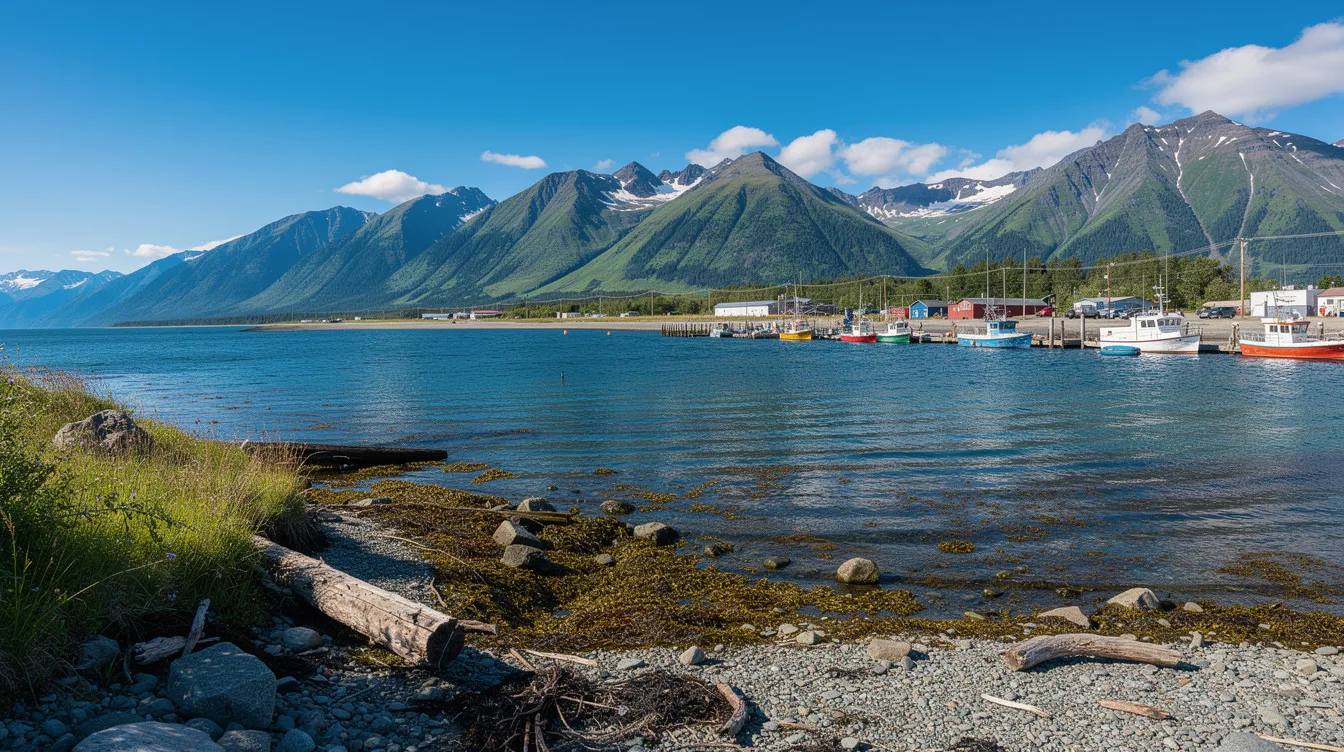
Homer sits at the end of Alaska’s Kenai Peninsula, facing Kachemak Bay with mountains and glaciers in view. But the real draw is farther out, where the town narrows into a place built around departures.
The Homer Spit is a natural strip of land that runs into the bay, with shops, campgrounds, seafood stops, fishing activity, and boat trips leaving from its harbor. It’s lively, but it still feels tied to the water.
A 4.5-mile strip with a reason to linger
This natural Alaska spit runs 4.5 miles, and walking it gives the town’s maritime character time to unfold. You’ll pass the harbor, boats at their slips, and the open bay beyond them. The salt air does much of the talking.
And this is the kind of waterfront that can cancel your afternoon plans. The spit has restaurants and small stores, but the harbor is the point, because it turns a stroll into an easy decision to get on the water.
Boat excursions leave from the harbor, making Homer useful for more than a scenic overnight. You can choose a trip across Kachemak Bay, a fishing charter, or an organized wildlife outing. The range is practical, not decorative.
But don’t expect a polished resort strip. Fishing and commercial boats are part of the view, so the place has a working edge. That’s why it feels more convincing than a waterfront designed only for visitors.
Kachemak Bay is where Homer gets interesting
Beyond the spit, Kachemak Bay gives Homer its larger sense of scale. The town is a gateway for kayaking, hiking, birdwatching, and trips toward Kachemak Bay State Park. You can stay close to shore or make the bay the whole day.
And if you want Alaska by boat rather than by highway, this is the better plan. Excursions can also head toward bear viewing in Katmai or Lake Clark, though those organized outings demand more planning than a simple harbor cruise.
Kachemak Bay State Park adds a useful counterweight to the town’s docks and galleries. Homer has an artsy side, with museums and local makers, but the surrounding water keeps the visit from becoming an indoor affair.
The weather is part of the bargain. Summer here is cool and damp compared with many American vacation spots, and that can make the bay feel raw around the edges. Bring layers, then let the changing light do its work.
The drive from Anchorage is long, but straightforward
Homer is a long drive from Anchorage via the Sterling Highway. The route puts it within reach of a larger Alaska trip, but it isn’t a quick side excursion. You need to want the coast.
Plan roughly 4 hours 30 minutes for the drive. That distance changes the mood when you arrive, because the spit feels like an endpoint rather than another stop on a crowded itinerary.
And there are other ways in. Homer can be reached by regional air service, Alaska Marine Highway ferry, or boat, which matters if you’re building a route that doesn’t begin and end in Anchorage.
For most first-time visitors, driving remains the simplest choice. But arriving by ferry or boat better matches the town’s rhythm. The harbor makes more sense when you reach it from the water.
Come when the boats, trails, and services are running
The best window runs from late May to early September. That’s when more services, excursions, fishing options, and hiking opportunities are available. Long summer days also give you room to slow down after the drive.
But Homer isn’t a heat-seeking escape. Its maritime position keeps conditions relatively moderate, and rain can be part of the experience. You’ll enjoy it more if your plan leaves space for a gray morning.
A stay of two to four nights works well. Start with the spit, then take a boat excursion or charter. After that, use a day for kayaking, hiking, or a nature-focused trip.
And don’t try to turn every hour into an activity. Homer’s appeal comes from watching the harbor change, then deciding which boat you’d rather be on tomorrow.
Fishing gives the town its working pulse
Homer is widely associated with halibut, with sport and commercial fishing both central to its identity. Charters also target salmon, so even visitors who don’t fish will notice how much the water shapes the town’s daily business.
The seafood offering follows naturally. You can eat near the spit after a day outside, and the meal feels connected to the place rather than imported as an attraction. That’s a small distinction, but it matters.
Homer has about 6,040 residents, so it’s a small town with unusually large ambitions for getting people onto the bay. It is touristy in summer, but the fishing fleet keeps the atmosphere from turning stagey.
By the time the last boats settle back into the harbor, the wind carries the smell of salt across the spit, and Homer feels most like itself.