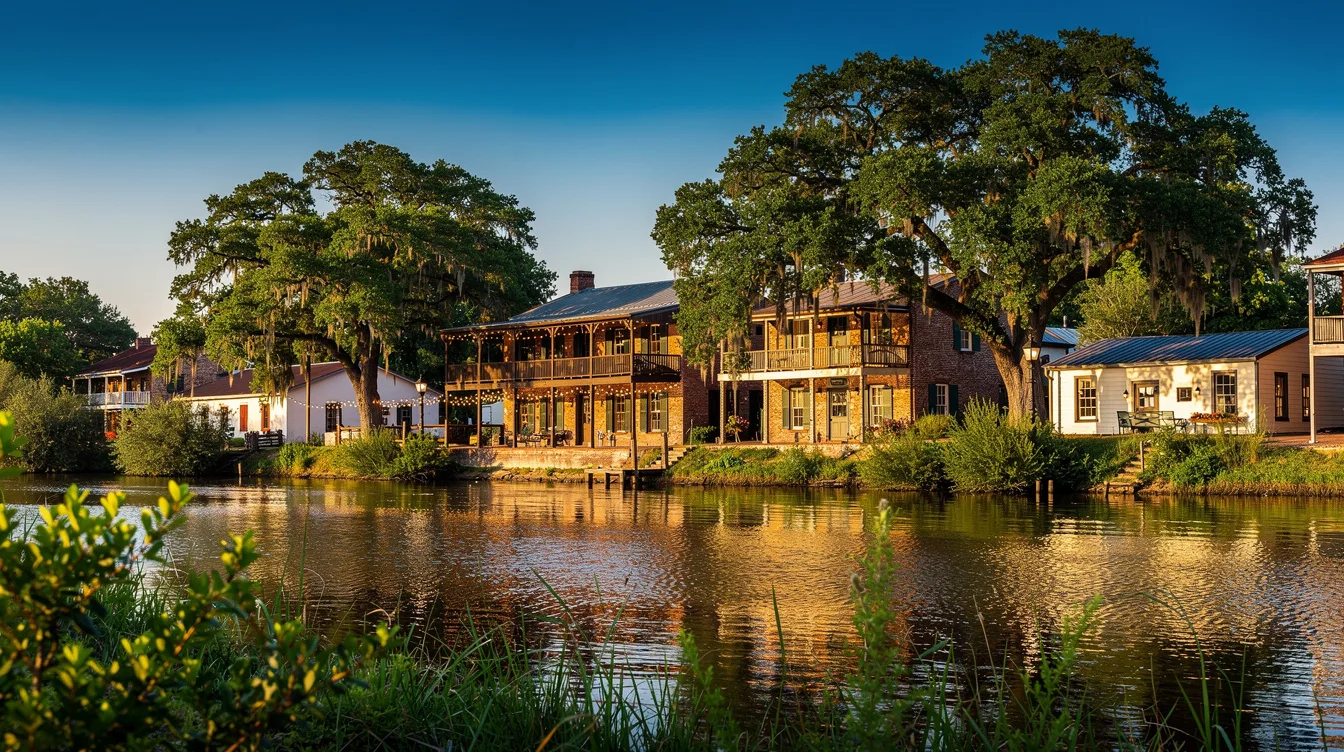
Natchitoches was founded in 1714, and its Christmas festival now brings more than 300,000 lights to this small Louisiana city. That pairing gives the town its pull: colonial history in daylight, bright reflections on Cane River Lake after dark.
But Natchitoches isn’t simply an old place with seasonal decorations. It’s presented as the oldest permanent settlement in the territory acquired by the United States through the Louisiana Purchase, and its 2020 population was just 18,039 residents.
Why 1714 still matters in Natchitoches
And the date changes how you read the town. On Front Street, brick-paved streets pass older buildings, shops, and restaurants through a 33-block historic district where the past feels close enough to touch.
But the story isn’t only French colonial history. The city’s name comes from the Natchitoches people, part of the Caddo confederation, so the name itself predates the European settlement that made the town famous.
You can start with a walk through the historic district, then follow the waterfront toward Cane River Lake. I think that sequence works best because the brick streets give you the context, while the water opens the town up.
And you’ll hear the local pronunciation before long: “NAK-uh-tish,” not the French-sounding version suggested by the spelling. For background before you go, the Natchitoches tourism office is the practical place to check.
Front Street leads to the river
But the city earns its slow pace around Front Street. The old buildings hold shops and restaurants, while Cane River Lake adds a broad strip of water where the light changes across the afternoon.
And you can see the river from the Cane River Queen, a paddlewheel boat used for cruises. The ride gives you a different view of the town, though you’ll want to plan around its schedule rather than assume you can board whenever you arrive.
Natchitoches is lively, but never overwhelming. Northwestern State University gives the city a student presence, while the historic district keeps the center walkable and human in scale.
That balance is the town’s strongest quality. You can spend an hour browsing Front Street, then sit near the water with the sound of boats and traffic fading behind you.
Beyond town, the history gets harder
And the most important visits sit beyond the shopping streets. At Cane River Creole National Historical Park, Oakland and Magnolia plantations explain the region’s Creole history alongside the lives of enslaved people and sharecropping families.
But this history shouldn’t be softened into scenery. The plantations are places to learn how wealth, labor, race, and land shaped the area, and that makes the visit more demanding than a simple architecture tour.
You can also visit Melrose Plantation, connected to Marie-Thérèse Coincoin, a formerly enslaved woman who became a major landowner in the region. The story adds another layer to a city often introduced through its colonial beginnings.
And the Louisiana Sports Hall of Fame and Northwest History Museum shifts the focus again, toward state sports and regional heritage. I prefer this wider route because it keeps Natchitoches from becoming a single-story destination.
When to see the lights and the river
But spring and fall are the better choices for walking and outdoor visits. Summer is hot and humid, so the cooler seasons make Front Street, the riverbanks, and the nearby historic sites easier to enjoy.
And Christmas changes the city’s rhythm completely. During the Natchitoches Christmas Festival, more than 300,000 lights brighten the waterfront and reflect across Cane River Lake.
The display is festive without erasing the town underneath it. You still have the brick streets, the older buildings, and the river, but evening brings a different kind of energy.
On a practical note, save room for a Natchitoches meat pie, the city’s signature savory pastry. It has its own autumn festival, and the town is presented as Louisiana’s capital for the specialty.
But the Christmas season isn’t the only reason to come. Visit in spring or fall for easier outdoor wandering, or arrive during the holiday period when the lights turn the riverfront into the town’s brightest gathering place.
By late evening, the reflections stretch across the dark water, and the old brick streets grow quiet behind them.