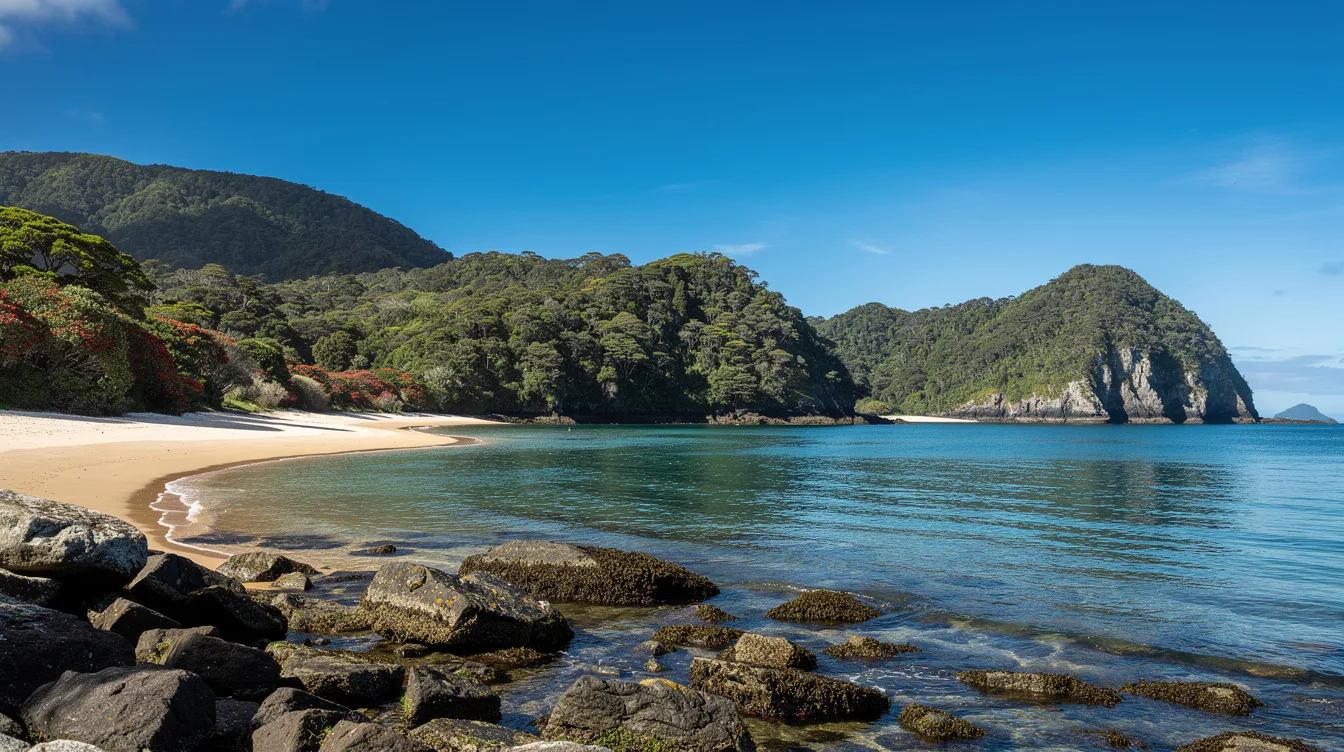
Aotea / Great Barrier Island sits 62.1 miles northeast of central Auckland, yet its night feels far farther away. In 2017, it became an International Dark Sky Sanctuary, the third designated and the first on an island.
That status matters because darkness here isn’t a curated attraction. The island’s off-grid character and limited development leave room for stars, so you come prepared to look up rather than expecting bright paths and late-night convenience.
The night is the reason to stay
International Dark Sky Sanctuary is a serious designation for very remote places that protect their night skies. Great Barrier Island earned it in 2017, and the title explains the trip better than any beach photograph could.
And you don’t need to turn the evening into a technical astronomy project. Bring a headlamp and a warm layer, then give your eyes time to adjust. The dark arrives as part of the island’s daily rhythm.
It’s quiet, but not frictionless. Mobile coverage can be patchy, local supplies are limited, and a casual dinner plan may require more forethought than it would in Auckland.
That trade-off is exactly the point. You’ll notice the air cooling after sunset, hear less machinery than you expect near a major city, and realize how much ordinary light usually fills the edge of a night.
Getting there changes the pace
A flight from Auckland to Claris takes about 30 minutes, which makes a short stay realistic. It’s the practical pick for a weekend, especially if rough water tends to ruin the first day of your holiday.
But the SeaLink ferry to Tryphena takes about 4.5 hours. It carries passengers, freight, and vehicles, so it works better if you’re bringing more gear or want your own wheels after arrival.
Summer schedules are more frequent, while winter options are fewer. And because transport, rental vehicles, and rooms can fill during summer, school holidays, and long weekends, reserve those before building the rest of your plan.
For a visit with hiking and stargazing, I’d choose three or four nights. Two nights can work, but it turns a place built for slowness into a schedule of arrivals and departures.
Tryphena and Port Fitzroy give you two moods
Tryphena is the sensible southern base, close to ferry arrivals, food, beaches, and the roads that spread across the island. It’s useful rather than polished, which feels right for an island that asks you to plan ahead.
From there, rent a vehicle locally or take one over by ferry if you can. Roads may be narrow, winding, and sometimes unsealed, so map distance doesn’t tell you how long the day will actually take.
Port Fitzroy in the north feels more harbor-oriented and sheltered. It’s popular for boating and puts you closer to conservation and walking areas, while the east coast has longer sandy beaches and heavier surf.
And that east-west contrast is worth using. Choose the harbor side for swimming or kayaking when the weather suits, then look east when you want the wilder edge of the island and a beach day with more weather in it.
Aotea Conservation Park is not a quick detour
Aotea Conservation Park has Auckland region’s only multi-day wilderness walk, with DOC huts and campsites. It’s the island’s best argument for staying longer, because the walking experience needs more than a spare afternoon.
You can also explore shorter tracks, but book huts or campsites early in popular periods. The forested hills ask for decent footwear and patience, then repay you with a day that feels properly separate from the city.
The island’s highest point is Mount Hobson, at 2,057 feet. The elevation is a real lure for walkers, though the weather can shift and the island isn’t a place to treat outdoor plans casually.
Can you do beach time and hiking in one visit?
Yes, if you give yourself enough nights and let the weather decide the order. Spend one main day walking in the park, then use another for Port Fitzroy or an eastern beach instead of trying to cram both into one rushed loop.
Stock up in Auckland for specialized food, medication, outdoor gear, and essentials. Local options exist, but they’re limited and can cost more, which is another reason this island rewards a little preparation.
Summer works, if you book early
Summer is the straightforward choice for an outdoors-first visit, but it’s also when advance planning matters most. Book your transport, vehicle hire, and accommodation first, then leave some room for variable weather.
And don’t treat the dark as an inconvenience to be fixed with screens or bright lights. By the time you’ve settled in after a day outside, the island’s strongest feature is overhead, quiet and entirely unhurried.