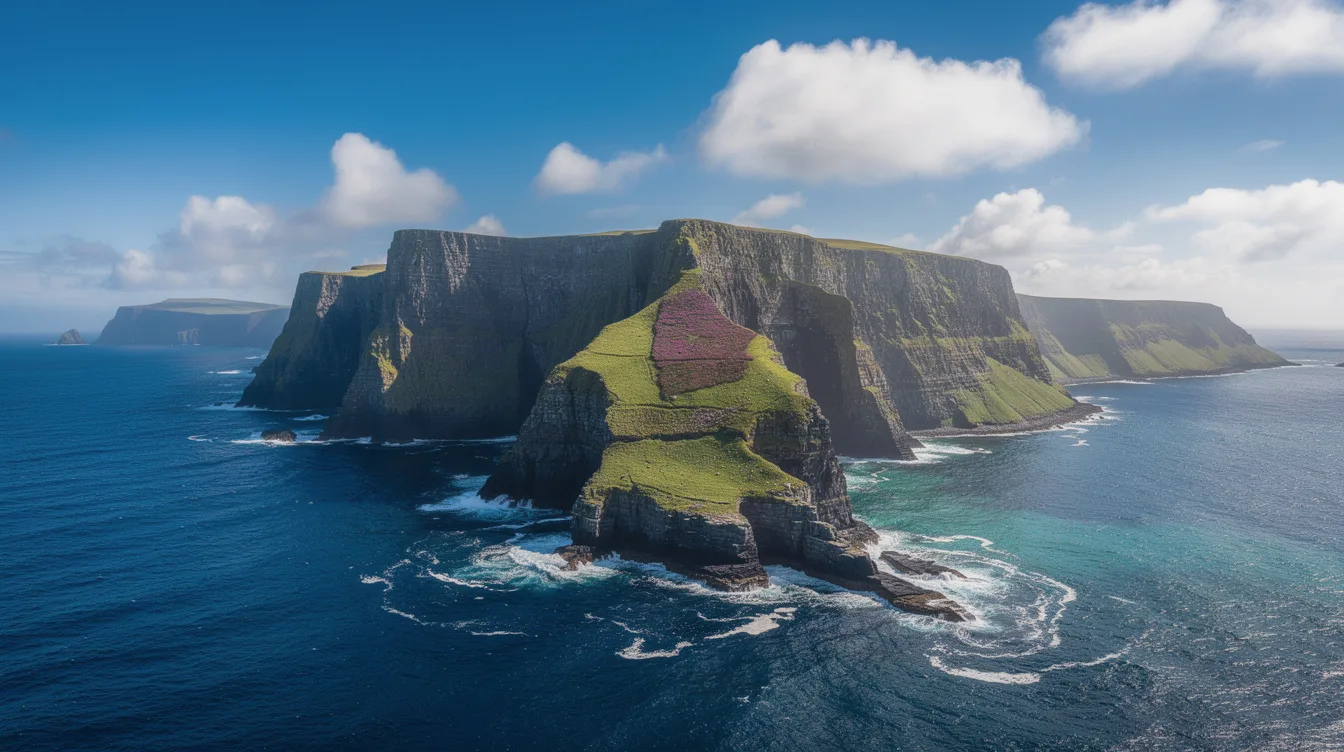
Achill Island makes its case fast. On Ireland’s County Mayo coast, Croaghaun’s sea cliffs rise about 2,257 feet above the Atlantic, and the scale changes how you travel here: you stop rushing, because the road keeps asking you to look.
But this isn’t an island for collecting quick viewpoints. Wind can arrive hard, visibility can shift, and Croaghaun is a serious coastal mountain outing. If you come for the cliffs, give them the weather and attention they demand.
Croaghaun is the reason to come slowly
The Atlantic-facing cliffs near Achill Head are among Ireland’s highest, and they don’t need much framing. Dark water presses against the foot of the mountain while grass and bog run toward the edge. You feel the exposure before you reach it.
And that exposure is the point, but also the limit. Wear proper footwear, stay well back from cliff edges, and don’t treat this as a casual beach walk. I’d skip the cliff plan entirely when conditions look poor.
Achill feels remote because its headlands are open to the ocean. Yet it isn’t difficult to reach: the Michael Davitt Bridge connects it to the mainland, with access from Westport via Newport. You can arrive by car, bicycle, or bus without a ferry timetable dictating the day.
Keem Bay gives the island a softer edge
Keem Bay is a horseshoe-shaped curve of sand beneath steep green slopes. After the force of Croaghaun, its vivid water looks almost improbable. Go early or late in summer, when the narrow approach road feels less like a queue.
But don’t confuse a calm-looking bay with a promise of calm weather. Achill is built for changing light and wind. That’s why a short stop can become an afternoon, especially when the clouds break over the water.
For a more everyday beach scene, head to Keel Beach. It is broad and accessible, with walkers, surfers, and watersports sharing the shore without much fuss. Keel also makes a sensible base when you want cafés and accommodation nearby.
Drive Atlantic Drive, but leave room to stop
The Atlantic Drive runs about 24.9 miles along coastal roads, viewpoints, cliffs, and mountain country. It works by car or e-bike, though I’d give it a full day rather than treating it as a route between two appointments.
And drive slowly. Broken light makes the island feel different every few minutes, while the wind carries salt across the road. It is touristy in summer, but the road still has enough pauses to make you forget the clock.
On the southern loop, Kildamhnait Castle adds a compact historical stop. The fortified tower house dates to the 15th century, and it fits easily into a day that already includes the island’s coastal roads.
Slievemore keeps the past in view
Under Slievemore, the Deserted Village holds roughly 80 to 100 stone cottages. You walk among the remains rather than viewing them from behind a barrier, which makes the site feel more immediate than a museum room.
But the weather matters here too. Lower light and moody skies suit the mountain and ruins, while rain can shorten your time outdoors. If clouds close in, the Achill Experience Heritage Centre has local history and folklore, plus Mayo’s first aquarium.
Slievemore rises to about 2,201 feet, slightly lower than Croaghaun but still commanding. You can see why Achill rewards an unhurried stay: beach, mountain, ruins, and road all sit close together, yet each needs its own weather window.
The Greenway makes the approach part of the trip
The Great Western Greenway links the Achill area with Westport along a former railway corridor. Its 26.1-mile route is for cyclists, walkers, and runners, so you can make the journey toward the island part of the experience.
And an e-bike is a smart choice if you want to save your legs for the island itself. Achill suits cycling because you can move at the pace of the weather. The trade-off is simple: exposed roads feel far longer when the wind turns.
May and June, plus September, are the months I’d choose for a quieter visit. Summer brings more activity options, but accommodation in Keel, Dooagh, and Dugort can be difficult to secure. Pack waterproof layers even then.
Stay two nights if you can. By late afternoon at Keem, the beach quiets beneath the slopes, and the Atlantic keeps making its low, steady argument against leaving too soon.