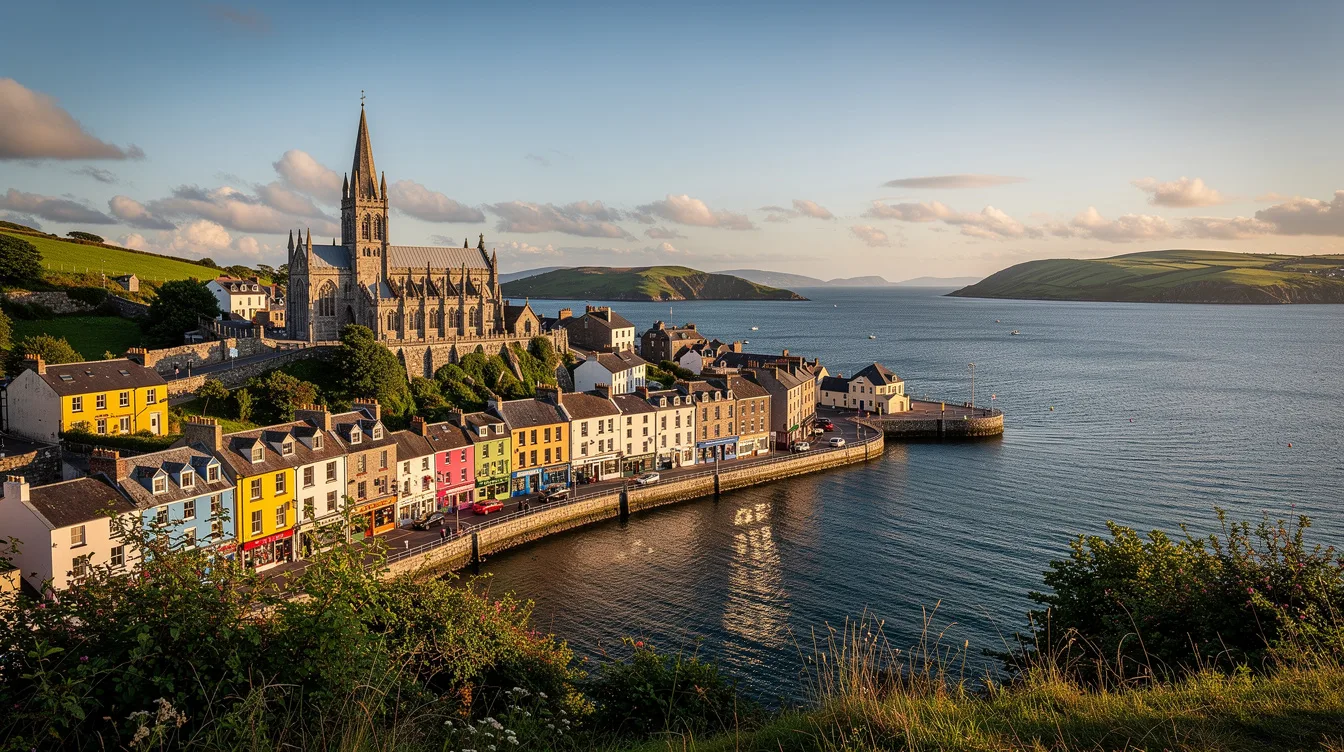
Cobh, pronounced “Cove,” is where the Titanic made its final stop on April 11, 1912. 123 passengers boarded here before the ship headed into the Atlantic, and only 44 survived the sinking. That fact changes the feel of this small Irish harbor immediately.
You arrive on Great Island and the town climbing above it. Cobh is colorful, but its history is heavier than the painted terraces suggest. And that tension is exactly why it deserves more than a quick photo stop from Cork.
The Titanic story starts at the waterfront
The historic pier is where Titanic passengers boarded tenders for the ship offshore. April 11, 1912 is not a vague museum date here. It is attached to this harbor, these streets, and the water stretching out beyond town.
Start near the station, where the waterfront puts the town’s maritime past directly in front of you. The Titanic Experience Cobh and the Titanic Trail are the right choice if that final port call brought you here. But don’t expect a grand liner terminal preserved in amber.
The power comes from the ordinary scale of the place.
The harbor can look calm even when its story is not. You’ll hear trains arriving beside the water and see ferries working that carried passengers toward an ocean crossing they could not have understood.
And the numbers stay with you. Of the passengers who boarded in Cobh, 44 survivors came through the disaster. That is a sharper detail than any dramatic display, because it makes the town’s connection feel human without pretending it was simple.
More than one departure shaped this town
Titanic is the headline, but Cobh’s deeper story is departure. Between 1848 and 1950, about 2.5 million emigrants left from Cobh for North America. For many visitors from the United States, that makes the harbor feel less distant than its map position suggests.
The Queenstown Story at Cobh Heritage Centre covers emigration, famine, and transport history by the station. Give it time before walking uphill. You’ll understand why people left, then see the same waterline that marked the beginning of their journey.
But this is not a town frozen inside one tragedy. Cobh was called Queenstown from 1849 until 1920, and its waterfront also holds an Annie Moore statue, commemorating the emigrant who became the first immigrant processed at Ellis Island in 1892.
A Lusitania memorial adds another layer. Survivors of that 1915 sinking were brought to Cobh, so the harbor holds overlapping Atlantic memories. It can feel solemn, yet the town is still lived-in, with commuters stepping off trains and cruise visitors moving along the quay.
Climb toward St Colman’s, then look back
The walk uphill is worth doing because the view explains Cobh’s shape. Rows of bright houses stack down toward the harbor, with St Colman’s Cathedral above them. It is the image called the Deck of Cards, and it earns its popularity.
The cathedral rises 300 feet, which is why it keeps appearing as you move through town. And the climb gives you a better sense of the harbor than any single waterfront bench can. The streets are steep.
You should go slowly here. The color is cheerful, but the slope is real, and there is no need to treat Cobh as a checklist. Look down toward Spike and Haulbowline islands, then let the wind and gulls interrupt the history lesson.
But don’t spend the whole visit chasing the famous angle. The residential streets are the better argument for lingering. They make Cobh feel lively without feeling loud, especially once visitors have spread out from the waterfront.
How to make Cobh work as a Cork day trip
The easiest route is the regular train from Cork to Cobh. The trip takes under 25 minutes, and the station is essentially on the waterfront beside the town’s main heritage sites. That convenience makes a no-car visit unusually straightforward.
Allow half a day if you want the harbor, one history stop, and the cathedral climb. Give it a full day if seasonal ferry times line up for Spike Island, whose former fortress and prison make a more substantial excursion.
And timing matters. Large cruise ships visit mainly in summer, when the town center can suddenly fill up. Cobh has Ireland’s only dedicated cruise terminal, so the contrast is part of the experience: a small harbor town beside ships that dwarf its houses.
All-year travel works here because the appeal is built on streets, museums, and harbor views rather than a single beach day. But if a cruise ship is in port, start uphill or at the heritage sites before returning to the quay.
By the time the train pulls away toward Cork, the cathedral still hangs above the colored roofs, and the harbor water keeps moving toward the Atlantic.