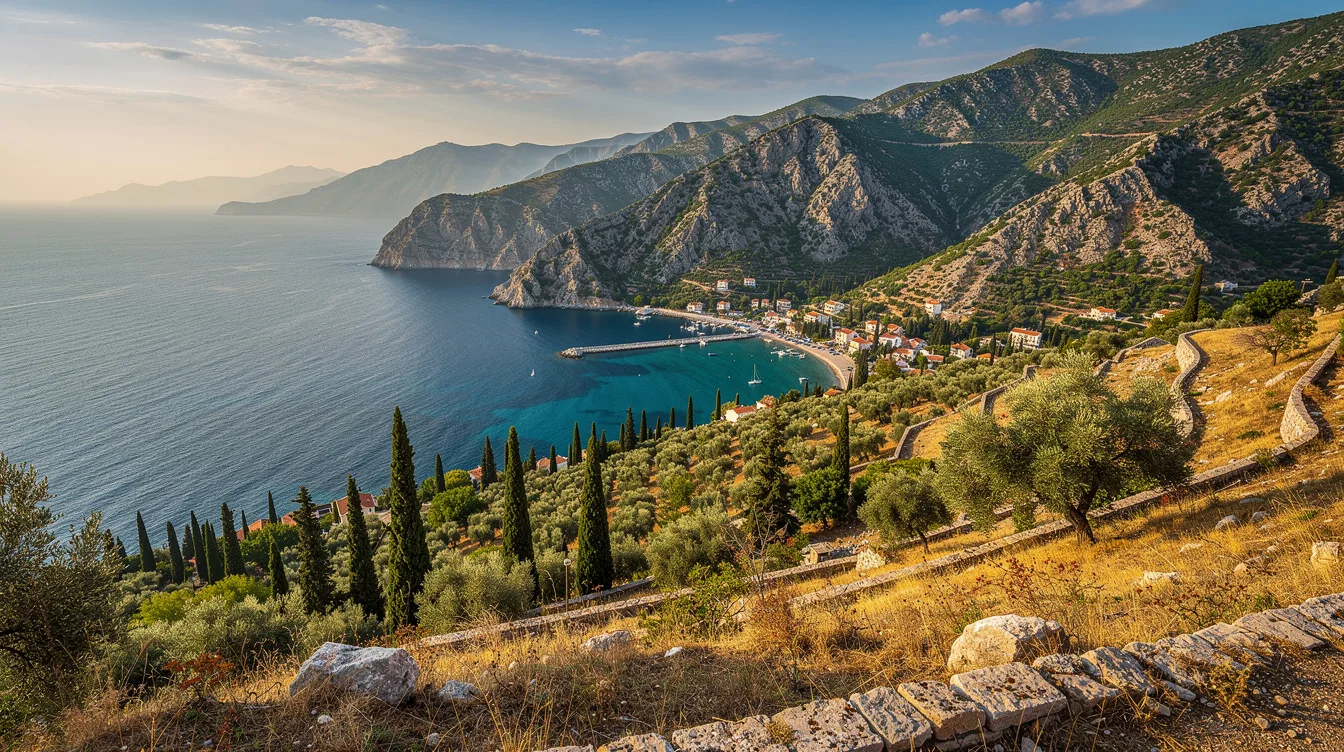
Ithaca has 2,862 residents and a connection to Odysseus’s kingdom in the Odyssey. That claim is literary and mythological, not proof that the hero existed. Still, the island’s quiet harbors and green hills make the old story feel unusually close.
Why Ithaca still feels tied to Odysseus
And that is the island’s central tension: Ithaca is both a real Greek destination and the home of a legendary return. In the Odyssey, it represents Odysseus’s kingdom and the place he reaches after the Trojan War.
But you shouldn’t come expecting archaeological certainty. The honest appeal is more atmospheric, with small ports, wooded hills, and coves that give the story room to breathe. My view is that Ithaca works best when you treat the myth as a lens, not a fact.
A small Ionian island with a quieter rhythm
About 96 square kilometers, or roughly 37 square miles, Ithaca is the second-smallest of Greece’s seven main Ionian islands. Only Paxos is smaller. That scale matters because you can understand the island’s shape without feeling rushed.
And the population is only 2,862 residents, according to the 2021 census. You’ll notice the difference in the pace, especially beyond the busiest port. The island feels discreet rather than empty, which is a better description than calling it untouched.
Vathy gives the story a harbor
Vathy, also spelled Vathi, is Ithaca’s capital and sits around a large natural bay. Sailboats gather in the harbor during summer, while the water catches the changing light between the hills.
But Vathy is lively without becoming loud. If you sit near the waterfront, you’ll hear rigging, footsteps, and the small sounds of boats moving against their lines. The bay is the kind of place that can make you cancel an afternoon plan.
Kioni and Frikes keep the coast intimate
Kioni is a small port often associated with Ithaca’s coastal charm. Its scale encourages wandering, though you shouldn’t expect a long list of attractions. The pleasure comes from the setting and the pause between arrivals.
And Frikes adds another port village to the northern part of the island. It also handles some maritime connections. You can pair the two with time in Vathy, but the island is better when you leave space for a slow lunch or a swim.
What you’ll find inland, beyond the boats
But Ithaca isn’t only a sailing stop. Villages such as Anogi, Exogi, and Stavros give you a view of the island away from the water, where the hills and traditional settlements create a quieter route through the interior.
And the walking is part of the appeal, even if the research doesn’t support promises about specific trails or distances. You’ll trade polished resort convenience for a more local rhythm. That limitation is real, but it’s also why the island feels less packaged than larger Greek destinations.
Can you visit Ithaca without a car?
Boat access is essential, and local connections should shape your plans. You can reach the island from Cephalonia, Lefkada, Patras, or Astakos, with ferries serving Piso Aetos and additional links reaching Vathy or Frikes.
But schedules and ports vary by date, so check the details before you book flights or lodging. The nearest airport is on Cephalonia, followed by a road journey to Sami and then a crossing. The Ithaca. Gr/en/”>official Ithaca tourism site provides current access information.
August brings boats, not solitude
August is the busiest period for nautical traffic, particularly around Vathy. You’ll still find quiet corners, but the harbor won’t feel private. The water may be calm, yet the docks carry the steady movement of summer sailors.
And that makes early summer a more appealing choice if you want breathing room. Ithaca is remote, but not hard to reach by boat. By evening, when the last vessels settle in the harbor, the island’s old story feels less like history than a low voice over dark water.