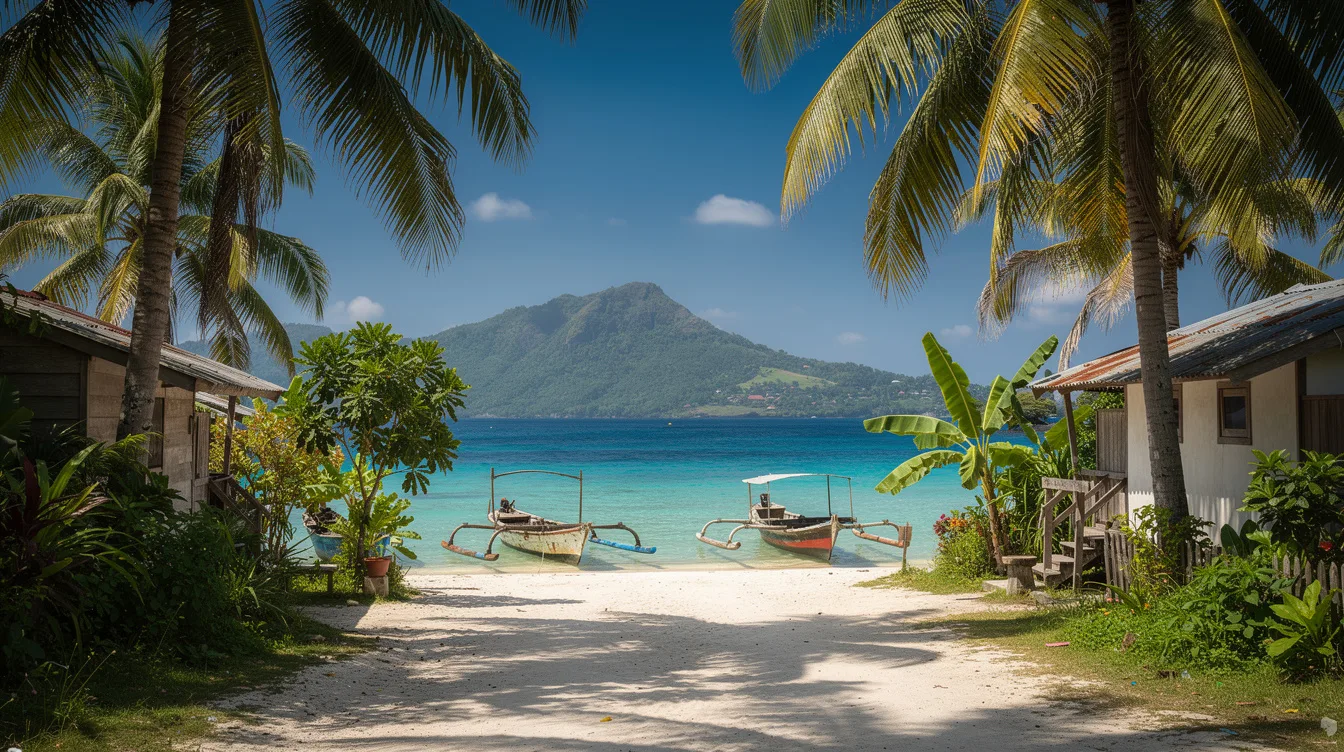
Gili Air is about 3.1 miles around, and it is the only one of Indonesia’s three Gili Islands with subterranean fresh water. That modest fact explains more than you might expect. On an island where fresh water is finite, the pace feels measured, even when the cafés are full.
Just off northwest Lombok, Gili Air is the middle choice in the Gili chain. It has more places to eat and more social energy than Gili Meno, but it is calmer than party-focused Gili Trawangan. You come here to slow down, not to fill every hour.
The fresh-water island has a slower rhythm
Fresh water underground gives Gili Air its name and separates it from its two neighbors. Some resorts and restaurants still bring water from the mainland because the supply is limited. That’s a useful reminder that this small beach break has real constraints beneath its easygoing surface.
And the island’s scale changes how you travel. There are no cars or motorbikes under local rules, so you walk, rent a bicycle, or take a horse-drawn cidomo cart. The absence of engines leaves room for bicycle bells, soft hoofbeats, and the steady hush of water beyond the palms.
You can circle the island in a day without making it a project. But don’t rush it. The sandy paths, uneven stretches, and tropical heat make a slow lap more enjoyable than a mission to check off every shore.
The island has a population small enough that repeated walks start to feel familiar. It isn’t empty, and it shouldn’t be sold that way. Cafés, dive operations, and beach bars bring activity, but the mood stays relaxed after dark.
East for the water, west for the last light
The east and northeast sides are where you should plan your morning. Shore snorkeling is easiest there, and turtle encounters are common. Put on your mask early, when the water feels quiet and the day hasn’t yet settled into its humid afternoon rhythm.
But the west side has a different job. On clear evenings, it faces Bali’s Mount Agung and catches the sunset. Low tide can make swimming less practical there, so save this shore for a drink, a walk, or simply watching the light fall across the Lombok Strait.
Gili Air Wall is among the nearby dive sites for travelers who want more than a mask and fins. Diving and freediving are common around the Gilis because of the coral formations and marine life. You don’t need to be an expert to enjoy the island, though.
The shoreline delivers plenty.
And this is the useful contrast: Gili Air can feel social without becoming loud. You’ll find sunset bars and dinner options, yet it doesn’t carry Gili Trawangan’s party intensity. If your ideal evening ends before the music gets demanding, this is likely your island.
Getting there rewards an early start
Bangsal Harbour on Lombok is the shortest practical gateway. Public and private boats usually take about 15-30 minutes to reach Gili Air. From Lombok airport, allow around two hours for the road journey and boat connection.
From Bali, fast boats leave from Padang Bai, Serangan, and Amed. Crossings generally run 1.5-3 hours, depending on weather and stops. You should treat those times as a range, not a promise, because the sea has the final word.
And morning crossings are often calmer. Conditions can turn rougher in wetter months, which makes an early departure the sensible choice if you’re prone to seasickness. Book ahead in peak season, then give yourself margin rather than stacking a tight same-day connection.
Bring enough Indonesian rupiah for your stay. Card payments and cash access can be inconsistent on a small island, and that inconvenience is part of the trade-off. Gili Air feels pleasantly removed, but it is not the place to discover your backup card won’t work.
May through October makes the easier case
May to October is generally the dry season, and it is the better bet for beach days, diving, and boat travel. July and August are usually busier and more expensive. You’ll get the steadier conditions, but you’ll share them.
But quieter travel comes with a weather compromise. November through April is wetter and more humid, and sea crossings can be rougher. If you want the island at its most straightforward, dry-season timing matters more here than chasing the lowest rate.
Plan for 3-4 nights if you can. One night turns Gili Air into a transfer point. With a few days, you can snorkel from shore, take a dive, cycle the full loop, and still have an afternoon when the only plan is finding shade.
By the time the sunset crowd thins on the west coast, the island’s paths go quiet again. A cidomo passes, the sea keeps moving in the dark, and Gili Air feels small in exactly the right way.